
Last updated September 24, 2026
Seasonal Insulation Care for Cupertino: Year-Round Homeowner’s Guide
Cupertino averages only 15 inches of rain per year, but it falls in roughly four months - concentrated enough that a single undetected attic penetration can deposit more moisture in one season than the insulation can dry out in the other eight months. Meanwhile, the June-through-September attic heat cycle bakes degraded materials, accelerating off-gassing and compression in ways that don’t show up on a thermostat until October’s first cool night. In this Attic Insulation Maintenance Checklist for Cupertino Homeowners, you’ll learn how to organize your insulation maintenance around these two real stress periods, not arbitrary calendar quarters, and how to read your utility bills like a diagnostic tool rather than just an expense.
Quick Answer
Seasonal insulation care in Cupertino means preparing for two distinct stress cycles: a pre-summer check in May focused on attic ventilation and HVAC duct integrity before heat peaks, and a pre-rain check in November targeting hatch seals, pipe collars, and ridge-vent baffles before concentrated winter rain arrives. Between these cycles, a post-summer inspection in October catches settling and thermal bridging while the evidence is still fresh. Most homeowners can handle visual checks and soffit vent clearing themselves; anything requiring insulation disturbance or attic floor traversal should trigger a professional evaluation with documented before-and-after blower-door numbers.
Table of Contents
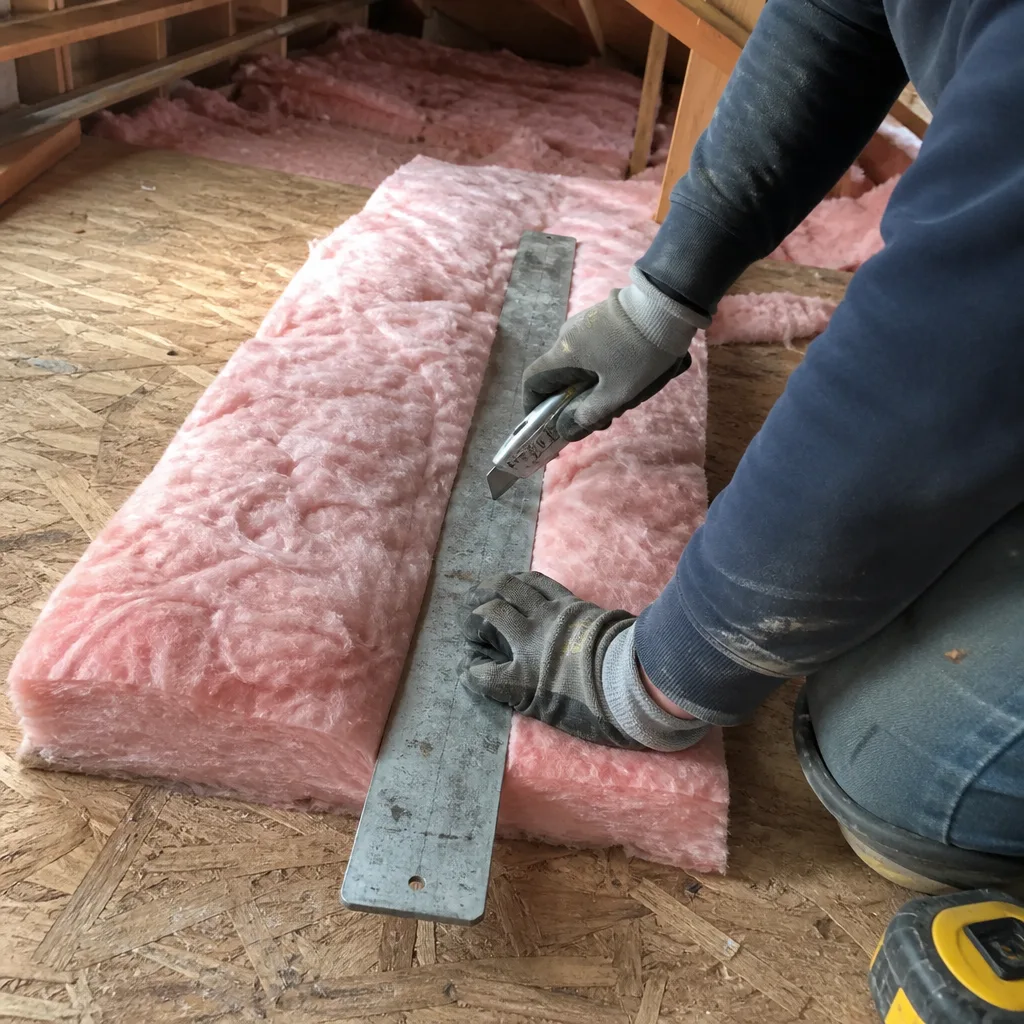
- Cupertino’s Two Insulation Stress Cycles
- Pre-Summer Checklist: May
- Post-Summer Checklist: October
- Pre-Rainy Season Checklist: November
- Reading Your Utility Bills Seasonally
- DIY vs. Professional Maintenance
- Common Mistakes to Avoid
- When to Call a Professional
- Frequently Asked Questions
- The Bottom Line
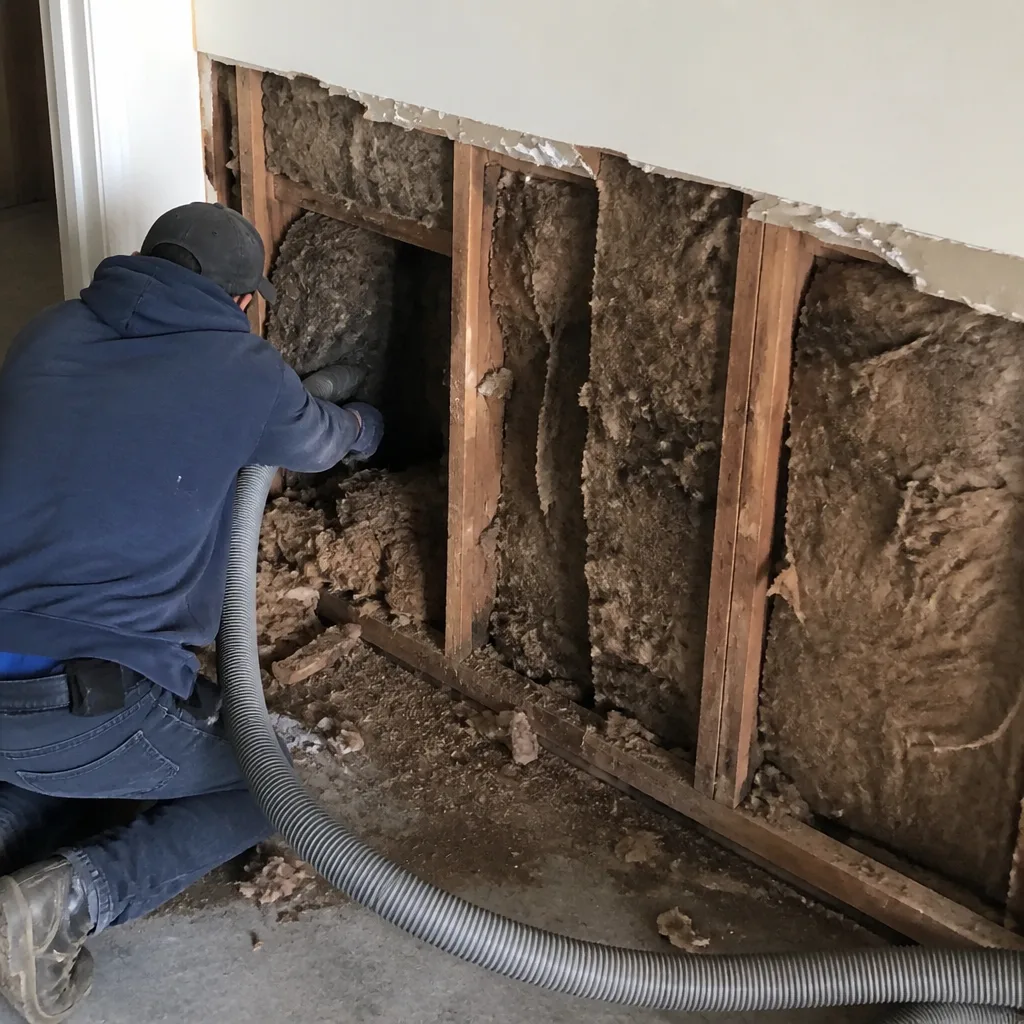 Before
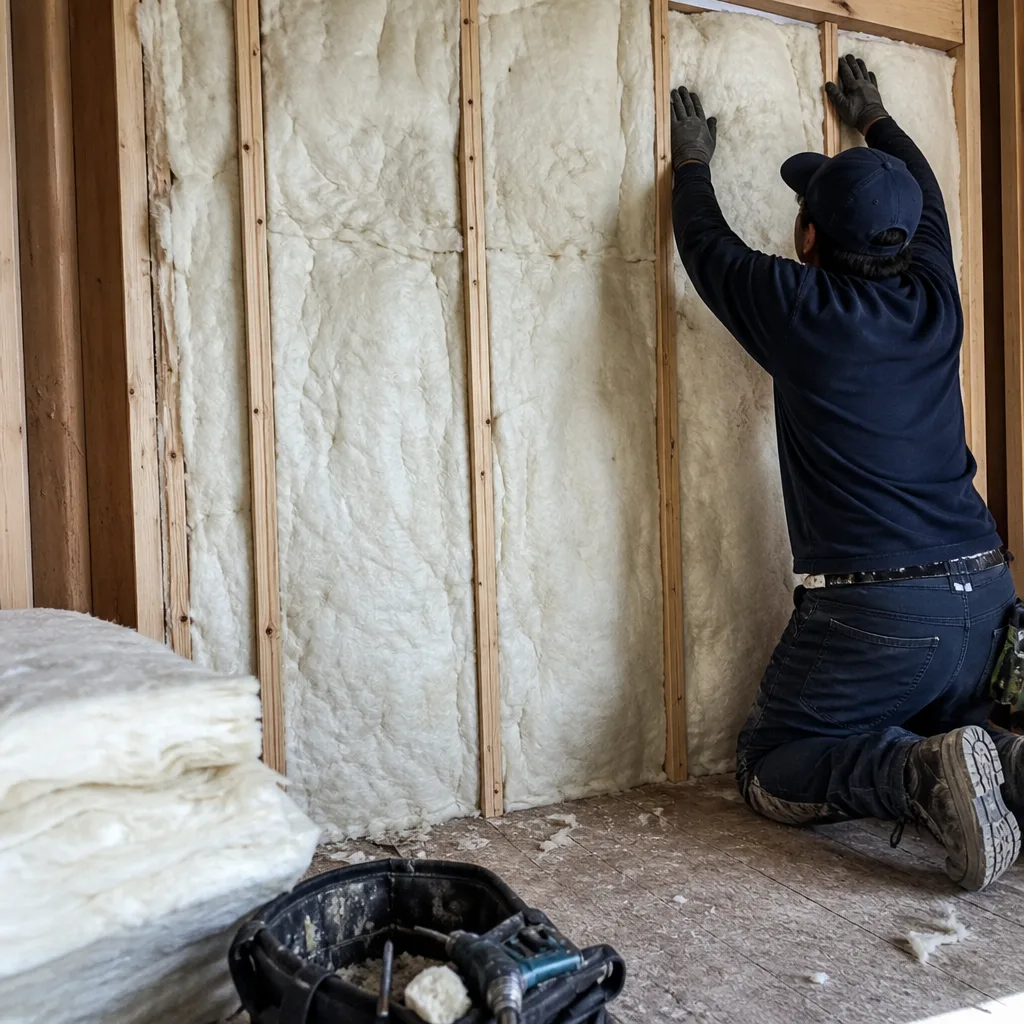 After
AfterCupertino’s Two Insulation Stress Cycles
Most insulation guides for Cupertino divide the year into four seasons and assign a task to each. That works in climates with dramatic temperature swings. Cupertino’s Mediterranean climate - warm, dry summers and mild, wet winters - creates a different pattern. The real enemies here are prolonged attic heat and concentrated moisture, not cold snaps or humidity.
The first stress cycle runs June through September. Attic temperatures in Cupertino regularly exceed 140°F on south-facing roofs. That heat doesn’t just make your air conditioner work harder; it degrades insulation materials from above while your cooled living space creates a temperature differential from below. Fiberglass batts lose loft. Spray foam can off-gas if improperly mixed during original installation. Air that leaks through ceiling penetrations carries moisture that condenses on cooler duct surfaces. By September, the damage is done - but you won’t feel it until the heating season starts and the envelope fails to hold warmth.
The second stress cycle runs November through March. Cupertino’s 15 inches of annual rainfall arrives in about 45 distinct wet days, often back-to-back. A single unsealed plumbing vent stack, a cracked flue collar, or a failed attic hatch gasket can admit water that saturates insulation for weeks without drying. Unlike snow climates where attic moisture is visible as frost, Cupertino’s mild temperatures let wet insulation stay wet - breeding mold, compressing material, and rotting roof decking from the inside out.
These cycles overlap in October and April, the two shoulder months when smart homeowners inspect for the damage the previous cycle caused and seal against the next. For more guides & resources on optimizing your home’s efficiency, explore our blog. This guide is organized around that reality.
Pre-Summer Checklist: May
May is the last practical month to address attic conditions before the heat cycle begins. Once June arrives, attic work becomes physically dangerous and less effective - sealants don’t cure properly above 100°F, and disturbed insulation releases particles into air you’re already struggling to cool.
1. Attic Ventilation Airflow Check
Proper attic ventilation in Cupertino requires a balanced system: intake at the soffits, exhaust at or near the ridge. Without continuous airflow, that 140°F attic air stagnates and radiates downward through the ceiling plane.
Check your soffit vents first. In Cupertino’s oak-dense neighborhoods like Monta Vista and Rancho Rinconada, debris accumulation is common. Look for:
- Paint or stucco blocking vent openings during prior exterior work
- Insulation that has migrated forward and blocked the vent channel
- Corroded or missing vent screens that let rodents nest (a common precursor to compression and contamination)
The fix is usually simple: clear debris, reinstall baffles to maintain a 2-inch clear channel above the insulation, and verify you can feel airflow on a breezy day. If you can’t, your exhaust vents may be insufficient or blocked.
2. HVAC Duct Inspection
In Cupertino, most homes built between 1965 and 1995 have flexible ductwork running through attic space. That ductwork sits in the hottest, most hostile environment in your house. Before the cooling season starts:
- Visually trace accessible duct runs for disconnected joints, kinked flex, or sagging sections resting on insulation (which compresses both the duct and the insulation beneath it)
- Check duct tape at connections - if it’s gray fabric tape, it’s likely failing; proper sealing requires mastic or foil-backed tape rated for temperature cycling
- Feel for temperature differential along metal trunk lines; cold spots indicate insulation damage or internal air leaks
A duct leaking 20% of its conditioned air into the attic doesn’t just waste money. It pressurizes the attic, forcing hot air through ceiling penetrations and accelerating the very heat transfer you’re trying to prevent.
3. Radiant Barrier Condition (If Present)
Many Cupertino homes, particularly in the Fairgrove and Seven Springs areas built during the 1970s energy crisis, have radiant barriers - reflective foil or roof-deck coatings that reduce radiant heat transfer. These degrade differently than mass insulation. Check for:
- Dust accumulation that reduces reflectivity
- Tears or gaps in foil applications, especially near access points where workers have traversed
- Delamination of bonded products, visible as bubbling or peeling
A degraded radiant barrier can increase ceiling heat gain by 30% or more. Replacement or cleaning is a specialized job; note conditions for your contractor.
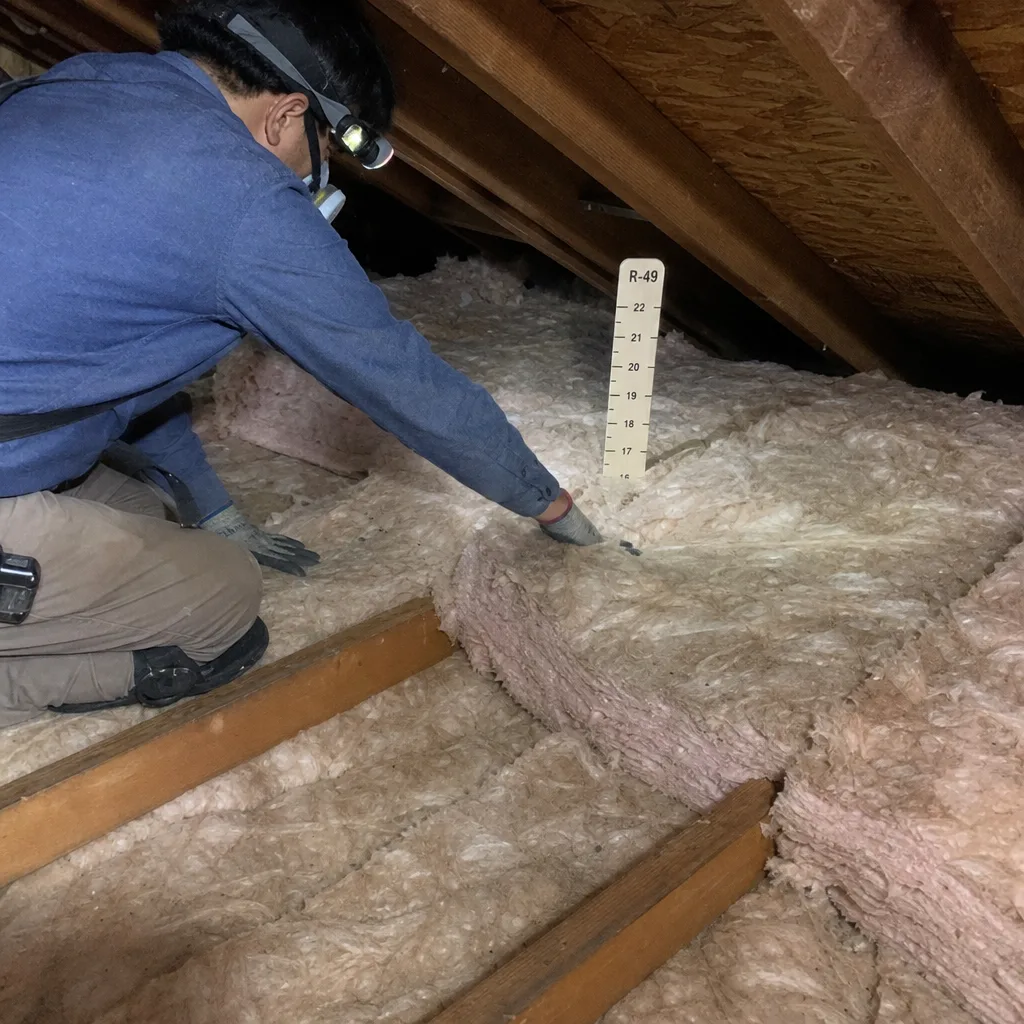
4. Settled Depth Baseline Measurement
Before summer compression begins, measure insulation depth at three representative points: center of attic, near the access hatch, and at the eaves. Record these numbers. In October, you’ll measure again to quantify how much the heat cycle cost you in R-value.
For reference, current California Title 24 standards call for R-38 to R-49 in Cupertino’s climate zone, depending on construction date and exact location. Blown fiberglass at R-38 requires roughly 12-14 inches of settled depth; cellulose, 10-12 inches. If you’re already below these depths in May, you entered the heat cycle at a deficit.
Post-Summer Checklist: October
October is the diagnostic month. The heat stress is complete, the first cool nights have revealed comfort problems, and you have roughly four weeks before rain arrives to address what you find.
1. Settled-Depth Measurement
Return to your three May measurement points. Compare depths. A loss of 1-2 inches in blown fiberglass is normal seasonal compression; more suggests material degradation, moisture weight gain, or rodent activity. In our experience across Cupertino, homes with original 1980s fiberglass in neighborhoods like Garden Gate often show 3-4 inches of settlement after a hot summer, effectively dropping from R-30 to R-19 or below.
Document with photos. If you hire a professional, this baseline supports warranty claims and helps distinguish new damage from pre-existing conditions.
2. Thermal Scan of Ceiling Plane
If your summer energy bills increased year-over-year, the ceiling plane is the first suspect. You don’t need expensive equipment for a basic check. On a cool October morning, with the heating system off overnight, run your hand across the ceiling in rooms that felt uncomfortable. Warm spots indicate thermal bridging or missing insulation. Cold spots suggest air leakage from conditioned space below.
For more precision, an inexpensive infrared thermometer ($30-50) reveals surface temperature variations. A properly insulated ceiling should vary no more than 2-3°F across its surface. Variations of 5°F or more indicate work needed.
In Cupertino’s market, professional thermal imaging runs $200-400 as a standalone service, but many insulation contractors include it in energy audit packages. The value is in documentation - a thermal image with temperature readings proves where the problem is, eliminating guesswork.
3. Roof Work Inspection
Summer is roof replacement season in Cupertino. If you or a neighbor had work done, inspect for:
- Displaced insulation where workers traversed, especially near valleys and chimneys
- New penetrations (vent pipes, solar mounts) without proper flashing or collar seals
- Debris - nails, shingle fragments, sawdust - that compresses insulation and creates moisture traps
We’ve found entire attic sections flattened by roofing crews who never knew insulation depth mattered. The damage is invisible from below until the heating bill arrives.
4. Material Degradation Assessment
October’s cooler temperatures make this the safest month to handle insulation directly. Look for:
- Discoloration in fiberglass - yellowing indicates UV exposure near vents; graying suggests dirt infiltration from air leaks; blackening is mold or rodent waste
- Crumbly texture in cellulose, which loses fire retardant and becomes dusty over time
- Off-odors from spray foam, indicating continued chemical off-gassing from improper original mix ratios
Any of these conditions warrant professional evaluation. Spray foam insulation in Cupertino requires particular care; degraded or improperly cured foam may need partial removal rather than supplementing.
Pre-Rainy Season Checklist: November
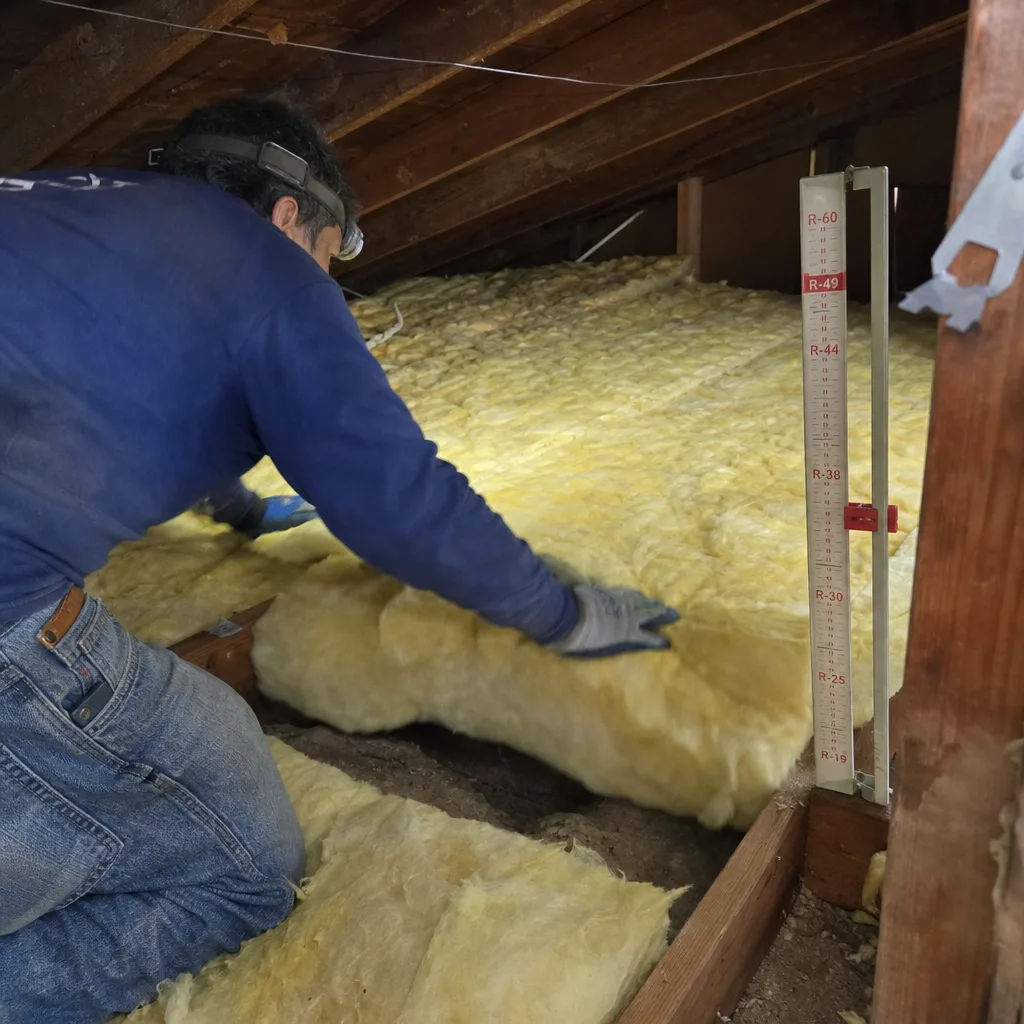
November is sealant season in Cupertino. Temperatures are moderate, humidity is rising but not yet saturated, and sealants cure properly. By December, you’re working between storms and hoping for dry windows.
1. Attic Hatch Gasket Condition
The attic hatch is the most overlooked leak in most homes. A ¼-inch gap around a standard 22×30 inch opening equals roughly 15 square inches of uncontrolled air exchange - equivalent to a 4-inch hole in your ceiling. In Cupertino’s rainy season, that gap admits moisture-laden air that condenses on cold ductwork and roof decking.
Inspect the gasket or weatherstrip. Foam tape degrades in 3-5 years; bulb gaskets last longer but compress permanently. Replace if:
- The gasket is cracked, flattened, or missing sections
- You can see light around the closed hatch from below
- The hatch doesn’t sit flush - often caused by insulation compression or frame warping
Install insulation on the hatch itself if absent; an uninsulated hatch is a thermal bridge that creates a cold spot visible on thermal imaging. Rigid foam board, properly sealed at edges, is the standard solution.
2. Pipe and Flue Collar Sealant Inspection
Every penetration through the ceiling plane is a potential water entry point. In Cupertino’s concentrated rainy season, the volume matters. A single failed collar can admit gallons over a wet winter.
Inspect:
- Plumbing vent stacks - rubber boots crack in 7-10 years; metal collars corrode where dissimilar metals contact
- Combustion flues - high-temperature sealant degrades from thermal cycling; look for gaps between flue and framing
- Electrical penetrations - conduit sleeves often lack firestop sealant, which also blocks air and moisture
- Recessed can lights - older non-IC fixtures are particularly leaky; even IC-rated units need gasketed trim
The repair is straightforward: remove degraded material, clean surfaces, and apply appropriate sealant. For flues, use high-temperature silicone rated to 500°F minimum. For general penetrations, acoustic sealant or fire-rated caulk. The key is completeness - partial sealing is often worse than none, as it channels water to the remaining gap.
3. Ridge Vent Baffle Verification
Ridge vents work only if baffles maintain an open airway. In Cupertino, we commonly find baffles blocked by:
- Insulation pushed against them during installation or subsequent work
- Wasps or rodents nesting in the protected channel
- Debris from deteriorated ridge cap shingles
Verification requires attic access and a flashlight. Look along the ridge line for daylight; if none appears, the vent is blocked. Clear carefully - damaged baffles should be replaced, not just cleared, or they’ll re-block.
This is also the time to verify that your insulation depth at the eaves doesn’t block soffit intake. The baffle must maintain a clear channel from soffit to ridge. In attic insulation in Cupertino, this detail separates functional systems from ones that look correct but fail in practice.
4. Crawl Space Preparation
Cupertino’s winter rains don’t just threaten attics. Crawl spaces in homes with raised foundations - common in older neighborhoods like Lynbrook and near Stevens Creek - face ground moisture surge as the water table rises. If your crawl space lacks encapsulation:
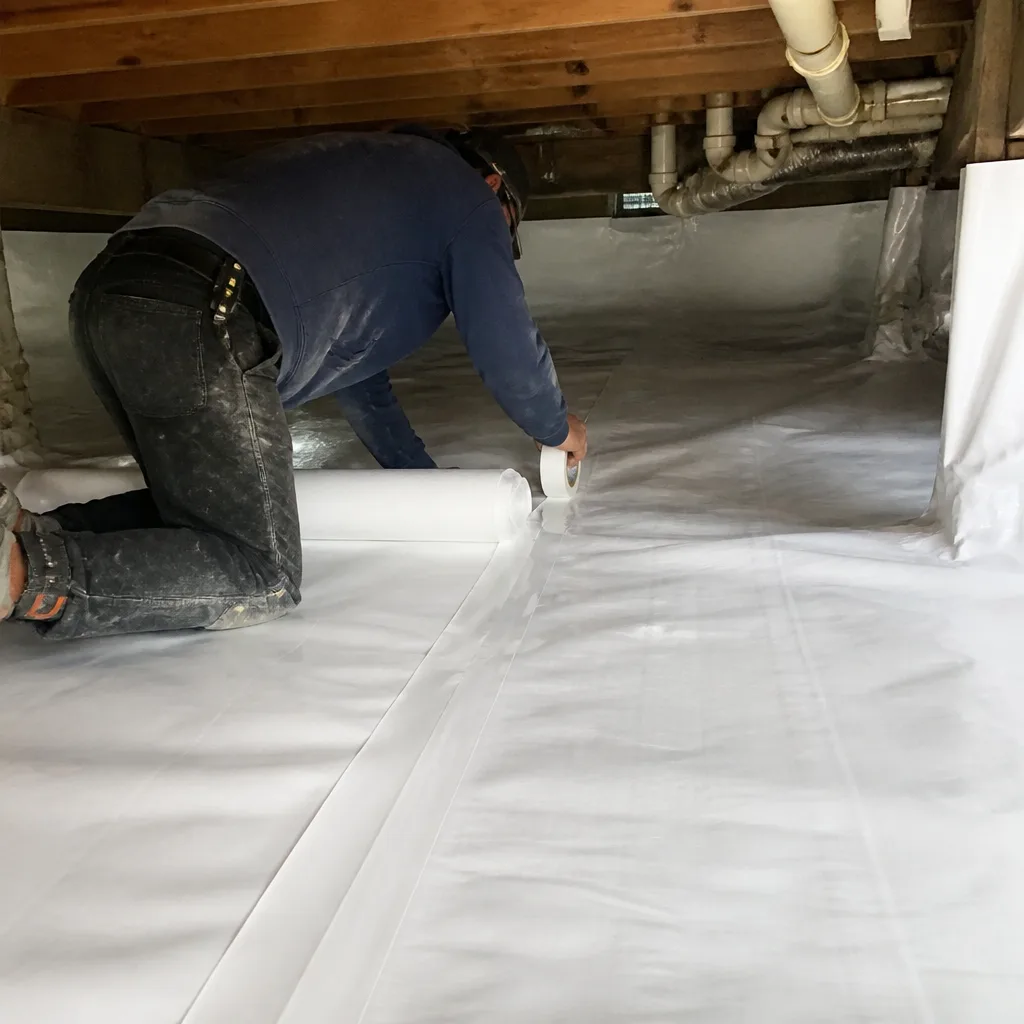
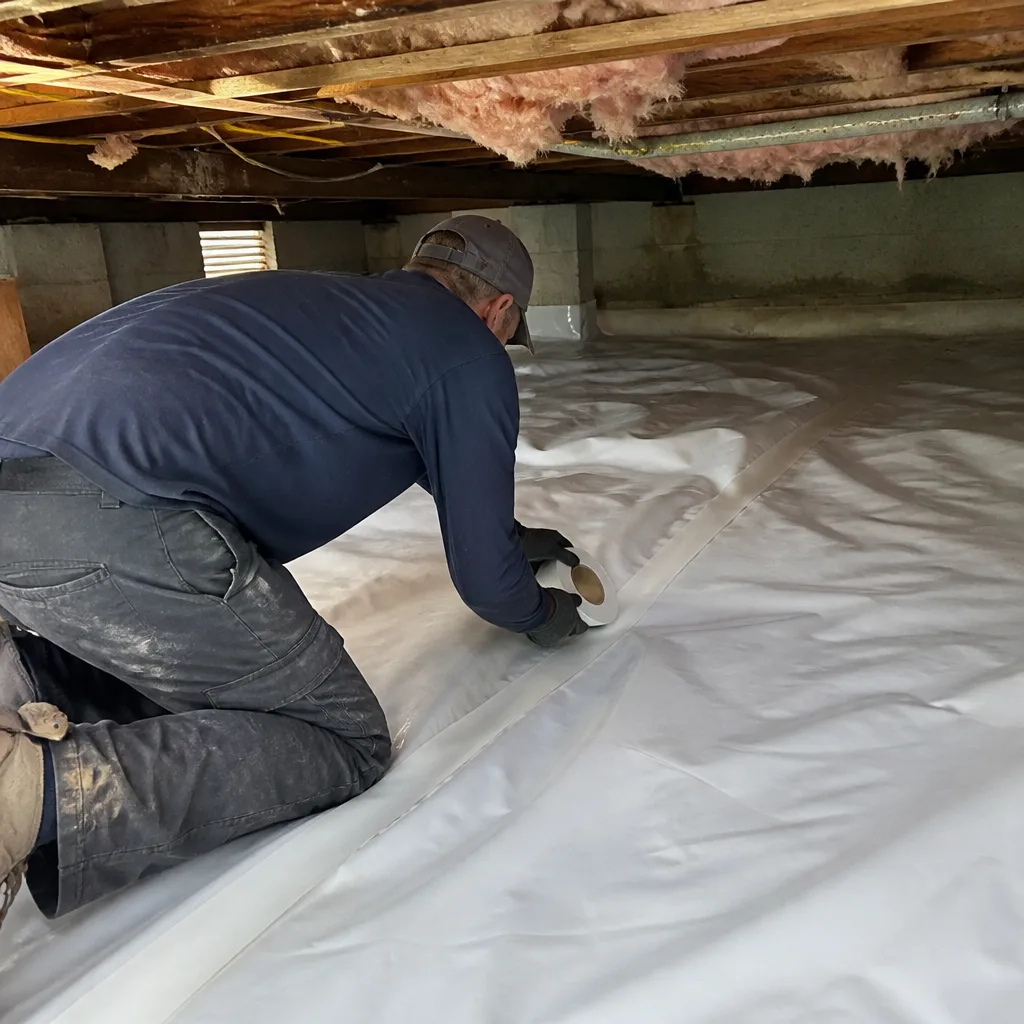
- Verify vapor barrier integrity; 6-mil polyethylene should cover 100% of ground surface with 12-inch overlaps
- Check perimeter vents; in our climate, these often admit more moisture than they exhaust during rainy periods
- Look for standing water or efflorescence on foundation walls, indicating drainage problems
Crawl space encapsulation and vapor barrier in Cupertino is increasingly standard for homes built before 1990. The investment typically pays back in 5-7 years through reduced heating load and avoided floor structure repair.
Reading Your Utility Bills Seasonally
Your PG&E bill is a diagnostic record, not just an expense. The key is separating consumption from cost - rates change, but thermodynamics don’t.
Correlating Spikes to Seasons
Pull 24 months of bills. For each month, note:
- kWh for electricity (primarily cooling in Cupertino)
- Therms for gas (primarily heating and water heating)
- Heating degree days and cooling degree days from NOAA data for San Jose (the closest reliable station)
Plot your usage against degree days. A properly sealed and insulated home shows a tight correlation: more degree days, more usage, in predictable proportion. Deviations reveal problems:
| Pattern | Likely Cause | Season to Inspect |
|---|---|---|
| Summer kWh spikes disproportionately | Attic heat gain, duct leakage, or degraded ceiling insulation | October post-summer check |
| Winter therm spikes disproportionately | Envelope air leakage, crawl space moisture, or failed window/door seals | November pre-rain check |
| Both increase year-over-year with similar weather | General insulation degradation or major envelope failure | Full energy audit with blower-door test |
| Spike follows specific month | Recent construction, roof work, or equipment change | Inspect work area for displacement or damage |
The blower-door test - a pressurization reading that shows, in one number, how much air your building envelope is losing - provides the baseline for comparison. A home built to 1970s standards might test at 3,500 CFM50; after proper air sealing and insulation, 1,500-2,000 CFM50 is achievable in Cupertino’s housing stock. Without this number, you’re guessing whether improvement is possible.
Rate Changes vs. Real Consumption
PG&E’s time-of-use rate shifts in recent years have masked real consumption changes for many Cupertino homeowners. A bill that increased 20% might reflect 15% rate increase and only 5% more consumption - or vice versa. Always normalize to kWh and therms before diagnosing your envelope.
DIY vs. Professional Maintenance
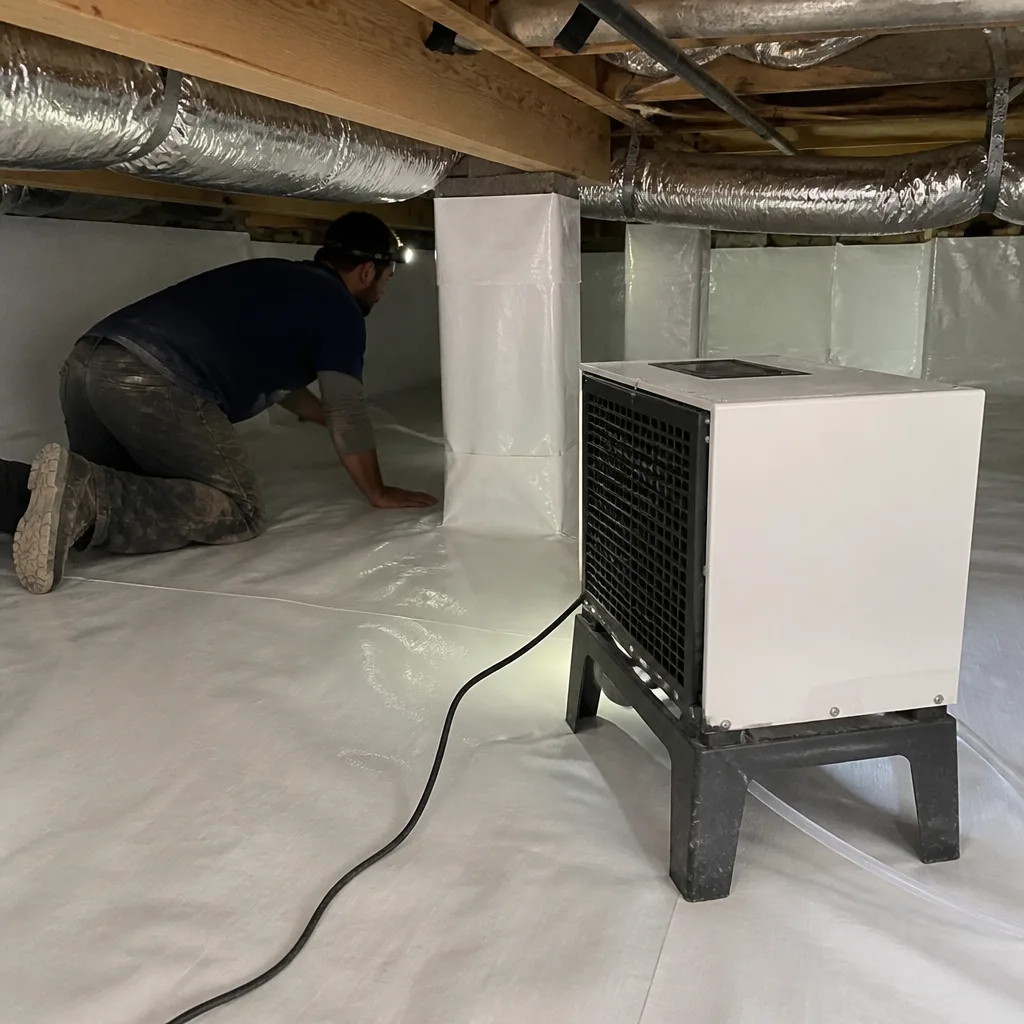
Some seasonal tasks are genuinely homeowner-appropriate. Others require disturbing insulation, which means reinstalling to rated depth - a job that demands proper equipment and technique, as covered in our DIY vs Professional Insulation: The Cupertino Homeowner’s Decision Guide.
Homeowner-Appropriate Tasks
- Visual inspection from attic access point with flashlight and camera
- Soffit vent clearing from exterior with brush and garden hose (low pressure)
- Attic hatch gasket replacement
- Surface-level debris removal near access path
- Utility bill tracking and degree-day correlation
- Basic thermal imaging with handheld IR thermometer
Tasks Requiring Professional Evaluation
- Any work requiring traversal of attic floor joists (fall risk through ceiling)
- Insulation disturbance for penetration sealing or duct repair
- Material removal or addition to restore rated R-value
- Spray foam inspection or repair
- Blower-door testing and documented air-sealing work
- Rodent contamination cleanup (health hazard; requires PPE and proper disposal)
The dividing line is disturbance. If you compress, displace, or remove insulation, you’ve created a thermal defect that must be properly restored. Blown fiberglass and cellulose require specific equipment to achieve rated density and coverage. Hand-placing material creates voids and bridges that perform worse than the original condition.
At Topside Attic Insulation Cupertino home, we publish before-and-after blower-door numbers on every applicable job so homeowners can verify the air-sealing result they paid for. A post-work test reading of 2,100 CFM50 against a pre-work 4,200 CFM50 is concrete evidence; “significantly improved efficiency” is not.
Common Mistakes to Avoid
- Blowing new insulation over old without air sealing first. This is the most common error we correct in Cupertino. Added insulation hides leaks but doesn’t stop them; conditioned air still escapes, moisture still enters, and the new material’s performance is compromised from day one. Air sealing of top plates, can lights, and penetrations must precede any insulation work.
- Ignoring soffit vent blockage after exterior painting. Cupertino’s frequent exterior updates in neighborhoods like Oak Valley and Rainbow Drive often result in painted-over vents. The attic overheats silently until the cooling bill spikes or shingles prematurely age.
- Measuring insulation at the access hatch only. The hatch area is typically most disturbed and least representative. Measure center and eaves for true depth; eaves are where wind washing and installation shortcuts most commonly reduce coverage.
- Sealing attic penetrations from below. Caulking around light fixtures or speaker grilles from the living side is cosmetic. The real leaks are at the top plate and penetration sleeve in the attic; sealing must happen there to be effective.
- Assuming spray foam is maintenance-free. Even quality products from manufacturers like Icynene or Demilec can degrade from UV exposure, mechanical damage during subsequent work, or original application errors. Annual visual inspection is still required.
- Waiting for a leak stain before inspecting. By the time drywall stains appear in Cupertino’s mild climate, insulation has been wet for weeks or months. Mold, compression, and structural damage are already established. Inspect before rain, not after visible failure.
- Using R-value alone to judge insulation condition. R-value measures resistance to conductive heat flow in a laboratory. Real performance depends on air sealing, installation quality, and absence of moisture. A theoretical R-38 with significant air leakage performs like R-15 in practice.
When to Call a Professional
Call for evaluation when: your normalized utility consumption increases year-over-year; you find moisture, mold, or rodent evidence in the attic; insulation depth has settled more than 2 inches from original; any penetration sealant is cracked or missing; or you’re considering adding insulation without prior air sealing. These conditions exceed homeowner maintenance and affect health, safety, and building durability.
Topside Attic Insulation Cupertino offers free estimates in Cupertino - call (831) 217-8521. Every estimate includes a written price before any work starts, per Haven Standard Clause 1, and a documented photo record of conditions found. On applicable jobs, we provide before-and-after blower-door readings so you can verify the performance change. The 365-Day Done Right Promise applies to all completed work.
Frequently Asked Questions
Most attic insulation maintenance and repair jobs in Cupertino run between $800 and $3,200, depending on whether the work involves air sealing only, spot insulation replacement, or full-depth restoration. A comprehensive energy audit with blower-door test, thermal imaging, and written scope typically ranges from $350 to $600, credited toward subsequent work. Call (831) 217-8521 for a written price specific to your home - estimates are free and include a documented photo record.
You can add loose-fill fiberglass or cellulose yourself if you rent the proper blowing equipment, calculate density correctly for your joist spacing, and maintain proper ventilation clearances. Most homeowners lack the equipment and experience to achieve rated coverage without voids or compression. More importantly, adding insulation without first air sealing top plates, can lights, and penetrations wastes material and masks leaks that continue degrading performance. We recommend professional evaluation before any addition.
Check for compressed or clumped texture, musty odor, dark staining on the paper backing or framing, and rust on roofing nails or duct straps. In Cupertino’s mild climate, wet insulation often dries superficially while remaining damp at the deck contact point. If you suspect moisture but can’t confirm, a professional moisture meter reading and thermal imaging will locate active wetting. Don’t wait for visible ceiling stains; by then, mold colonization and structural damage are likely.
For attic floors in Cupertino’s dry-summer, wet-winter climate, blown cellulose or fiberglass each perform well when properly installed. Cellulose has slightly better air-sealing characteristics at density and handles moisture cycling better if temporarily wetted. Fiberglass maintains loft longer in extreme attic heat. For specialized applications, Rockwool provides fire resistance and sound dampening; CertainTeed and Owens Corning manufacture reliable fiberglass products; Icynene and Demilec produce open-cell and closed-cell spray foams for specific envelope strategies. We source from all major manufacturers with no proprietary lock-in, matching material to condition rather than pushing a single product.
In Cupertino, unexplained summer cooling increases usually trace to attic heat gain exceeding your system’s capacity. Causes include: insulation settlement reducing R-value below critical threshold; duct leakage pressurizing the attic and pulling hot air through ceiling penetrations; failed radiant barrier or reflective surface degradation; or blocked ventilation creating stagnant 140°F+ conditions. The diagnostic sequence is: measure current insulation depth against prior baseline, inspect ducts for disconnections, verify soffit and ridge vent airflow, and if inconclusive, schedule a blower-door test with thermal imaging.
For Cupertino homes, we recommend a professional evaluation every 3-5 years for homes with proper initial installation, and annually for homes over 30 years old, those with prior moisture events, or those with any spray foam application. The inspection should include blower-door testing on applicable jobs, thermal imaging, depth measurement at multiple points, and documented photo record. Under Haven Standard, we provide written findings with every evaluation, not verbal summaries that change with recall.
The Bottom Line
Cupertino’s climate creates two distinct stress cycles for your home’s insulation: summer attic heat that degrades materials and drives moisture through the envelope, and concentrated winter rain that exploits every unsealed penetration. Organize your maintenance around these real conditions, not arbitrary quarters. In May, verify ventilation and duct integrity before heat peaks. In October, measure what summer cost you in settled depth and thermal performance. In November, seal every penetration before rain concentrates. Track your utility bills against degree days to catch problems before they become stains on the ceiling. And remember that insulation without air sealing is incomplete - the sequence matters, and the documentation proves what you got.
Written by Wes Okafor, Owner at Topside Attic Insulation Cupertino, serving Cupertino since 2016.