
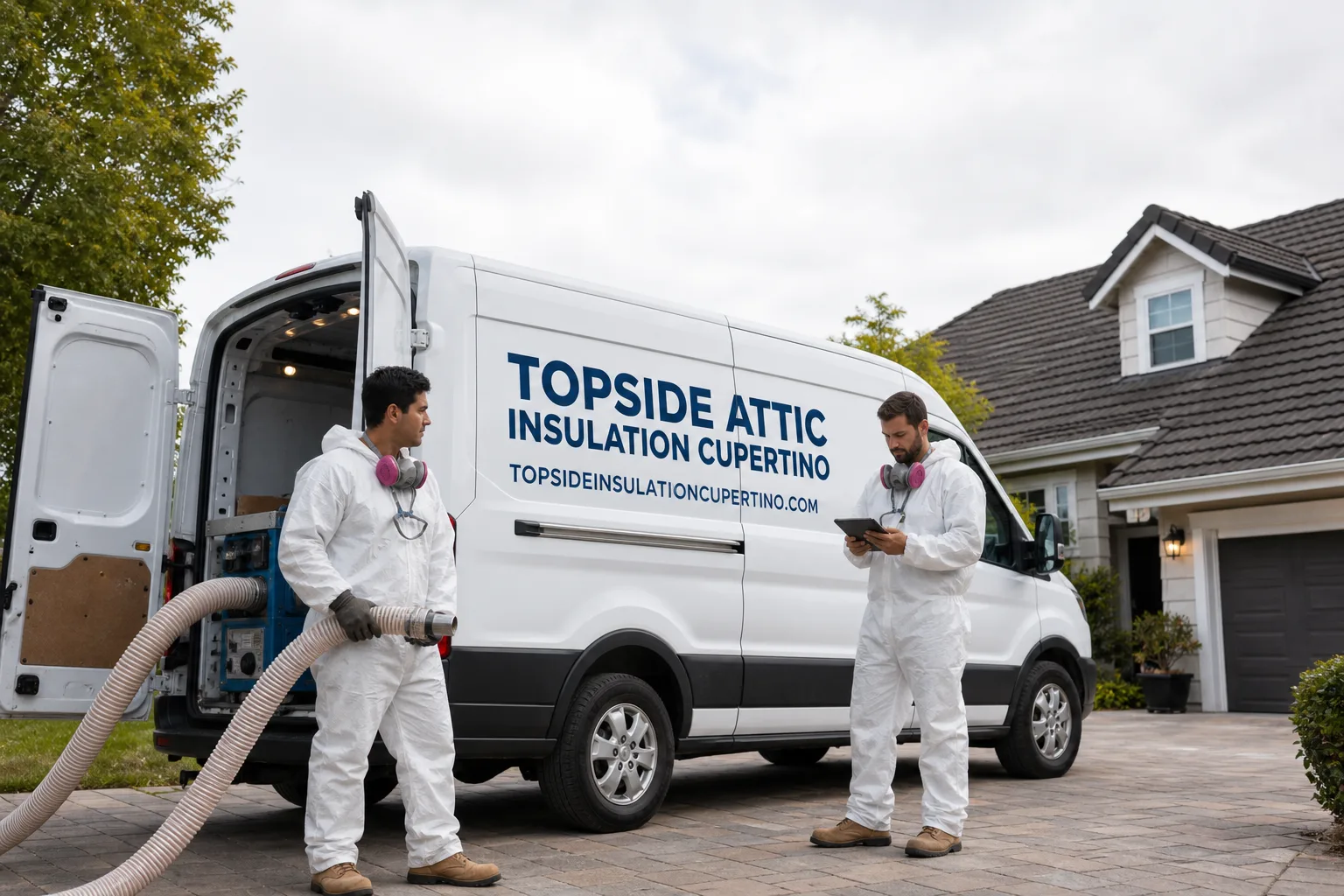
Trusted Spray Foam Insulation for Cupertino Homeowners
Spray foam insulation in Cupertino typically costs $1.80-$3.50 per board foot installed, so how much Spray Foam Insulation costs varies by project specifics, with most whole-attic jobs running $3,200-$7,800 depending on open-cell versus closed-cell choice and accessibility. Most projects we complete in Cupertino are finished in a single day, and we can often schedule within 48 hours of your call to (831) 217-8521. Since 2016, we’ve sealed and insulated over 9,000 homes across Santa Clara County, and every one started with a written price before any work began.
Cupertino’s mild Mediterranean climate still delivers real thermal swings, 35°F winter mornings to 85°F summer afternoons, and the older ranch-style homes in neighborhoods like Rancho Rinconada and Monta Vista were built with minimal air sealing. Spray foam fills irregular cavities and bonds to framing, creating both insulation and an air barrier in one application. Unlike batt insulation, it doesn’t sag, settle, or leave gaps at electrical boxes and top plates where conditioned air escapes. We’ve measured blower-door results in Spray Foam Insulation in Cupertino homes where spray foam reduced air leakage by 40-60% compared to the original fiberglass installation.
Our crews are background-checked and uniformed, and a live person answers calls 24/7. You’ll get a named technician, a text when they’re en route, and a Documented Photo Record when the job is done. Under Haven Standard Clause 1, the written price and scope arrive before anyone lifts a tool.
What Our Spray Foam Insulation Service Includes
Open-Cell Spray Foam
Open-cell spray foam is a lightweight, expanding insulation with a density of about 0.5 pounds per cubic foot, R-value near 3.6 per inch, and a permeable structure that allows moisture vapor to pass through. In Cupertino’s climate, we often specify open-cell for attic applications where roof deck ventilation is already adequate and moisture management isn’t a primary concern. It’s the more economical spray option, and it deadens sound transmission through shared walls, a real benefit in the tighter lot configurations you’ll find off Stevens Creek Boulevard or near De Anza College. We source open-cell formulations from Icynene and Demilec, installing them only after air sealing of top plates, can lights, and penetrations is complete.
Closed-Cell Spray Foam
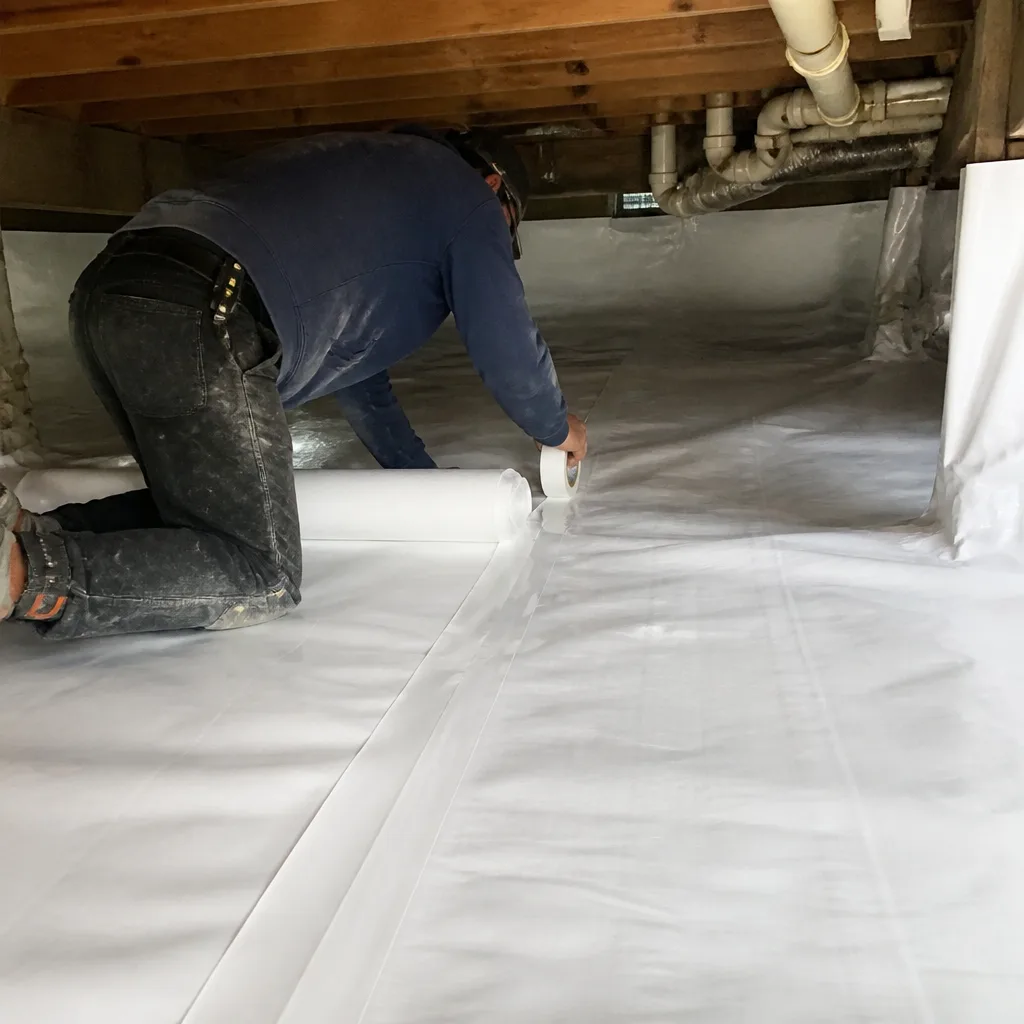
Closed-cell spray foam runs 2.0 pounds per cubic foot, delivers R-6.5 per inch, and forms a vapor barrier at thicknesses above 1.5 inches, making it the choice for moisture-critical applications. In Cupertino crawl spaces and garage ceiling retrofits, where ground moisture or vehicle exhaust fumes are factors, closed-cell creates a monolithic seal that open-cell cannot match. We’ve applied closed-cell Demilec products in homes near Stevens Creek where seasonal creek drainage created humidity issues that batt insulation simply absorbed. The higher material cost is offset by thinner required thickness to hit target R-values, and the structural rigidity it adds to roof decks is measurable.
Rim Joist Spray Foam
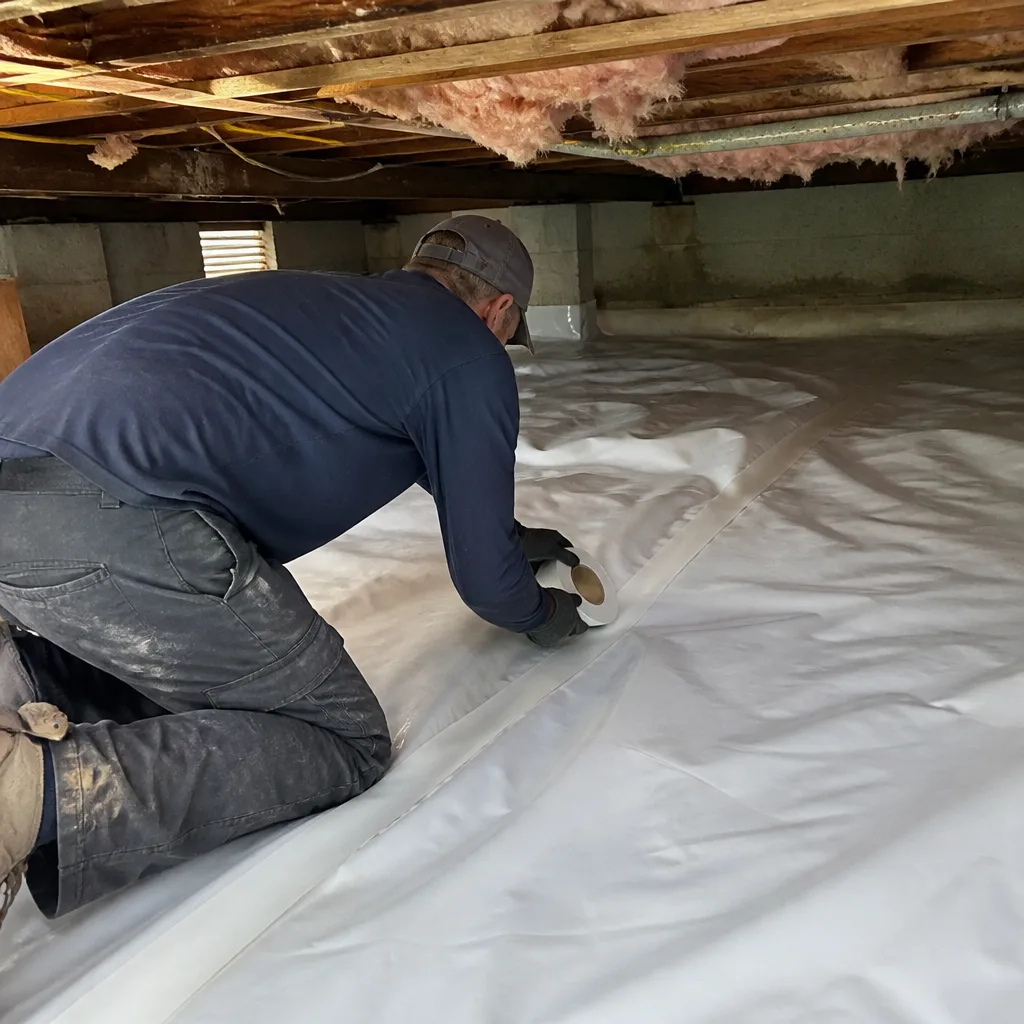
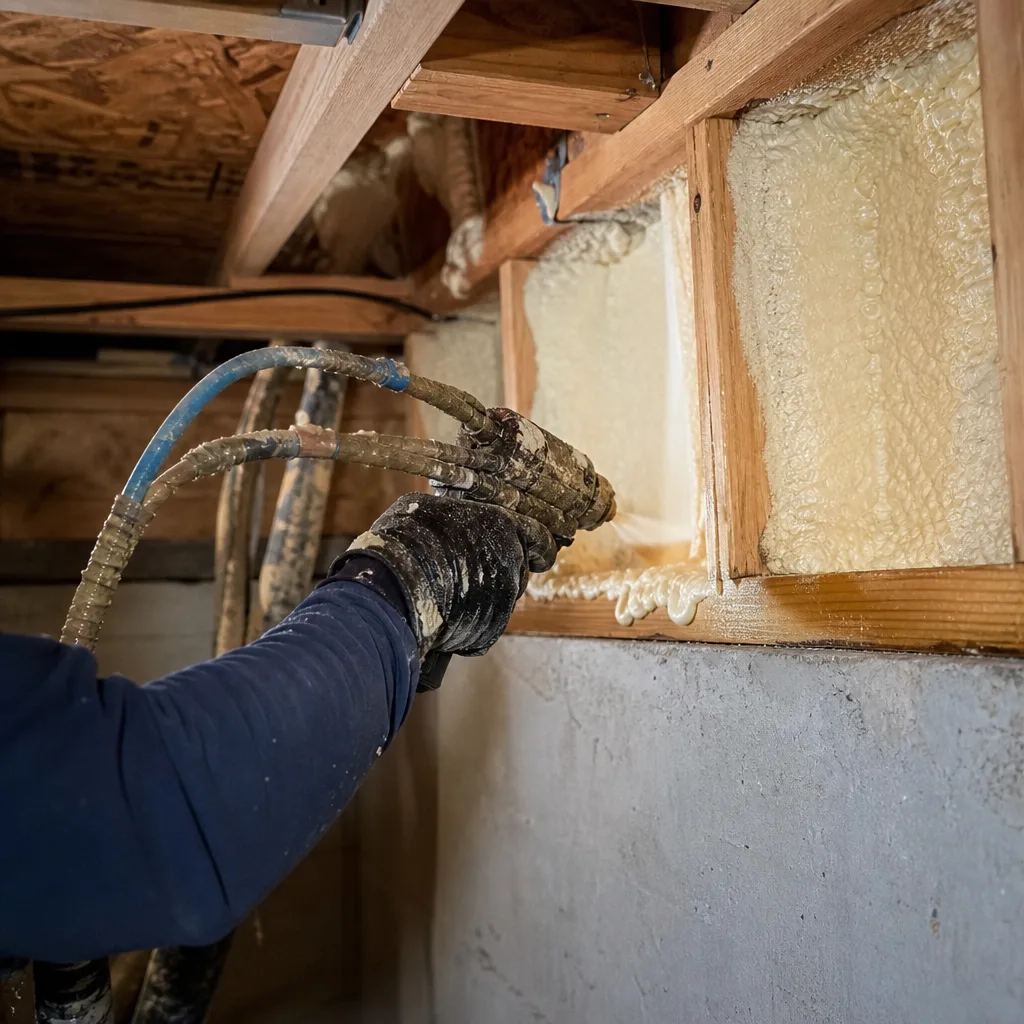
The rim joist, where your foundation walls meet the first floor framing, is the single leakiest construction joint in most houses, and it’s almost never insulated well in Cupertino homes built before 1990. Cold air pours through this band in winter, and summer humidity condenses on the cool concrete. We spray closed-cell foam directly to rim joist cavities after removing any degraded fiberglass that was stuffed there originally. In a 2023 job on a Eichler-influenced home near Portal Park, our blower-door test showed 380 CFM50 of leakage attributable to rim joist gaps alone, before we sealed them. After closed-cell application, that path was effectively eliminated.
Garage Ceiling Spray Foam
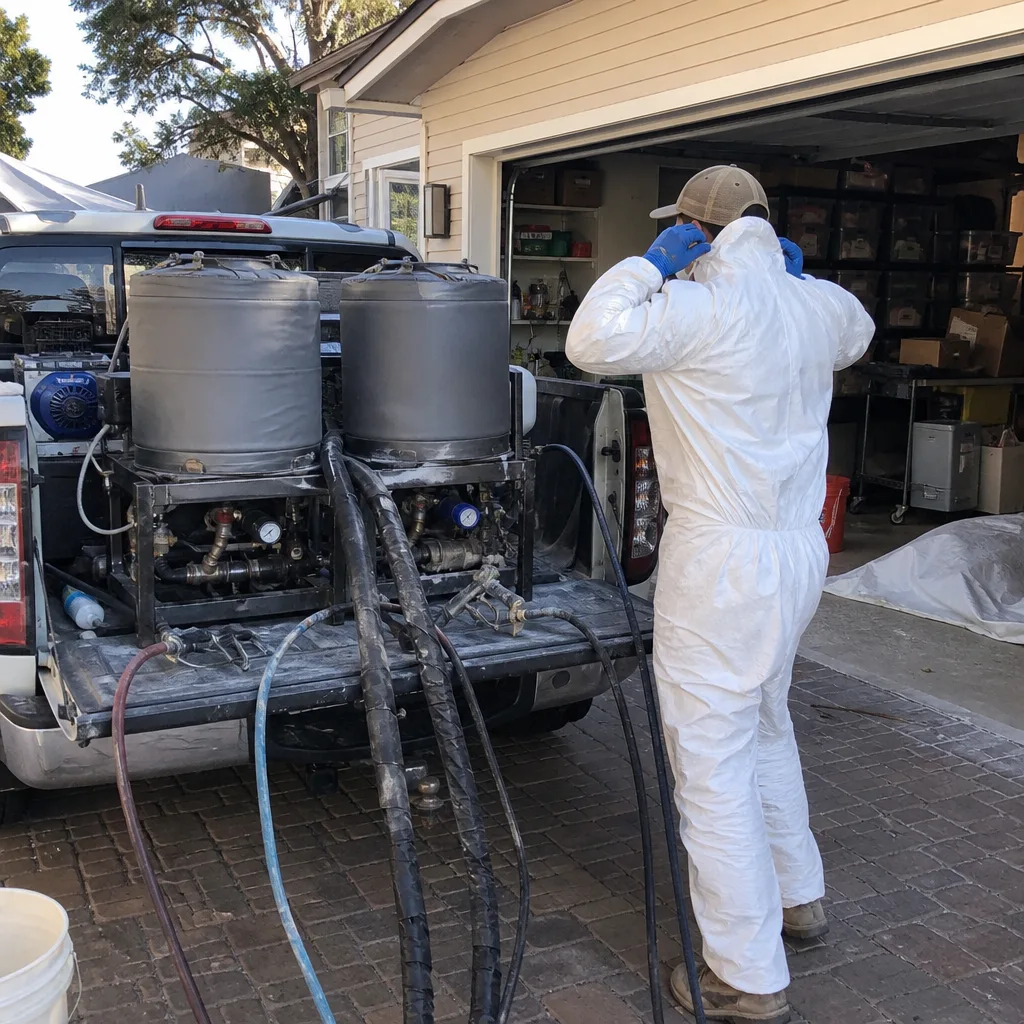
Garage ceiling insulation matters when the space above is conditioned living area, bedrooms or bonus rooms that stay uncomfortably cold in Cupertino’s winter mornings. We spray foam to the garage ceiling deck, sealing around duct penetrations and light fixtures that are typically unsealed in original construction. The foam bonds to irregular surfaces where batts fall away, and it eliminates the thermal bypass at the garage-to-house wall top plate. We’ve completed garage ceiling work in the Oak Valley neighborhood and along McClellan Road where attached garages sit directly beneath master suites, and we also handle Saratoga Spray Foam Insulation projects.
Spray Foam Roof Deck
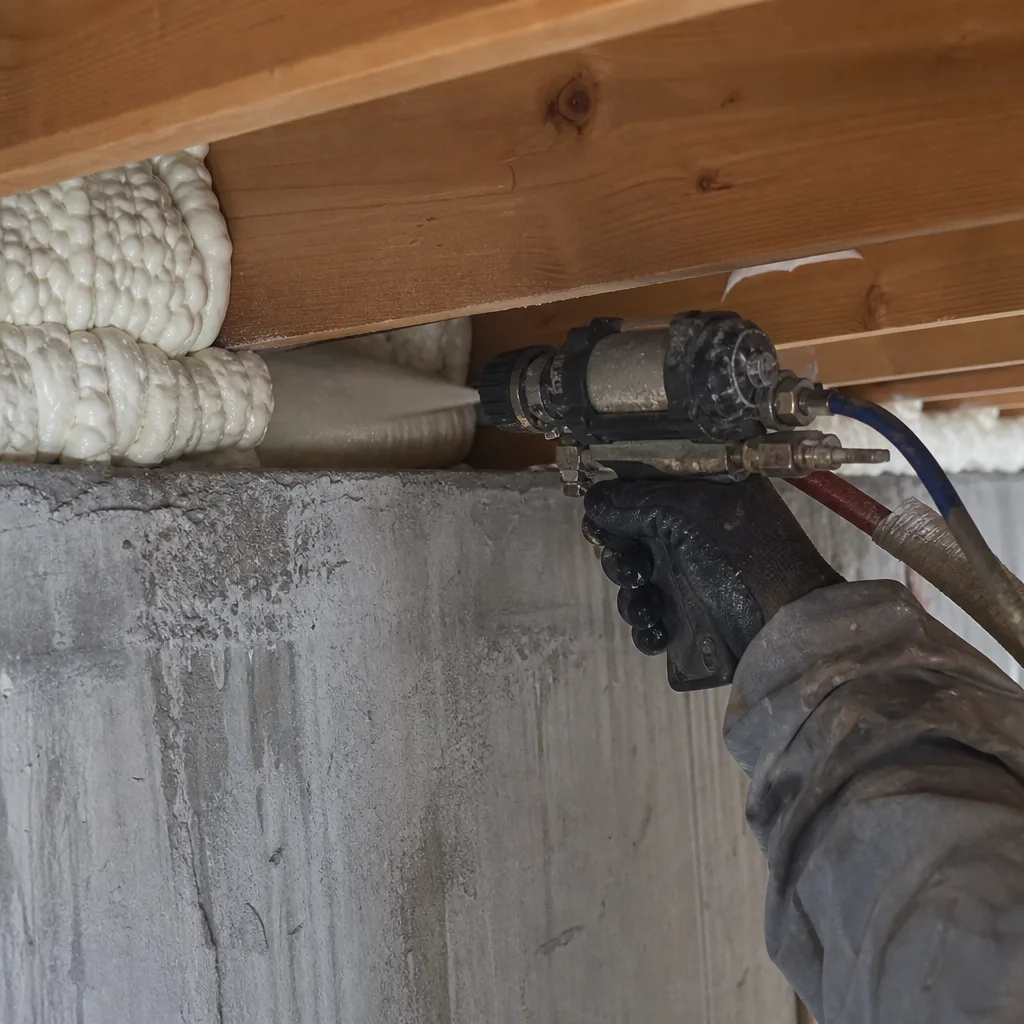
Spray foam applied directly to the underside of the roof deck creates an unvented, conditioned attic, converting what was a hostile space into usable square footage or simply protecting HVAC equipment and ductwork from temperature extremes. In Cupertino’s older neighborhoods, where ductwork was often routed through vented attics, this approach can improve delivered efficiency by 15-25% by eliminating the thermal penalty of attic-duct losses. We use open-cell for most roof deck applications in this climate, with vapor-permeable assembly details that meet California Title 24 requirements. Every roof deck job includes before-and-after blower-door numbers so you can verify the air-sealing result.
What happens when you call
- 1
A real person answersNo phone trees - you reach a local pro.
- 2
You get an upfront price rangeHonest numbers before anyone is dispatched.
- 3
A background-checked tech heads outLicensed & insured, dispatched right away.
- 4
You approve before work beginsNothing starts until you say go.
Brands We Service for Spray Foam Insulation
We work with Icynene’s open-cell formulations for attic and roof deck applications where vapor permeability and sound attenuation are priorities. Their LD-C-50 product has been our specification for hundreds of Cupertino-area jobs since 2018, and we maintain current installer certification for warranty eligibility. Demilec’s closed-cell Heatlok XT series is our standard for crawl spaces, rim joists, and garage ceilings where vapor control and compressive strength matter, and we’ve applied it in conditions from standard residential retrofits to small commercial envelope work in Santa Clara County.
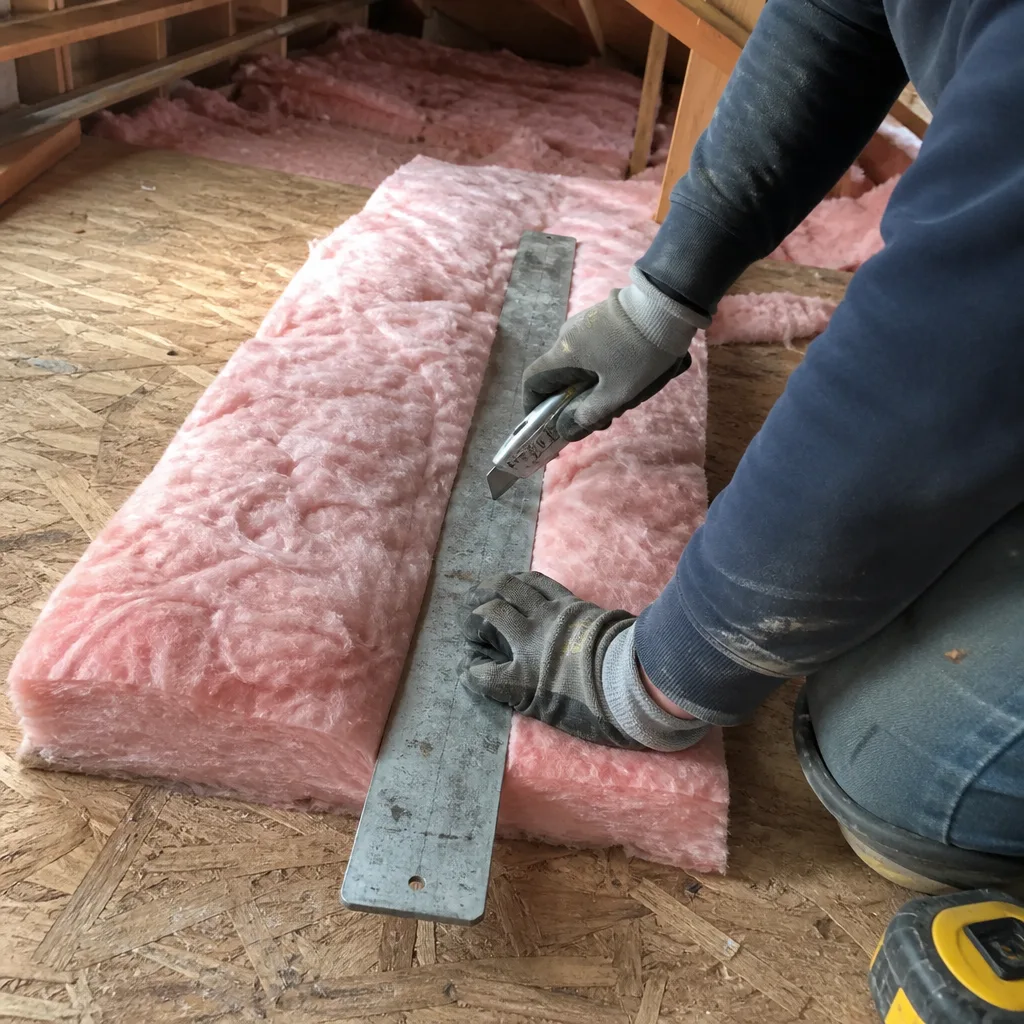
CertainTeed’s IntelliFoam products round out our specifications for homeowners who prefer a building-materials brand with long California distribution history. We don’t carry proprietary product lock-in, we specify what performs for your specific assembly condition. Whether you have an existing specification from an architect or energy consultant, or you’re starting from a blank slate, we’ll match material to application and document the product lot numbers in your job record. Rockwool mineral wool is available from our inventory for hybrid assemblies where spray foam and batt combinations make sense.
 Before
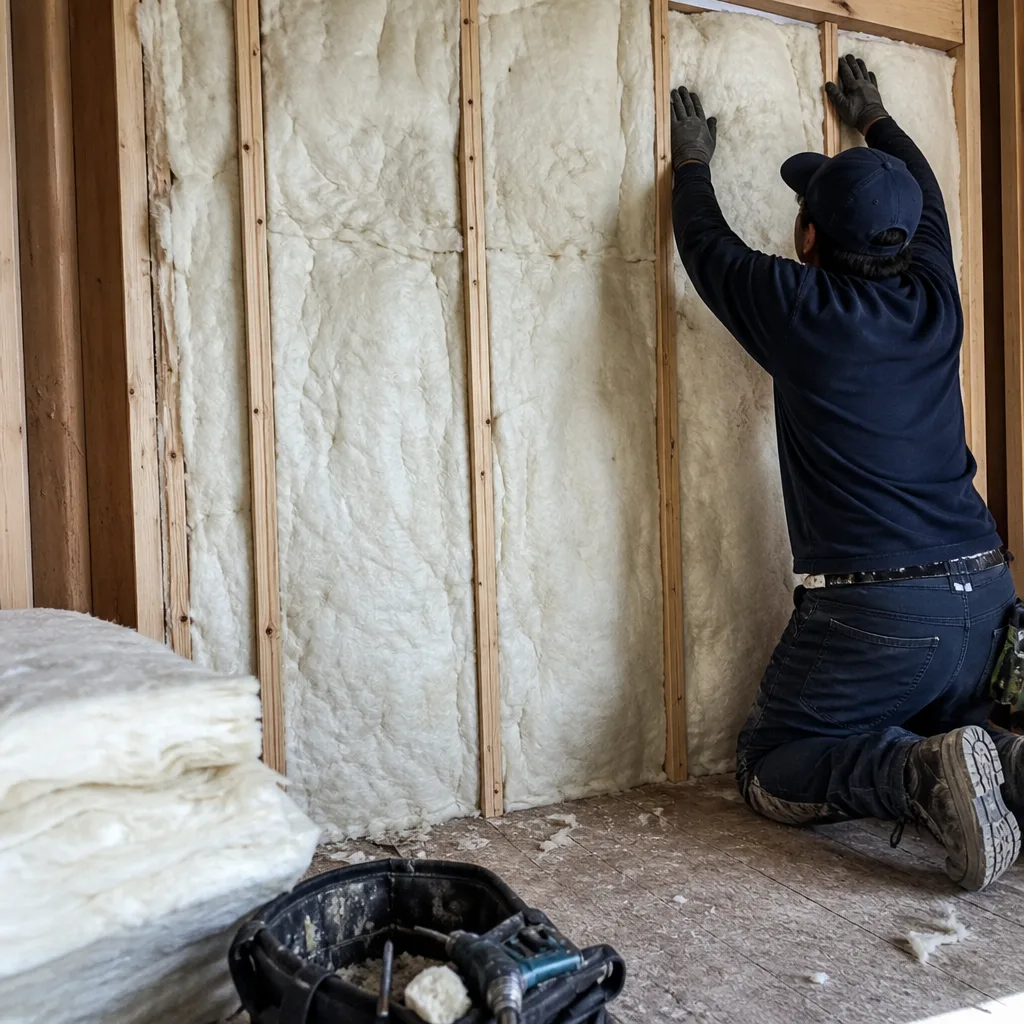 After
AfterSigns You Need Spray Foam Insulation Right Now
- Rooms that won’t hold temperature despite your HVAC running constantly. In Cupertino, this often shows up as a south-facing bedroom that overheats by 2 PM while the north side of the house stays comfortable. The problem is usually air leakage through poorly sealed attic floor penetrations combined with insulation that has settled or was never full-thickness to begin with. Spray foam addresses both issues simultaneously.
- Dust accumulation around ceiling light fixtures and electrical outlets. That fine gray film is conditioned air carrying attic particulates through gaps in the thermal boundary. We’ve traced this pattern in homes throughout Cupertino’s Rancho Rinconada and Fairgrove neighborhoods, where original construction left top plates and wire penetrations unsealed. Spray foam’s expansion characteristics seal these irregular paths that caulk alone cannot reach.
- Ice dam formation or concentrated snow melt on your roof in winter. Even in Cupertino’s mild climate, rare freeze events reveal heat loss patterns. Warm air escaping through attic bypasses melts roof snow unevenly, and the refreeze at eaves forces water back under shingles. Spray foam to the roof deck or comprehensive attic floor sealing eliminates the thermal bridging that causes this.
- Musty odors from crawl space or garage areas below living space. Ground moisture and vehicle exhaust infiltration through unsealed rim joists and garage ceilings create indoor air quality issues that HVAC filtration cannot resolve. Closed-cell spray foam forms a vapor barrier and air seal in one application, stopping the moisture drive and pollutant migration at the source.
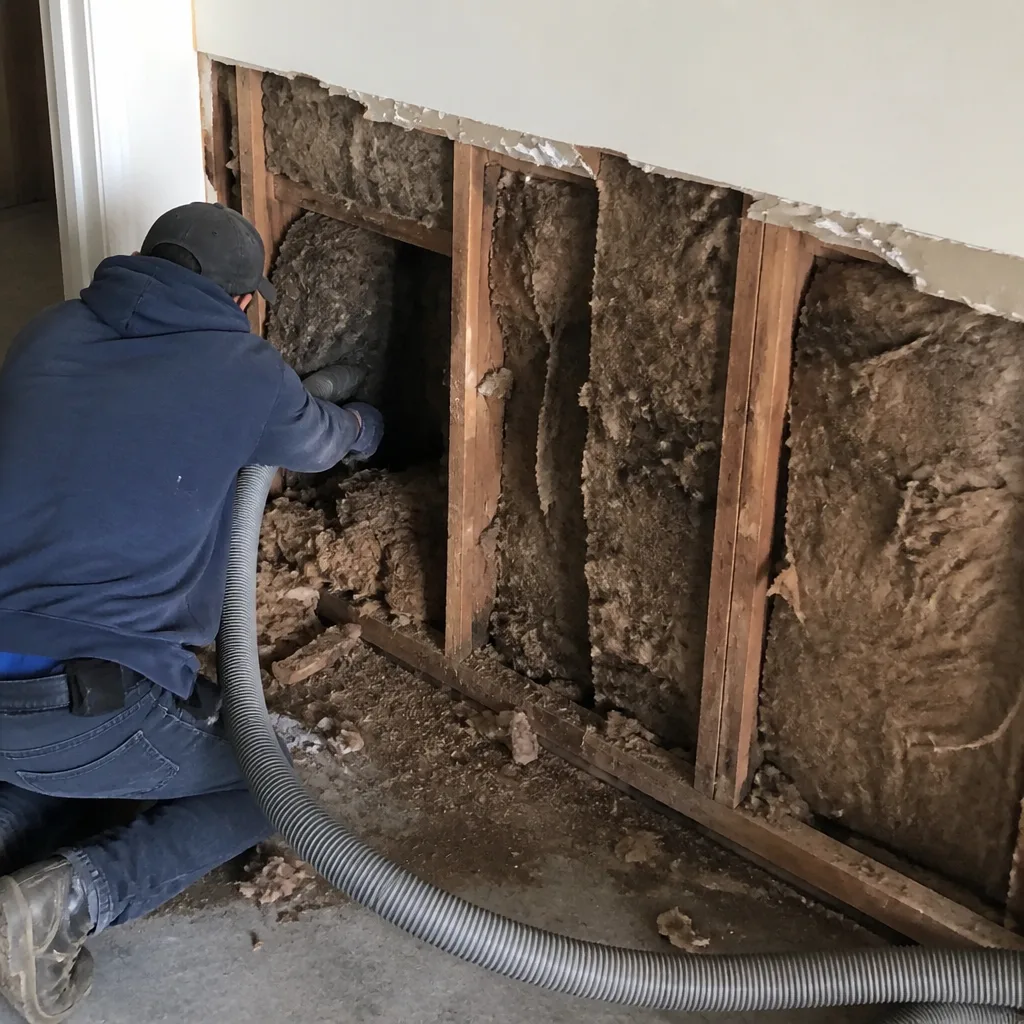
- Energy bills that climbed without rate increases or equipment changes. Pacific Gas and Electric rates have risen, but if your usage pattern hasn’t shifted and bills are up 20% or more, envelope degradation is likely. Insulation settles, pests disturb batts, and original air sealing dries out or was never complete. A blower-door test, which we perform as part of every spray foam evaluation, quantifies exactly how much conditioned air your home is losing.
Our Spray Foam Insulation Process - Step by Step
- 1
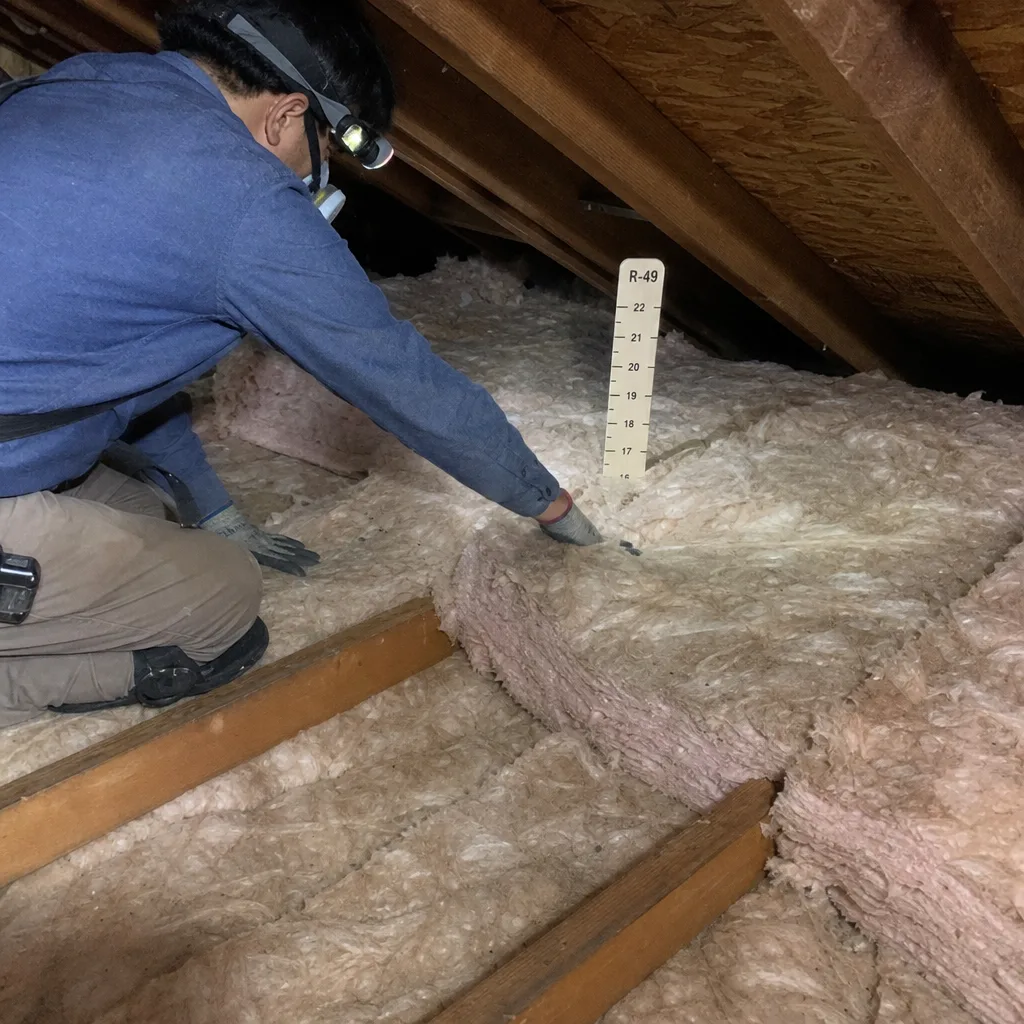
On-site evaluation and blower-door test. We arrive with a written appointment time, a named technician, and a text when we’re en route. The technician walks the attic, crawl space, or target area with you, then runs a blower-door test, a pressurization reading that shows, in one number, how much air your building envelope is losing. In Cupertino homes built 1955-1985, we typically see 3,500-6,000 CFM50 before any work begins.
- 2
Written scope, written price, written warranty. Under Haven Standard Clause 1, you receive these three documents before any work starts. The scope specifies material type, thickness, and application areas. The price is flat, not time-and-materials. The warranty covers both installation and material performance for 365 days. We also offer a Free Second Opinion on any competing written estimate, bring us another contractor’s scope and we’ll review it with you.
- 3
Air sealing before insulation. This is the step most contractors skip or upsell. We seal top plates, can lights, plumbing and electrical penetrations, and chimney chases with appropriate materials, fire-rated where code requires. The blower-door test is repeated after sealing to quantify the improvement. Only when the air barrier is intact do we begin spray foam application.
- 4
Spray foam installation with continuous quality checks. Our crew monitors substrate temperature, ambient humidity, and material ratio in real time. Spray foam is a chemical reaction, and off-ratio application causes odor issues and performance failure that may not appear for months. We document pass thickness with depth gauges and photograph complete coverage before the material skins over.
- 5
Final blower-door test, photo documentation, and walkthrough. On applicable jobs, we run the blower-door again and publish the before-and-after numbers in your job record. You receive a Documented Photo Record showing application coverage, thickness verification, and any areas of note. The technician reviews the documentation with you, confirms your satisfaction, and leaves the written warranty in hand.
How Much Does Spray Foam Insulation Cost in Cupertino?
A typical open-cell attic application in a Cupertino single-family home runs $3,200-$5,800 for 1,200-2,000 square feet of attic floor at R-38 equivalent thickness. Closed-cell crawl space or rim joist work generally falls in the $2,800-$4,500 range for the same footprint, driven by higher material cost per board foot. Roof deck applications, which convert a vented attic to conditioned space, typically range $5,500-$7,800 for open-cell at full thickness, with closed-cell specifications running higher due to material density and labor pace.
Several factors move these ranges. Accessibility matters: attics with limited hatch size, low headroom, or extensive stored belongings require more labor time. Existing insulation removal adds $1.00-$2.50 per square foot depending on material type and contamination level. Roof deck work in homes with complex geometry, multiple dormers, or cathedral sections increases board footage and cutting detail. And substrate condition affects prep, we won’t spray over active roof leaks or deteriorated sheathing without repair.
To avoid overpaying, get a written scope that specifies material brand, density, and target thickness, not just “spray foam.” Vague specifications allow contractors to substitute lower-density products or apply thin passes that don’t achieve rated R-value. Our written price includes all of this detail before any work starts, and our Free Second Opinion service lets you verify competing quotes against a documented standard. Every estimate we provide in Cupertino is free and carries no obligation.
Spray Foam Insulation Near Cupertino - Our Service Area
We complete spray foam insulation projects throughout Cupertino and neighboring communities, typically arriving within 30-45 minutes of dispatch to Saratoga, Los Altos, Sunnyvale, Santa Clara, Campbell, Mountain View, Los Altos Hills, Palo Alto, Los Gatos, Portola Valley, East Palo Alto, and the broader Santa Clara Valley. Response to Cupertino addresses is same-day for evaluations, and most scheduled installations begin within 48-72 hours of written scope approval. Whether your home is in the Monta Vista hills or the flatter lots near Vallco, we travel with full material inventory and application equipment, no return trips for forgotten components.
Serving Cupertino, CA - Our Local Coverage Area
We’re based in the Cupertino area and know this community well. Use the map below to see our service coverage - if you’re nearby, we can almost certainly help.
Frequently Asked Questions - Spray Foam Insulation in Cupertino
Spray foam insulation is a two-component chemical mixture that expands on application to fill cavities, bond to substrates, and cure into a rigid or semi-rigid cellular structure. Unlike fiberglass batts, which are cut and friction-fit, spray foam creates a monolithic air barrier and thermal barrier simultaneously; unlike blown-in cellulose or fiberglass, it doesn’t settle or shift over time. In Cupertino’s varied housing stock, from 1960s ranches to newer infill construction, this adaptability eliminates the gaps and compression points that degrade other insulation types.
Most residential spray foam projects in Cupertino are completed in one day, with larger whole-home applications or complex roof deck work occasionally extending to a second day. The material requires 24 hours to fully cure before occupancy of the treated space is recommended, so we schedule accordingly if the area is actively used. Call (831) 217-8521 for scheduling, most Cupertino appointments are available within 48 hours, and we also schedule Spray Foam Insulation - Sunnyvale visits with the same responsiveness.
Open-cell attic work typically runs $3,200-$5,800, closed-cell crawl space or rim joist applications $2,800-$4,500, and roof deck conversions $5,500-$7,800, with final price depending on square footage, accessibility, and whether existing insulation removal is required. We provide a written, flat price before any work starts, and our Free Second Opinion service helps you evaluate competing quotes against a documented scope. Call (831) 217-8521 for a free estimate with no obligation.
Yes, we are certified installers for both Icynene open-cell and Demilec closed-cell formulations, and we maintain current training for warranty eligibility on both product lines. We’ve applied these materials in hundreds of Santa Clara County homes since 2016. Whether your project specifies one of these brands or you’re open to material selection based on application requirements, we can source and install appropriately.
We do not classify insulation as an emergency trade, but we do offer same-day evaluation appointments throughout Cupertino for situations where thermal failure has created urgent comfort or safety concerns, such as elderly residents in unheated conditions or post-remediation situations where insulation was removed due to contamination. A live person answers calls 24/7, and we’ll dispatch for next-available evaluation. Call (831) 217-8521 to discuss urgency and scheduling.
All completed spray foam insulation is backed by our 365-Day Done Right Promise, if it’s not done right, we make it right. The written warranty delivered before work starts specifies material performance, installation quality, and our remediation commitment. Under Haven Standard, this documentation is not available on request, it is mandatory and provided before any tool is lifted.
Clear stored items from the work area, provide attic or crawl space access, and ensure pets and occupants are out of the home during application and the 24-hour cure period that follows. Our crew covers floors and finishes with protection appropriate to the access path, and we photograph pre-existing conditions as part of our Documented Photo Record. We’ll specify any additional preparation, such as HVAC isolation or smoke detector management, in the written scope you receive before work begins.
Schedule Your Spray Foam Insulation Service in Cupertino Today
Call (831) 217-8521 to speak with a live person, 24/7, and schedule your free evaluation. We’ll run a blower-door test, deliver a written price and scope before any work starts, and leave you with documented proof of the performance change you paid for. Under Haven Standard since 2016, every job begins with clarity and ends with evidence.
Written by Wes Okafor, Owner at Envelope Insulation Co., serving Cupertino since 2016.