
Last updated September 24, 2026
Insulation Cost Breakdown: The Cupertino Homeowner’s Reference for 2026
A $2,200 attic insulation quote and a $5,400 quote for the same Cupertino house can both be accurate. The first might cover blown-in fiberglass only. The second includes air sealing of top plates and can lights, Title 24 permit and HERS verification, and documented blower-door proof that the work performed. They are not the same job. In this guide, we break down what each cost category actually pays for in the Cupertino market so you can compare bids line by line, spot scope reductions before you sign, and understand what fair pricing looks like for your specific home. For Insulation Warning Signs: A Cupertino Homeowner’s Reference Guide, see our companion resource.
Quick Answer
Most Cupertino attic insulation projects in 2026 range from $2,800 to $7,500 for a typical 1,200-2,000 square foot home, with the final price determined by three variables: material type (blown fiberglass, blown cellulose, or open-cell spray foam), whether air sealing is included as a prerequisite, and whether permit and HERS verification are handled by the contractor. The lowest legitimate bids in this market start around $1,800 for material-only blown-in work on a pre-sealed attic; comprehensive jobs with spray foam, full air sealing, and documentation run toward the upper end.
Table of Contents
- Material Costs per R-Value: What Each Insulation Type Actually Costs in Cupertino
- Air Sealing Labor: The Line Item Most Quotes Hide or Skip
- Permits, Title 24, and HERS Verification in Cupertino
- How to Read a Quote for Hidden Scope Reductions
- The Cost-per-BTU-Saved Calculation for Santa Clara Valley
- Cupertino Neighborhood Factors That Move the Price
- Common Mistakes to Avoid
- When to Call a Professional
- Frequently Asked Questions
- The Bottom Line
 Before
 After
AfterMaterial Costs per R-Value: What Each Insulation Type Actually Costs in Cupertino
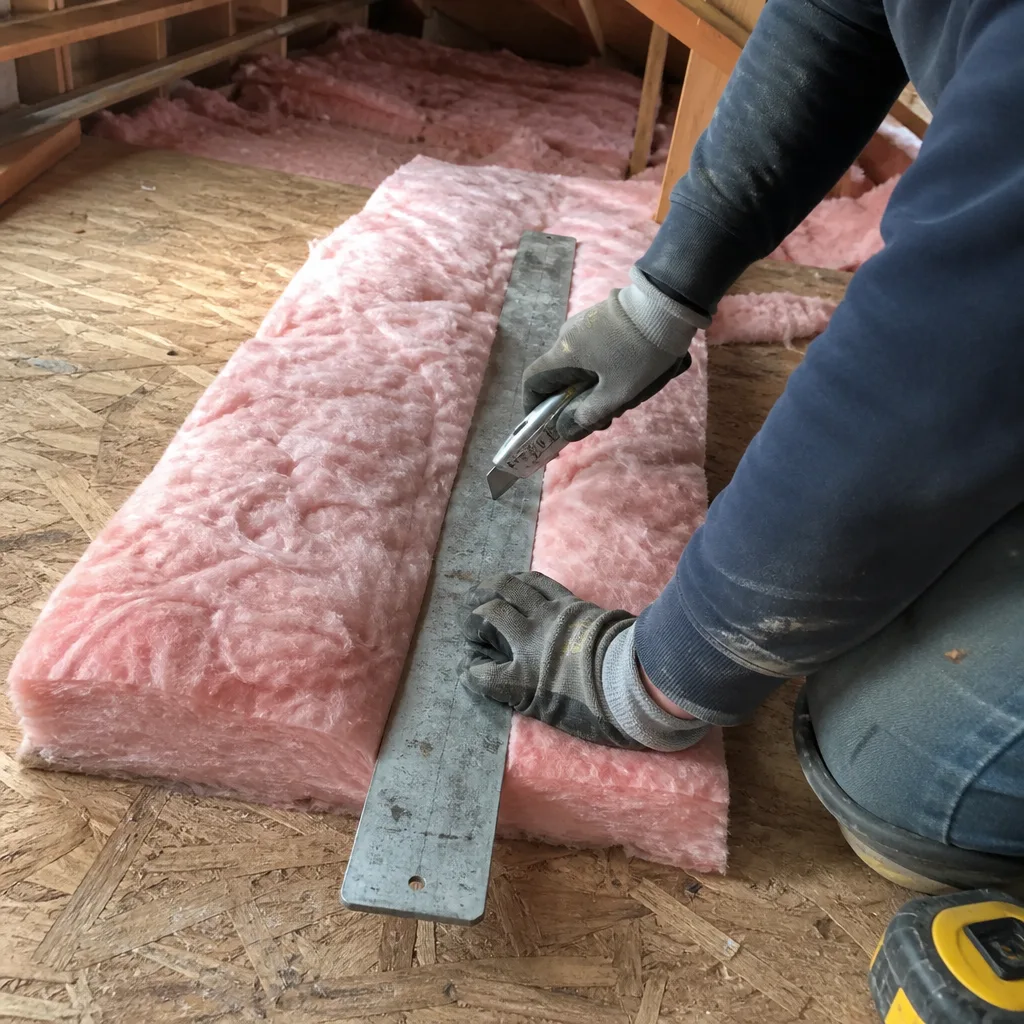
Three materials dominate the Cupertino attic market in 2026: blown fiberglass, blown cellulose, and open-cell spray foam. Each carries a different installed cost per square foot at a given R-value, and each performs differently in our climate.
Blown fiberglass, typically Owens Corning or Johns Manville product, runs $1.10 to $1.60 per square foot installed at R-38 in the Cupertino market. This assumes a standard attic with reasonable access, no obstructions, and a crew that can work from the hatch without building a temporary floor. The material itself is lightweight, does not settle significantly, and performs well in the moderate temperature swings of the Santa Clara Valley. For a 1,500 square foot attic plane, material and labor for fiberglass to R-38 typically falls between $1,650 and $2,400.
Blown cellulose, often GreenFiber product in this region, costs $0.90 to $1.40 per square foot installed at R-38. Cellulose is denser, provides better sound attenuation, and fills irregular cavities more completely than fiberglass. It does settle slightly over time, so reputable crews in Cupertino install to a settled depth that achieves the labeled R-value, not the lofted depth immediately after blowing. A 1,500 square foot attic runs $1,350 to $2,100 for cellulose to R-38. The lower material cost is partly offset by slightly longer installation time.
Open-cell spray foam, sourced from Demilec or similar manufacturers, is priced very differently because it combines insulation and air sealing in one application. Installed cost in Cupertino ranges from $2.80 to $4.20 per square foot at R-38 equivalent, or $4,200 to $6,300 for that same 1,500 square foot attic. Spray foam is rarely installed to full R-38 depth in attics here; more common is 3-5 inches on the roof deck in a conditioned attic assembly, or targeted application at rim joists and complex geometry where blown material cannot perform. The price includes specialized equipment, certified applicators, and ventilation requirements during installation.
Key distinction: these per-square-foot figures assume the attic floor is ready to receive insulation. If your quote does not specify a separate air sealing line item, one of two things is true. Either the contractor intends to blow over unsealed leaks, which wastes material and performance, or the air sealing is buried in a generalized labor charge you cannot evaluate.
Air Sealing Labor: The Line Item Most Quotes Hide or Skip
Air sealing is the work of closing the pathways that allow conditioned air to escape into the attic. Top plates, electrical penetrations, can light housings, plumbing stacks, chimney chases, and duct boots. In our experience across Cupertino, an unsealed attic floor leaks 30-50% more air than the same attic after proper sealing. Blowing insulation over these leaks is like throwing a blanket over a sieve.
We treat air sealing as a hard prerequisite, not an upsell. Every job begins with it.
For a typical 1,500 square foot attic plane in a Cupertino home built between 1960 and 1995, air sealing labor runs 6 to 10 crew hours. Materials include low-expansion canned foam for small penetrations, fire-rated caulk and mineral wool batt blocking around chimney chases and can lights, mastic sealant for duct boots, and rigid foam with spray adhesive for larger gaps. Total air sealing cost in this market: $800 to $1,400 for that 1,500 square foot scope.
What you are paying for is not just the materials. It is the time to move carefully through an attic without damaging drywall below, the knowledge to identify which penetrations are connected to conditioned space below, and the documentation that proves the work changed something. We publish before-and-after blower-door numbers on every applicable job. A typical Cupertino home pre-sealing reads 3,500 to 5,500 CFM50; post-sealing and insulating, 1,800 to 2,800 CFM50. That number, in one figure, shows you what you paid for.
Contractors who skip air sealing can quote $800-$1,400 less. The homeowner saves nothing. The insulation performs poorly, the attic stays thermally connected to the house below, and the energy bills do not move. Worse, some jurisdictions now require visual verification of air sealing at rough inspection; a job without it may fail.
Permits, Title 24, and HERS Verification in Cupertino
Cupertino falls under Santa Clara County jurisdiction for building permits, with the City of Cupertino handling plan check and inspection for work within city limits. Attic insulation replacement in an existing home does not always trigger a permit, but three conditions make it mandatory: any alteration of the thermal envelope where the existing insulation is removed, any work involving spray foam application, and any project where the homeowner intends to claim energy efficiency rebates through state or utility programs. For full details, see our guide to Insulation Permits, Codes & Inspections in CA: What You Need to Know.
Permit fees in Cupertino for attic insulation work run $180 to $450 depending on project valuation. A simple blown-in overlay with no air sealing falls at the low end. A comprehensive job with air sealing, baffles, blocking, and spray foam components falls higher. The contractor or homeowner must submit a scope description, and for rebate-qualifying work, a HERS (Home Energy Rating System) rater must verify installation quality.
Title 24, California’s energy code, requires specific R-values by climate zone. Cupertino sits in Climate Zone 4, where attic insulation must achieve R-38 minimum for new construction and major alterations. Existing homes are not always required to meet new construction standards, but rebate programs and many contractors specify R-38 as the target. HERS verification adds $250 to $450 to the project cost. The rater visits after installation, verifies depth and coverage with infrared imaging, and submits documentation to the program administrator.
Some Cupertino contractors quote without permit inclusion, leaving the homeowner to navigate plan check. Others include permit but not HERS, which kills rebate eligibility. When comparing quotes, verify which of these four cost components are included: permit fee, plan check time, HERS verification, and the final inspection scheduling. A $3,200 quote without permit and HERS is not comparable to a $3,800 quote with both.
How to Read a Quote for Hidden Scope Reductions
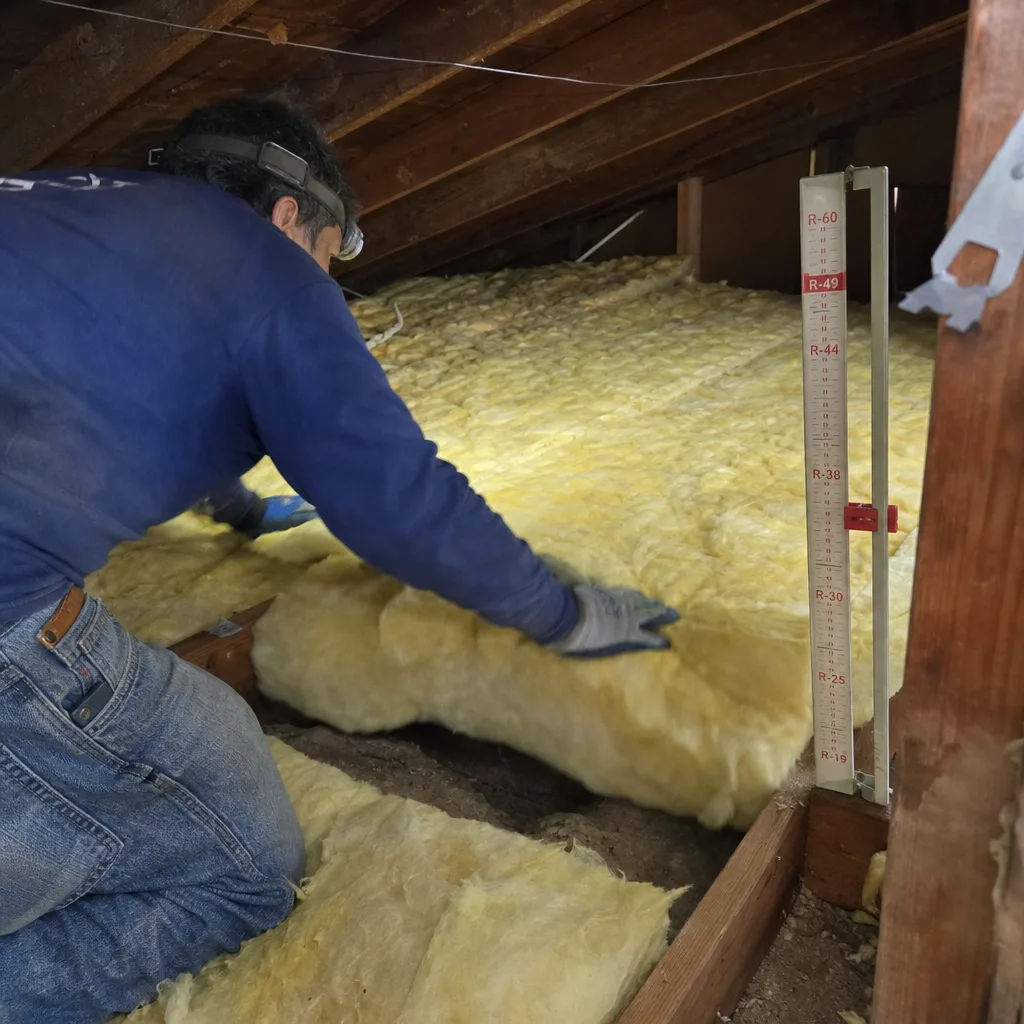
We review competitor quotes for homeowners who bring them in under our Free Second Opinion on Any Written Estimate. These are the reductions we see most often.
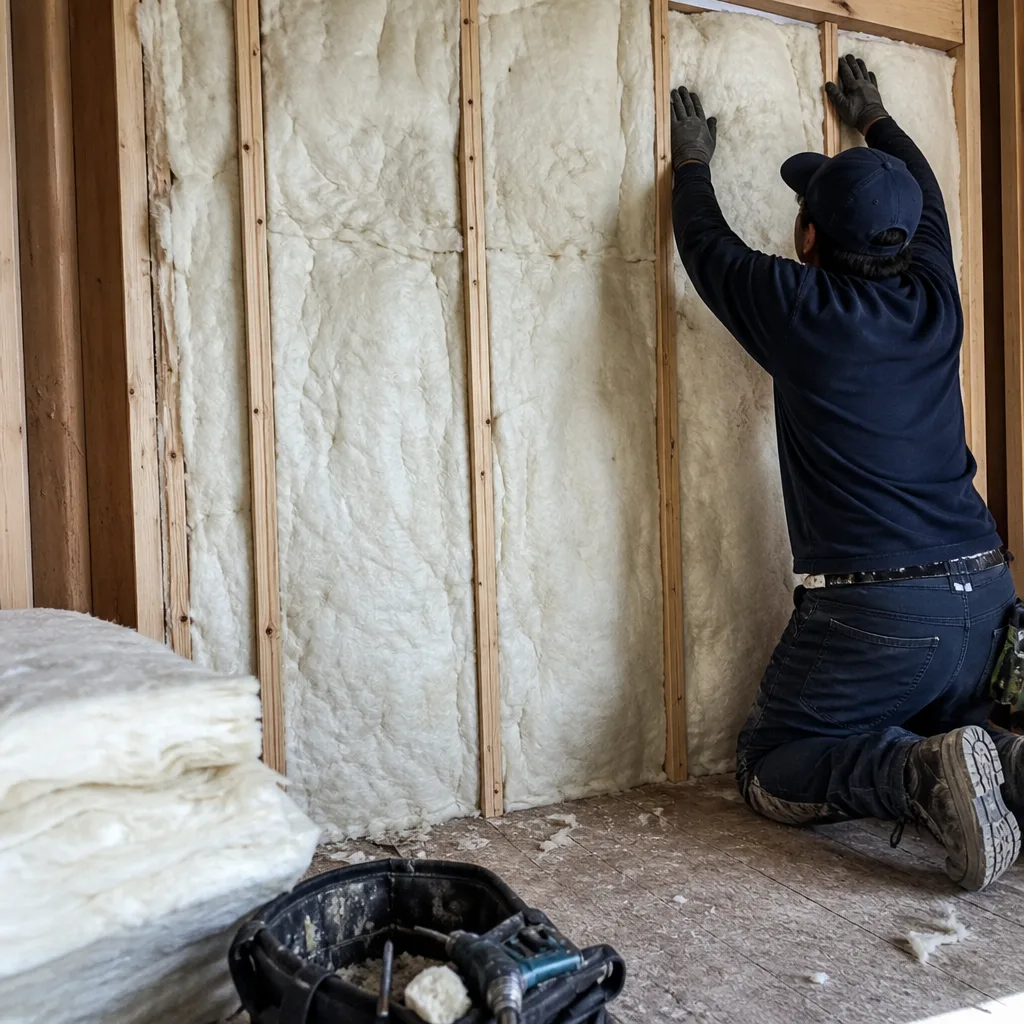
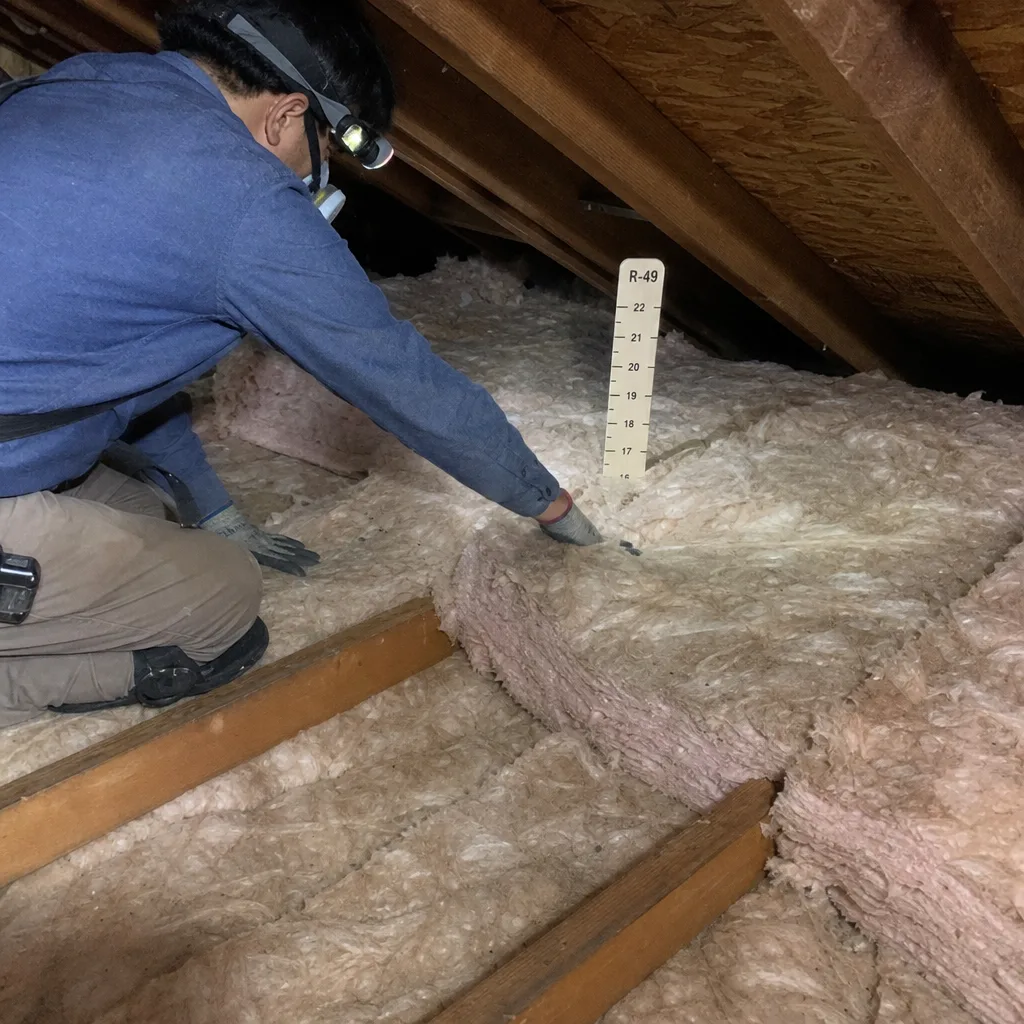
- Vague depth specifications. “Up to R-38” means the crew will install somewhere between R-30 and R-38 depending on time and material remaining. A proper quote specifies settled depth in inches for blown material, or labeled R-value and thickness for batts and foam. For blown fiberglass in Cupertino, R-38 requires approximately 14-15 inches settled depth. If the quote does not state this, the depth is not guaranteed.
- No baffles or blocking specified. Attic baffles maintain ventilation channel clearance at eaves; blocking prevents insulation from contacting recessed light housings or dropping into soffits. These are not optional in a code-compliant job. A quote that lists “insulation only” with no baffle or blocking line item is planning to skip them or charge change orders later.
- Missing documentation commitments. Every job we complete ends with a Documented Photo Record showing before, during, and after conditions. Quotes that promise only “we’ll clean up” without specifying what documentation you receive are avoiding accountability. Ask: what do I get in writing when the crew leaves?
- Air sealing absent or described as “light seal.” There is no such thing as partial air sealing that achieves performance. Either top plates, can lights, penetrations, and duct boots are sealed, or they are not. “Light seal” typically means the crew will foam the two most obvious leaks and blow insulation over the rest.
- No blower-door or performance verification. Without a number, you have no proof the work changed anything. We provide before-and-after blower-door readings on every applicable job. A contractor who cannot or will not measure performance is asking for trust without evidence.
- Material brand unspecified. Owens Corning, Johns Manville, Knauf, GreenFiber, and Demilec are the brands we source from depending on application. A quote that says “premium insulation” without naming the manufacturer is hiding commodity-grade material or proprietary product with no competitive benchmark.
The Haven Standard requires a written scope, written price, and written warranty before any work starts. If your quote lacks any of these three, you are not comparing bids. You are comparing a promise to a contract.
The Cost-per-BTU-Saved Calculation for Santa Clara Valley
Homeowners often ask whether insulation pays for itself. The honest answer: it depends on what you are comparing, what you pay for energy, and how long you will own the home. Here is how to run the calculation yourself using Cupertino-specific numbers.
Step 1: Establish your baseline. Pacific Gas and Electric (PG&E) residential rates in the Santa Clara Valley in 2026 run $0.32 to $0.42 per kWh for electricity and $1.80 to $2.40 per therm for gas, depending on tier and season. A typical Cupertino home built 1960-1990 with unsealed attic insulation at R-19 or below spends $180 to $280 monthly on heating and cooling combined.
Step 2: Estimate the reduction. A comprehensive job, air sealing plus insulation to R-38, typically reduces HVAC load 15-25% in our climate. Using 20% and a $230 monthly average, annual savings run $552.
Step 3: Calculate simple payback. A $4,500 job with $552 annual savings pays back in 8.2 years. A $2,800 job with the same savings pays back in 5.1 years. This does not account for utility rate inflation, which has averaged 4-6% annually in California, or for improved comfort and reduced equipment cycling, which extends HVAC lifespan.
Step 4: Compare to alternatives. A new 16 SEER heat pump might cost $8,000-$14,000 installed and reduce energy use 20-30%, but the existing duct system must be adequate. Solar panels at $3.00-$3.80 per watt installed offset generation, not consumption. Insulation is the only upgrade that reduces the load the other systems must serve.
The cost-per-BTU-saved calculation is not precise. Blower-door numbers help. A home at 4,800 CFM50 pre-work and 2,400 CFM50 post-work has cut air leakage roughly in half. The insulation R-value improvement handles the conductive load. Together, they produce the savings. Any contractor who promises a specific dollar reduction without measuring your home’s leakage and existing insulation is estimating, not engineering.
Cupertino Neighborhood Factors That Move the Price
Not every Cupertino attic is the same. We have worked in Monta Vista, Rancho Rinconada, and the older neighborhoods near Stevens Creek Boulevard, and the construction era drives as much cost variation as square footage.
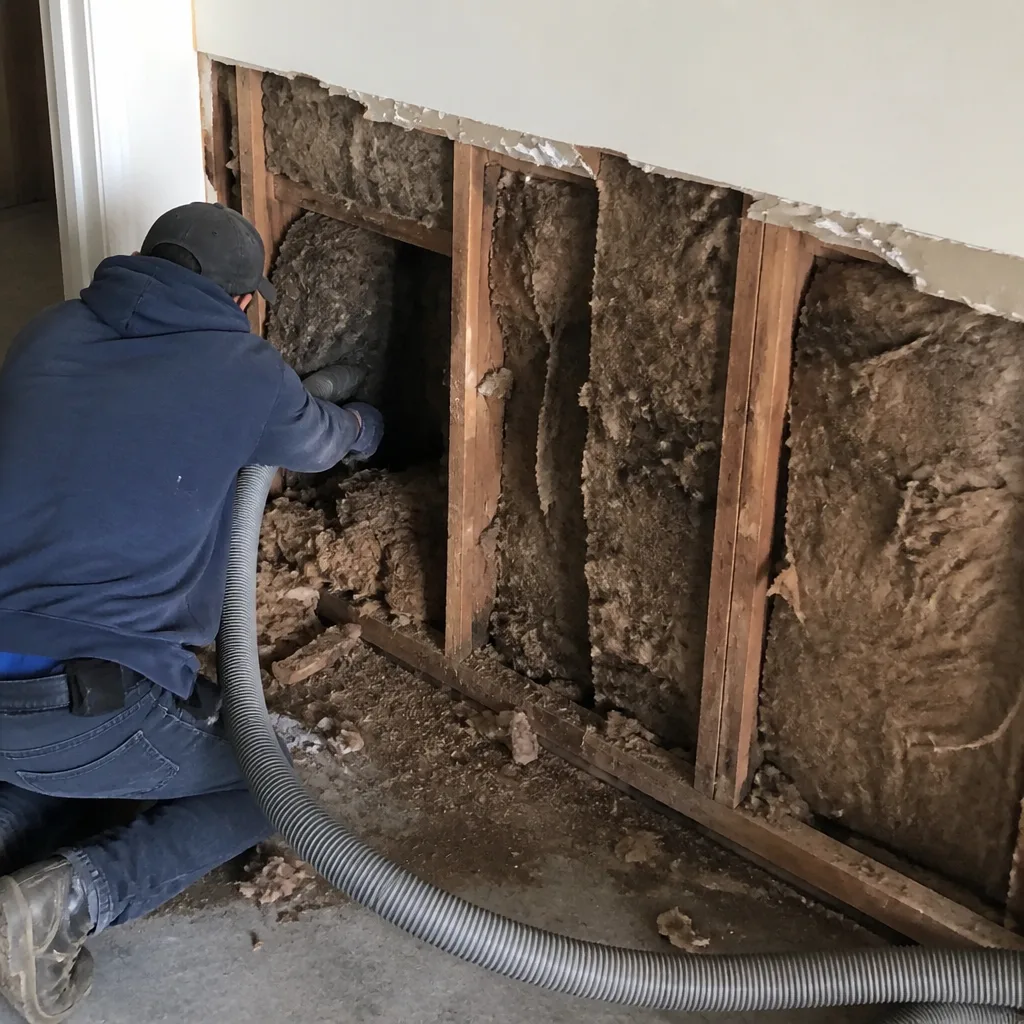
Pre-1975 homes with original insulation. Many contain vermiculite or early fiberglass batts, sometimes with inadequate or no vapor barrier. Insulation removal and replacement adds $1.20 to $2.00 per square foot for safe removal, disposal, and cleaning. If rodent activity is present, remediation precedes insulation work. We handle this through our Attic Insulation in Cupertino service line, including cleaning and rodent proofing.
Homes with recessed can lights. Pre-2010 installations often lack IC-rated housings, meaning insulation cannot contact the fixture without fire risk. Each can light requires a protective box or replacement with IC-rated LED units. A kitchen with six can lights adds $400-$800 in material and labor.
Steep-pitch or limited-access attics. Cupertino hills neighborhoods, particularly west of Highway 85, include homes with 10/12 or steeper roof pitches. Crews cannot move safely without temporary flooring, which adds labor hours. Hatch access smaller than 22 by 30 inches may require temporary enlargement.
Conditioned attic conversions. Some homeowners in newer Cupertino construction want the attic brought inside the thermal envelope, with spray foam on the roof deck and HVAC equipment protected from temperature extremes. This is a different project category entirely, running $8,000 to $15,000 depending on square footage and whether the existing roof deck requires repair. Our Spray Foam Insulation in Cupertino page details this approach.
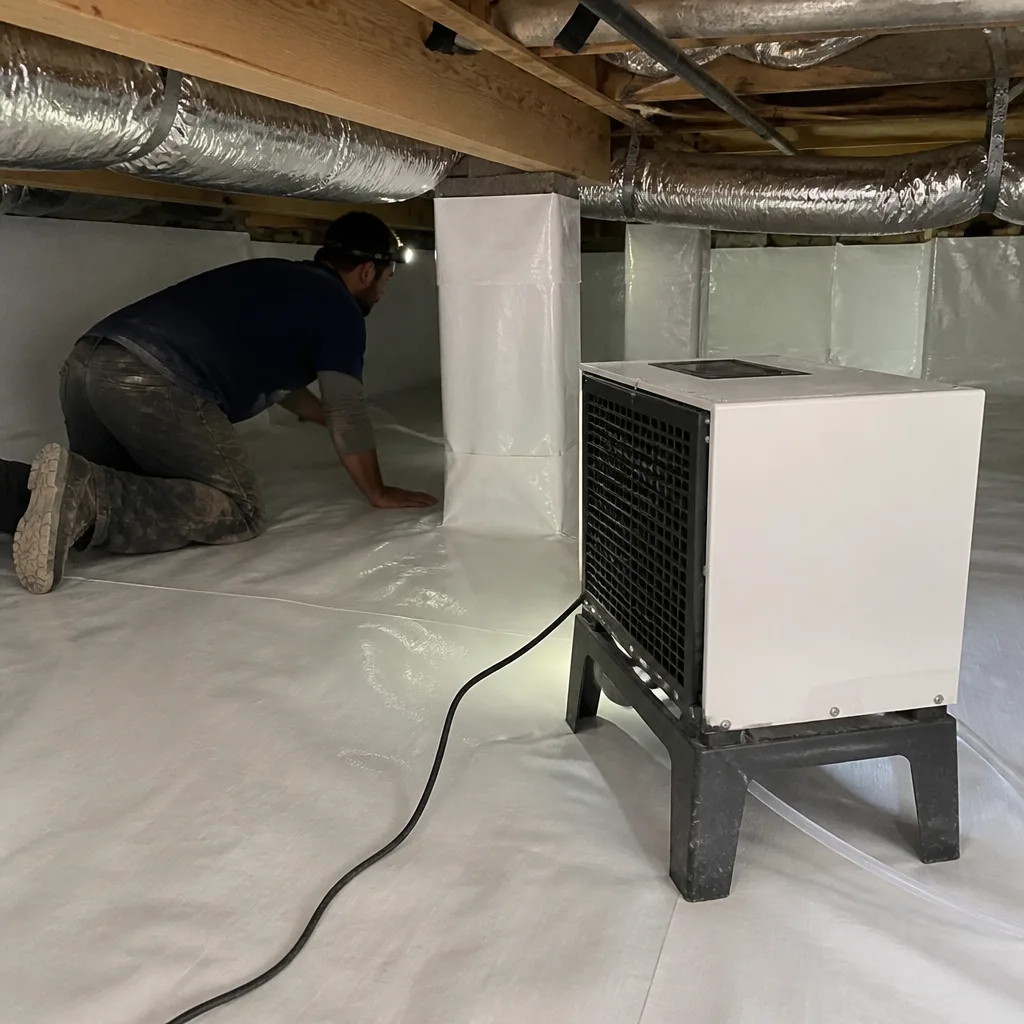
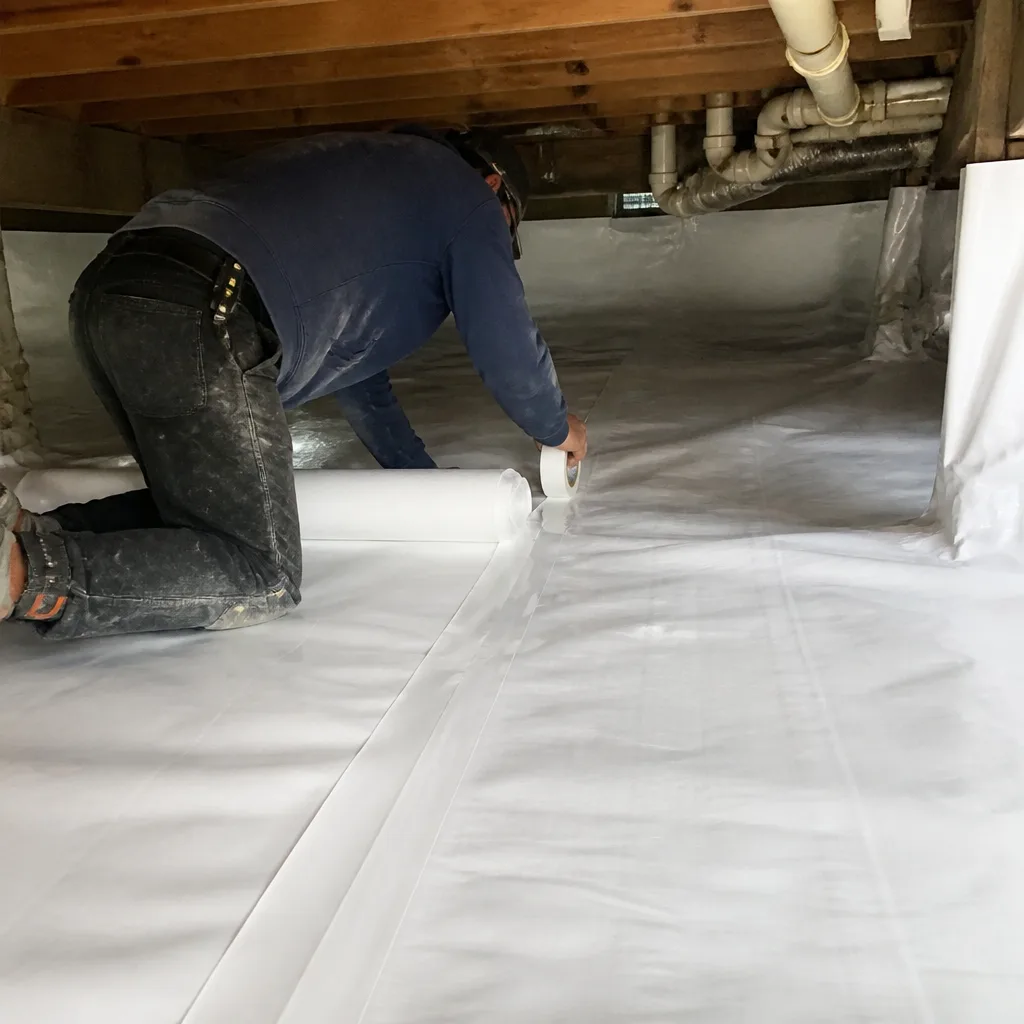
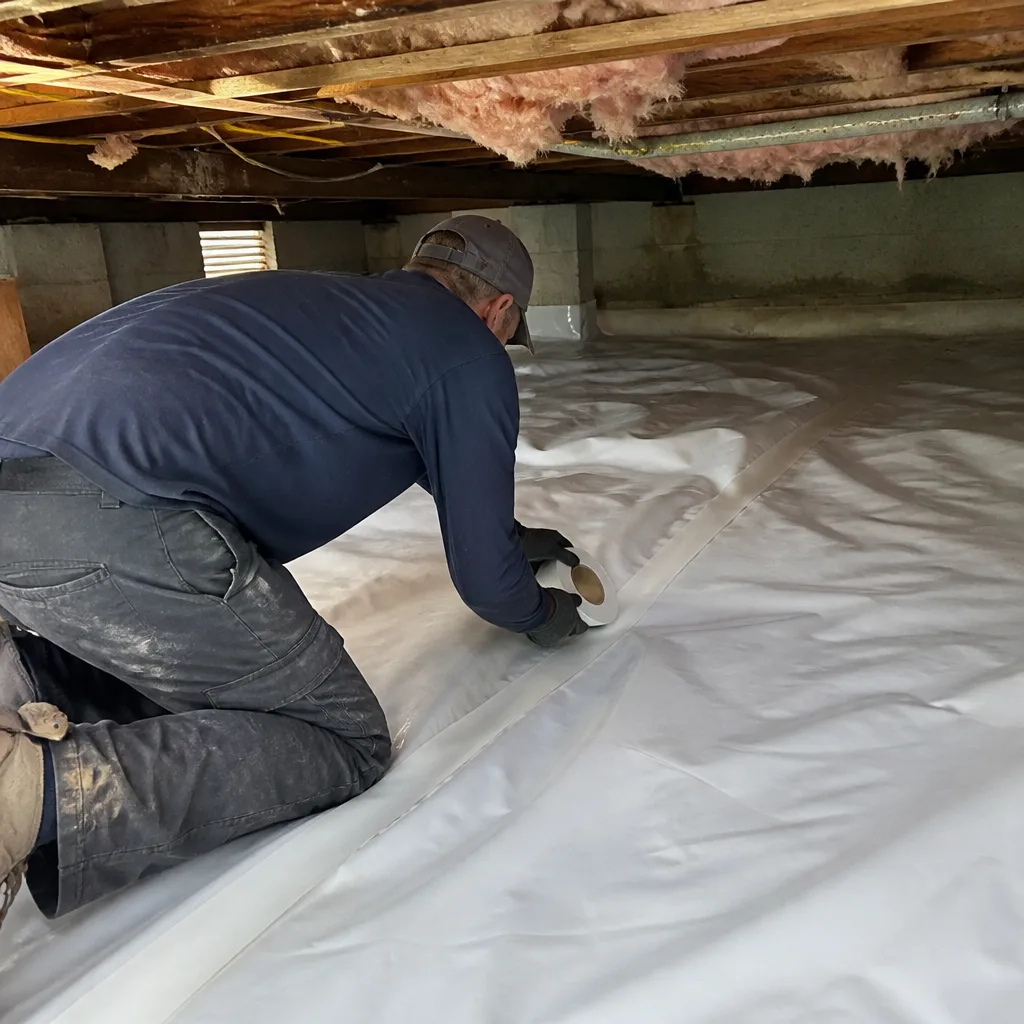
Crawl space condition. Homes with vented crawl spaces in the flatter eastern neighborhoods often have thermal bypass through the floor assembly. Addressing the crawl space with encapsulation and vapor barrier, detailed on our Crawl Space Encapsulation & Vapor Barrier in Cupertino page, can be coordinated with attic work for whole-envelope performance.
Common Mistakes to Avoid
- Comparing quotes that specify different R-values. A quote for R-30 and a quote for R-38 are not comparable without adjusting for the performance difference. R-38 provides approximately 27% more thermal resistance than R-30.
- Accepting “up to” language without settled depth in inches. “Up to R-38” allows the contractor to install less material if the attic is irregular or access is difficult. Insist on specified settled depth.
- Skipping air sealing to save money. In Cupertino’s mild climate, air leakage dominates heating and cooling load more than conduction through under-insulated surfaces. An R-38 attic with unsealed top plates performs like an R-25 attic that is tight.
- Not verifying permit status. Unpermitted work can complicate future sales, void insurance claims if damage occurs, and disqualify rebate programs. Ask for the permit number and verify it with the City of Cupertino.
- Ignoring the documentation gap. If the quote does not specify what you receive in writing, photos, or test results, you are buying a service with no proof of completion. Under Haven Standard Clause 1, you get a written scope, written price, and written warranty before work starts; at completion, a Documented Photo Record and blower-door numbers where applicable.
- Choosing material based on price alone. Blown cellulose costs less than fiberglass but requires proper depth management to avoid settling below target R-value. Spray foam costs more but addresses air sealing simultaneously. The right material depends on your attic’s condition and your performance goals, not just the bid total.
- Neglecting to ask about the crew. Background-checked, uniformed technicians who arrive on schedule with a text notification are not a luxury. They are how you know who is in your home and when they will finish. Under Haven Standard: Arrive on schedule, you get a named technician and a text when they are on the way.
When to Call a Professional
Call for an evaluation if your energy bills have risen without rate changes, if rooms directly below the attic are uncomfortably warm in summer or cold in winter, if you can see floor joists through existing insulation, or if you suspect rodent damage or moisture staining. These symptoms indicate the envelope is compromised, and adding material without diagnosing the failure wastes money.
Topside Attic Insulation Cupertino offers free estimates in Cupertino. We will review your attic condition, explain what we find, and provide a written price before any work starts. Call (831) 217-8521 to schedule. Every estimate includes a documented photo record of what we observed, so you have a baseline regardless of whether you proceed.
Frequently Asked Questions
Most projects range from $2,800 to $7,500 for a 1,200-2,000 square foot home, with blown fiberglass or cellulose at the lower end and spray foam with full air sealing at the upper end. Material-only blown-in on a pre-sealed attic can run as low as $1,800; comprehensive jobs with documentation and permits run higher. Call (831) 217-8521 for a written estimate specific to your home.
Repair is rarely cost-effective unless the existing insulation is relatively new, properly installed, and only damaged in isolated areas. In most Cupertino homes built before 1990, existing insulation is below current code, poorly distributed, and installed over unsealed leaks. Removal and replacement with proper air sealing typically outperforms repair at similar or lower total cost. We evaluate this during our free estimate and show you photos of what we find.
Air sealing closes the gaps and penetrations that allow conditioned air to escape into the attic. It costs extra when contractors treat it as an optional add-on rather than a prerequisite. At Topside Attic Insulation Cupertino, air sealing is included in every attic job because blowing insulation over leaks wastes material and performance. Typical air sealing for a 1,500 square foot attic runs $800-$1,400 in the Cupertino market.
A permit is required if you are removing existing insulation, installing spray foam, or claiming energy efficiency rebates. Simple blown-in overlays over existing insulation may not require permitting, but we recommend verifying with the City of Cupertino. Our quotes specify whether permit and HERS verification are included. Unpermitted work can complicate home sales and void rebate eligibility.
Compare line items, not totals. A quote $1,500 below competitors likely omits air sealing, uses vague depth specs, excludes permit fees, or lacks documentation commitments. Ask: what R-value at what settled depth? Is air sealing itemized? What do I receive in writing at completion? Under Haven Standard, you get a written scope, written price, and written warranty before work starts. Any contractor who cannot provide these three documents is not bidding the same job.
A typical blown-in job with air sealing takes one day for a 1,500 square foot attic. Spray foam applications require two days: one for prep and application, one for curing and re-entry. Weather matters less in Cupertino’s mild climate than in hotter inland areas, though spray foam curing is temperature-sensitive; see our Seasonal Insulation Care for Cupertino: Year-Round Homeowner’s Guide for timing considerations. We schedule with a named technician and text when they are on the way.
The Bottom Line
Insulation quotes in Cupertino vary because they describe different jobs. The homeowner who understands material costs per R-value, air sealing as a separate and necessary line item, permit and HERS requirements, and how to spot scope reductions in a quote can compare bids accurately and choose based on value, not just price. Explore our more guides & resources for additional homeowner tools. The documentation you receive at completion, blower-door numbers where applicable, determines whether you can verify what you paid for. Every job we have completed since 2016, more than 9,000 homes, began with a written price and ended with a documented record. That is the Haven Standard.
Written by Wes Okafor, Owner at Topside Attic Insulation Cupertino, serving Cupertino since 2016.