
Last updated September 24, 2026
Insulation Warning Signs: A Cupertino Homeowner’s Reference Guide
Dust streaks on carpet near baseboards are not a cleaning problem. They’re pressure-driven air infiltration markers, and they indicate that your thermal envelope has gaps large enough to move particulate matter, which means conditioned air is moving through them too. In Cupertino’s climate, where summer afternoons push 85°F and winter nights dip into the 40s, these gaps force your HVAC system to compensate year-round. This guide pairs each visible warning sign to its underlying failure mechanism so you can determine whether the fix is insulation, air sealing, or both before you spend money on the wrong solution, and you can explore more guides & resources for deeper dives.
Quick Answer
The most common insulation warning signs in Cupertino homes are dust tracking patterns near baseboards and ceiling edges, room-to-room temperature differences exceeding 3°F, and HVAC runtime increases of 15% or more year-over-year. These symptoms point to specific envelope failures: unsealed attic floor penetrations, compressed or missing batt insulation, or bypassed air barriers at the wall-ceiling junction. Diagnosing the mechanism correctly determines whether you need air sealing, insulation replacement, or both.
Table of Contents
- Dust Tracking Patterns: Reading the Particulate Map
- Room-to-Room Temperature Differentials Above 3°F
- HVAC Runtime Increases of 15% or More
- Ice Dam Formation in Monta Vista Hillside Homes
- Pest Evidence in Attic Insulation
- Ceiling and Floor Symptoms That Reveal Assembly Failures
- Common Mistakes to Avoid
- When to Call a Professional
- Frequently Asked Questions
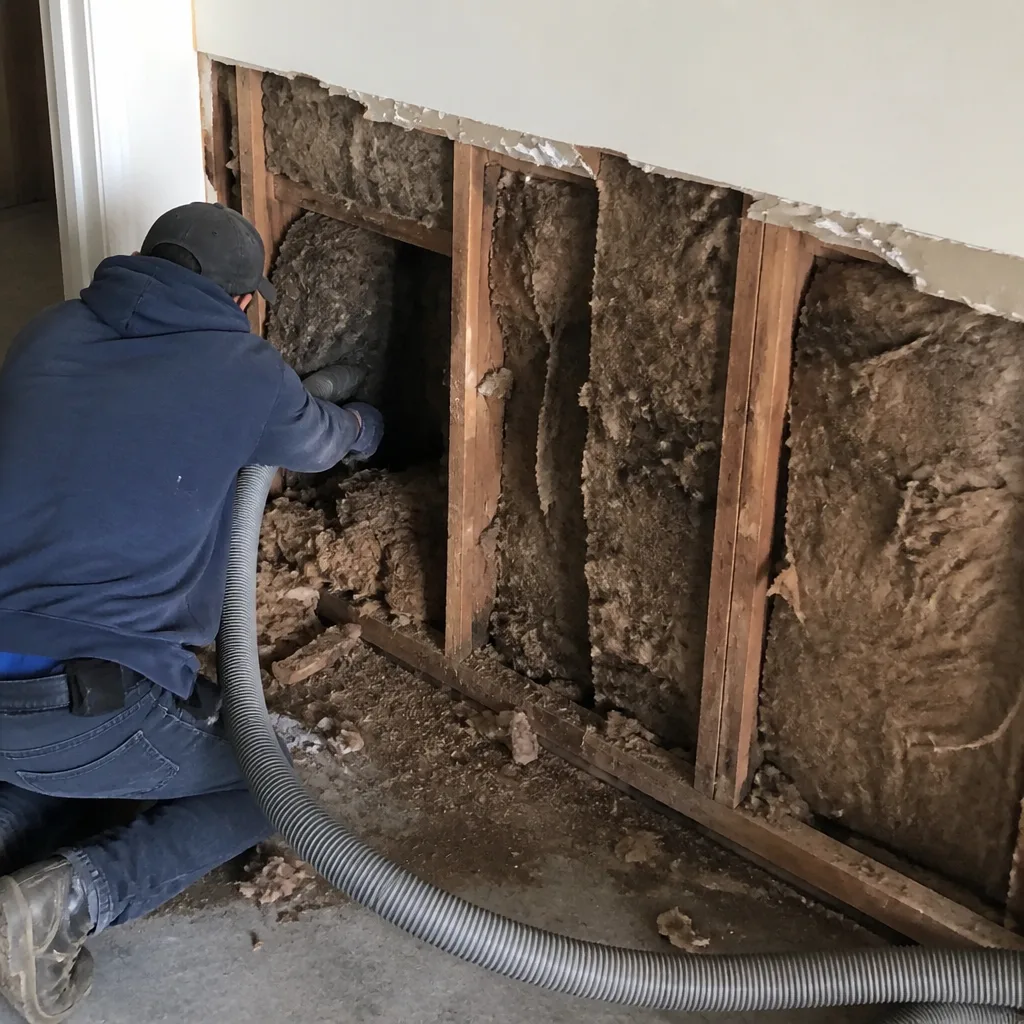 Before
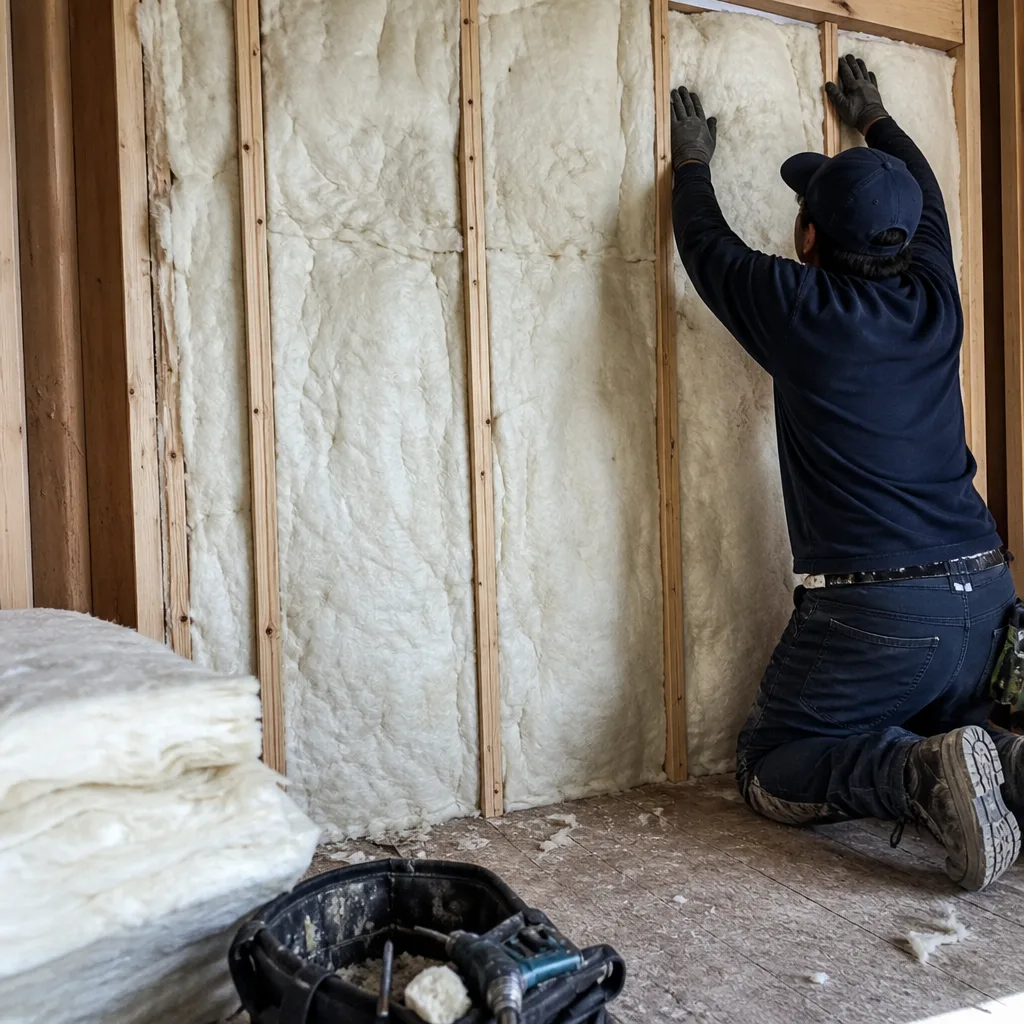 After
AfterDust Tracking Patterns: Reading the Particulate Map
The dark lines that form on carpet along baseboards and on ceiling paint near wall joints are filtration soiling. Air pressure differentials between conditioned space and unconditioned attic or wall cavities force air through any gap it can find. When that air carries dust, the gap becomes a filter, leaving a visible record of its path.
In Cupertino’s older ranch-style homes, particularly in the Monta Vista and Rancho Rinconada neighborhoods built in the 1960s and 1970s, we see three distinct dust tracking patterns that map directly to specific envelope failures, as detailed in our Attic Insulation Maintenance Checklist for Cupertino Homeowners:
- Baseboard streaks on exterior walls indicate that the bottom plate of the wall assembly isn’t sealed to the slab or subfloor, or that the wall cavity lacks a complete air barrier. The pressure stack effect draws attic air down through the wall and out at the base.
- Ceiling darkening at room perimeters signals unsealed top plates, the horizontal framing member where wall studs meet the ceiling drywall. This is the most common bypass we find in Cupertino attics, and it’s invisible from below until the dust pattern appears.
- Dust deposits around electrical outlets and switch plates on exterior walls mean the wall cavity behind the box is open to the attic or exterior sheathing. The small gap around the electrical box itself becomes a nozzle for conditioned air escape.
Tracing these patterns back to their source requires attic access. In a properly sealed home, the attic floor should present a continuous air barrier: sealed top plates, caulked electrical penetrations, boxed or sealed can lights, and sealed duct boots. When we find dust tracking below, we almost always find the corresponding gap above.
The fix sequence matters. Blowing new insulation over an unsealed attic floor buries the gaps but doesn’t close them; the air still moves, just through a thicker filter. That’s why Topside Attic Insulation Cupertino home assessments begin with a blower-door test, a pressurization reading that shows, in one number, how much air the building envelope is losing. We’ve tested homes in Cupertino reading 4,500 CFM50 before sealing and 2,200 after, with the dust patterns disappearing within one heating season.
Room-to-Room Temperature Differentials Above 3°F
A single-story home with a single HVAC zone should not vary more than 2°F room to room. When we measure 4°F, 6°F, or greater differences in Cupertino homes, the cause is almost always an assembly failure in the thermal boundary, not equipment sizing or duct design.
Three specific failures produce these differentials:
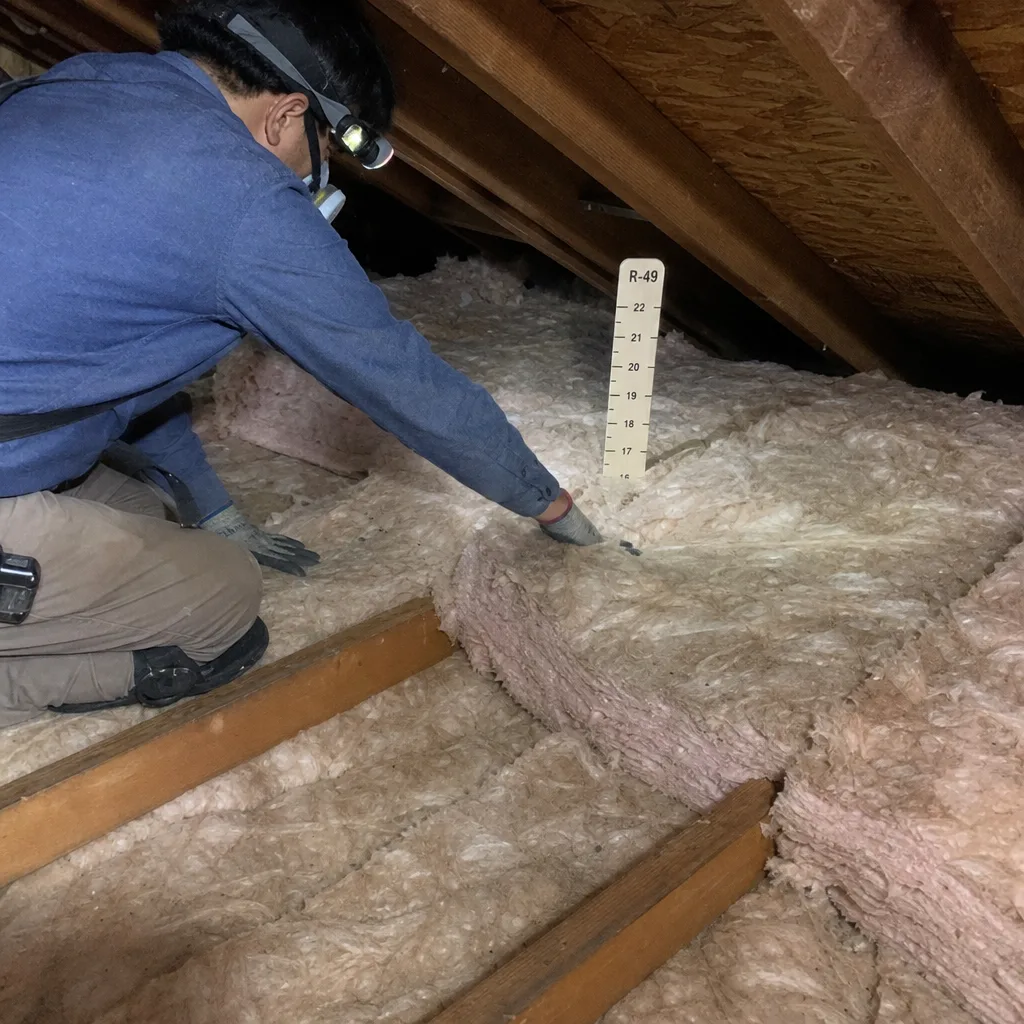
- Missing or displaced batt sections in the attic above the warmer room. In homes where homeowners or prior contractors have moved through the attic for electrical or duct work, batts get pushed aside and never replaced. The room below loses R-value in exact proportion to the exposed ceiling area.
- Compressed insulation from storage boards, walking paths, or improperly installed recessed lighting housings. Fiberglass batt compressed to half its design thickness loses roughly half its thermal resistance. We’ve found entire sections of Rancho Rinconada attics compressed to R-11 where R-30 was specified.
- Bypassed air barriers at kneewalls or vaulted ceiling transitions. Cupertino’s split-level and hillside homes often have conditioned space adjacent to unconditioned attic at kneewalls. When the kneewall isn’t sheathed with an air barrier on the attic side, the insulation cavity becomes a convection loop, moving heat in or out regardless of the batt’s R-value.
The diagnostic test is simple but requires an infrared camera and a blower door running. With the house depressurized, the camera reveals which surfaces are connected to outdoors. A missing air barrier shows as a cold surface in winter or warm surface in summer, even where insulation is present. The insulation isn’t doing its job because the air is moving around it, not through it.
We’ve documented this pattern repeatedly in Cupertino’s Fairgrove and Garden Gate neighborhoods, where 1970s construction used kneewalls extensively for second-story volume. The fix is sheathing the kneewall with rigid foam or sealed OSB, then insulating the stud cavity, in that order. Attic Insulation in Cupertino must include air sealing as a prerequisite, or the temperature differential persists.
HVAC Runtime Increases of 15% or More
Your utility bill tells part of the story, but the equipment runtime tells the rest. Modern thermostats and smart home systems record heating and cooling call duration. When runtime increases 15% or more year-over-year with no equipment change, the question is whether the envelope has degraded or the equipment has.
Equipment degradation produces specific signatures: a heat pump with declining charge shows longer runtimes but reduced temperature rise at registers. A furnace with a dirty blower shows longer cycles but weak airflow. An envelope failure shows longer cycles with normal or near-normal register performance, because the equipment is sized correctly but the load has increased.
In Cupertino’s climate, envelope degradation typically follows one of two paths:
- Insulation settlement in blown-in attics. Cellulose and loose-fill fiberglass settle over time, reducing coverage depth at the eaves and center of the attic. A home that started with R-38 may have R-25 at the center and R-15 at the eaves after 10-15 years. The equipment runs longer to compensate for the increased heat flow through the ceiling.
- Air barrier failure at duct penetrations. Flex duct routed through unconditioned attic loses capacity when the boot connection loosens or the attic air leaks increase. The equipment runs longer because delivered capacity has dropped, even though the insulation itself hasn’t changed.
Separating these causes requires measurement, not guesswork. We compare current blower-door readings to the original construction or prior test, measure actual insulation depth against specification, and pressure-pan test duct connections to quantify leakage. In our experience with Cupertino homes, roughly 60% of runtime increases trace to envelope degradation, 30% to equipment maintenance needs, and 10% to both.
The documentation matters. Under Haven Standard Clause 1, every assessment ends with a written scope showing measured conditions, recommended repairs, and flat price before any work starts. For applicable jobs, we provide before-and-after blower-door numbers so you can verify the air-sealing result in a single figure.
Ice Dam Formation in Monta Vista Hillside Homes
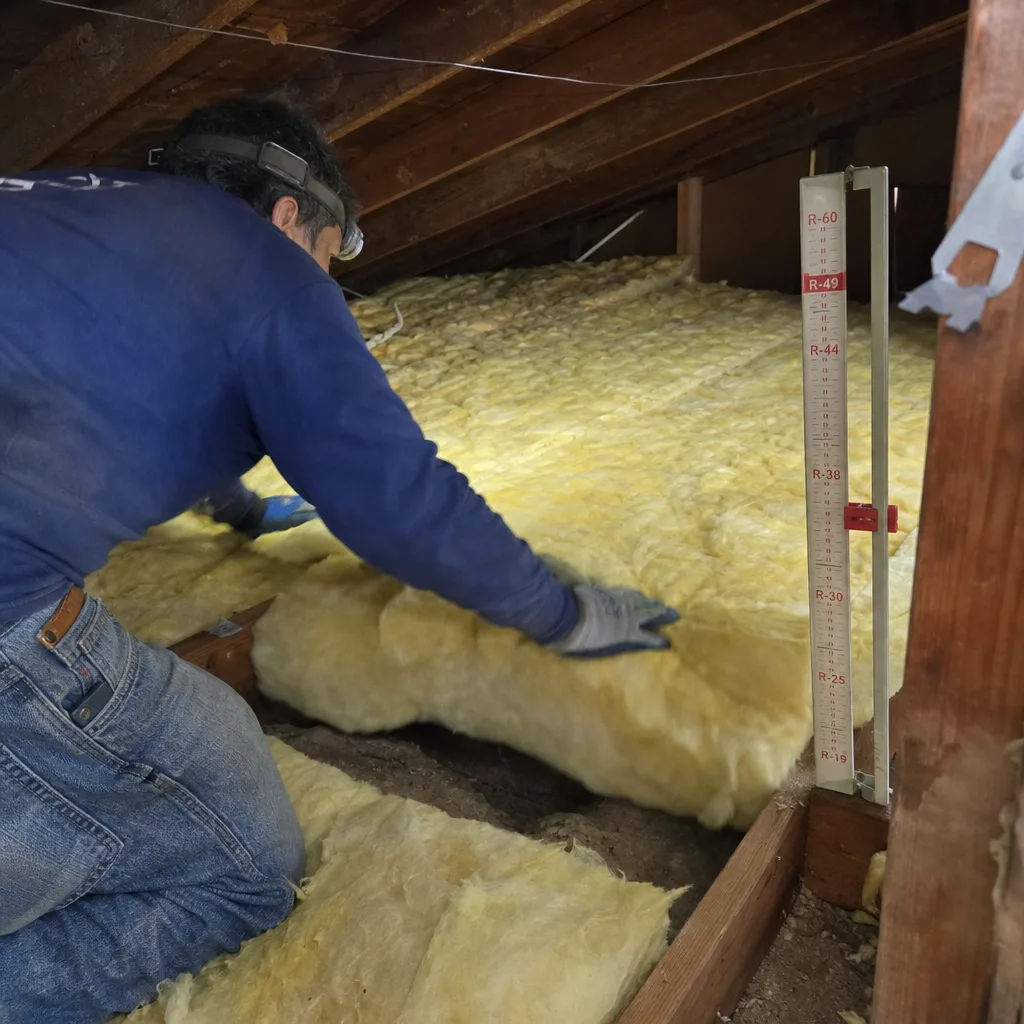
Ice dams are rare in Cupertino, but they’re not absent. Homes in the Monta Vista hillside areas, particularly those above 400 feet elevation with north-facing roof slopes, can see brief ice dam conditions during the coldest winter storms. When they occur, they reveal a specific attic heat escape pattern that also drives summer cooling loads.
An ice dam forms when roof deck temperature above the heated space melts snow, which runs to the cold eave and refreezes. The melt source is warm air leaking into the attic from below, combined with inadequate or bypassed insulation at the eave. The dam traps subsequent melt, forcing water under shingles and into the structure.
In Cupertino’s mild climate, the conditions that produce ice dams are the same conditions that waste cooling energy all summer: warm air entering the attic through bypasses at the top plate, around chimney chases, and through unsealed recessed light housings. The roof deck runs hot in summer, radiating heat into the attic and forcing longer AC cycles. The fix is identical: seal the bypasses, insulate to full depth at the eave with proper ventilation baffles, and verify with a blower-door test.
We’ve worked on three Monta Vista homes with documented ice dam history since 2016. Each showed blower-door readings above 3,500 CFM50 for a 2,000 square foot footprint, and each dropped below 2,000 CFM50 after sealing. None have reported recurrence. The same work reduced their summer cooling runtime by 18-22% measured against prior year data.
Pest Evidence in Attic Insulation
Droppings, nesting material, or compressed tunnel paths in attic insulation indicate rodent activity, and the correct response sequence is exclusion first, then insulation remediation, not both simultaneously. This sequence matters for health, effectiveness, and cost.
Rodents compress insulation to create runways and nest cavities, reducing R-value precisely where they travel. They also contaminate batts and loose fill with urine and feces, which can harbor hantavirus and other pathogens. Simply adding new insulation over contaminated material buries the problem but doesn’t eliminate the exposure risk or the compression damage.
We’ve found this pattern frequently in Cupertino’s older neighborhoods, particularly where mature trees provide roof access and where original construction left gaps at eave vents, pipe penetrations, and roof-wall junctions. The Haven Standard approach documents the contamination with photos, removes affected insulation, seals all entry points with rodent-proof materials, then installs replacement insulation to specification.
Crawl Space Encapsulation & Vapor Barrier in Cupertino addresses the same principle below grade: exclusion before insulation, with vapor barrier installation to eliminate the moist conditions that attract pests. The materials we use for replacement include CertainTeed and GreenFiber products selected for the specific application, with no proprietary lock-in.
The photo record is critical here. Our Documented Photo Record on every visit shows pre-condition, entry point locations, post-sealing verification, and finished insulation installation. You receive this record before the crew leaves, not on request afterward.
Ceiling and Floor Symptoms That Reveal Assembly Failures
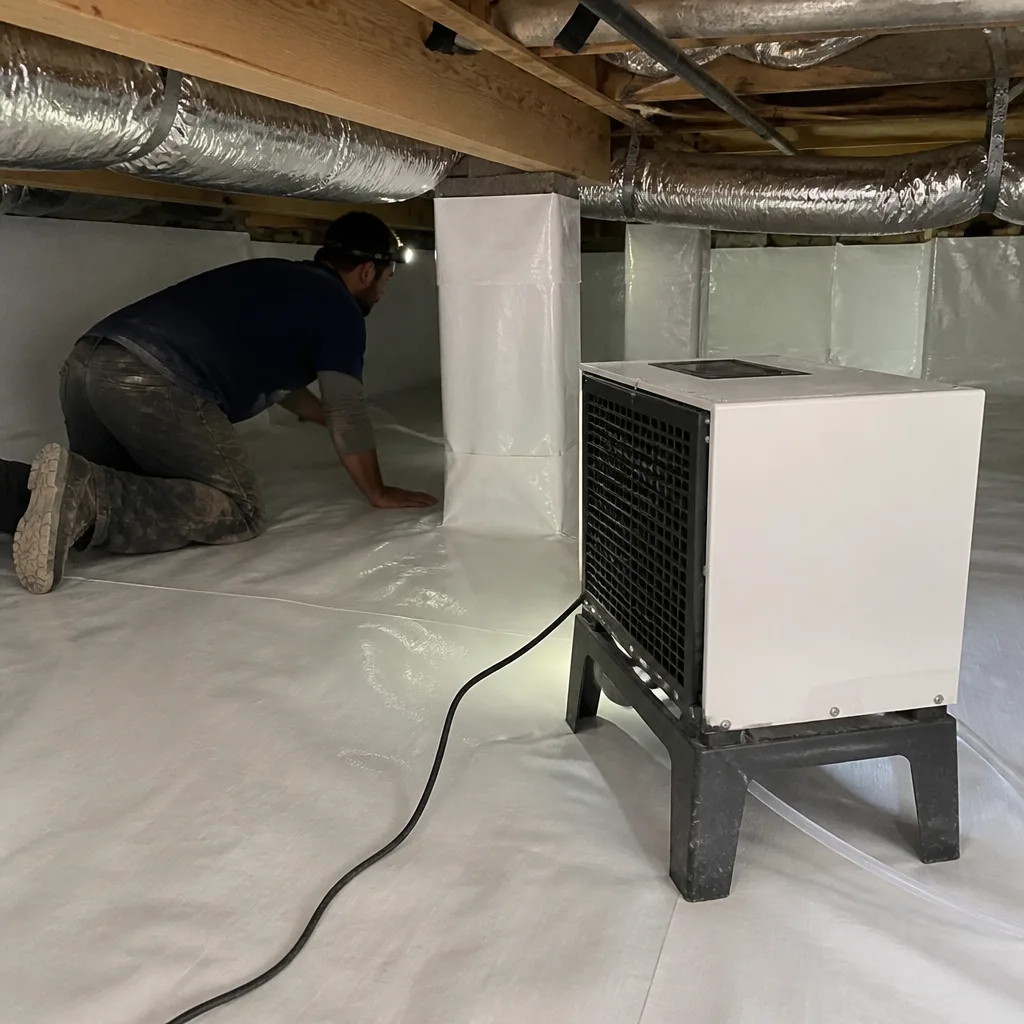
Beyond dust and temperature, several surface conditions in Cupertino homes point to insulation or air barrier failures, which we cover fully in The Complete Guide to Insulation in Cupertino:
- Blistering or peeling paint on cathedral ceilings indicates moisture accumulation from interior air leaking into the roof assembly. The warm, moist air hits cold sheathing in winter and condenses. The fix is rarely more insulation; it’s sealing the air barrier at the ceiling plane and ensuring vented assemblies have clear airflow from eave to ridge.
- Cold floors over crawl spaces in winter, even with apparent insulation between joists, usually mean the insulation is falling away from the subfloor or the crawl space vents are introducing exterior air that overwhelms the floor assembly. In Cupertino’s clay-heavy soils, crawl spaces also contend with ground moisture that degrades batt performance. Crawl Space Encapsulation & Vapor Barrier in Cupertino converts vented crawl spaces to conditioned, sealed assemblies with ground vapor barrier and perimeter insulation.
- Hot second-story rooms in summer despite adequate attic insulation often trace to unsealed duct boots in the attic. Conditioned air leaks into the attic before reaching the register, while attic air is drawn into the return. The room starves for cooling even as the equipment runs continuously. Pressure-pan testing identifies these leaks; sealing them often produces more comfort improvement than additional insulation.
- Frost on nail points in attic during cold mornings is a classic Cupertino winter sight in under-insulated or poorly ventilated attics. The nail shank conducts heat from below, and moist attic air condenses and freezes on the cold metal. When it melts, it stains the ceiling below. The fix is more insulation depth to bury the nail points and adequate ventilation to control attic humidity.
Spray Foam Insulation in Cupertino addresses several of these failures in a single application, particularly for complex rooflines and knee wall assemblies where batt insulation is difficult to install completely. Icynene and Demilec open-cell products provide both insulation value and air sealing in one step, though they must be paired with proper ventilation design in attic applications.
Common Mistakes to Avoid
- Blowing insulation over an unsealed attic floor. This is the most common error we correct in Cupertino. The new insulation performs poorly because air still moves through the gaps beneath it, and the homeowner has no way to verify what was or wasn’t sealed.
- Adding insulation without measuring existing depth. Many attics have uneven coverage with deep piles in accessible areas and thin or missing coverage at eaves and corners. A spot check in the attic hatch area doesn’t represent the whole assembly.
- Ignoring the kneewall in split-level homes. The kneewall is a thermal and air barrier, not just a partition. Leaving it unsealed on the attic side creates a convection loop that bypasses the insulation entirely.
- Replacing HVAC equipment before diagnosing envelope performance. We’ve seen Cupertino homeowners install new, correctly sized systems that still can’t maintain setpoint because the envelope loses conditioned air faster than the equipment can replace it. The blower-door test costs less than the wrong equipment purchase.
- DIY rodent cleanup without respiratory protection. Disturbing contaminated insulation aerosolizes particles. Professional removal with HEPA containment and proper disposal is a health precaution, not an upsell.
- Sealing attic vents to “improve efficiency.” Attic ventilation serves a moisture management function. Sealing vents without converting to a conditioned, sealed attic assembly traps moisture and degrades roof deck life, particularly in Cupertino’s winter rainy season.
When to Call a Professional
Call for assessment when you measure room-to-room temperature differences exceeding 3°F, when your smart thermostat shows runtime increases above 15% year-over-year, or when you observe dust tracking, ceiling stains, or pest evidence. These symptoms indicate measurable envelope failures that won’t self-correct.
Topside Attic Insulation Cupertino offers free estimates in Cupertino, including blower-door testing on applicable assessments. Call (831) 217-8521. Every estimate includes a written scope and flat price before any work starts, under Haven Standard Clause 1. Our 365-Day Done Right Promise applies to all completed work, and you’ll receive a Documented Photo Record before the crew leaves.
Frequently Asked Questions
Most attic insulation jobs in a Cupertino home of 1,800 to 2,400 square feet run between $2,800 and $5,500 for air sealing and blown-in insulation to R-38, with spray foam applications at the higher end of that range or above for complex assemblies. The exact price depends on existing insulation condition, attic accessibility, and whether removal of contaminated material is required. Call (831) 217-8521 for a written estimate, estimates are free.
Same-day completion is possible for straightforward air sealing and blown-in insulation in accessible attics, but we won’t confirm until we’ve assessed conditions. Jobs requiring insulation removal, pest exclusion, or spray foam need scheduling for proper material curing and ventilation. Call (831) 217-8521 to schedule an assessment.
Repair is cheaper only when the existing insulation is uncontaminated, evenly distributed, and at or near design depth. In our Cupertino assessments, we find that repair is viable in roughly 30% of cases; the other 70% require partial or full replacement due to settlement, compression, contamination, or inadequate original installation. We quote both options when repair is possible so you can compare.
Cold floors over crawl spaces indicate that the floor insulation has detached from the subfloor, that crawl space vents are introducing exterior air, or that ground moisture has degraded batt performance. The fix is rarely more attic insulation; it’s addressing the crawl space assembly directly with encapsulation, vapor barrier, and perimeter insulation.
A blower-door test provides the answer. If the reading is high, above 3,000 CFM50 for a typical Cupertino home, air sealing is the priority. If the reading is moderate but infrared imaging shows thermal bypasses at framing members, both are needed. We perform this test as part of our standard assessment and show you the numbers.
Yes. We’ve completed work in Monta Vista, Rainbow Drive, and other hillside areas with narrow streets and limited parking. We coordinate access in advance and carry materials by hand when driveway access isn’t available. The assessment and documentation process is identical regardless of site constraints.
The Bottom Line
Insulation warning signs are diagnostic tools, not cosmetic problems. Dust tracking maps air infiltration paths. Temperature differentials reveal missing or bypassed insulation. Runtime increases separate envelope degradation from equipment failure. Reading these signs correctly prevents spending on insulation when air sealing is the actual need, or sealing alone when insulation is also compromised. In Cupertino’s climate, where cooling dominates but heating still matters, the envelope must work in both directions. Start with measurement, specify the fix to the failure mechanism, and verify with documented results. That’s the Haven Standard approach we’ve applied to 9,000+ homes since 2016.
Written by Wes Okafor, Owner at Topside Attic Insulation Cupertino, serving Cupertino since 2016.