
Last updated September 24, 2026
How to Hire a Insulation Contractor in Cupertino: A Step-by-Step Guide
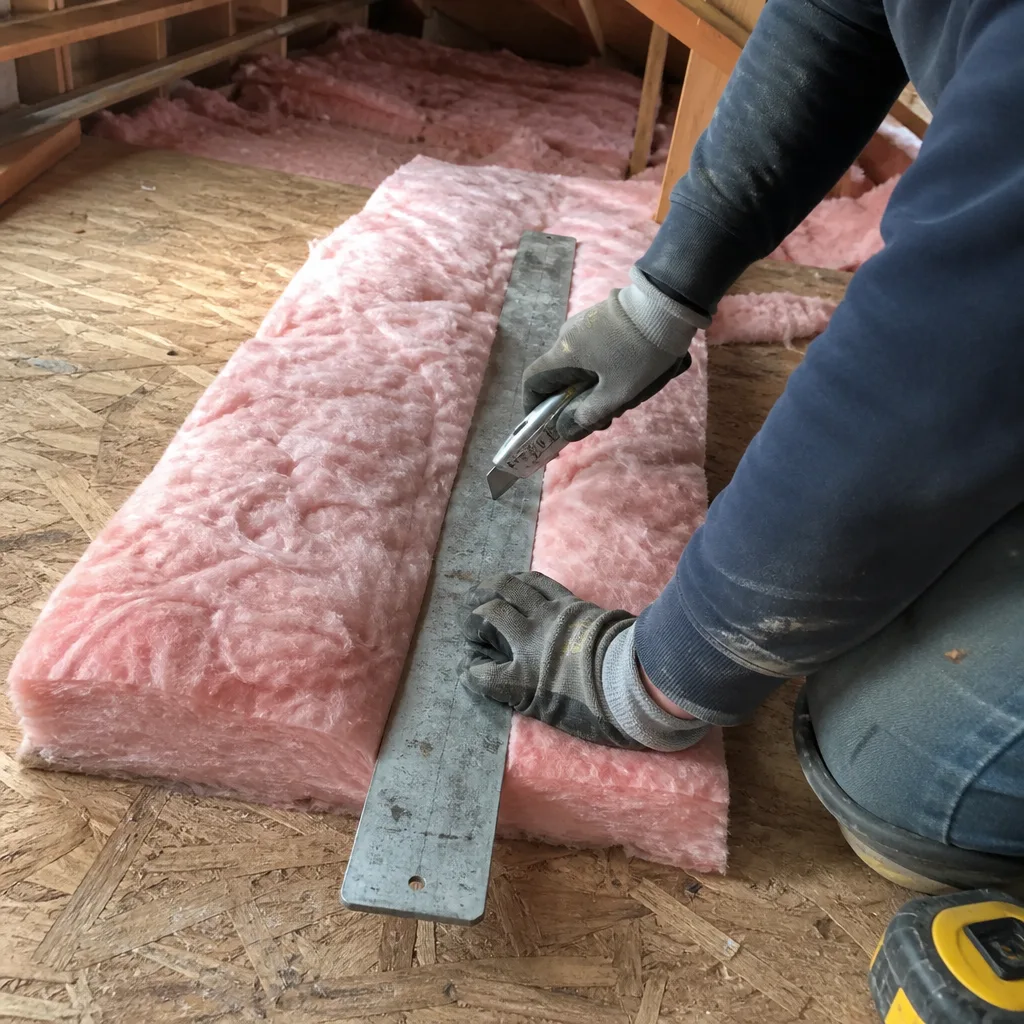
Ask any three insulation contractors in Cupertino whether they perform a blower-door test. Most will say yes on request. Only one will hand you the pre- and post-installation ACH50 numbers without being asked. That gap between promised and documented performance is what separates a material installer from a building-envelope contractor. In this guide, you’ll learn how to verify credentials, compare bids on an apples-to-apples basis, and demand the four documents that prove your job was done correctly - not just done - with insulation warning signs every Cupertino homeowner should know.
Quick Answer
To hire an insulation contractor in Cupertino, verify their CSLB license classification (B-General or C-2), request four documents before signing (written scope with R-values, permit plan, air-sealing protocol, and post-job documentation commitment), and compare bids only after restating them to include air sealing and post-installation blower-door verification. A legitimate contractor in Cupertino will provide these without hesitation; one who cannot is a liability risk, not just an inconvenience.
Table of Contents
- Why Most Hiring Checklists Fail
- Step 1: Verify the CSLB License and Classification
- Step 2: Demand the Four Documents Before Signing
- Step 3: Compare Bids on an Apples-to-Apples Basis
- Step 4: Ask Three Questions That Reveal Building Science Knowledge
- Step 5: Understand Cupertino Permits and Code Requirements
- Step 6: Know What Your Final Job Record Should Contain
- Common Mistakes to Avoid
- When to Call a Professional
- Frequently Asked Questions
- The Bottom Line
 Before
 After
AfterWhy Most Hiring Checklists Fail
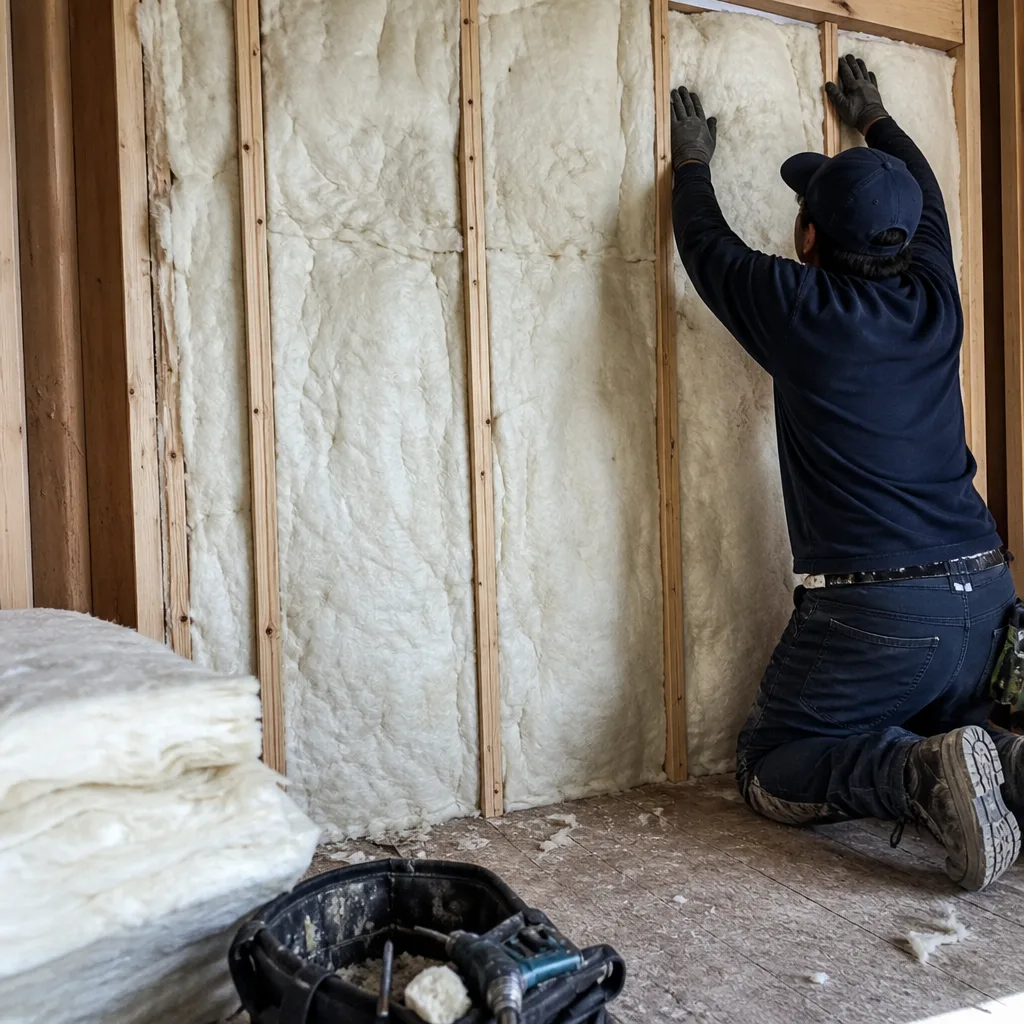
Most guides tell you to check reviews, verify insurance, and get three bids. These are table stakes, not hiring criteria. They don’t tell you whether the contractor will pull a permit, whether they’ll air-seal before insulating, or whether you’ll have any record of what was actually installed in your Cupertino home.
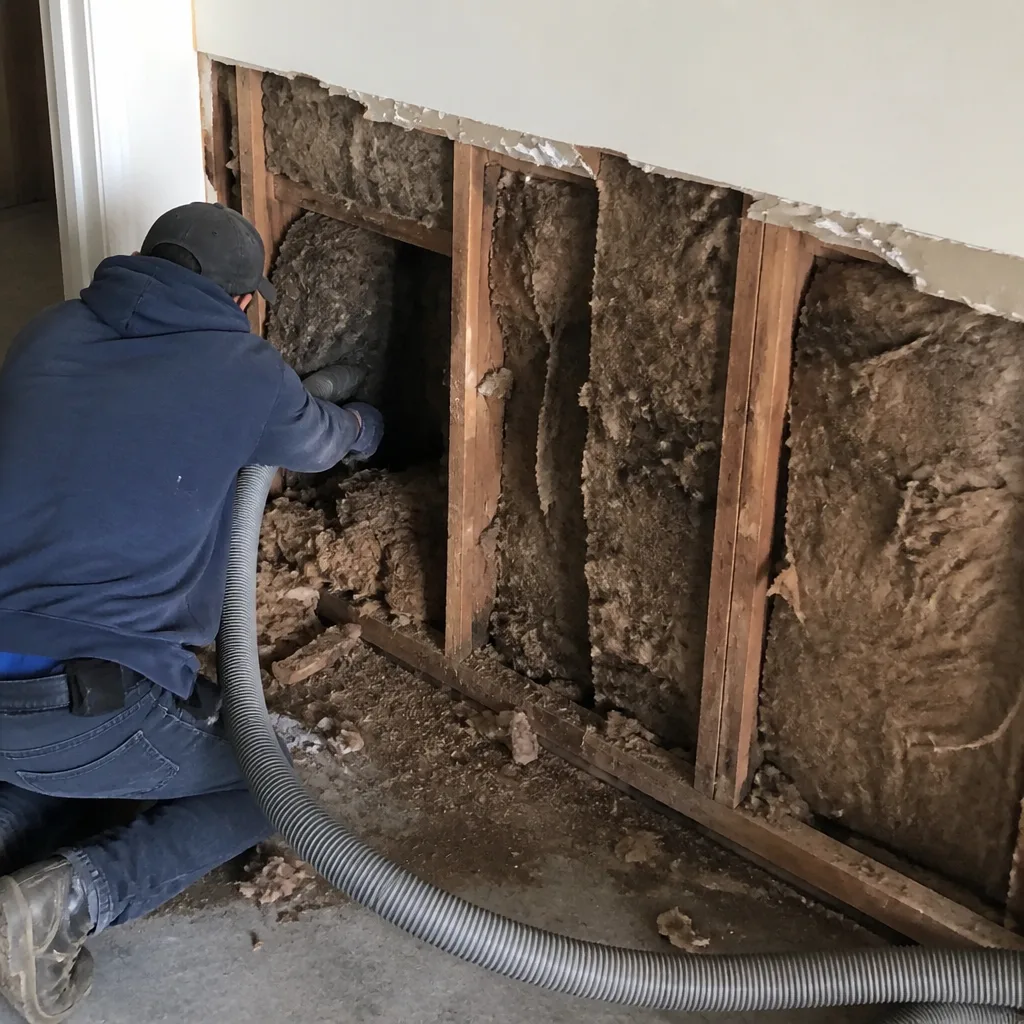
We’ve inspected attics in Rancho Rinconada, Monta Vista, and the older Eichler neighborhoods near Stevens Creek where blown-in fiberglass was installed directly over unsealed top plates and recessed light cans. The insulation looked full. The energy bills didn’t change. The homeowner had no written scope, no permit record, and no photos. When we ran the blower-door test, the building envelope was leaking 3,800 CFM50 - nearly identical to a house with no insulation at all.
The problem isn’t that homeowners don’t ask enough questions. It’s that they ask the wrong ones. “Are you licensed?” gets a yes. “Will you air-seal?” gets a yes. Neither answer is verifiable without documentation. This guide replaces the generic checklist with a process built around outputs you can hold in your hand: license numbers you can look up, scopes you can compare, permits you can verify, and post-job records that protect you if something goes wrong.
Topside Attic Insulation Cupertino home
Step 1: Verify the CSLB License and Classification
Every insulation contractor working in Cupertino must carry a valid California State License Board (CSLB) license. But the classification matters more than most homeowners realize. Here’s what the two relevant classifications actually permit:
- B-General Building Contractor: Can perform insulation work as part of a larger project or as a standalone job, but cannot claim specialty expertise in insulation specifically. Legally allowed to install all insulation types and perform air sealing.
- C-2 Insulation and Acoustical Contractor: Specialty classification specific to insulation installation. Cannot perform structural work or trades outside their specialty without additional licensing.
To verify, go to cslb.ca.gov and enter the license number. Check three things: status (must show “Active”), classification (B or C-2), and whether the license is in the contractor’s name or a corporate entity. If the person quoting your job isn’t the license holder, ask who will be the responsible managing employee on site.
Also check for workers’ compensation insurance. In California, contractors without employees can file an exemption, but any crew of two or more must carry it. If a worker is injured in your Cupertino home and the contractor lacks coverage, your homeowner’s policy becomes the primary target.
We’ve seen unlicensed operators in the South Bay quote attic jobs 30% below market, then disappear when the homeowner finds mold behind the kneewall insulation six months later. The CSLB lookup takes 90 seconds. Do it every time.
Step 2: Demand the Four Documents Before Signing
A contractor who cannot produce these four documents before work starts is not prepared to stand behind their work. Under Haven Standard Clause 1, every job begins with a written price - flat, with scope, with warranty - before anyone lifts a tool. Here’s what to request:
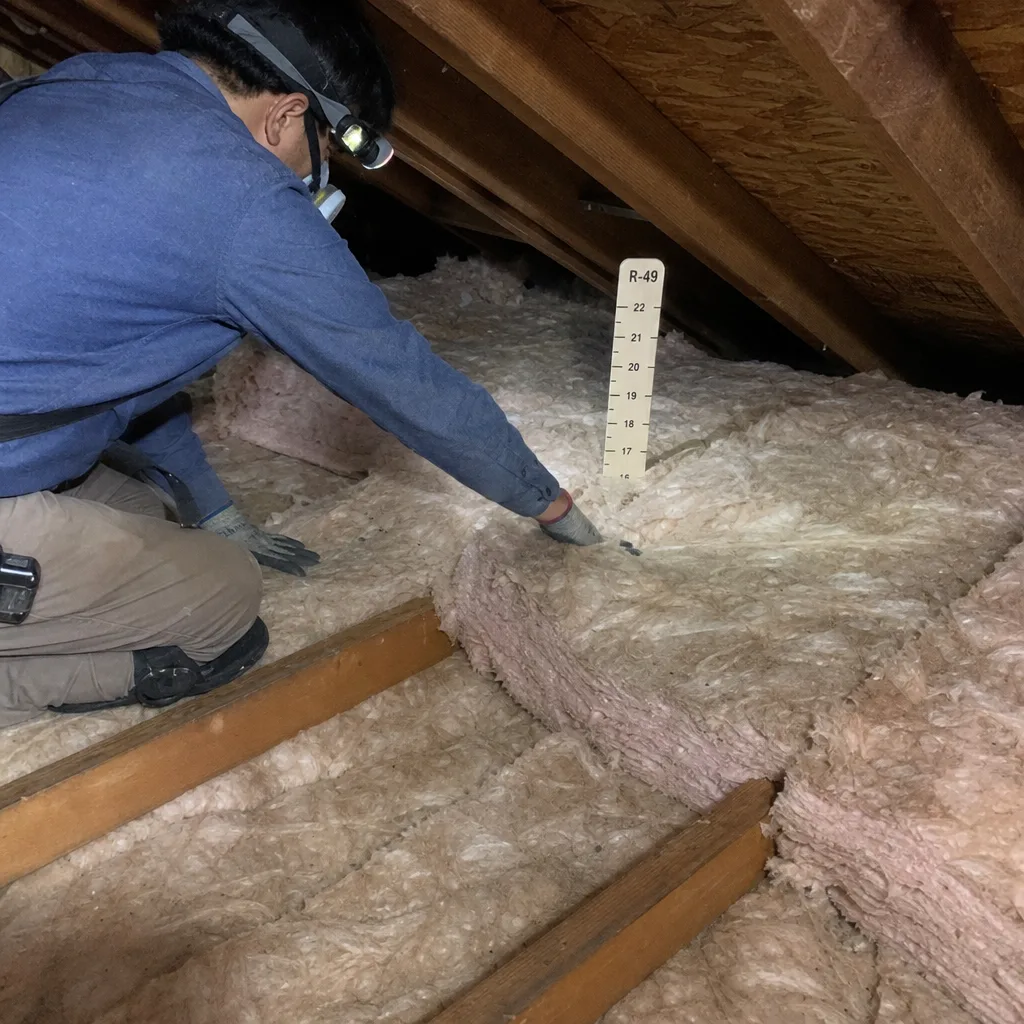
- Written scope with material specs and R-values: Must specify manufacturer (Owens Corning, Johns Manville, Knauf, Rockwool, or other named brand), product line, installed R-value, and coverage area in square feet. “R-38 blown-in fiberglass” is not enough. “Owens Corning AttiCat R-38, 12 inches nominal depth, 1,200 square feet conditioned attic floor” is what you need.
- Permit plan: In Cupertino, attic insulation upgrades typically require a building permit if the work involves removal, replacement, or changes to the thermal envelope. The contractor should specify whether they’ll pull it or whether you’ll need to. If they say “permits aren’t required for this job,” ask them to cite the specific Cupertino Municipal Code exemption. Get it in writing.
- Air-sealing protocol description: This is where most bids diverge. A legitimate protocol names the locations to be sealed: top plates, wire and pipe penetrations, recessed light cans, chimney chases, and duct boots. It specifies the sealant (caulk, foam, or gasket) and the sequence (sealing before insulation, never after). If a bid omits this entirely, the contractor is planning to blow insulation over air leaks - which is like putting a sweater over a screen door.
- Post-job documentation commitment: What you receive when the crew leaves. At minimum: photos of the completed work, a permit final inspection record (if applicable), and on air-sealing jobs, before-and-after blower-door readings. Without this, you have no baseline if performance problems emerge later.
We’ve completed over 9,000 homes since 2016, and every one left with these four documents. A contractor who treats documentation as an after treat is planning for you to forget what was promised.
Step 3: Compare Bids on an Apples-to-Apples Basis
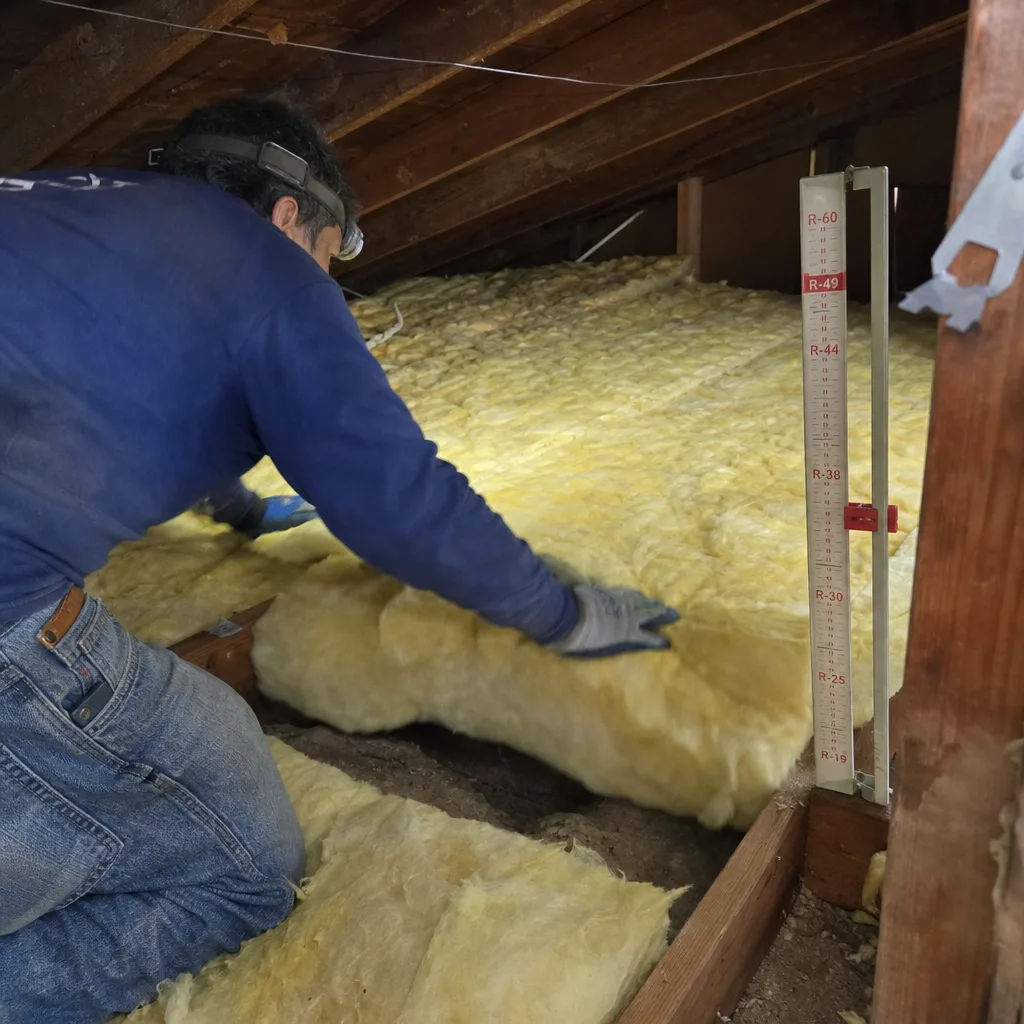
The most common hiring mistake in Cupertino is comparing bids with different scopes and calling the lowest price a bargain. A bid that omits air sealing is not a lower price for the same work. It’s a different scope entirely, and the performance gap will cost you for the life of the home.
Here’s how to restate any bid for fair comparison:
- Add air sealing if missing. In Cupertino’s climate - warm, dry summers and mild winters with significant diurnal temperature swing - air leakage dominates energy loss more than conduction through under-insulated walls. A home at 3,500 CFM50 will underperform even with R-60 in the attic.
- Standardize R-values. One bid may quote R-38, another R-49. Convert to cost per R-value per square foot to see the real material value.
- Include permit costs. Some contractors bury permit fees; others exclude them entirely. Cupertino’s building division charges permit fees based on valuation. A $3,500 attic job typically runs $150-$300 in permit fees.
- Factor in documentation. A bid with blower-door verification costs more than one without. But the $200-$400 difference pays for measurable proof of performance, not just a promise.
Most attic insulation jobs in a typical Cupertino single-family home run between $2,800 and $5,400 when air sealing and blower-door verification are included. Wall insulation, spray foam, or crawl space work runs higher. If three bids cluster at $1,800, $3,200, and $4,100, the $1,800 bid almost certainly excludes air sealing, permits, or both.
We provide a Free Second Opinion on any written estimate. Bring us a competing quote and we’ll read it with you, line by line, and show you what’s included, what’s excluded, and what questions to ask.
Step 4: Ask Three Questions That Reveal Building Science Knowledge
These questions separate contractors who understand how buildings actually perform from those who move material from truck to attic. Ask them in person or by email, and judge the specificity of the answer.
Question 1: “How do you seal top plates before blowing insulation?”
The top plate is the horizontal framing member where wall studs meet the ceiling drywall or roof sheathing. In most Cupertino homes built before 1990, this joint is unsealed and leaks continuously. A competent contractor will describe accessing each bay, applying expanding foam or caulk to the seam, and verifying seal quality before insulation covers it. An incompetent one will say “we spray foam around the edges” or change the subject.
Question 2: “How do you address thermal bridging at truss heels?”
Truss heels - where roof trusses sit on exterior walls - create a compressed insulation zone that drops effective R-value by 30-50% at the eave. A knowledgeable contractor will describe baffles to maintain ventilation, raised-heel truss modifications if structurally feasible, or dense-pack approaches that fill the cavity fully. A material-mover will look confused or say “we just blow it in thick.”
Question 3: “What do you do at recessed light cans?”
Recessed cans are among the worst thermal and air leaks in Cupertino ceilings, especially in homes with original non-IC (non-insulation-contact) fixtures from the 1970s and 1980s. The correct answer involves one of three approaches: replacing with airtight IC-rated LED fixtures, installing pre-formed airtight covers, or sealing with fire-rated foam and maintaining clearance. The wrong answer is “we just blow around them” or “fiberglass doesn’t burn, so it’s fine.”
We’ve found unsealed cans leaking 150 CFM50 each in Monta Vista ranch homes. Multiply by eight cans and you’ve got a hole in your ceiling the size of a basketball, pumping conditioned air into your roof cavity year-round.
Spray Foam Insulation in Cupertino
Step 5: Understand Cupertino Permits and Code Requirements
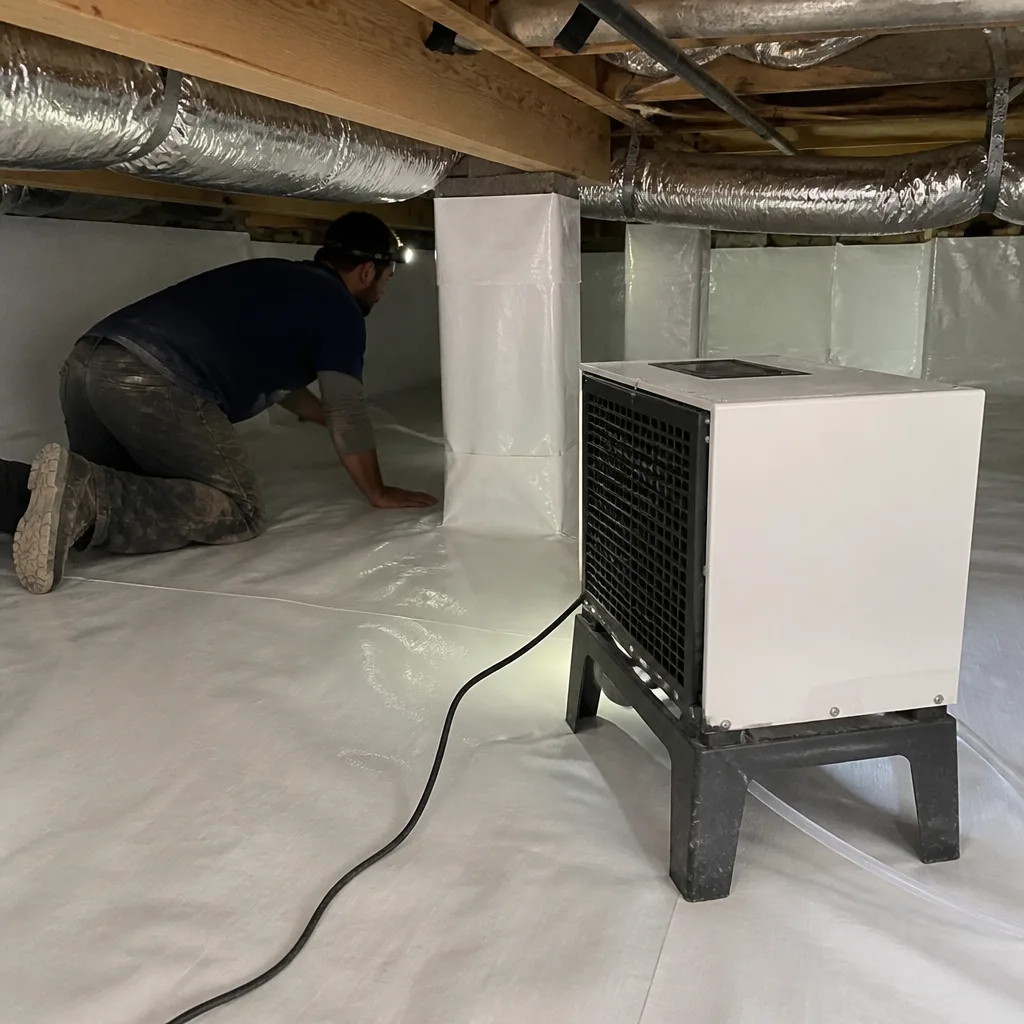
Cupertino falls under Santa Clara County jurisdiction for some building matters, but the city maintains its own building division for residential alterations. Before starting, review insulation permits, codes & inspections in CA: what you need to know. Here’s what actually applies to insulation work:
- Attic insulation replacement or upgrade: Requires a building permit if R-value is changed, insulation is removed, or the thermal envelope is modified. Simple top-offs over existing insulation sometimes qualify as maintenance, but most legitimate contractors pull a permit to document the work for resale and warranty purposes.
- Wall insulation in existing construction: Requires permit and typically a building inspector’s sign-off on fire blocking and vapor retarder placement.
- Spray foam insulation: Requires permit, fire separation inspection, and in some cases a 15-minute thermal barrier per California Building Code Chapter 26. Not all contractors are familiar with these requirements; ask specifically.
- Crawl space encapsulation: May trigger moisture barrier and ventilation code requirements. Cupertino’s clay-heavy soils in some neighborhoods (particularly near Stevens Creek) create vapor drive issues that unencapsulated crawl spaces magnify.
The permit process in Cupertino typically takes 2-5 business days for simple residential insulation jobs, with inspection scheduled 24-48 hours after completion. A contractor who says “permits take too long” or “we’ll pull it after” is asking you to accept uninspected work. Under Haven Standard, we pull permits before work starts, period.
California’s Title 24 energy code also mandates minimum insulation levels for alterations. For attic insulation in Climate Zone 4 (which includes Cupertino), the prescriptive minimum is R-38 for wood-framed ceilings. A contractor quoting R-30 or proposing to “match what’s there” in a pre-1990 home is proposing code-deficient work.
Crawl Space Encapsulation & Vapor Barrier in Cupertino
Step 6: Know What Your Final Job Record Should Contain
The job isn’t done when the crew leaves. It’s done when you have a complete record that protects your investment and documents performance. Here’s what a legitimate contractor delivers:
| Document | What It Contains | Why It Matters |
|---|---|---|
| Final written scope | Actual installed materials, R-values, square footage, any changes from original bid | Warranty baseline; resale documentation; dispute resolution |
| Permit final inspection record | City inspector sign-off, date, permit number | Proof of code compliance; required for many home sales |
| Documented Photo Record | Pre-condition, during, and post-completion photos of attic, walls, or crawl space | Visual proof of complete coverage; evidence if problems emerge |
| Blower-door test results | Pre-sealing CFM50 or ACH50, post-sealing CFM50 or ACH50, calculated reduction | Quantified proof of air-sealing performance; energy model input |
| Warranty document | 365-Day Done Right Promise or equivalent, with specific coverage and claim process | Recourse if materials fail or performance doesn’t match promise |
We publish before-and-after blower-door numbers on every applicable job. A typical Cupertino home built in the 1970s starts around 3,500-4,500 CFM50. After proper air sealing and insulation, we regularly see 1,800-2,400 CFM50 - a 40-50% reduction that shows up in comfort and utility bills within the first billing cycle.
A contractor who cannot or will not produce this record is not just disorganized. They’re a liability risk. If your insulation compresses, settles, or fails to perform, and you have no documentation of what was installed or how it tested, your warranty claim is unsupported and your small-claims case is unwinnable.
Common Mistakes to Avoid
- Hiring based on price per square foot alone. A $1.20/sq ft bid that excludes air sealing will underperform a $1.80/sq ft bid that includes it. Calculate total cost per unit of measured performance, not material volume.
- Accepting “we’ll pull the permit later.” In Cupertino, work without a permit can trigger stop-work orders, double fees, and removal requirements. Never pay final invoice until the final inspection is approved.
- Assuming all blown-in fiberglass is the same. Owens Corning AttiCat, Johns Manville Climate Pro, and Knauf Jet Stream are engineered for different densities and coverage. The written scope must name the product, not just the generic material type.
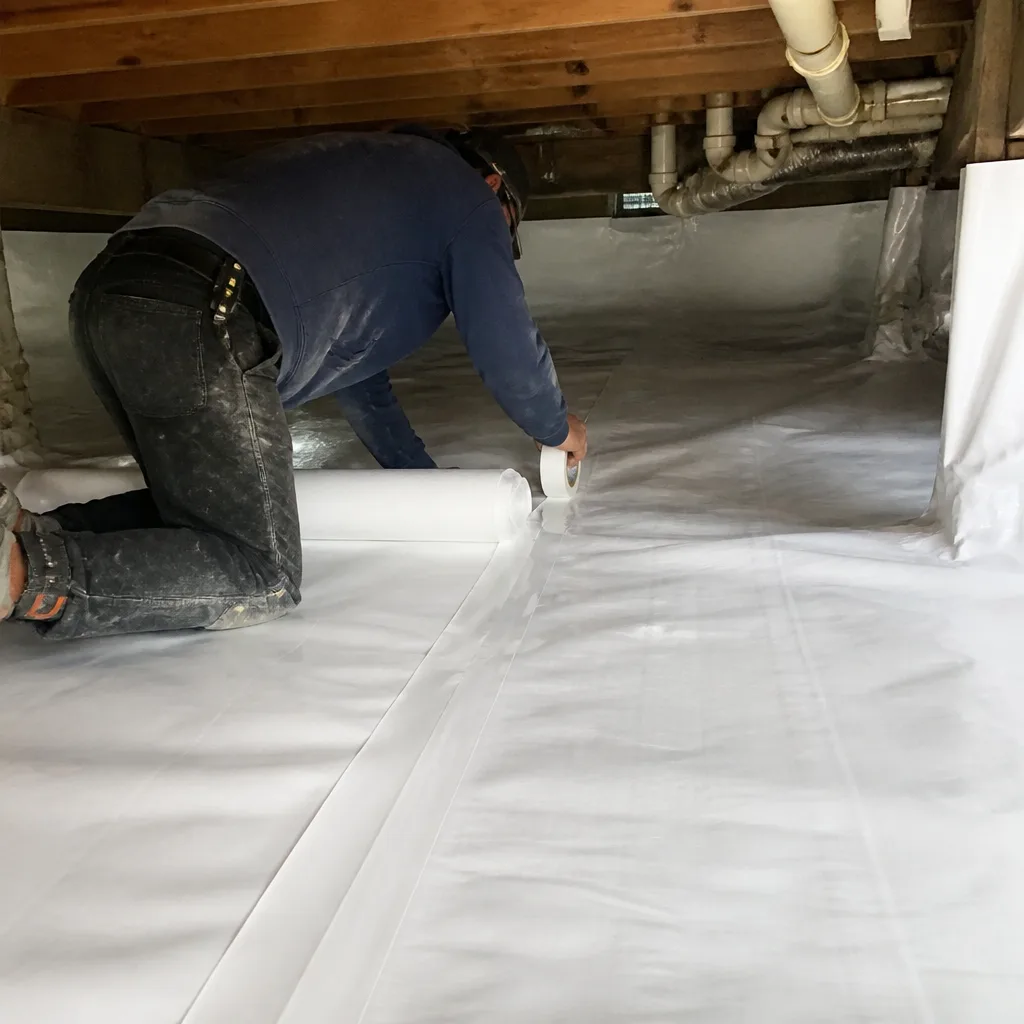
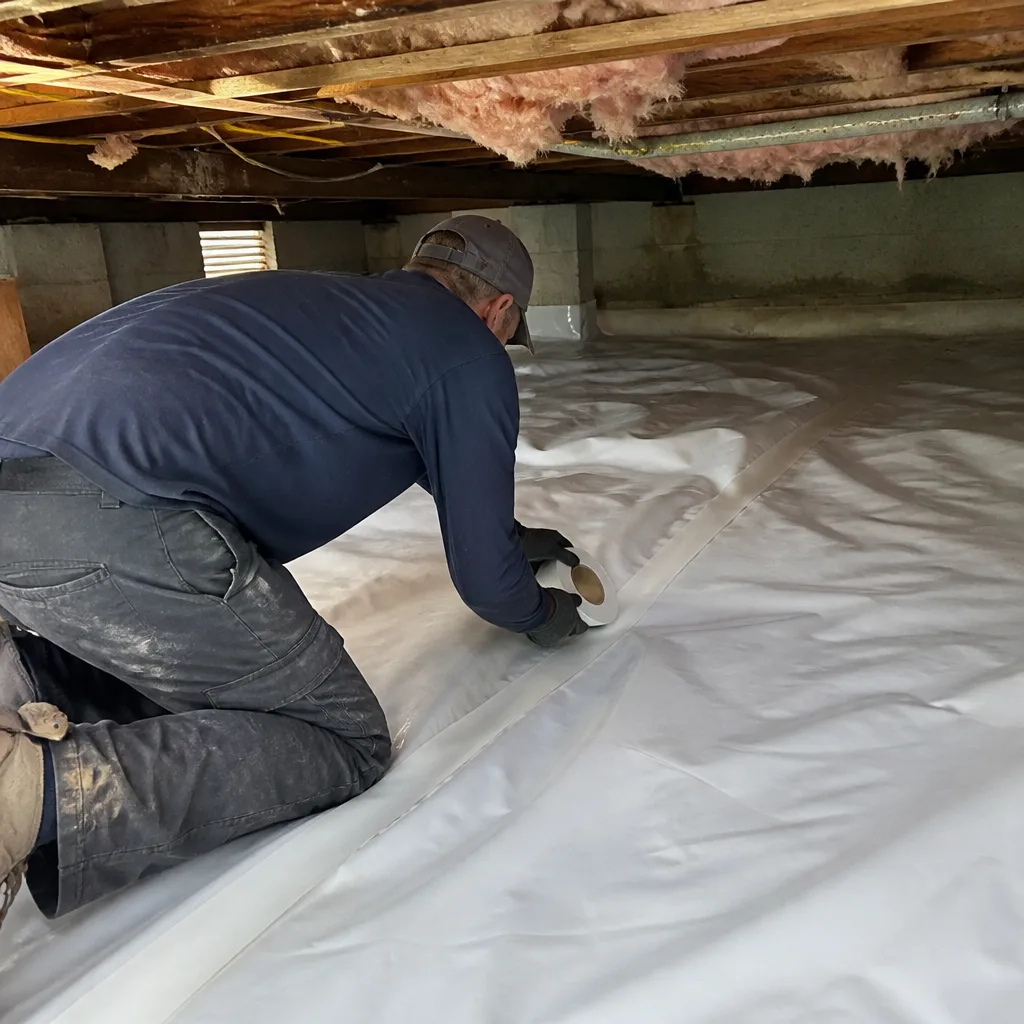
- Ignoring the crawl space. Cupertino’s older homes near Eichler developments and original ranch neighborhoods often have vented crawl spaces with no vapor barrier. Insulating the attic while ignoring 1,200 square feet of dirt-floor crawl space is treating half the problem.
- Not asking about rodent damage before insulating. We’ve found active infestations in attics above Rancho Rinconada and The Oaks where homeowners were quoted insulation top-offs. Blowing new material over rodent-soiled insulation is a health hazard and violates California code. The scope must address existing contamination first.
- Trusting verbal promises over written scope. “We’ll air-seal the important stuff” means nothing. The protocol must name locations, materials, and sequence. Under Haven Standard, if it’s not in writing, it’s not promised.
- Skipping the blower-door test. Without measured verification, you’re buying a material installation, not a performance improvement. The test costs $200-$400 and proves whether the air sealing actually worked.
When to Call a Professional
Call a building-envelope contractor when your energy bills are rising without rate increases, when rooms have persistent temperature differences of more than 4 degrees, when you can see floor joists in your attic (indicating settled or insufficient insulation), or when you’re planning any HVAC replacement - because the equipment size depends on the building’s heat loss, which depends on the envelope performance.
In Cupertino’s climate, the combination of warm summer days, cool nights, and heating-dominated winter mornings makes air sealing the highest-return improvement for most homes built before 2005. Insulation without sealing is incomplete; sealing without insulation is better than the reverse.
Topside Attic Insulation Cupertino offers free estimates in Cupertino and the surrounding Santa Clara Valley. We’ll review your existing conditions, provide a written scope with flat pricing, and explain what documentation you’ll receive before anyone starts work. Call (831) 217-8521 to schedule.
Frequently Asked Questions
Most attic insulation jobs in a typical Cupertino single-family home run between $2,800 and $5,400 when air sealing, permit, and blower-door verification are included. See our Insulation Cost Breakdown: The Cupertino Homeowner’s Reference for 2026 for detailed pricing factors. Wall insulation, spray foam applications, or crawl space encapsulation run higher depending on access difficulty and square footage. Call (831) 217-8521 for a written estimate on your specific home - estimates are free and include a documented photo record of existing conditions.
Repair is rarely practical. Insulation that has settled below the joist tops, been disturbed by rodents, or contaminated by moisture cannot be restored to original R-value by topping off. In our experience inspecting Cupertino homes, removal and replacement with proper air sealing costs 15-25% more than topping off but delivers 40-60% better measured performance. The real comparison is replacement versus doing nothing - topped-off old insulation almost always underperforms a clean installation.
Same-day service is available for urgent situations like failed insulation after water damage or rodent contamination that has created active health hazards. Standard attic insulation replacement requires 1-2 days for most Cupertino homes, with permit lead time adding 2-5 business days before work can begin. Call (831) 217-8521 to discuss timeline - we’ll tell you what’s possible and what’s not.
Yes, if you’re changing R-value, removing existing insulation, or modifying the thermal envelope. Cupertino’s building division requires permits for most insulation upgrades, with final inspection required before the permit is closed. A contractor who suggests skipping the permit is exposing you to stop-work orders, double fees, and uninspected work that complicates future home sales. We pull permits on every job and include the final inspection record in your documentation package.
R-value measures resistance to heat flow through a material - how well insulation blocks conduction. Air leakage measures how much conditioned air escapes through gaps and cracks - how well the building envelope is sealed. A home can have R-60 in the attic and still leak 4,000 CFM50 if top plates, cans, and penetrations are unsealed. In Cupertino’s climate, air leakage typically causes more energy loss than insufficient R-value in homes built before 1990. Both matter, but sealing comes first.
Demand before-and-after blower-door test results. A blower-door test - a pressurization reading that shows, in one number, how much air your building envelope is losing - provides quantitative proof. If your contractor claims to have air-sealed but cannot produce pre- and post-installation CFM50 or ACH50 numbers, you have no verification. Under Haven Standard, we publish these numbers on every applicable job and include them in your final documentation.
The Bottom Line
Hiring an insulation contractor in Cupertino is not about finding the lowest bid or the most reviews. It’s about verifying that the contractor will document what they promise, seal before they insulate, pull the proper permits, and leave you with measurable proof of performance. The four documents - written scope, permit plan, air-sealing protocol, and post-job record - are your protection against the common failure mode of insulation that looks full but performs poorly. Ask the three building-science questions. Run the CSLB lookup. Restate every bid to the same scope. And never accept a verbal promise when a written one is available. The 90 minutes you spend on this process will determine whether your insulation investment pays back over decades or disappoints by the first winter. For more guides & resources on building performance, visit our blog.
Written by Wes Okafor, Owner at Topside Attic Insulation Cupertino, serving Cupertino since 2016.