
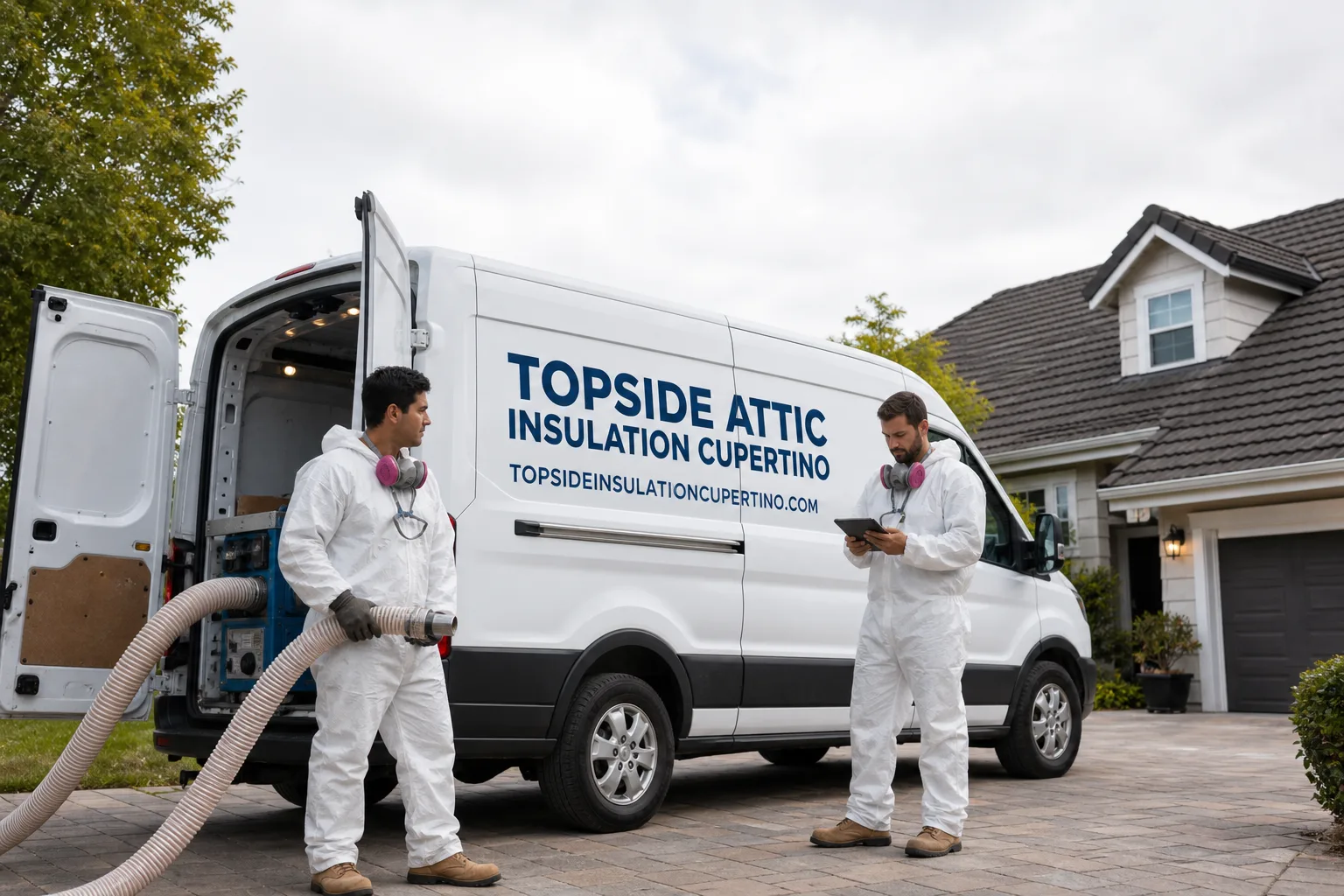
How Much Does Spray Foam Insulation Cost in Cupertino?
Our Spray Foam Insulation services in Cupertino, CA typically cost between $1.50 and $4.50 per board foot, depending on foam type, application area, and site conditions. Most homeowners in Cupertino spend somewhere between $2,800 and $7,500 for a standard attic or crawl space job, though larger whole-envelope projects can reach $12,000 to $18,000. Every price Envelope Insulation Co. puts in front of you is a flat written number before anyone starts work – no estimates that balloon on the day.
If you want to understand exactly what moves that range up or down – and how Cupertino’s specific construction stock and climate affect your project – keep reading. This guide lays out real 2026 numbers, the factors that drive cost, and how to avoid overpaying.
Spray Foam Insulation Cost Breakdown (2026)
The two types of spray foam – open-cell and closed-cell – behave differently, perform differently, and cost differently. Here is how 2026 pricing shakes out in the Cupertino market, where labor costs track with the broader South Bay construction trades and material lead times have stabilized after a few volatile years.
| Application | Foam Type | Typical Range (per board foot) | Typical Total (avg. Cupertino home) |
|---|---|---|---|
| Attic floor sealing + spray foam | Closed-cell (2 in. lift) | $2.75 - $4.50 | $3,200 - $6,800 |
| Attic roof deck (unvented attic conversion) | Closed-cell (3-4 in. lift) | $3.25 - $4.50 | $5,500 - $11,000 |
| Crawl space walls + rim joists | Closed-cell (2 in.) | $2.75 - $4.00 | $2,800 - $5,500 |
| Rim joists only (partial job) | Closed-cell (2 in.) | $3.00 - $4.25 | $900 - $2,200 |
| Wall cavities (new construction or open wall) | Open-cell (3.5 in.) | $1.50 - $2.25 | $3,500 - $8,000 |
| Wall cavities (retrofit, open wall) | Closed-cell (2 in.) | $2.75 - $3.75 | $4,200 - $9,500 |
| Garage ceiling / bonus room floor | Open-cell or closed-cell | $1.75 - $3.50 | $1,400 - $4,000 |
| Whole-envelope project (attic + crawl + walls) | Mixed | Negotiated scope | $12,000 - $18,000 |
A note on “board foot”: one board foot equals one square foot of foam at one inch of thickness. When a contractor says “two-inch closed-cell,” they mean two board feet of material per square foot of surface. Closed-cell foam achieves roughly R-6 to R-7 per inch; open-cell runs about R-3.7 per inch. That difference in R-value per inch is the main reason closed-cell costs more – you get more thermal and moisture resistance in a thinner profile.
Old Cupertino tract homes built in the 1960s and 1970s – the ranchers throughout Monta Vista and the two-story colonials off Stevens Creek – frequently have uninsulated or under-insulated rim joists and vented crawl spaces that are pulling in cold, damp air from the ground. Those partial rim-joist jobs tend to be the most cost-effective entry point before committing to a larger project.
Under the Haven Standard, Envelope Insulation Co. delivers a written flat price for your specific scope before any crew member picks up a spray rig. The price in the table above is a market reference; the price on your written scope is the price you pay.
What Affects Spray Foam Insulation Pricing in Cupertino
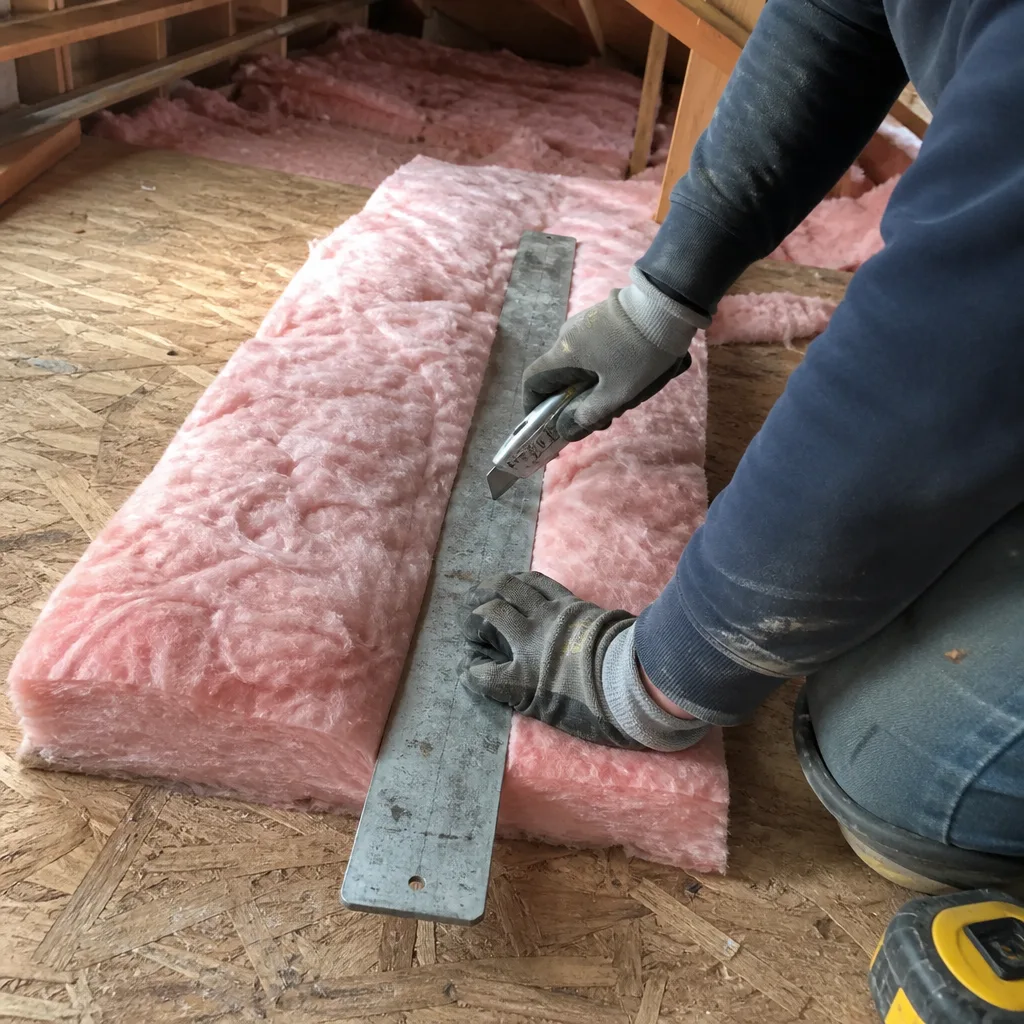
Six factors move the needle most consistently on Cupertino jobs. Understanding them helps you read a competing quote and spot where a low number might be hiding a corner cut.
- Foam type: open-cell vs. closed-cell. Open-cell foam (sometimes called half-pound foam) is lower-density, vapor-permeable, and costs roughly $1.50 to $2.25 per board foot. Closed-cell (two-pound foam) is denser, acts as a vapor retarder, and runs $2.75 to $4.50. In Cupertino’s climate – cool, dry winters with occasional moisture intrusion from December through February – closed-cell is almost always the right call in crawl spaces and on roof decks. Open-cell can work in interior wall cavities where vapor management is less critical.
- Application area and access. Spraying a clean, open attic floor is straightforward. Spraying the underside of roof sheathing in a low-pitch attic with HVAC equipment in the way – common in the post-1980s homes along Randy Lane and the Rancho Rinconada pocket – adds labor time and therefore cost. Crawl spaces under the older single-stories in Homestead neighborhood frequently have 18-inch clearance, which slows the crew down and changes what equipment can be used.
- Air sealing as a prerequisite – not an upsell. Envelope Insulation Co. will not spray foam over an unsealed building envelope. Before foam goes on, top plates, can-light penetrations, and any open chases get sealed. Some contractors skip this step to offer a lower bid. On jobs where we have run blower-door tests – a pressurization reading that shows, in one number, how much air the envelope is losing – we regularly see attics in Cupertino’s Rancho Rinconada and Monta Vista neighborhoods reading between 3,800 and 5,200 CFM50 before sealing, dropping to 1,400 to 2,200 CFM50 after. That air-sealing labor is included in the written price, not added later.
- Existing insulation removal. If old, contaminated, or rodent-damaged fiberglass batts are in the space, they need to come out before foam goes in. Removal on a 1,400-square-foot attic in Cupertino typically runs $800 to $1,800 depending on depth and contamination. This is a separate line item on the written scope so you can see exactly what you are paying for and why.
- Thickness and R-value target. California’s Title 24 energy code requires R-38 in attic ceilings for most Cupertino homes in Climate Zone 4. Hitting R-38 with closed-cell foam alone would require roughly 5.5 to 6 inches – expensive. Most projects pair 2 inches of closed-cell at critical air-barrier locations with blown-in fiberglass or cellulose to reach the full R-value target at a lower total cost. The written scope will show both the foam depth and the blended R-value you are buying.
- South Bay labor market. Cupertino is in Santa Clara County, where skilled insulation labor costs more than in the Central Valley or most of Southern California. A job that quotes at $2,800 in Fresno may reasonably quote at $3,600 to $4,200 in Cupertino for the same square footage. This is not price gouging; it is what it costs to hire background-checked, uniformed technicians in a market where construction wages are high.
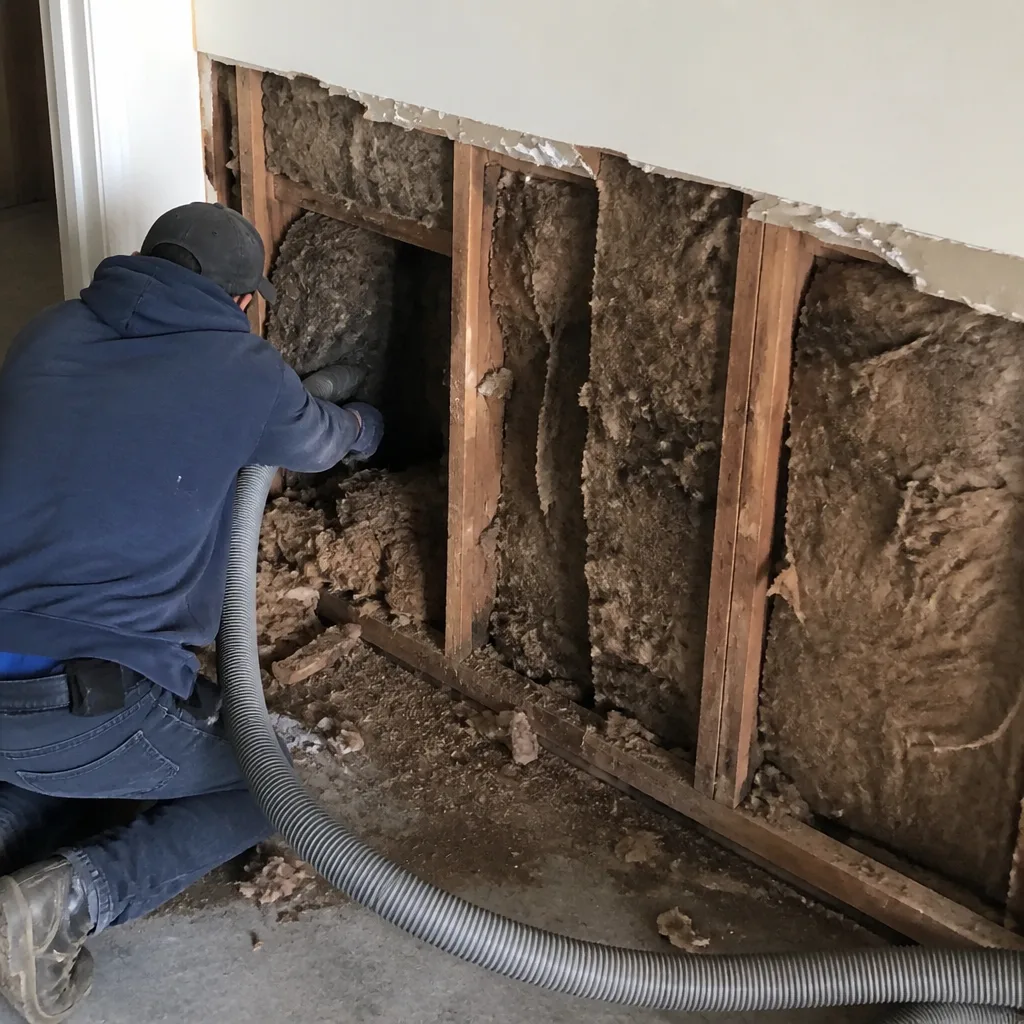 Before
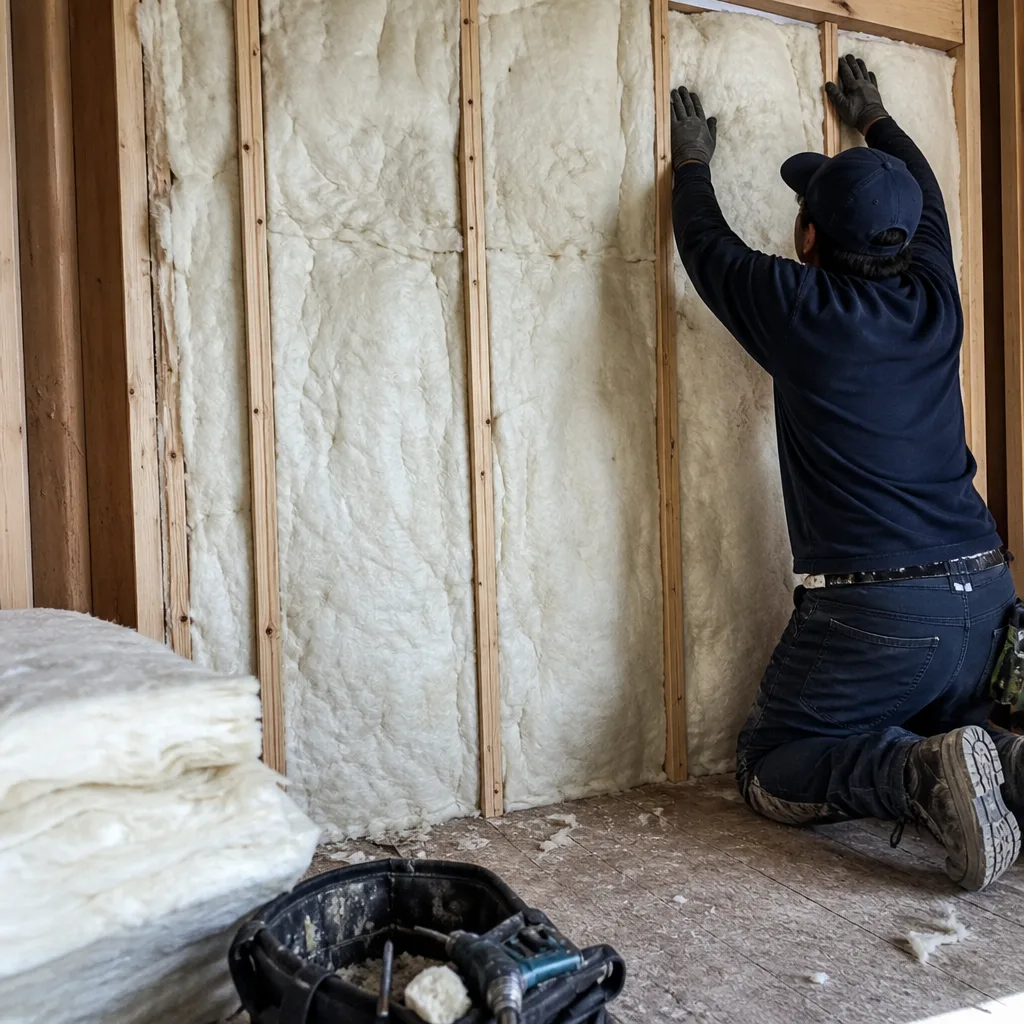 After
AfterOpen-Cell vs. Closed-Cell: Which Should Cupertino Homeowners Choose?
This comes up on almost every estimate call. The short answer for most Cupertino applications: closed-cell in the crawl space, on the roof deck, and at rim joists; open-cell is a reasonable option in interior wall cavities where you have a drywall-side vapor barrier or where budget is the primary constraint.
Here is the practical difference. Closed-cell foam at 2 inches gives you roughly R-12 to R-14 and a Class II vapor retarder in the same application. That matters in crawl spaces under Cupertino homes that sit over damp soil – especially the properties west of DeAnza College where shallow groundwater is more common after heavy rain years. Open-cell foam at the same 2-inch thickness gives you about R-7.5 and does nothing to slow moisture vapor. For roof decks being converted from vented to unvented attics, California Energy Commission guidance strongly favors closed-cell or a code-compliant hybrid assembly.
For Spray Foam Insulation in Cupertino projects where the homeowner wants the full picture – blower-door numbers before and after, documented foam depth, and a photo record of every penetration sealed – Envelope Insulation Co. provides all of that on every applicable job. It is not an upgrade tier. It is how every job closes.
Do Cupertino Homeowners Need a Permit for Spray Foam Insulation?
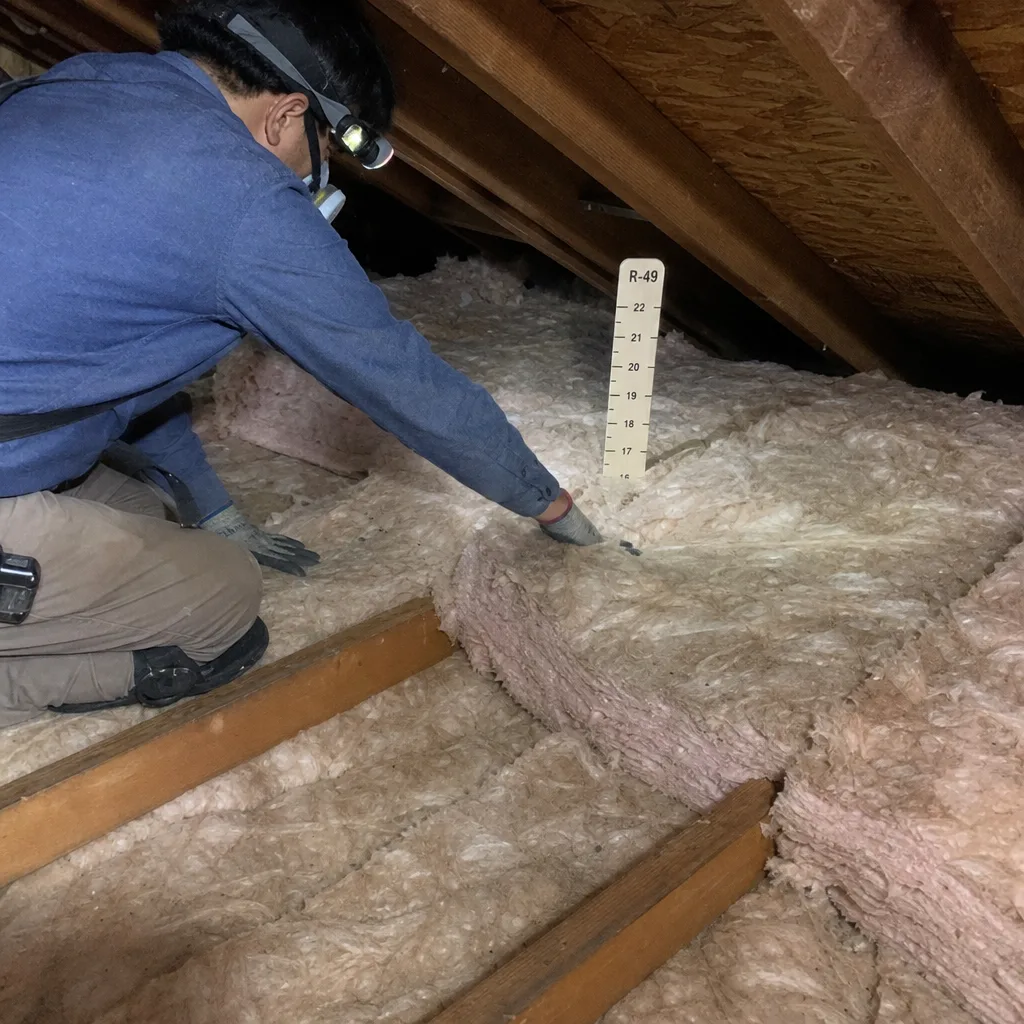
In most cases, adding spray foam to an existing attic floor or crawl space in Cupertino does not require a building permit under the City of Cupertino’s Community Development Department guidelines – it falls under the maintenance and repair exemption when the structural assembly is not being altered. However, two scenarios almost always do require a permit and an inspection:
- Converting a vented attic to an unvented attic (spray foam to the roof deck changes the attic’s thermal and moisture dynamics, which is a change in the building assembly).
- Any spray foam application in conjunction with electrical, HVAC, or structural work that is separately permitted.
When a permit is required, it adds both time and cost – typically $350 to $700 in city fees for a residential energy project in Santa Clara County, plus inspection scheduling. This will be spelled out in the written scope before any work starts. We do not pull a permit and absorb the cost silently; you see it as a line item.
Spray foam also carries a fire-rating requirement under California Building Code Section 2603: most spray polyurethane foam installed in an occupied building must be covered with a thermal barrier – typically half-inch drywall – unless the specific product has been tested and listed for ignition resistance as an exposed foam. Icynene and Demilec products we use have specific tested assemblies. This affects attic-deck applications where the foam will be visible, and it should be discussed before scope is written.
How to Save on Spray Foam Insulation in Cupertino
Cupertino homeowners are not short on options for insulation contractors, and some will quote a number that looks significantly lower than others. Here is how to save real money without ending up with a job that needs to be redone.
Use a hybrid assembly where it makes sense
Closed-cell foam is not always the right material for every inch of R-value. On attic floors, 2 inches of closed-cell to seal the air barrier, followed by blown-in fiberglass or cellulose to reach the Title 24 R-38 requirement, is frequently 20 to 30 percent less expensive than achieving R-38 with closed-cell alone. The air-sealing benefit comes from the foam; the bulk R-value comes from the less expensive blown material. On a 1,500-square-foot Cupertino attic, that approach can save $1,800 to $3,500 compared to full-depth closed-cell.
Bundle the crawl space and attic into one scope
When a crew mobilizes to a Cupertino home, setup, transit, and equipment time are real costs that get spread across the job. A homeowner who does the attic in spring and the crawl space the following fall pays two mobilization charges. Combining them into one written scope typically cuts 8 to 12 percent from the total because those overhead costs are absorbed once. Ask for a bundled quote as a separate line item so you can see the actual savings.
Get a second opinion on any written estimate before signing
Under the Haven Standard, Envelope Insulation Co. offers a free second opinion on any written estimate. Bring us a competing quote and we will read it with you, line by line. We will flag if a competitor has quoted an inadequate foam thickness, omitted air sealing, or excluded removal of existing insulation. Whether you end up working with us or not, you leave understanding what the quote actually covers.
Look into available rebates before the project starts
PG&E’s Energy Upgrade California program and the federal 25C energy efficiency tax credit have historically covered portions of air sealing and insulation costs for Cupertino homeowners. As of 2026, the 25C credit covers 30 percent of qualifying insulation material costs (not labor) up to a $1,200 annual cap. State and utility programs change; verify current eligibility directly with PG&E and a tax advisor before counting on a specific dollar amount. We can provide the documentation – foam product specifications, R-value certification, and the project record – that most rebate applications require.
Do not delay if you have a vented crawl space with moisture
This sounds counterintuitive as a money-saving tip, but crawl spaces in Cupertino that show ground moisture intrusion, efflorescence on foundation walls, or condensation on floor joists in winter are actively degrading the wood structure. A crawl space encapsulation and foam job that costs $4,500 today is considerably less expensive than sistering floor joists or replacing subfloor sheathing two years from now. The photo record we document on every visit will show you exactly what is there before a single dollar is spent.
To schedule a free estimate with a written price before any work starts, call (831) 217-8521. A live person answers – no voicemail loops, no callback windows.
What the Estimate and Job Documentation Look Like
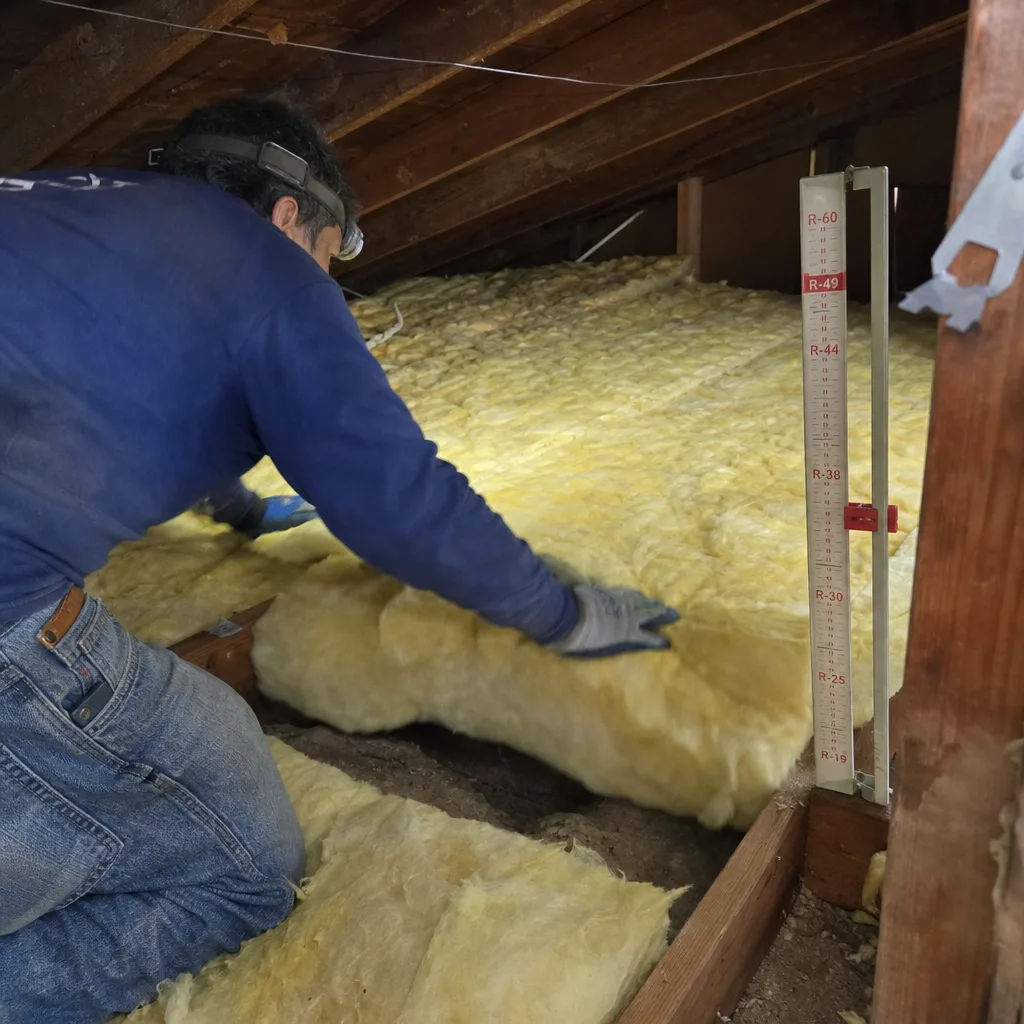
Knowing what you will receive before and after the job matters as much as the price itself. Here is what the process looks like on a standard Cupertino spray foam project under the Haven Standard.
Before the work starts
- A site visit where the technician measures the application area, notes access conditions, identifies any existing insulation to be removed, and reads any observable air leakage points.
- A written scope that names the foam type, the target thickness and R-value, the air-sealing locations, any removal work, and the flat price. This is not an estimate range – it is the price.
- A written warranty delivered before the crew starts.
- On applicable jobs, a pre-work blower-door reading documented in CFM50 – so you have a baseline to compare against the post-work number.
When the crew leaves
- A documented photo record of the completed work, included on every job.
- On applicable air-sealing and foam jobs, a post-work blower-door reading so you can see the before-and-after performance change in a single comparable number.
- The foam product data sheets and R-value certifications you will need for any PG&E rebate or 25C tax credit application.
- The 365-Day Done Right Promise in writing: if it is not right, we make it right.
Wes Okafor leads every project scope and stands behind the written warranty. If something is not right six months after the job closes, the same person who wrote the price is the person you call.
Cupertino-Specific Notes: Why Local Context Matters for Spray Foam
Cupertino sits in Climate Zone 4 under California’s Title 24 classification, which means it sees more heating demand than the Bay’s coastal zones but less than the inland valleys. Winter nights in Cupertino regularly drop to the mid-30s Fahrenheit, and the homes along the Foothill Boulevard corridor and up toward the Rancho San Antonio open space can see sustained cold snaps that drive significant heat loss through an unsealed attic or crawl space.
The housing stock is also fairly specific. A large share of Cupertino homes were built between 1958 and 1985 – ranch styles and split-levels in Monta Vista, two-story colonials in the Fairgrove neighborhood, and denser single-family homes throughout the central Cupertino grid. These homes were built before energy codes required meaningful insulation, and they frequently have original fiberglass batts in the attic that are compressed, settled, or contaminated. Spray foam, used correctly as an air barrier rather than a bulk R-value solution, changes the performance of these homes substantially.
We also see a specific pattern in Cupertino crawl spaces: homes built on the clay-heavy soils west of Highway 85 tend to trap ground moisture under the house more aggressively than properties on the east side of town. A vented crawl space in the Monta Vista neighborhood in February can have relative humidity above 80 percent when the rest of the house is dry. That is the environment where open-cell foam is the wrong choice and where a closed-cell or hybrid encapsulation assembly earns its cost.
From our work across the home building envelope – 9,000-plus homes sealed and insulated since 2016 – Cupertino ranks among the markets where attic air sealing alone produces the most measurable improvement in blower-door results relative to project cost. The homes are old enough to have significant leakage but tight enough in construction to respond well to sealing. A job that moves the blower-door number from 4,800 CFM50 to 2,100 CFM50 is not unusual here.
Spray Foam vs. Other Insulation Types: Cost Comparison
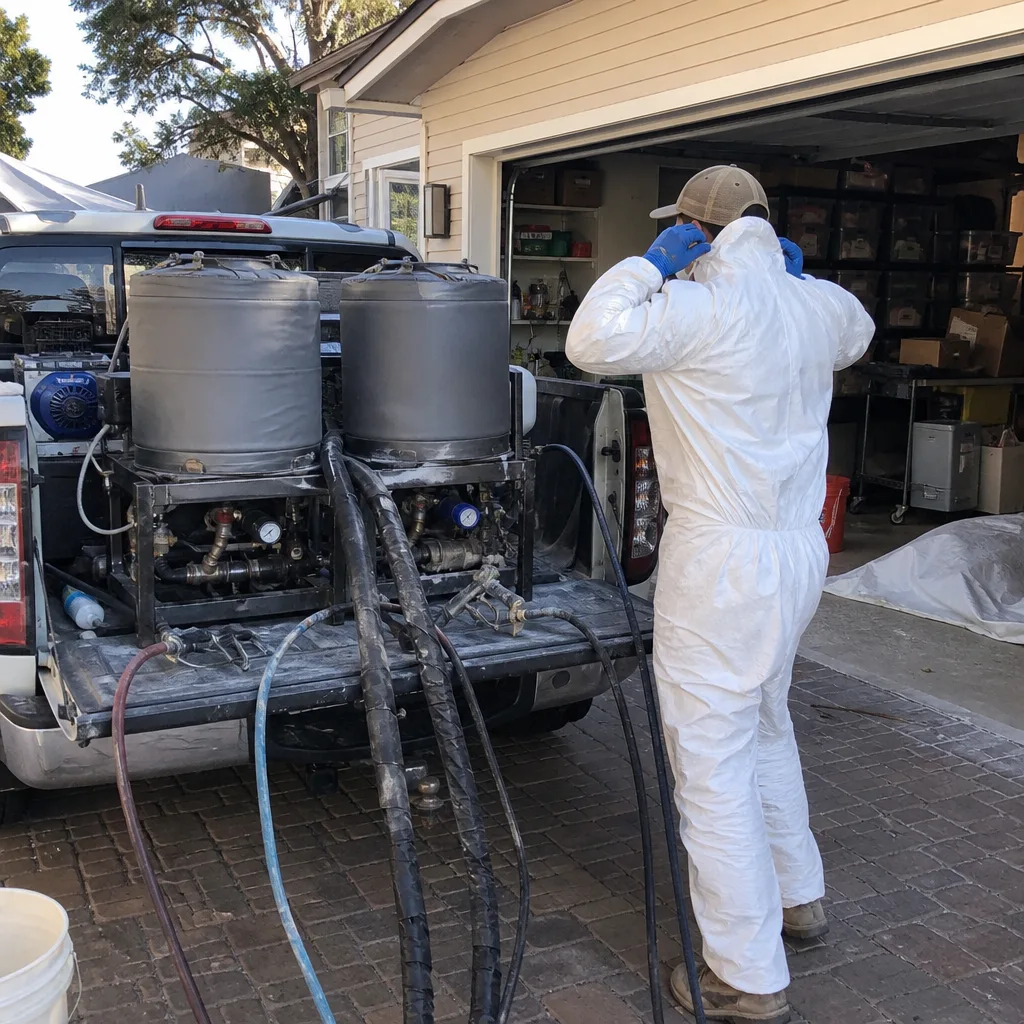
Spray foam is not the right answer for every application or every budget. Here is how it compares to the two most common alternatives in Cupertino attic and crawl space projects.
- Blown-in fiberglass (loose-fill): $0.90 to $1.50 per square foot for a standard attic application to R-38. No air-sealing capability on its own – it must be paired with a separate air-sealing step. Least expensive option for bulk R-value. Does not perform well as a vapor retarder.
- Blown-in cellulose: $1.10 to $1.80 per square foot to R-38. Slightly better at reducing air movement through the material than fiberglass but still not an air barrier. Recycled content is a positive for homeowners prioritizing sustainability.
- Fiberglass batts: $0.50 to $1.10 per square foot installed. The least expensive installed option, but batts that are not cut and fitted precisely leave gaps that allow significant air movement. In older Cupertino homes where framing is irregular, batt performance in practice falls well below rated R-value.
- Closed-cell spray foam: $2.75 to $4.50 per board foot. The only option that functions simultaneously as an air barrier, vapor retarder, and thermal insulator in a single application. Higher upfront cost; lower operational cost over time when the blower-door numbers are compared.
On most Cupertino jobs, the most cost-effective outcome comes from a hybrid: closed-cell foam at the critical air-leakage locations (top plates, penetrations, rim joists, roof deck perimeter) and blown-in material for bulk R-value. This is how a $5,500 hybrid job can outperform a $4,200 blown-in-only job that skipped air sealing – and why the blower-door number matters more than the R-value label on the bag.
FAQs – Spray Foam Insulation Cost in Cupertino
How much does spray foam insulation cost per square foot in Cupertino?
Closed-cell spray foam in Cupertino costs $2.75 to $4.50 per board foot (one square foot at one inch of thickness). Open-cell foam runs $1.50 to $2.25 per board foot. For a typical 2-inch closed-cell application, that works out to roughly $5.50 to $9.00 per square foot of surface area covered. Most Cupertino attic floor jobs with air sealing included run between $3,200 and $6,800 total. For a written price on your specific home, call (831) 217-8521 – the estimate is free and the price is flat before anyone starts.
Is spray foam insulation worth it for older Cupertino homes?
For homes built before 1985, spray foam at key air-leakage points is almost always worth it – not because of the R-value per inch (though that is real), but because of the air-sealing effect. On Cupertino homes where we have run blower-door tests before and after, we regularly see air exchange rates cut by 40 to 60 percent when top plates, can lights, and penetrations are sealed before insulation is added. That change shows up in lower utility bills and a more consistent indoor temperature. If a contractor is offering to install spray foam without mentioning air sealing, ask them specifically what happens at the top plates and penetrations.
How long does spray foam insulation last in a Cupertino home?
Properly installed closed-cell spray foam has a physical lifespan measured in decades – most product manufacturers cite 80-plus years for the foam itself. The limiting factor is usually not the foam but changes to the building around it: new electrical penetrations, HVAC modifications, or roof work that disturbs the sealed assembly. The 365-Day Done Right Promise covers the installation; the foam itself is covered by the product manufacturer’s warranty, which we document and leave with you at job close.
Can spray foam insulation be installed in a Cupertino home in one day?
Most standard Cupertino spray foam jobs – attic floor, crawl space, or rim joists – are completed in a single day. A full roof-deck application on a larger home (2,000-plus square feet of attic) or a whole-envelope project that combines attic, crawl space, and walls may run into a second day. The written scope will include a time estimate before any work starts so you can plan. Note that closed-cell foam requires a cure time of 1 to 4 hours before the space can be safely re-entered; this is standard for the chemistry and is not a contractor-to-contractor variable.
Does spray foam insulation qualify for a tax credit in Cupertino?
As of 2026, the federal 25C nonbusiness energy property credit covers 30 percent of qualifying insulation material costs up to a $1,200 annual cap for spray foam that meets the applicable IECC standards. This covers material only, not labor. California does not currently offer a statewide spray foam-specific credit, though PG&E has run attic air sealing rebate programs that overlap with foam scopes. Eligibility and amounts change; verify the current status with your tax advisor and PG&E before the project starts. We provide all the documentation – product specs, R-value certificates, and the project photo record – that these applications typically require.
Written by Wes Okafor, Owner at Envelope Insulation Co., serving Cupertino since 2016.
Pricing reflects the Cupertino market as of 2026. Topside Attic Insulation Cupertino offers free estimates – call (831) 217-8521.
What Our Customers Say
"They photographed rodent damage in the old insulation that we had no idea about, and priced the exclusion work separately so we could decide."
- Harriet N."Two other companies quoted to blow more insulation on top of what was there. These were the only ones who said the existing material had to come out first, and explained why."
- Clifford E."Crawl space encapsulation done properly. Photographs of the vapour barrier at every seam, and the damp smell in the hallway is gone."
- Ainsley P.