
Crawl Space Vapor Barrier in Cupertino, CA
A crawl space vapor barrier is a polyethylene or reinforced poly sheeting installed across the ground and up the foundation walls of your crawl space to block ground moisture before it enters your home’s structural framing and living area. In Cupertino, where winter rainfall and the marine layer that rolls in through the Santa Cruz Mountains keep subterranean soil damp for months at a time, most crawl spaces without a barrier are actively wicking moisture into floor joists, subfloor sheathing, and insulation year-round – often without any visible sign from inside the house until wood rot or mold is already established.
If you’re researching what this actually involves and what it costs, you’re in the right place. Topside Attic Insulation Cupertino has been installing crawl space vapor barriers in homes across Cupertino, Sunnyvale, and the surrounding South Bay since 2016, every job starting with a written price and closing with a documented photo record. Call us at (831) 217-8521 for a free estimate – we’ll give you a flat number in writing before anyone picks up a roll of poly.
This page covers the vapor barrier installation itself. If you’re also weighing full encapsulation – sealed vents, rigid foam on the walls, a conditioned crawl space – see our Crawl Space Encapsulation & Vapor Barrier in Cupertino page, which walks through the broader scope and how the two approaches compare.
When You Need a Crawl Space Vapor Barrier
Not every homeowner knows what’s happening two feet below their floorboards. Here are the signs we see regularly in Cupertino homes that point directly to uncontrolled crawl space moisture:
- Musty odor concentrated in ground-floor rooms or near HVAC registers. In older Cupertino homes built before 1990 – especially those in the Monta Vista and Rancho Rinconada neighborhoods – crawl spaces were often left with bare dirt and minimal ventilation. That musty smell rising through the subfloor is a reliable early indicator of biological activity fed by elevated moisture.
- Soft or springy spots in hardwood or engineered flooring. When subfloor sheathing absorbs ground moisture over multiple seasons, it swells and loses structural stiffness. Homeowners often notice this as a bounce underfoot before they ever see visible damage.
- Condensation on HVAC ducts or water stains on duct insulation in the crawl space. Warm, humid air from the ground hits cold duct surfaces during winter and spring, creating drip points. We document this in photos during every inspection.
- Insulation falling from the floor cavity or batts with visible discoloration. Fiberglass batts in floor joist bays sag and fall when they saturate. If your existing insulation is hanging loose or has dark staining, moisture has been collecting for some time.
- Higher-than-expected winter heating bills without an obvious cause. Ground moisture conducts heat out of your living space more efficiently than dry air does. A wet crawl space with degraded floor insulation is a consistent energy drain that a vapor barrier helps stop at the source.
- A recent pest inspection that flagged wood moisture content above 19%. Termite and pest inspectors in the South Bay routinely use moisture meters in crawl spaces. If yours came back above that threshold, ground vapor is almost certainly the primary source – and a vapor barrier is the first corrective step before any pest treatment or insulation replacement.
Our Crawl Space Vapor Barrier Process
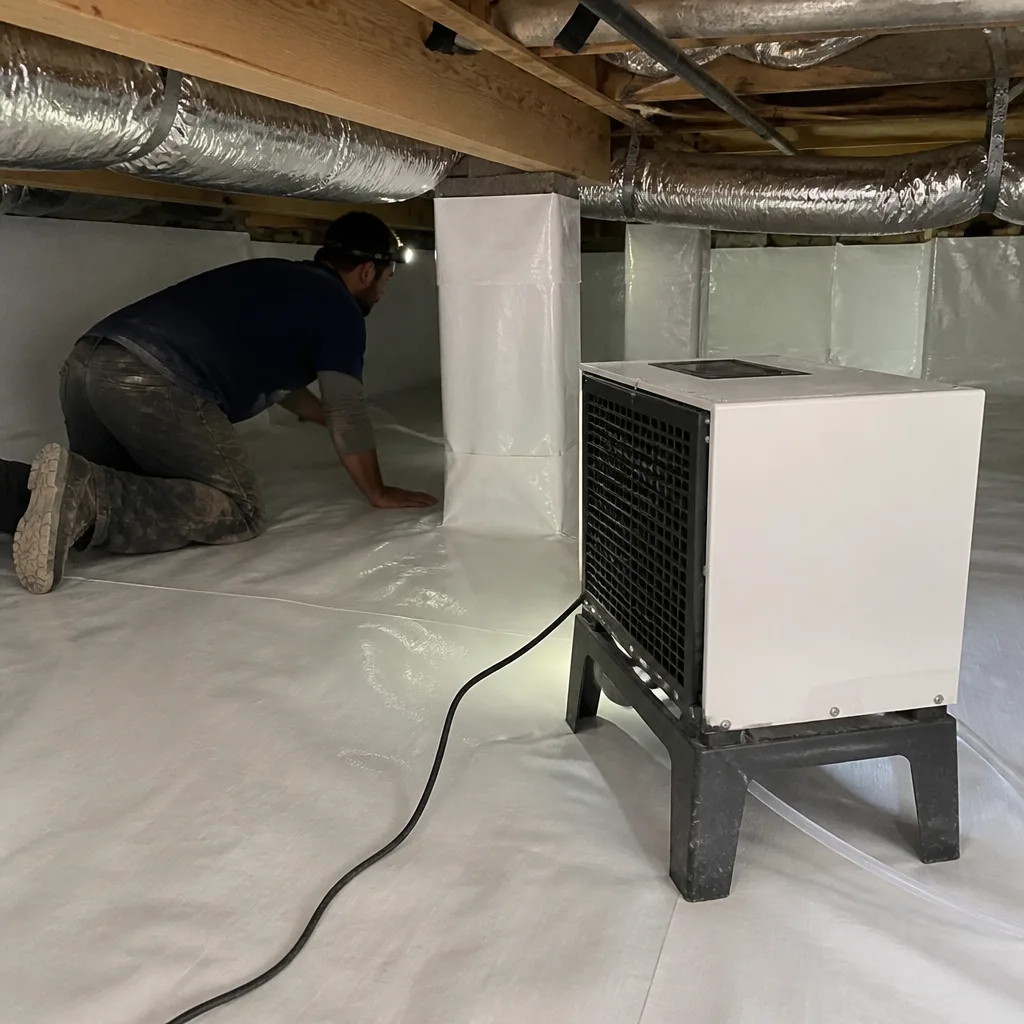
Every installation follows the same sequence. We don’t abbreviate steps to save time, because cutting corners on prep is exactly how a vapor barrier fails inside three years.
- Pre-installation inspection and documentation. Before any material goes in, we walk the full crawl space with a moisture meter and a camera. We measure soil moisture content in multiple locations, check wood moisture at the rim joists and center girder, photograph any existing damage, and note the condition of any prior vapor control. You receive this photo record whether or not you move forward with the installation. Under the Haven Standard, this documentation is included on every visit – not a paid add-on.
- Debris and standing water removal. Loose debris, old deteriorated poly scraps, construction waste, and any pooled water are removed before sheeting goes down. In Cupertino crawl spaces built on clay-heavy soils common to the foothills near Inspiration Heights, we occasionally find seasonal water intrusion from perimeter drainage issues. If we find active water entry, we flag it in writing before proceeding – installing vapor barrier over an active water source solves nothing and we won’t do it.
- Ground sheeting installation. We install a minimum 10-mil reinforced polyethylene barrier across the entire ground surface, with sheets overlapped a minimum of 12 inches at seams and sealed with a moisture-resistant tape. For most Cupertino homes, we use 12-mil or heavier sheeting as a standard – the thicker material resists puncture from anyone who needs to access the space for HVAC maintenance or plumbing work after installation.
- Wall termination and fastening. The barrier runs up each foundation wall and is mechanically fastened and sealed at the top with adhesive and mechanical fasteners. This step is what distinguishes a properly installed barrier from a piece of poly loosely thrown on the ground – the wall termination prevents moist air from migrating around the edges of the sheet at the perimeter, which is where most moisture bypasses occur in installations that fail early.
- Penetration sealing. Pipes, supports, and any other obstructions that penetrate the barrier are individually wrapped, sealed, and taped. We don’t leave gaps around posts or plumbing rough-ins.
- Final documentation and written closeout. When the crew leaves, you receive a photo record of the completed installation, a written scope documenting what was installed and where, and the written warranty. The 365-Day Done Right Promise applies from the day work closes – if anything about the installation isn’t performing as documented, we come back and make it right.
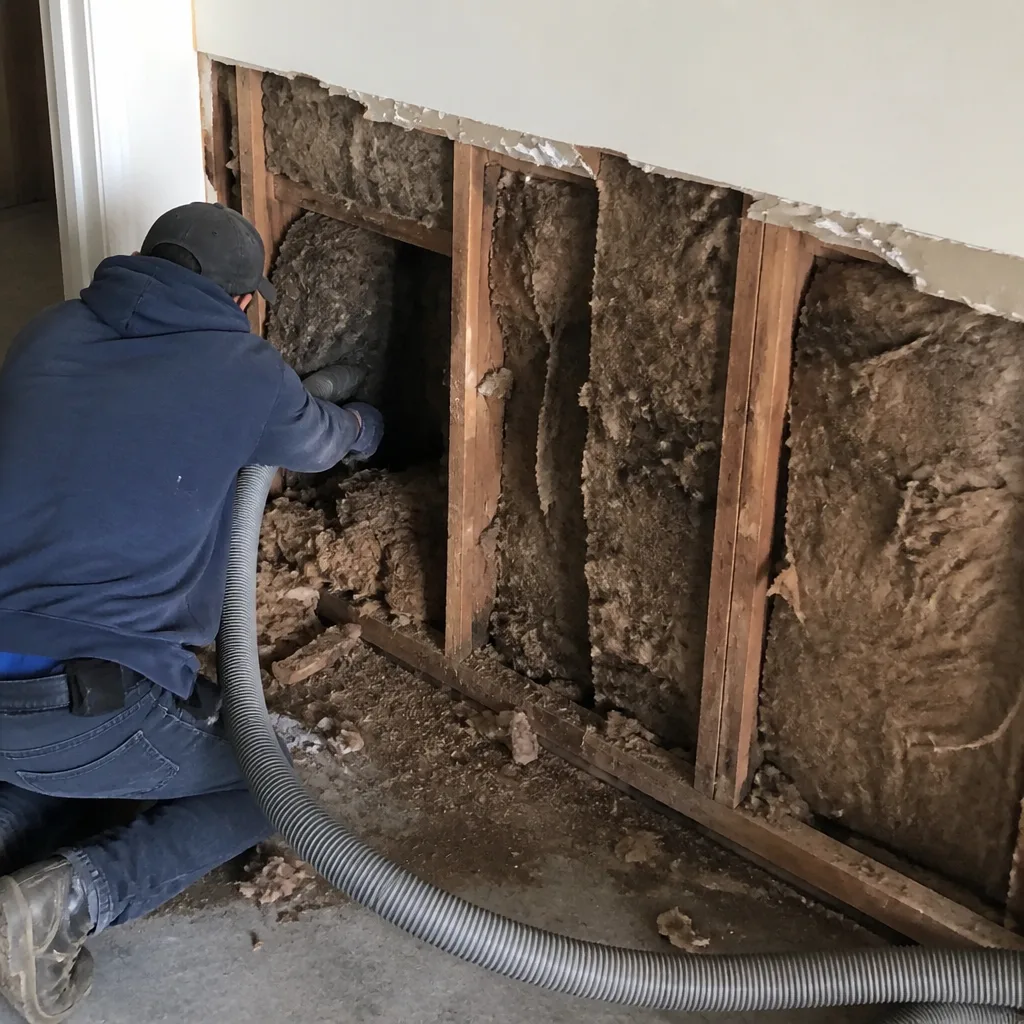 Before
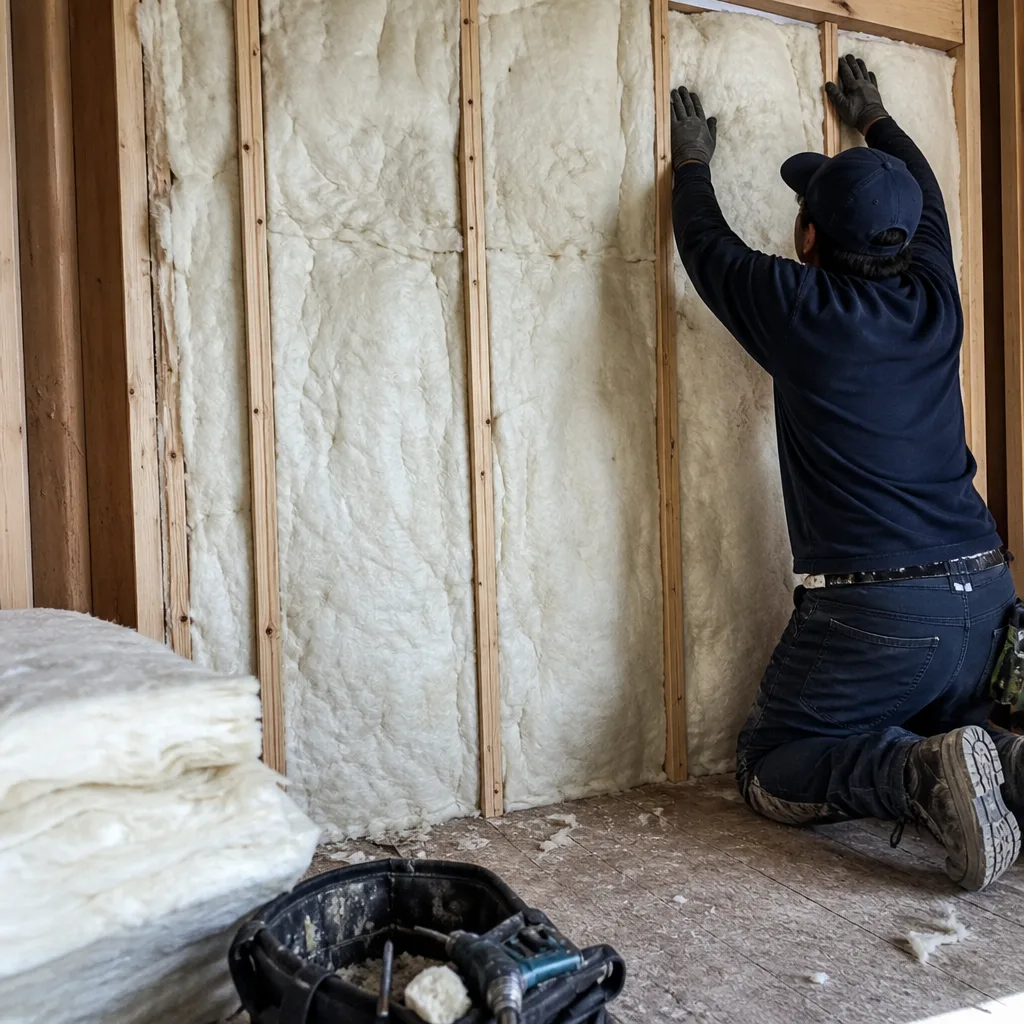 After
AfterCrawl Space Vapor Barrier Pricing in Cupertino
Crawl space vapor barrier installation in Cupertino typically runs between $1,200 and $3,800 for a standard single-family home. The range is wide because crawl space conditions vary significantly – here is what actually moves the number:
- Square footage of the crawl space floor. Most Cupertino homes in the 1,500-2,500 sq ft range have crawl spaces between 800 and 1,400 sq ft, which puts the typical job between $1,400 and $2,600 for barrier installation alone.
- Mil thickness and material type. A 6-mil basic poly sheet costs less to supply than a 12-mil reinforced barrier. For most Cupertino homes – particularly those in areas with heavier clay soils or where plumbing or HVAC access is routine – the heavier material is the right call, and we price it honestly upfront.
- Access difficulty. Crawl spaces below 18 inches clearance take longer and cost more to work in safely. If your home has an unusually shallow crawl space, the written estimate will note the access condition and price it accordingly – not as a surprise after the job starts.
- Debris removal and prep condition. A crawl space with significant debris, old deteriorated poly, or evidence of pest activity takes more time to prep. We itemize this separately in the written scope so you can see exactly what you’re paying for.
- Combined scope with floor insulation. Many Cupertino homeowners install vapor barrier and replace degraded floor cavity insulation at the same time. Combining those scopes reduces total mobilization cost. We’ll note the combined pricing clearly in writing before any work starts.
We don’t give ballpark numbers over the phone without seeing the space. What we do give you is a flat written price after the inspection – no ranges, no “starting at,” no scope creep. Under Haven Standard Clause 1, the price is written and agreed before anyone picks up a tool. If you have a competing written estimate, bring it. We offer a free second opinion on any written estimate, and we’ll read it with you line by line.
Call (831) 217-8521 to schedule a free inspection and written estimate for your Cupertino home.
FAQs – Crawl Space Vapor Barrier
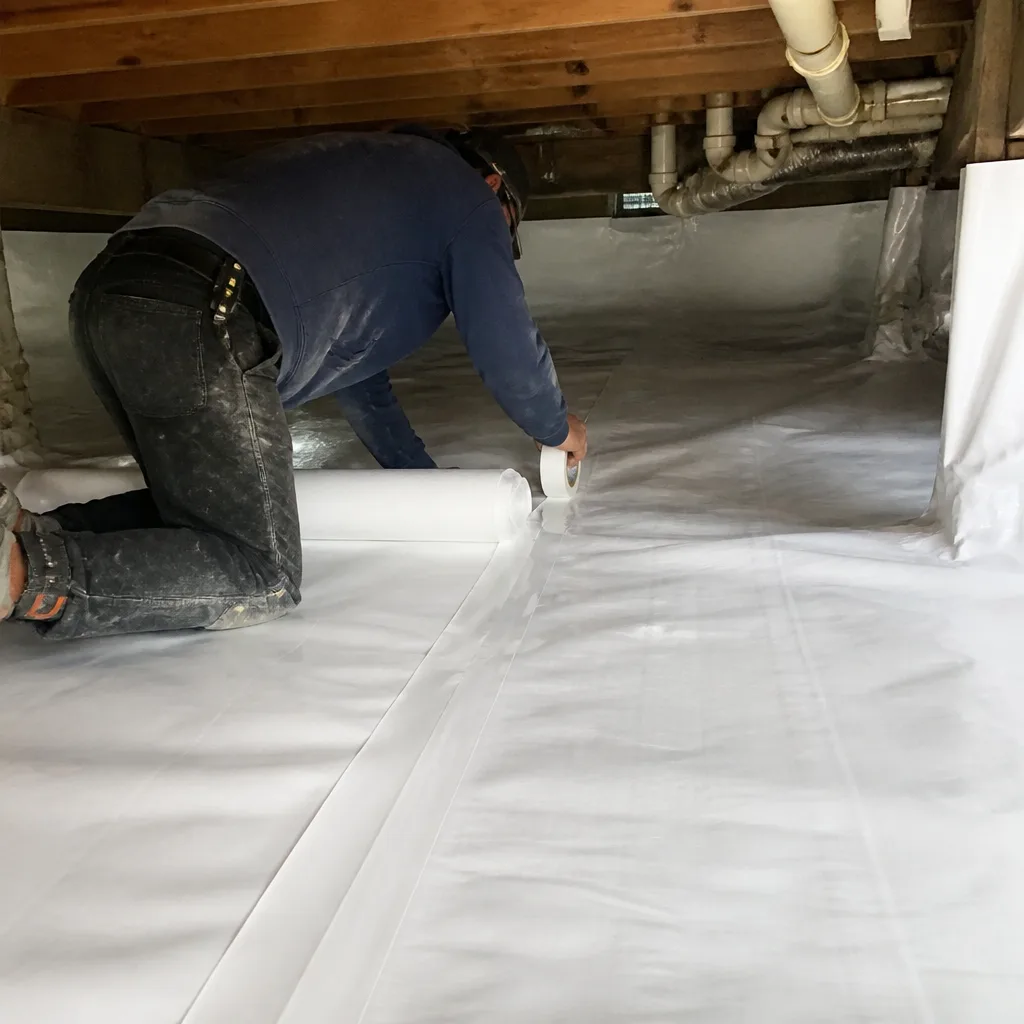
How thick should a crawl space vapor barrier be in Cupertino?
For most Cupertino homes, a 10-mil to 12-mil reinforced polyethylene barrier is the appropriate choice – and 12-mil is what we typically install as a standard. The California Building Code sets a minimum of 6-mil for ground vapor retarders in crawl spaces, but 6-mil tears easily when anyone enters the space for maintenance and degrades faster in the alkaline soil conditions common in parts of Cupertino and the surrounding South Bay. A 12-mil reinforced product holds up to foot traffic, resists puncture from debris and plumbing work, and maintains its vapor-blocking performance for the long term. We will specify the exact material in your written scope before work starts. Call (831) 217-8521 and we’ll walk through the options at no charge.
Is a vapor barrier the same thing as full crawl space encapsulation?
No – a vapor barrier and full crawl space encapsulation are related but different scopes. A vapor barrier installs polyethylene sheeting across the ground and up the foundation walls to block ground moisture. Full encapsulation goes further: it seals the foundation vents, adds rigid foam insulation to the crawl space walls, and conditions the air in the space so the crawl space itself becomes part of the building’s thermal envelope. In Cupertino homes with older vented crawl spaces that simply need ground moisture controlled, a properly installed vapor barrier is often the right and sufficient solution. Homes with persistent humidity problems, existing mold remediation history, or HVAC equipment located in the crawl space more often benefit from the full encapsulation scope. Our Crawl Space Encapsulation & Vapor Barrier in Cupertino page covers both in detail. We’ll tell you in writing, after the inspection, which scope the condition of your crawl space actually warrants.
How long does crawl space vapor barrier installation take?
Most standard single-family homes in Cupertino are completed in one day. A crawl space in the 1,000-1,200 sq ft range with good access and minimal prep work typically takes four to six hours from the time the crew arrives. Larger spaces, difficult access conditions, or significant debris removal can extend that to a full day or into a second visit. We give you the realistic time estimate in the written scope, not an optimistic number to win the job. You’ll know what the day looks like before the technician arrives.
Will a vapor barrier fix my musty crawl space smell?
A vapor barrier significantly reduces the ground moisture source that feeds mold growth and the musty odor associated with it – but it depends on what’s driving the smell. If the odor comes from active mold on wood framing or existing degraded insulation, the barrier alone won’t eliminate it; the mold source needs to be addressed first or concurrently. In the majority of Cupertino homes we inspect where the musty smell is the primary complaint, elevated soil moisture with bare dirt or failed old poly is the root cause, and a properly installed barrier with good wall termination eliminates the smell within a few weeks as the soil dries out. We document the inspection findings in photos so you can see exactly what condition is present before deciding on scope. Call (831) 217-8521 and we’ll schedule an inspection – the photo record is included regardless of what you decide.
Why Cupertino Homeowners Choose Topside Attic Insulation
Cupertino sits at the base of the Santa Cruz Mountains, and the micro-climate here – cool, damp winters with significant rainfall between November and April, followed by dry summers – creates reliable conditions for crawl space moisture problems in homes that don’t have a functioning vapor barrier. We’ve been inside crawl spaces across Cupertino, from the established neighborhoods near De Anza College to newer construction in the Rancho San Antonio corridor, since 2016. More than 9,000 homes sealed and insulated with Crawl Space Insulation since we started, every one with a written price before work began and a documented record when the crew left.
What that experience means practically: we know where Cupertino soil tends to hold water, what the older slab-edge and pier-and-beam foundations in this area commonly look like underneath, and what a crawl space that’s been sealed wrong looks like after five years. We document everything in photos, give you a flat written price before anyone starts, and back the work with the 365-Day Done Right Promise. If something isn’t right, we come back and make it right – that’s in writing, not a verbal assurance.
For full building envelope services in Cupertino, including attic insulation, air sealing, and radiant barrier installation, visit our home page to see the complete service line. And if you want to understand how crawl space vapor barrier fits into the broader encapsulation decision, the Crawl Space Encapsulation & Vapor Barrier in Cupertino page covers both options side by side.
Call (831) 217-8521 to schedule a free crawl space inspection and written estimate. A technician will send you a text when they’re on the way, and a live person answers that number now – no voicemail, no callback window.
Written by Wes Okafor, Owner at Topside Attic Insulation Cupertino, serving Cupertino since 2016.