
Attic Insulation Top-Up in Cupertino, CA
An attic insulation top-up adds Blown-In Attic Insulation over your existing material to bring the total depth up to current California energy code – typically R-38 to R-60 for Cupertino’s Climate Zone 4. Most top-ups in this area run between $900 and $2,400 depending on attic square footage and the depth of insulation already present, and the work is usually completed in a single day. If your home is losing heat through the ceiling plane but the existing insulation isn’t damaged or contaminated, a top-up is almost always the more cost-effective path compared to a full removal and replacement.
At Topside Attic Insulation Cupertino, we’ve been working inside Bay Area attics since 2016 – over 9,000 homes sealed and insulated, each one with a written price before anyone touched a tool. Before we ever load the blower truck, we assess what’s already up there, measure the existing R-value, and test the air barrier. We won’t blow insulation over an unsealed attic floor. That’s not a sales pitch; it’s the reason our before-and-after blower-door numbers consistently show meaningful change. You can read more about our full approach on our Attic Insulation in Cupertino page, or call us directly at (831) 217-8521 to schedule a free attic assessment.
Wes Okafor leads every project under The Haven Standard – written scope, written price, documented photo record, 365-Day Done Right Promise. You know what the job looks like before we arrive and what you receive when we leave.
When You Need an Attic Insulation Top-Up
Cupertino homes have a particular set of insulation challenges. The city sits at roughly 200 feet elevation in a coastal-influenced inland valley, which means summer attic temperatures can push past 140°F while winter mornings drop into the low 30s in neighborhoods like Monta Vista and the Rancho Rinconada corridor. Insulation that was installed to 1990s code – often R-19 or R-25 – is working far harder than it was designed to, and it shows up in predictable ways.
- Your energy bills have drifted upward over three or more years, even though your usage habits haven’t changed. Settled or compressed fiberglass batts lose effective R-value over time. A home in the Garden Gate neighborhood that tested at R-22 on its original 1985 installation may be performing closer to R-14 today once settlement and moisture cycling are factored in.
- Your HVAC system runs longer cycles than it used to, especially during July and August. Cupertino’s summer heat peaks differently from coastal cities – afternoon temperatures in the Homestead corridor regularly exceed 95°F, and an under-insulated attic becomes a heat battery that keeps your air conditioner running well into the evening.
- You can feel temperature variation room to room, particularly in upstairs spaces. Rooms directly under the roof deck in two-story homes near Stevens Creek Boulevard are a consistent example – uneven insulation depth produces uneven performance.
- Your home was built before 1995 and has never had an insulation upgrade. Pre-1995 Cupertino construction typically used R-19 batts in the attic, which falls well short of California’s current Title 24 requirements for existing homes undergoing permitted improvements.
- A recent home inspection flagged thin or missing insulation coverage. This comes up frequently in resale transactions around the Rancho Rinconada and Seven Springs areas, where original blown cellulose has settled by 30 to 40 percent from its installed depth.
- You are planning a permitted HVAC replacement or solar installation and need to bring the attic into code compliance. Santa Clara County’s building department requires insulation upgrades as a condition on certain permit types – a top-up documented with before-and-after photos satisfies that requirement cleanly.
Our Attic Insulation Top-Up Process
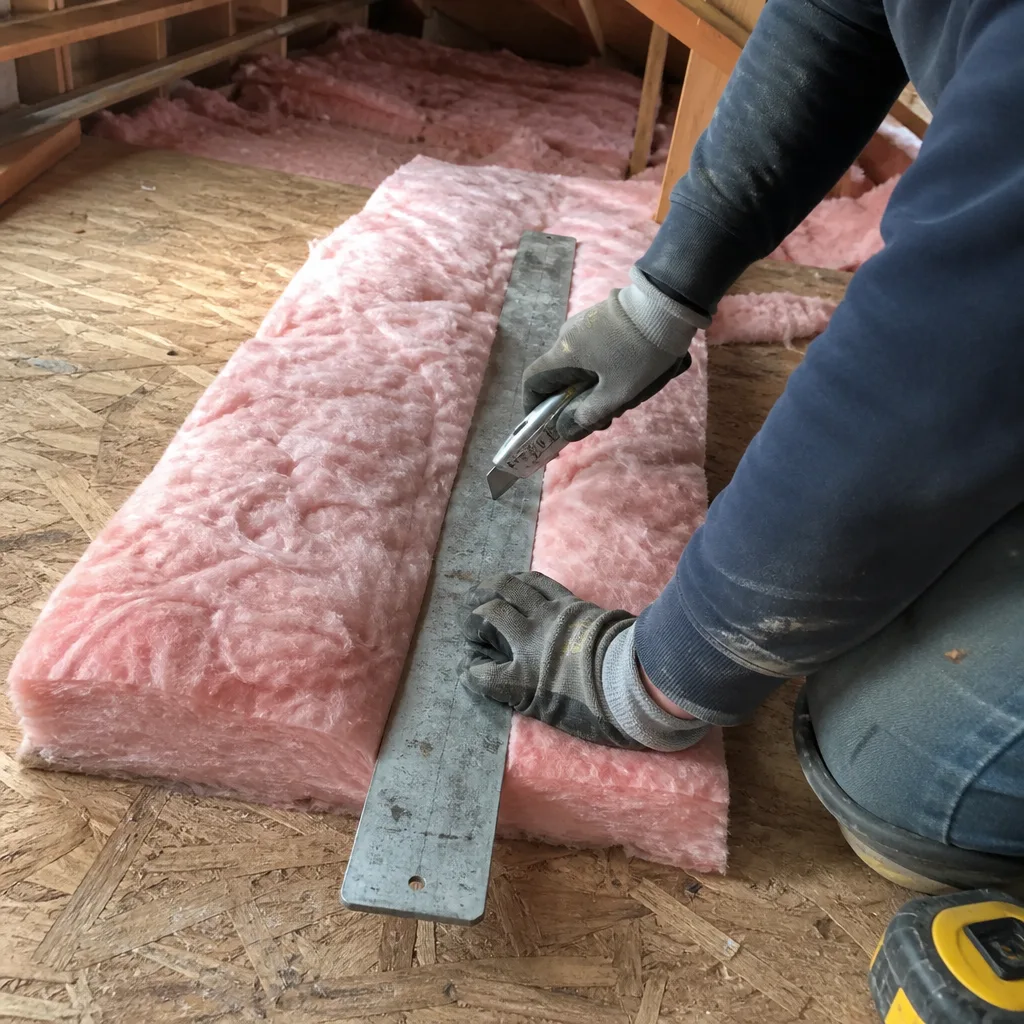
A top-up sounds simple – blow more insulation in – but the Attic Baffles & Ventilation Prep and other prep work that determines the outcome happens before the blower truck arrives. Here is exactly what we do, in order.
- Written scope and price before any work is scheduled. Under Haven Standard Clause 1, you receive a flat written price that covers materials, labor, and cleanup. No estimate that turns into a different invoice when the crew shows up. The scope names the target R-value, the material we’ll use, and the attic square footage we’re working with. You sign off on that document, or we don’t proceed.
- Attic entry and existing-condition assessment. We measure actual insulation depth at a minimum of six points across the attic floor – corners, center, and near the eaves – because depth varies and a single reading at the hatch is not representative. We document what we find with photos and note the material type (fiberglass batt, loose-fill fiberglass, cellulose, or older vermiculite-era material that requires a separate protocol). If we find anything that changes the scope – rodent activity, moisture staining, damaged ductwork – we tell you before we proceed.
- Blower-door baseline test. We depressurize the home to 50 pascals and record the CFM50 reading – the cubic feet per minute of air moving through every gap in the building envelope. This number tells us whether the attic floor air barrier is doing its job. A Cupertino home of 1,800 square feet might read anywhere from 1,800 CFM50 (reasonably tight) to 5,500 CFM50 (significant leakage). That baseline number is yours to keep.
- Air sealing of top plates, recessed light penetrations, and mechanical chases – before any insulation goes in. We seal every identifiable air pathway with the appropriate material: two-part spray foam for larger gaps, fire-rated caulk for penetrations at electrical boxes and plumbing stacks. In Cupertino homes built in the 1970s and 1980s – particularly those in Monta Vista and along McClellan Road – we regularly find unsealed double-top-plate gaps running the full length of interior walls. Sealing those gaps first is non-negotiable. Blowing insulation over them would reduce the visible gap but do almost nothing to the air exchange rate.
- Top-up installation to specified R-value depth. We install blown-in insulation – typically Rockwool, Knauf, or GreenFiber depending on the existing material and your preference – to the depth required to hit the target R-value, measured against depth gauges installed at multiple attic locations. Our crew carries a calibrated depth rule and checks actual depth against the spec before packing equipment. The material goes in evenly, including at the eave baffles where coverage typically drops off in older installations.
- Post-installation blower-door test and documentation package. We run a second blower-door test to confirm the air-sealing result. Both numbers – before and after – go into your documentation package along with the photo record and written warranty. If the post-test number isn’t consistent with what the scope promised, we find and fix the remaining pathways before we leave. That’s the 365-Day Done Right Promise in practice, not in marketing language.
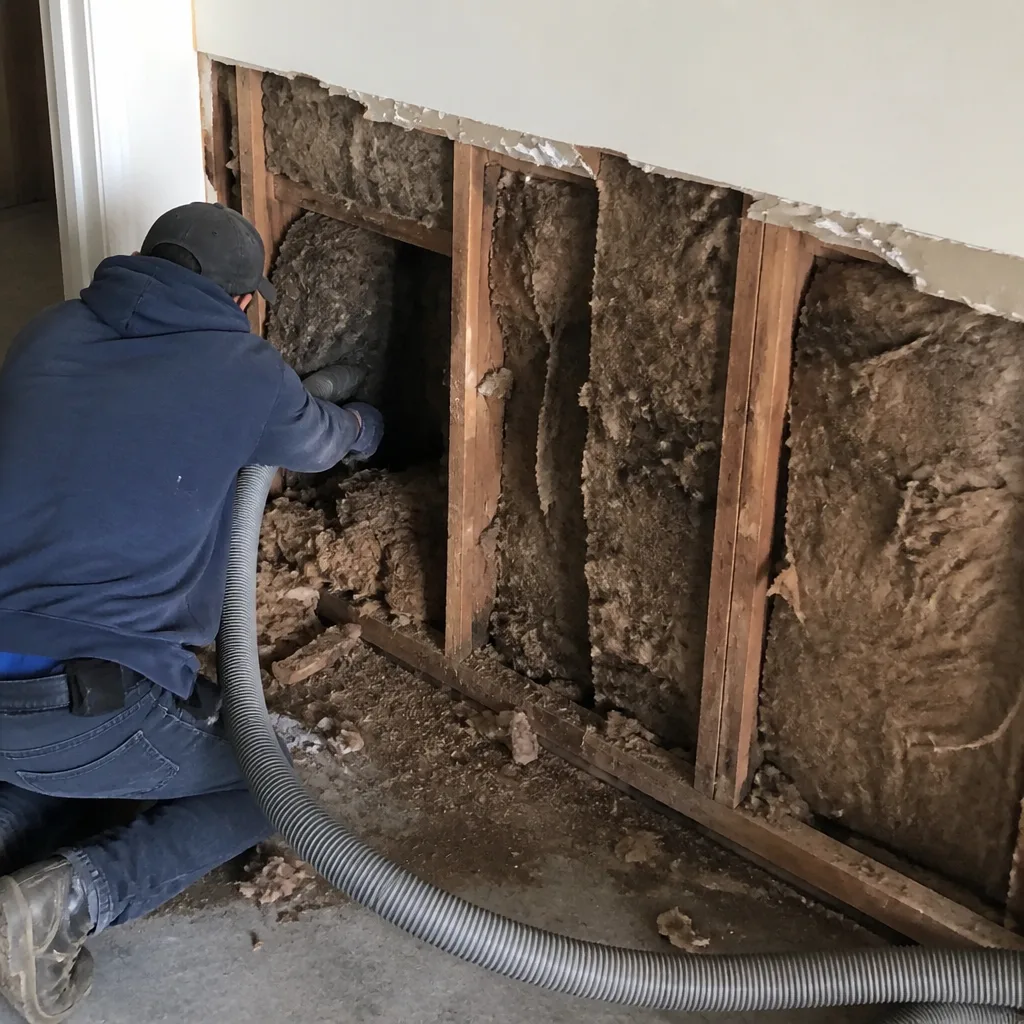 Before
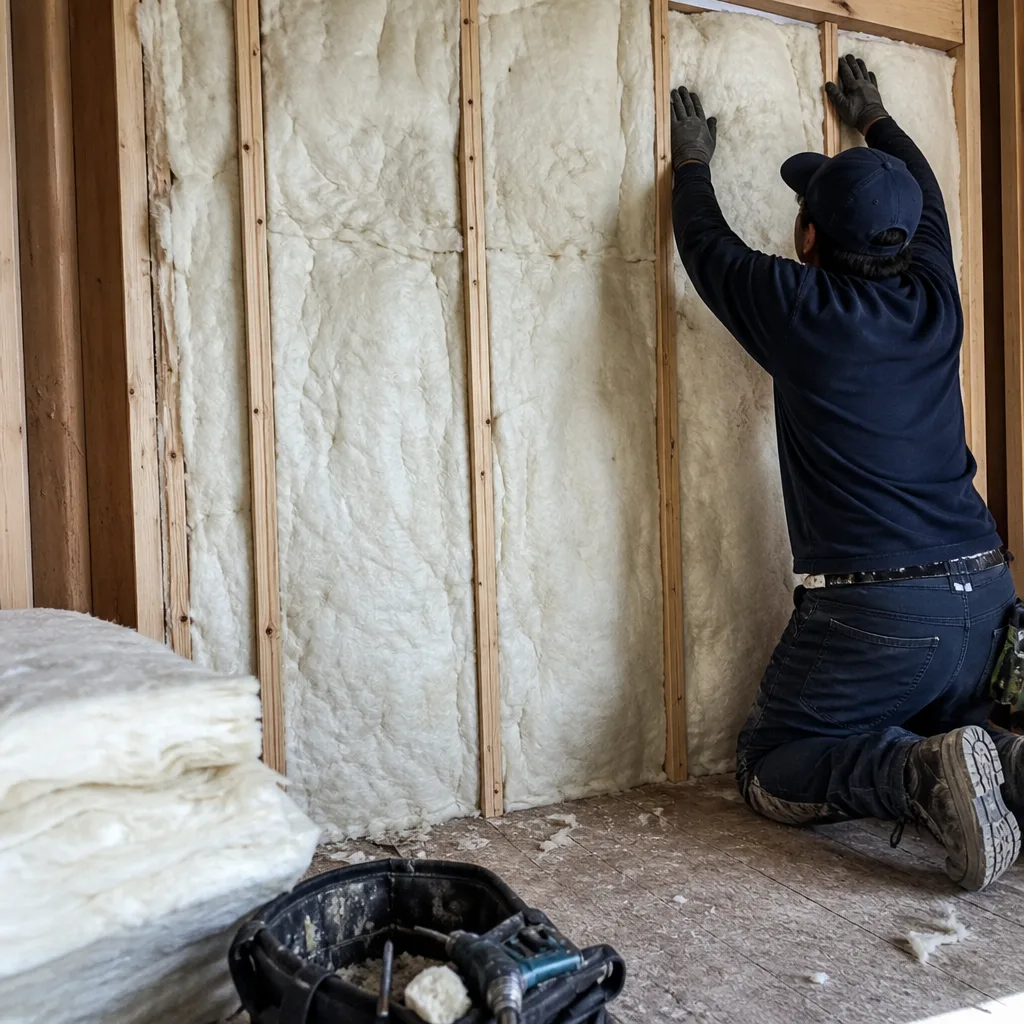 After
AfterAttic Insulation Top-Up Pricing in Cupertino
Most attic insulation top-up jobs in Cupertino fall between $900 and $2,400 for a standard single-story home. Two-story homes with complex attic geometries – common in the Seven Springs and Rancho Rinconada neighborhoods – typically run toward the higher end of that range. Below is a breakdown of how pricing components stack.
| Cost Component | Typical Range (Cupertino) |
|---|---|
| Blown-in insulation material and installation (up to 1,000 sq ft attic floor) | $700 – $1,100 |
| Blown-in insulation material and installation (1,000 – 2,000 sq ft attic floor) | $1,050 – $1,800 |
| Attic air sealing (top plates, can lights, penetrations) | $350 – $650 |
| Before-and-after blower-door testing | Included on every applicable job |
| Documented photo record | Included on every job |
| Full removal before top-up (if existing material is contaminated or wet) | $600 – $1,400 added to top-up cost |
Three factors move the number up or down more than anything else:
- Existing depth and material condition. If you already have R-19 in good shape, you need less material to reach R-49 or R-60 than a home starting at R-10. If the existing material is wet, compressed flat, or contaminated with rodent waste, it has to come out first – that’s a separate line item, not a surprise invoice.
- Attic accessibility. Attics with low pitch (3:12 or less) in older Monta Vista ranches take longer to work in safely. That shows up in the labor component, and we name it in the written scope.
- Air-sealing scope. A home that reads 4,800 CFM50 on the baseline test has more unsealed penetrations than one reading 2,200 CFM50. More sealing work means more material and time – but it also means a bigger performance change when you see the post-test number.
We publish the price range here because “contact us for pricing” doesn’t help you decide whether to make a call. When you’re ready for a number specific to your home’s square footage and existing condition, call (831) 217-8521. The estimate is free, the price we give you is written, and it doesn’t change when we show up.
If you have a written estimate from another contractor, bring it. We offer a Free Second Opinion on any written estimate – we’ll read it with you and tell you what it does and doesn’t include.
FAQs – Attic Insulation Top-Up in Cupertino
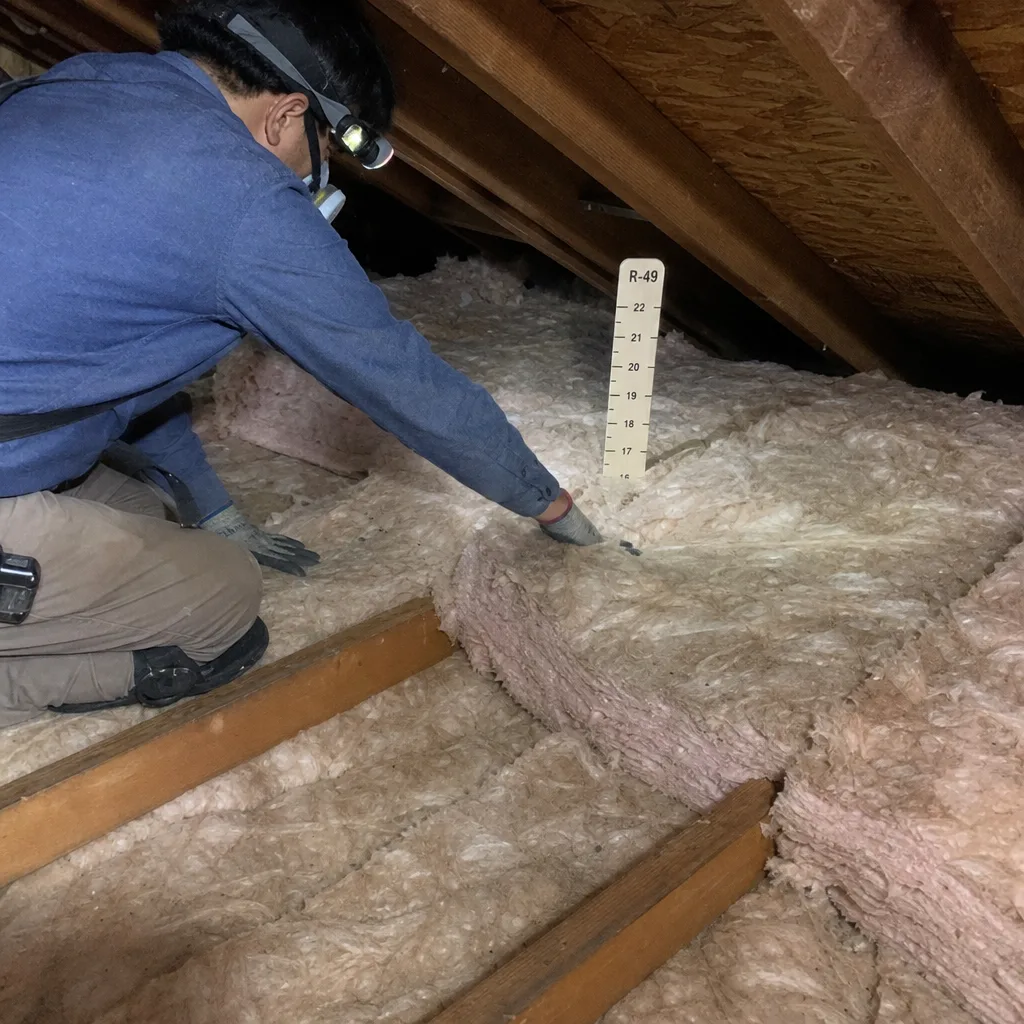
Can you add insulation on top of what’s already in my attic, or does the old material have to come out first?
In most cases, yes – the existing insulation can stay, and we top-up over it. The exception is material that is wet, compressed to less than half its rated depth, visibly contaminated with rodent waste, or identified as vermiculite (which requires a separate abatement protocol). For a standard Cupertino home with dry Attic Batt Insulation or settled cellulose, a top-up over the existing layer is the right call and avoids the cost of removal. We document the existing condition with photos before making that determination, so you’re not taking our word for it. Call (831) 217-8521 to schedule an assessment and get a written price for your specific situation.
What R-value does my Cupertino attic need to meet current California code?
California Title 24 currently sets R-38 as the minimum for attic insulation in existing homes in Climate Zone 4, which covers Cupertino. For new construction and homes undergoing significant permitted renovations, the target is R-49 to R-60. If your attic is at R-19 or R-25 – common in pre-1995 Cupertino construction – a top-up to R-49 is both the code-compliant path and the performance-meaningful one. We measure actual existing depth at multiple points and tell you in the written scope exactly how much material we’ll add to hit the specified target.
How long does an attic insulation top-up take in Cupertino, and will I need to leave the house?
A typical top-up for a 1,200 to 1,800 square foot single-story home in Cupertino takes four to six hours from setup to blower-door post-test. You don’t need to leave the house – the work happens entirely in the attic and through an exterior hose run from the blower truck. You will notice some minimal dust around the attic hatch during installation; we stage a drop cloth and seal the hatch perimeter before we start. If air sealing is included in the scope, add roughly an hour for that phase before insulation goes in.
Is an attic insulation top-up worth it for a Cupertino home I’m planning to sell in the next two to three years?
It typically is, for two reasons. First, home inspectors in Santa Clara County flag thin attic insulation consistently – it shows up on disclosure reports and can become a negotiation point that costs more to resolve under deadline than it would have cost proactively. Second, a documented before-and-after blower-door test, written warranty, and photo record are transferable – they give a buyer evidence of the improvement rather than just a seller’s representation. Most Cupertino top-ups in the 1,200 to 1,600 square foot attic range cost $1,100 to $1,700 all-in. Whether that math makes sense for your specific situation is worth a conversation – call (831) 217-8521 and we can walk through the numbers with you.
Why Cupertino Homeowners Work With Topside
Cupertino has a housing stock that spans five decades of insulation standards, from the post-war ranches in Monta Vista with their low-slope attics and original blown rock wool to the 1990s two-stories in the Rancho Rinconada tract with fiberglass batts that have been settling for thirty years. We’ve worked in all of them. We know where the penetrations are, which can-light configurations are the most common air leak sources in this zip code, and what the Santa Clara County building department requires when a top-up is tied to a permitted project.
Every job we do connects back to the home services philosophy we’ve operated under since 2016: document what you find, price it in writing, and leave the homeowner with proof the work performed. Nine thousand-plus homes across the Bay Area have our documentation in their files. Yours should too.
For our full Attic Insulation service line – including full removal and replacement, new-construction insulation, and radiant barrier installation – see our parent service page.
Key Takeaways
- Attic insulation top-ups in Cupertino typically cost $900 to $2,400, depending on attic size and existing R-value.
- California Title 24 targets R-38 minimum (existing homes) to R-60 (new construction) for Cupertino’s Climate Zone 4.
- Air sealing happens before insulation goes in – always. Blowing over unsealed penetrations doesn’t close them.
- Every job includes a before-and-after blower-door test, a documented photo record, and a written warranty.
- If you have a written estimate from another contractor, bring it – we’ll review it with you at no charge.
- The 365-Day Done Right Promise applies to every completed job.
Ready to find out what your attic actually has in it and what it would cost to bring it to where it should be? Call (831) 217-8521 to schedule your free attic assessment. Wes Okafor’s team will come out, measure what’s there, and put a written price in your hands before any work is scheduled.
Written by Wes Okafor, Owner at Topside Attic Insulation Cupertino, serving Cupertino.