
Blown-In Attic Insulation in Cupertino, CA
Blown-in attic insulation is the process of using a pneumatic hose to deposit loose-fill insulation – either fiberglass or cellulose – directly onto the attic floor in an even, continuous layer, as part of our Attic Insulation services. In Cupertino, most older homes in neighborhoods like Monta Vista and Garden Gate were built with R-11 to R-19 batts that have compressed or settled over decades, leaving the attic well below the R-49 that California’s Title 24 energy code targets for this climate zone. Blown-in material fills gaps, conforms to irregular framing, and can be added on top of existing insulation without a full tear-out – making it one of the more practical upgrades available to homeowners here.
What most contractors skip is the step that actually determines whether the blown-in insulation performs. Warm air from your living space carries heat and moisture up through every unsealed top plate, recessed-light housing, and wiring penetration before it ever reaches the insulation layer. Adding R-value over an unsealed attic floor is like putting a down blanket over a screen door. At Envelope Insulation Co., operating as Topside Attic Insulation Cupertino, we complete attic air sealing before any insulation goes in – not as an upsell, but as a hard prerequisite. We then run a blower-door test, publish the before-and-after numbers in writing, and leave you with a documented photo record of the finished work. If you want to talk through what your attic actually needs, call us at (831) 217-8521.
This service is part of our broader Attic Insulation in Cupertino work, which covers everything from initial assessment through final documentation.
When You Need Blown-In Attic Insulation
A few situations point clearly toward blown-in insulation as the right solution. Here is what we see most often in Cupertino homes:
- Your energy bills keep rising despite an otherwise efficient home. Cupertino sits in California’s Climate Zone 4, where summer afternoons regularly push past 95°F and radiant heat load through the roof can be substantial. If your HVAC is running hard from June through September even with a programmable thermostat, inadequate attic insulation is usually where the audit points first.
- Your attic was insulated before 1990 and has never been upgraded. Many homes in the Rancho Rinconada and Seven Springs areas were built with fiberglass batts that have compressed significantly over 30-plus years. Compressed batts lose R-value proportionally – an R-19 batt at half its original thickness may be performing closer to R-10.
- You have an older home with irregular joist spacing or obstructions. Blown-in material fills around blocking, bridging, and low-clearance areas that cut batts cannot reach cleanly. This is particularly common in pre-1970 Cupertino construction where joist spacing was not always standardized.
- You had a recent rodent intrusion and existing insulation has been soiled or disturbed. After an insulation removal and attic cleaning, blown-in is usually the fastest way to restore the depth to code levels without the labor-intensive fitting of new batt rolls in a confined space.
- Your home failed a home energy audit or a blower-door test. A blower-door test – a pressurization reading that shows, in one number, how much air your building envelope is losing – often reveals that the attic is the primary infiltration pathway. Adding blown-in insulation after sealing the top plates is the standard corrective measure.
- You are preparing for a real estate transaction. Cupertino’s housing market is competitive, and buyers increasingly request energy disclosure documentation. A completed blown-in insulation job with documented R-value and blower-door readings is a verifiable, transferable asset.
Our Blown-In Attic Insulation Process
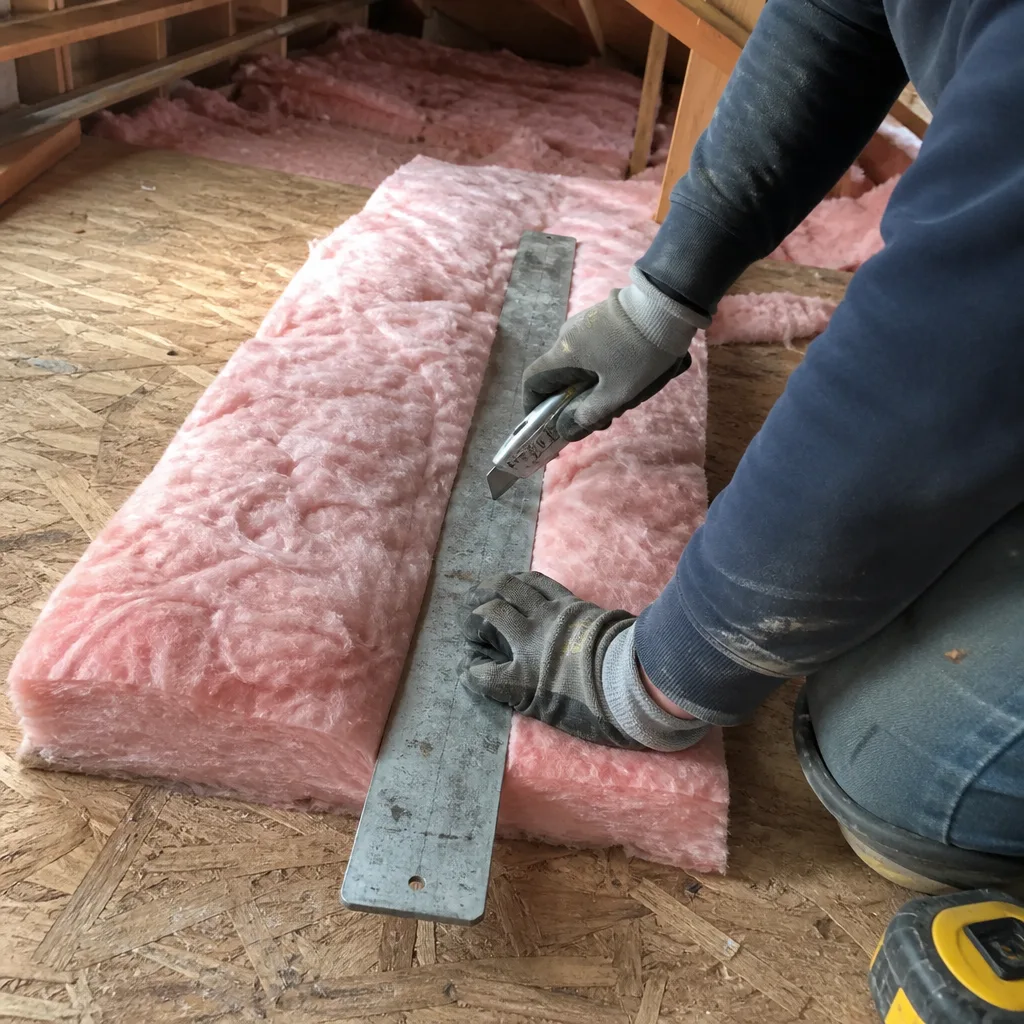
Every job follows the same sequence. Skipping steps – specifically step two – is how insulation projects underdeliver. We do not shorten this process regardless of attic size or job complexity.
-
Written Scope and Price Before Any Work Starts
Under Haven Standard Clause 1, you receive a flat written price and a written scope before anyone enters your attic. The document names the insulation material, the target R-value, the air-sealing locations we plan to address, and what the Documented Photo Record will include. No surprises at the end of the job because everything is agreed to at the beginning. This is not a courtesy – it is how we operate on every single job.
-
Blower-Door Pre-Test and Attic Air Sealing
Before we touch the insulation, a technician runs a blower-door test to establish your baseline air-leakage rate in CFM50 – cubic feet per minute of air loss at a standardized 50 Pascals of pressure. We then seal every top plate penetration, recessed-light housing, wiring chase, and plumbing stack that is accessible from the attic floor. This step is completed with foam and fire-rated caulk; it is not skipped, and it is not optional. Unsealed penetrations can account for 30 to 40 percent of a home’s total air leakage in older Cupertino construction – covering them with insulation does not eliminate that loss.
-
Blower-Door Post-Seal Verification
After air sealing is complete, we run the blower-door test a second time. The before-and-after numbers are recorded and provided to you in writing. A job where the post-seal reading is not materially lower than the pre-seal reading tells us there are additional penetrations to find. We keep working until the numbers confirm the sealing is effective. This is the documented performance evidence that separates the work we do from contractors who skip the measurement entirely.
-
Blown-In Insulation Installation
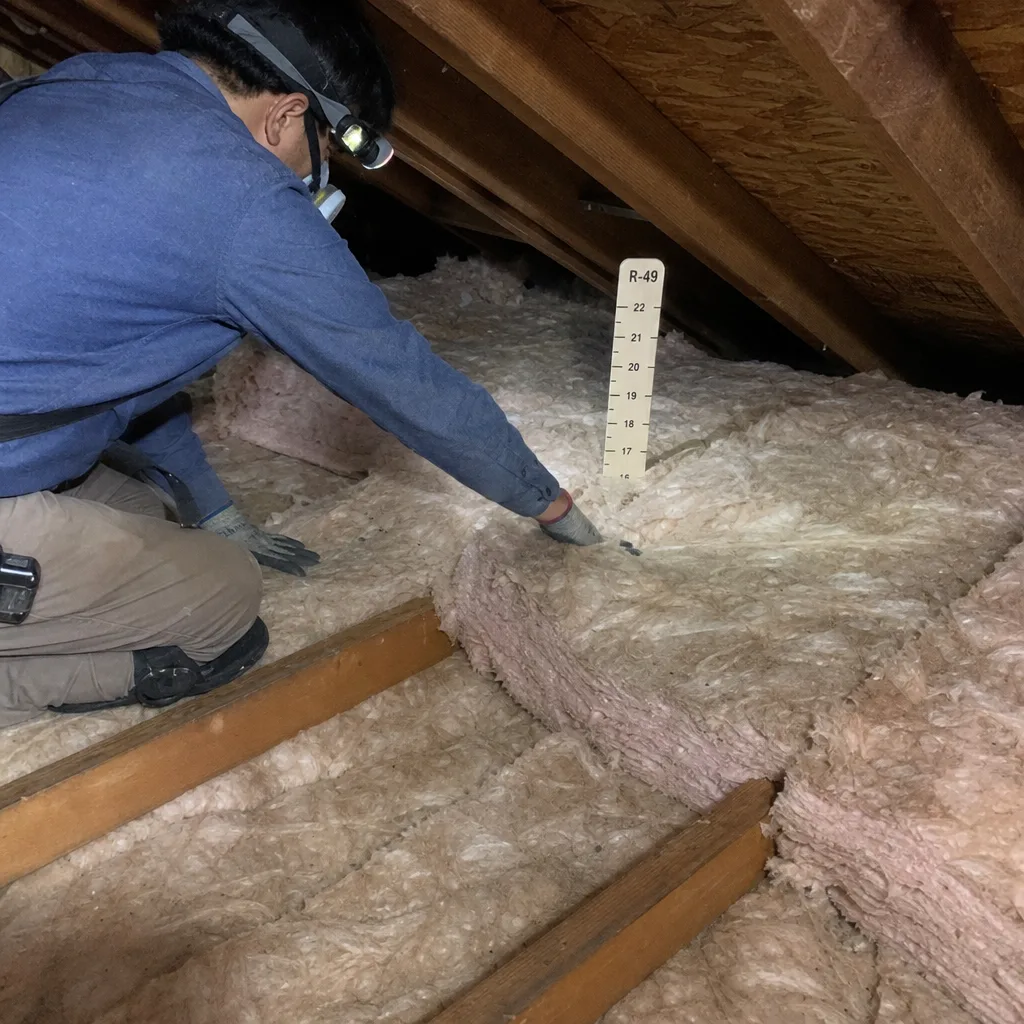
With the attic floor sealed and verified, we bring in the blower equipment and install loose-fill insulation to the target depth, following the Attic Baffles & Ventilation Prep steps as needed. For most Cupertino homes targeting R-49 compliance, that means approximately 16 to 18 inches of fiberglass blown-in, depending on the product’s published R-value per inch. We use materials from manufacturers including CertainTeed and Rockwool – sourced based on the specific application, not brand affiliation. Depth gauges are placed throughout the attic so the finished depth is visible and verifiable in your photo record.
-
Post-Installation Inspection and Photo Documentation
After installation, a technician photographs the attic floor at multiple points, including close-ups of the depth gauges and the sealed penetration locations. These photos are part of your Documented Photo Record – included on every visit, not available on request. You receive the record before the crew leaves. It documents what was installed, where, and to what depth.
-
Written Warranty Delivery
The 365-Day Done Right Promise applies to all completed work. If anything we installed is not performing as documented, we come back and make it right. The warranty is delivered in writing before we close out the job – same session, same visit.
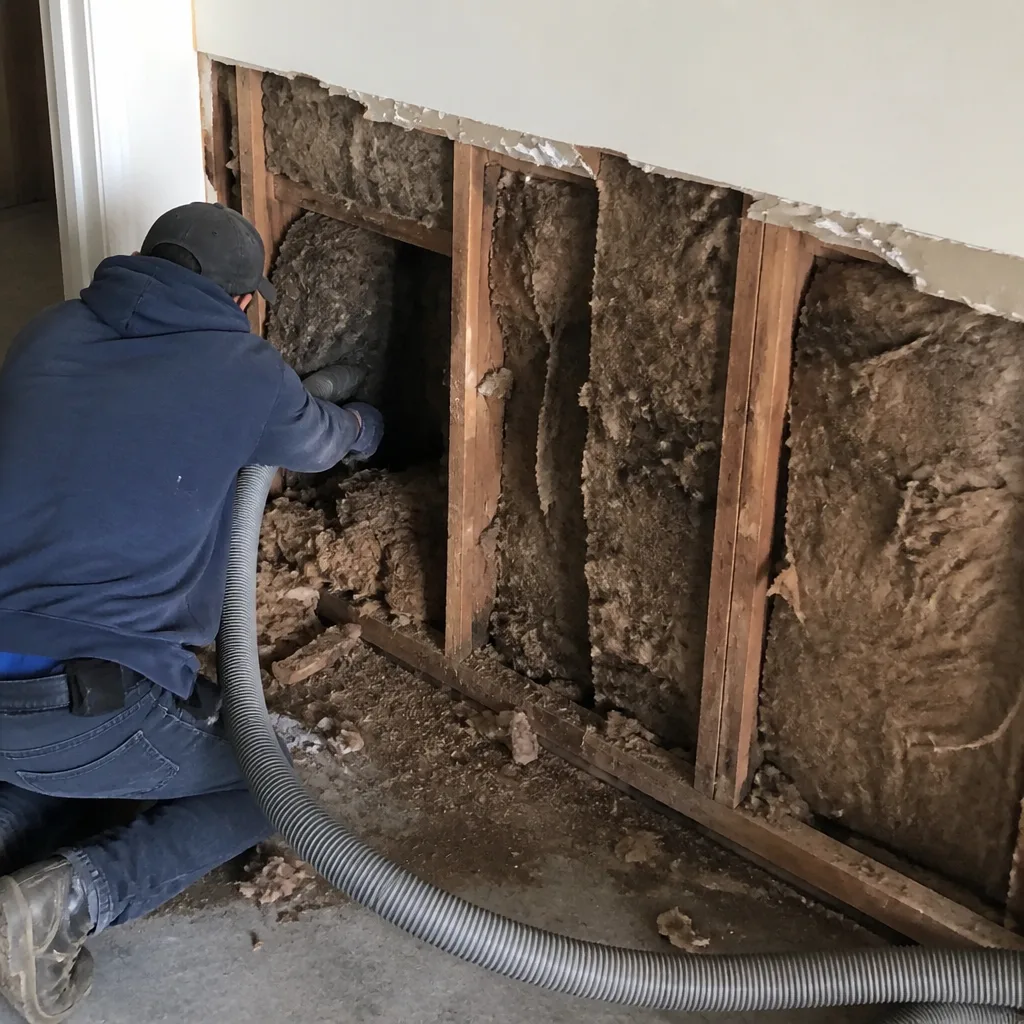 Before
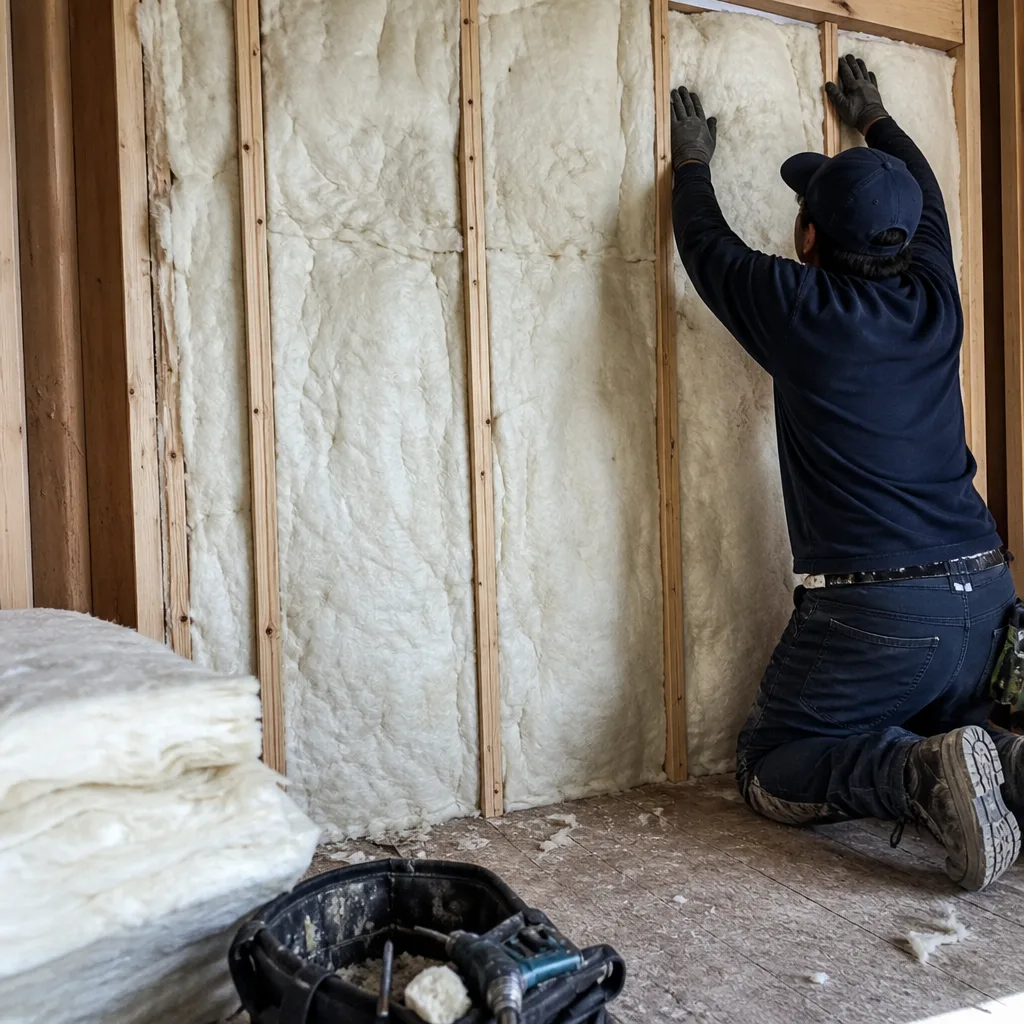 After
AfterBlown-In Attic Insulation Pricing in Cupertino
Most blown-in attic insulation jobs in Cupertino run between $1,800 and $4,200, with the majority of single-story homes in the 1,400 to 2,000 square foot range landing between $2,100 and $3,100 when air sealing is included; for more detail, see How Much Does Attic Insulation Cost? (2026 Price Guide) - Cupertino, CA. That range reflects the full scope – air sealing, blower-door testing before and after, material, installation, and documentation. It does not reflect insulation-only jobs that skip the air sealing step, because we do not offer that configuration.
Here is what drives the number up or down in this market:
- Attic square footage. Larger footprints require more material and more blower time. A 2,800 square foot home in Cupertino’s Seven Springs neighborhood will cost more than a 1,200 square foot unit in a Monta Vista townhome cluster.
- Existing insulation depth. If there is already R-19 in place and you are topping up to R-49, the material cost is lower than starting from bare joists. If existing insulation is soiled or damaged and requires removal first, that is a separate line item.
- Number of penetrations requiring air sealing. Homes with many recessed lights – common in Cupertino homes built between 1985 and 2005 – have more sealing locations, which adds labor time. Old-style can lights that are not rated for insulation contact require specific treatment before insulation can be added over them.
- Attic access and clearance. Low-slope attics or those with minimal clearance around the hatch slow the work down and increase labor cost. Attics with knee-wall sections, like some of the split-level homes near De Anza College, typically require more setup time.
- Current R-value deficit. An attic with no existing insulation costs more to bring to R-49 than one sitting at R-30. California’s rebate programs through PG&E can offset a portion of this cost depending on current program availability.
Under the Haven Standard, you receive a flat written price before any work starts – not a range, not an estimate that grows on installation day. Call (831) 217-8521 to schedule a no-cost site assessment. We will measure your attic, note the existing conditions, and give you a written number before anyone opens a hatch.
FAQs – Blown-In Attic Insulation
How long does blown-in attic insulation last in a Cupertino home?
Properly installed blown-in fiberglass or cellulose insulation typically maintains its effective R-value for 20 to 30 years when the attic is free of moisture intrusion and pest activity. In Cupertino, the primary threat to insulation longevity is not climate – the Bay Area’s relatively mild humidity is less damaging than coastal fog exposure further west – but rodent activity. Squirrels and rats tunnel through blown-in material and compact it significantly, which is why we photograph depth gauges at installation and recommend a post-rodent-activity inspection if you hear attic activity after a completed job. The 365-Day Done Right Promise covers installation workmanship for a full year; material degradation from pest intrusion falls under a separate evaluation.
Is blown-in insulation better than batt insulation for attics?
For attic floors specifically, blown-in insulation covers more completely than Attic Batt Insulation in most real-world attic conditions. Batts work well when framing is regular and there are no obstructions – a situation that is less common in older Cupertino homes where decades of electrical upgrades, HVAC modifications, and previous insulation attempts have left the attic floor cluttered. Blown-in material flows around bridging, blocking, and wiring without leaving the air gaps that mis-cut or compressed batts create. The performance difference is measurable on a blower-door test: homes where we top up over old batts with a blown-in layer consistently show lower post-job infiltration numbers than homes where batts were the only material used.
Can blown-in insulation be added on top of existing insulation?
Yes, in most cases. If the existing insulation is dry, intact, and free of pest contamination, blown-in material can be added directly on top to bring the total depth to the target R-value. We check the existing layer during the pre-job assessment – compressed, wet, or soiled insulation is removed before new material goes in, not covered over. Covering damaged insulation traps the problem and eventually shows up in both performance numbers and air quality. Our written scope will specify whether existing insulation is being retained or removed before we ask you to sign anything.
Does blown-in attic insulation require a permit in Cupertino?
The City of Cupertino does not typically require a building permit for adding insulation to an existing attic, provided no structural alterations are involved. However, California’s Title 24 energy code sets the performance standard – R-49 for attic floors in Climate Zone 4 – and any insulation work done in conjunction with a permitted renovation or HVAC replacement will need to meet that standard as part of the broader permit scope. If you are doing standalone insulation work, no permit is generally required, but the work should still be documented – which is why the Documented Photo Record we provide is worth keeping with your home file. If your situation involves a concurrent permitted project, we will note it in the written scope. Call (831) 217-8521 and we can clarify based on your specific job conditions before any work begins.
How much does it cost to add blown-in insulation to a 1,500 square foot attic in Cupertino?
A 1,500 square foot attic in Cupertino, starting from minimal existing insulation and targeting R-49, typically runs between $2,200 and $2,900 when air sealing and blower-door testing are included. That range shifts upward if the attic has a high count of recessed-light penetrations or requires removal of damaged existing material first. The written price you receive before any work starts will be a flat number, not a range – the assessment is what converts the estimate into a commitment. Call (831) 217-8521 to schedule that assessment at no cost.
Key Takeaways
- Blown-in insulation is the standard method for bringing Cupertino attics up to California’s R-49 target, particularly in homes built before 2000 where existing insulation has settled or been disturbed.
- Air sealing must happen before insulation is added. Blowing insulation over unsealed penetrations adds R-value on paper without stopping the air movement that drives heat loss and gain.
- Before-and-after blower-door numbers are provided in writing on every applicable job – not as a marketing claim, but as the only way to verify that the sealing work actually performed.
- Pricing in Cupertino’s market runs $1,800 to $4,200 for most residential jobs, with the written price delivered before work starts under Haven Standard Clause 1.
- The 365-Day Done Right Promise and a Documented Photo Record are included on every completed job.
- Wes Okafor and the Topside Attic Insulation Cupertino team have been operating under The Haven Standard since 2016, covering more than 9,000 homes with a written price before the first tool is lifted.
If you want a straight assessment of what your attic actually needs – and a written price before anyone starts – call Wes Okafor and the team at Topside Attic Insulation Cupertino at (831) 217-8521. We will measure, document, and give you a flat number. No voicemail loop, no callback window measured in business days – a live person answers every call.
Written by Wes Okafor, Owner at Topside Attic Insulation Cupertino, serving Cupertino.