
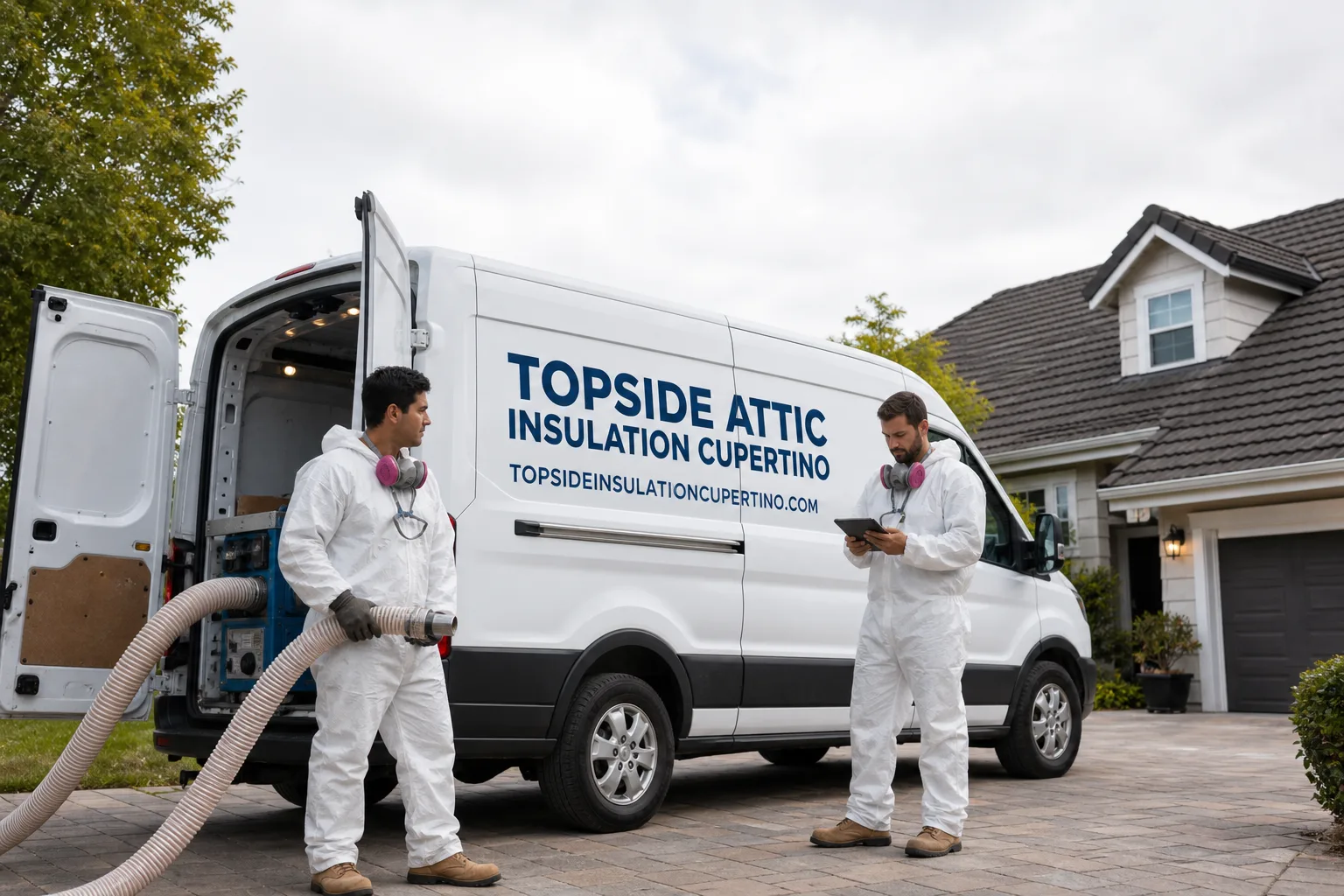
Fast, Reliable Spray Foam Insulation Across San Jose
Spray foam insulation in San Jose typically runs $2.80-$6.50 per board foot depending on open-cell versus closed-cell product, and most residential jobs are completed in a single day with crews dispatched from our San Francisco Bay Area office. We’re familiar with the specific conditions that drive insulation decisions here: the 1950s-1970s stucco ranches that dominate Berryessa and Cambrian, the 140°F attic temperatures that hit before noon in July, and the Title 24 CF1R documentation required on every ADU and garage conversion permit.
Our Spray Foam Insulation team serves San Jose homeowners with same-day response times to most neighborhoods, and every job starts with a written price before anyone lifts a tool. Call (831) 217-8521 to schedule a free estimate.
Why Topside Attic Insulation Cupertino Is San Jose’s Preferred Spray Foam Insulation Company
We’ve sealed and insulated more than 9,000 homes since 2016, and a significant share of those have been in Santa Clara Valley. San Jose customers specifically mention our one-trip completion rate in reviews - they don’t want crews back twice for a job that should finish in a day. Our technicians are background-checked, uniformed, and arrive with manufacturer-approved R-value documentation already prepared, which matters enormously here.
Response time to San Jose averages under 90 minutes from dispatch during standard hours, with emergency scheduling available 24/7 through a live person - no voicemail loops. We know the difference between a Cambrian split-level with original degraded batts and a Willow Glen balloon-frame where wall cavities run floor-to-rafter. That local housing-stock knowledge prevents the mis-specified jobs we’ve seen from out-of-area contractors who treat every Bay Area home like a fog-cooled San Francisco flat.
Our 365-Day Done Right Promise applies to all San Jose work, backed by a written scope and written warranty delivered before the first hose gets pulled. Under Haven Standard: Have it in writing.
Our Spray Foam Insulation Services in San Jose
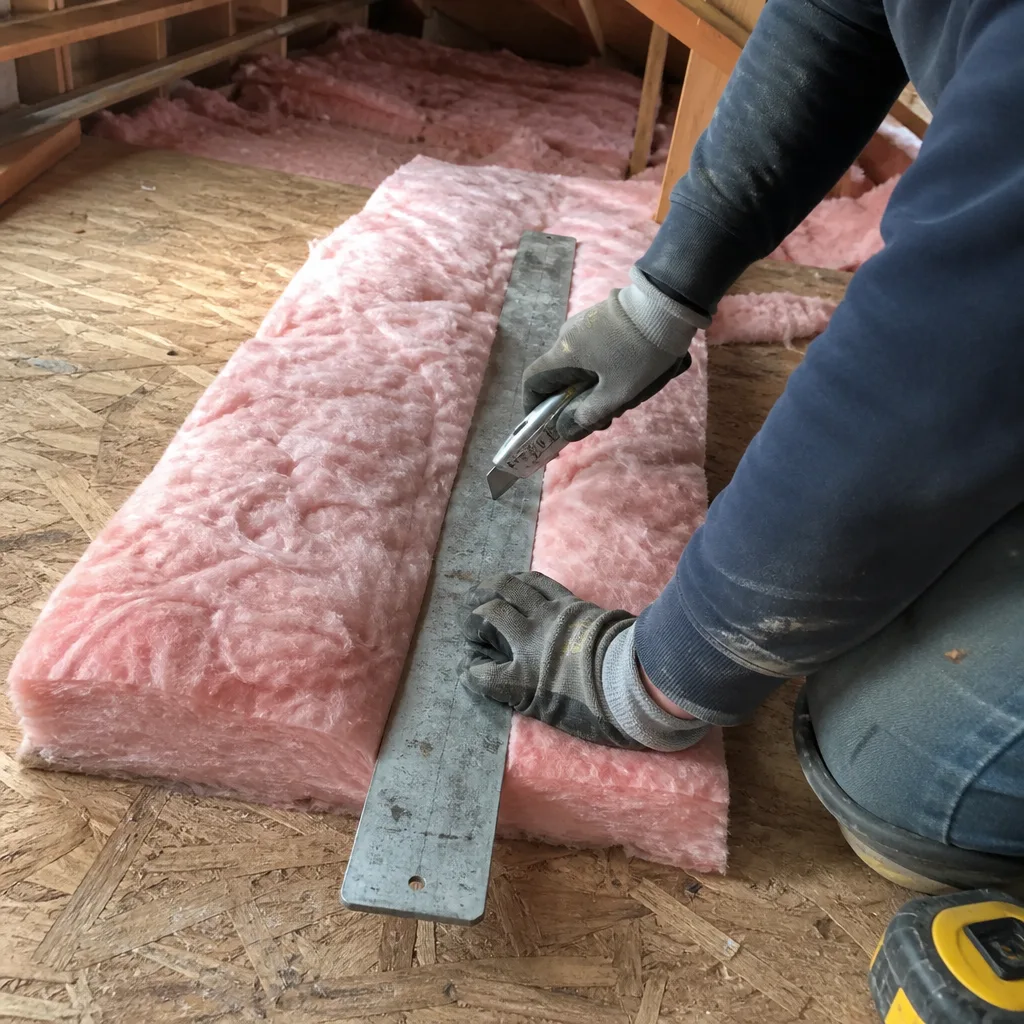
Closed-Cell Spray Foam
Closed-cell spray foam is our most-specified product for San Jose’s ADU and garage-conversion market, and for good reason. At roughly 6.5 R-value per inch, it delivers the highest thermal resistance in the thinnest profile, which matters when you’re trying to meet Title 24 CF1R requirements in a 2×4 wall cavity without losing interior square footage. We source closed-cell products from Demilec and Icynene, both with manufacturer documentation we can submit directly to San Jose’s building department.
Closed-cell also functions as a vapor barrier when applied at sufficient thickness, which is critical on San Jose’s valley floor where clay soils hold moisture against slab edges and rim joists. We sprayed closed-cell foam on the underside of an unvented roof deck on a Berryessa ranch built in the 1960s, where the homeowner had a detached workshop with heavy double doors and a garage door they wanted insulated to stop heat gain. Using Icynene closed-cell at the rim joists and roof deck, we sealed the assembly in one trip, documented the installed R-values for their Title 24 file, and the attic temperature dropped enough that their older opener motor stopped overheating mid-cycle. They didn’t need a second visit - everything passed on the first inspection.
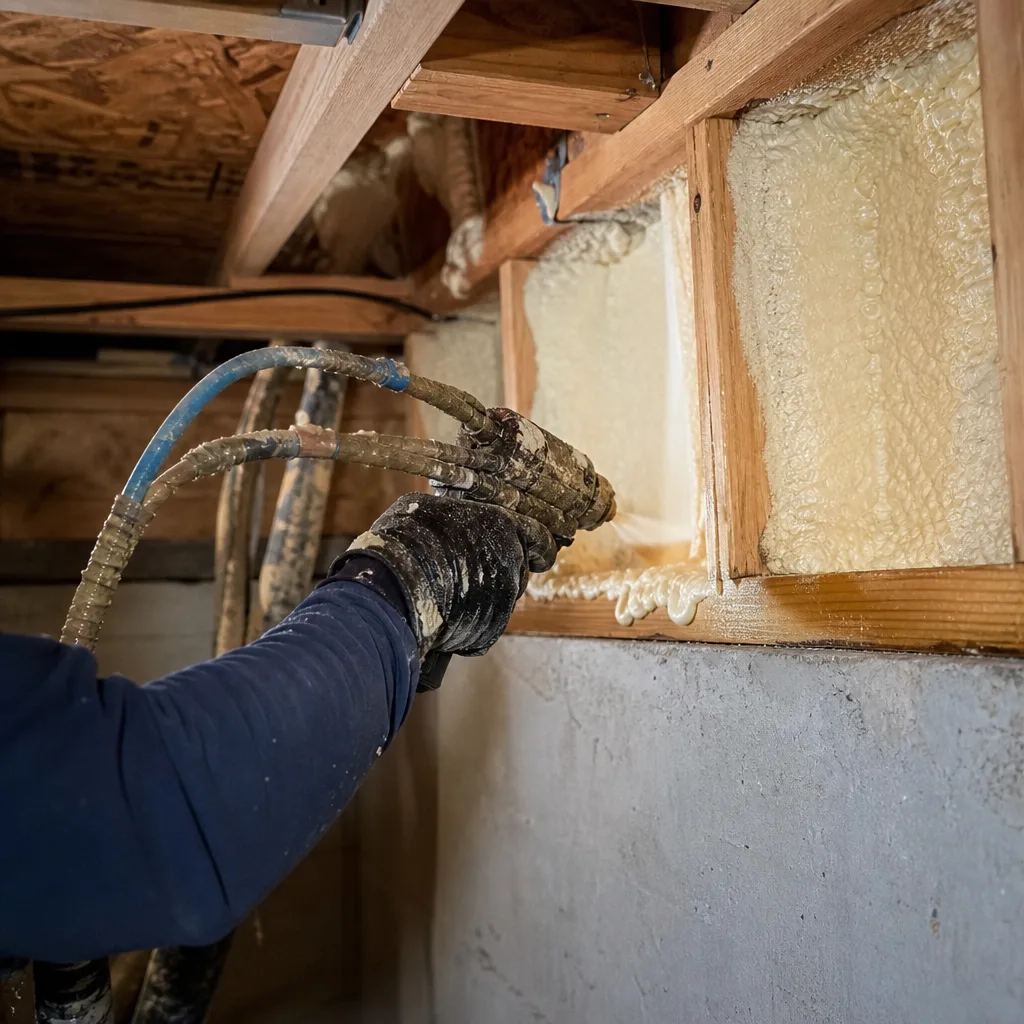
Open-Cell Spray Foam
Open-cell runs lighter and less dense at roughly 3.5-3.7 R-value per inch, and it’s our recommendation for San Jose roof-deck applications where the assembly needs to breathe and bulk water management is already handled. In unvented attics - increasingly common in ADU conversions across the city - open-cell allows incidental moisture to diffuse through the foam rather than trapping it against sheathing. We typically pair open-cell roof-deck work with a dedicated vapor-management strategy, and we document the assembly’s permeance rating in the photo record you receive at job close.
Rim Joist Spray Foam
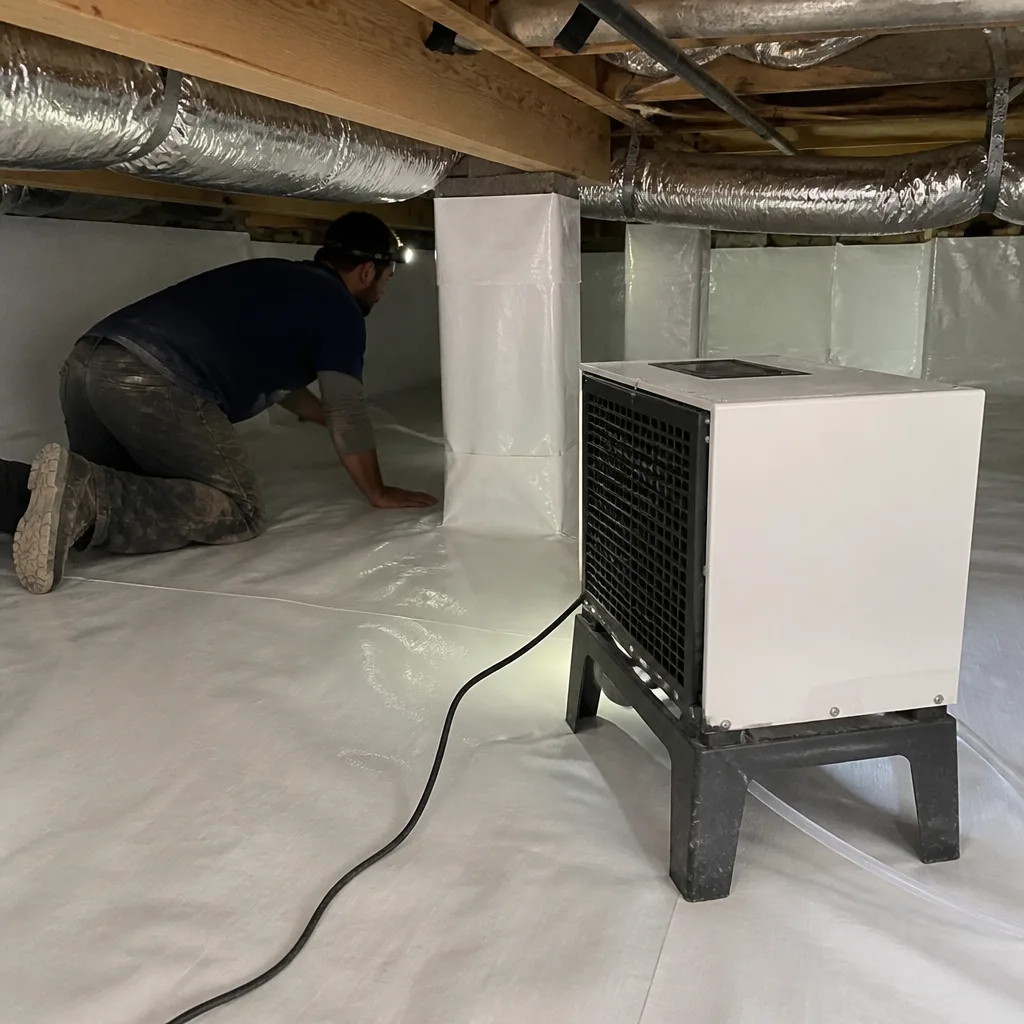
Rim joists are the single most overlooked air-leakage site in San Jose’s older housing stock, especially in Willow Glen and Rose Garden where balloon-frame construction lets outside air travel floor-to-rafter through unsealed cavities. In winter, that means 35-45°F air infiltrating directly above your foundation; in summer, 90-100°F attic heat radiates through the same gap. Spray foam at the rim joist seals this thermal bypass in one application, and we always complete this before adding any attic insulation - sealed first, then insulated, in that order. On jobs where we perform blower-door testing, rim-joist sealing typically accounts for 15-25% of the total air-leakage reduction.
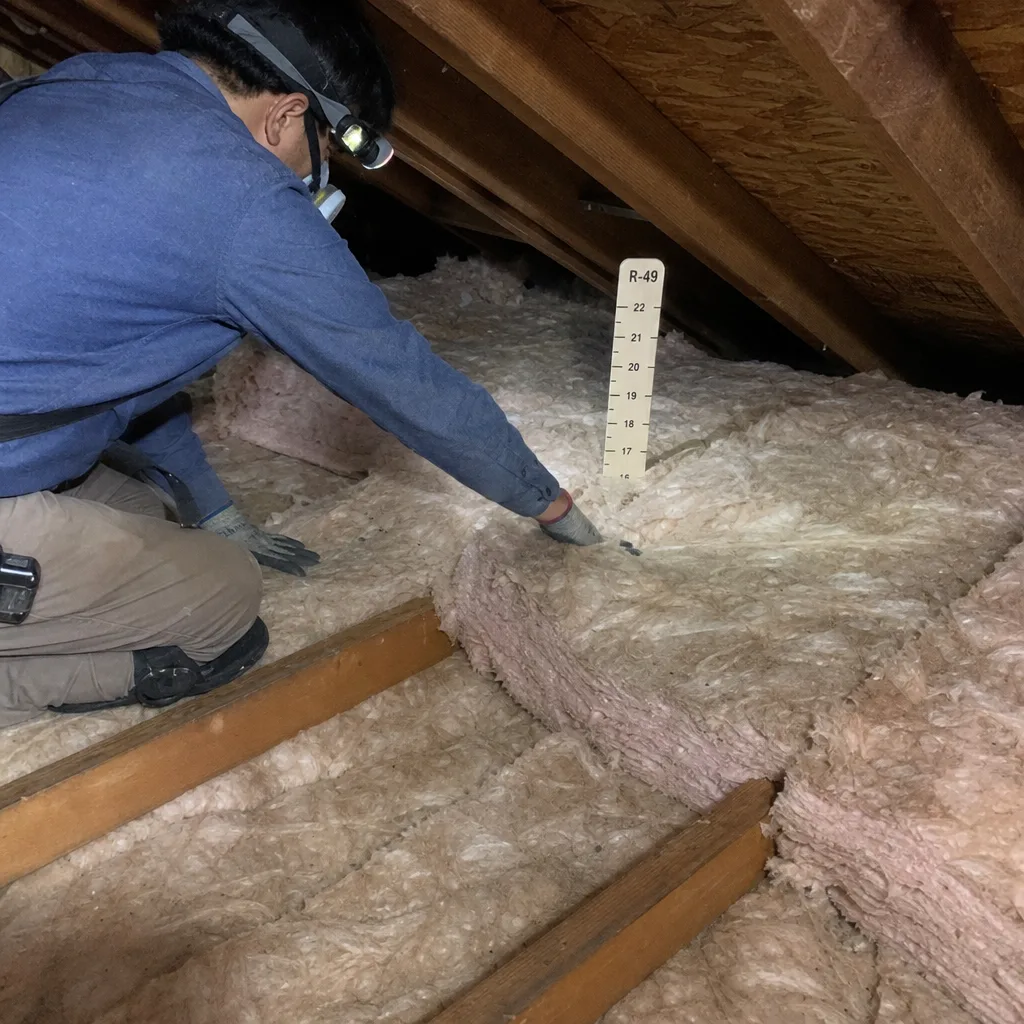
Garage Ceiling Spray Foam
Garage ceiling spray foam has become a high-volume request in San Jose specifically because of the city’s streamlined ADU permitting program. Converting a garage to living space triggers mandatory Title 24 compliance, and the ceiling assembly must demonstrate verified R-values that fiberglass batts rarely achieve without compression gaps or thermal bridging. Spray foam conforms to irregular joist bays and fills around conduit, ductwork, and fire-blocking - the exact conditions that make batt installation fail inspection. We document every garage-ceiling application with installed-thickness photos and manufacturer R-value certificates.
Spray Foam Roof Deck
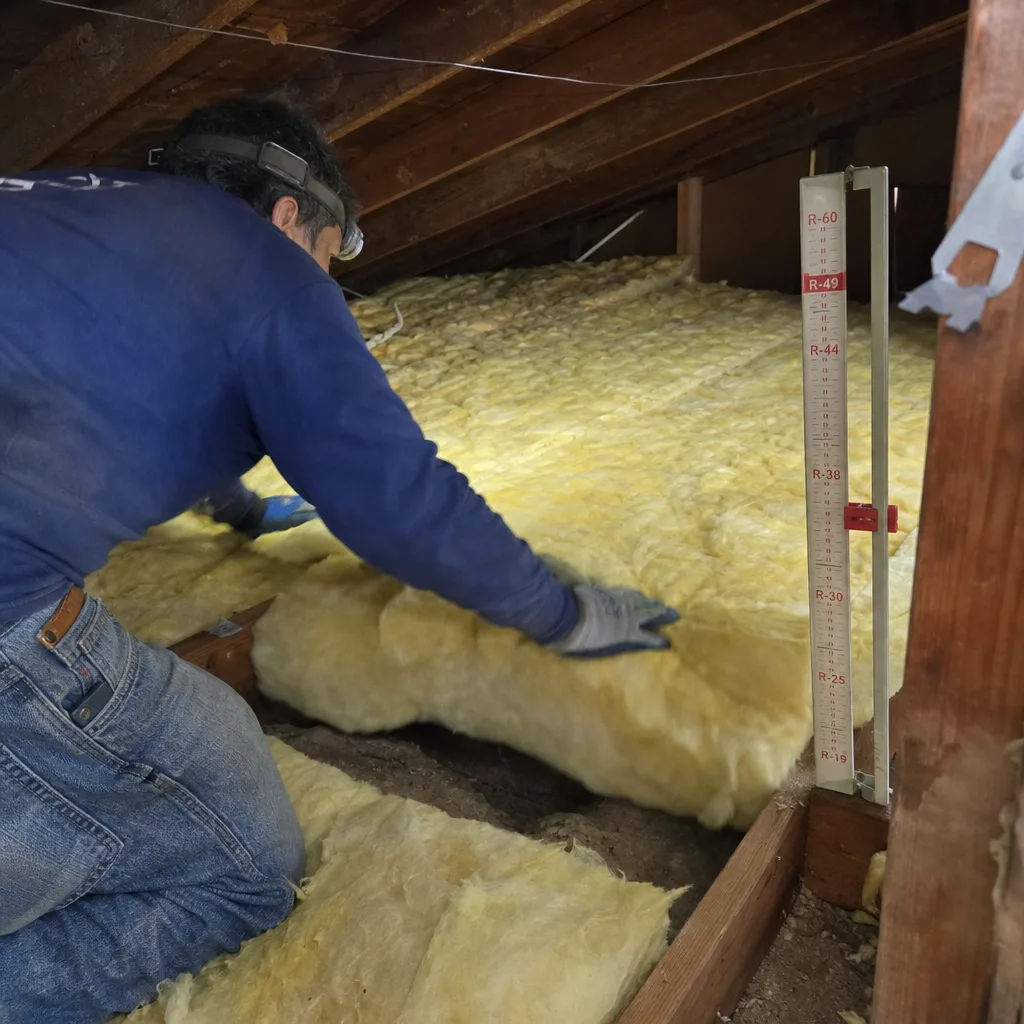
Unvented spray foam roof decks are increasingly specified for San Jose homes where ductwork runs through attic space that routinely exceeds 140°F in summer. By moving the thermal boundary to the roof deck rather than the attic floor, conditioned air in ducts stays within the building envelope, and the attic itself becomes a semi-conditioned buffer zone. This assembly requires careful vapor-profile design - something we calculate before quoting, not after installation - and we provide the hygrothermal analysis documentation as part of your project file.
What happens when you call
- 1
A real person answersNo phone trees - you reach a local pro.
- 2
You get an upfront price rangeHonest numbers before anyone is dispatched.
- 3
A background-checked tech heads outLicensed & insured, dispatched right away.
- 4
You approve before work beginsNothing starts until you say go.
 Before
 After
AfterTrusted Brands We Service in San Jose
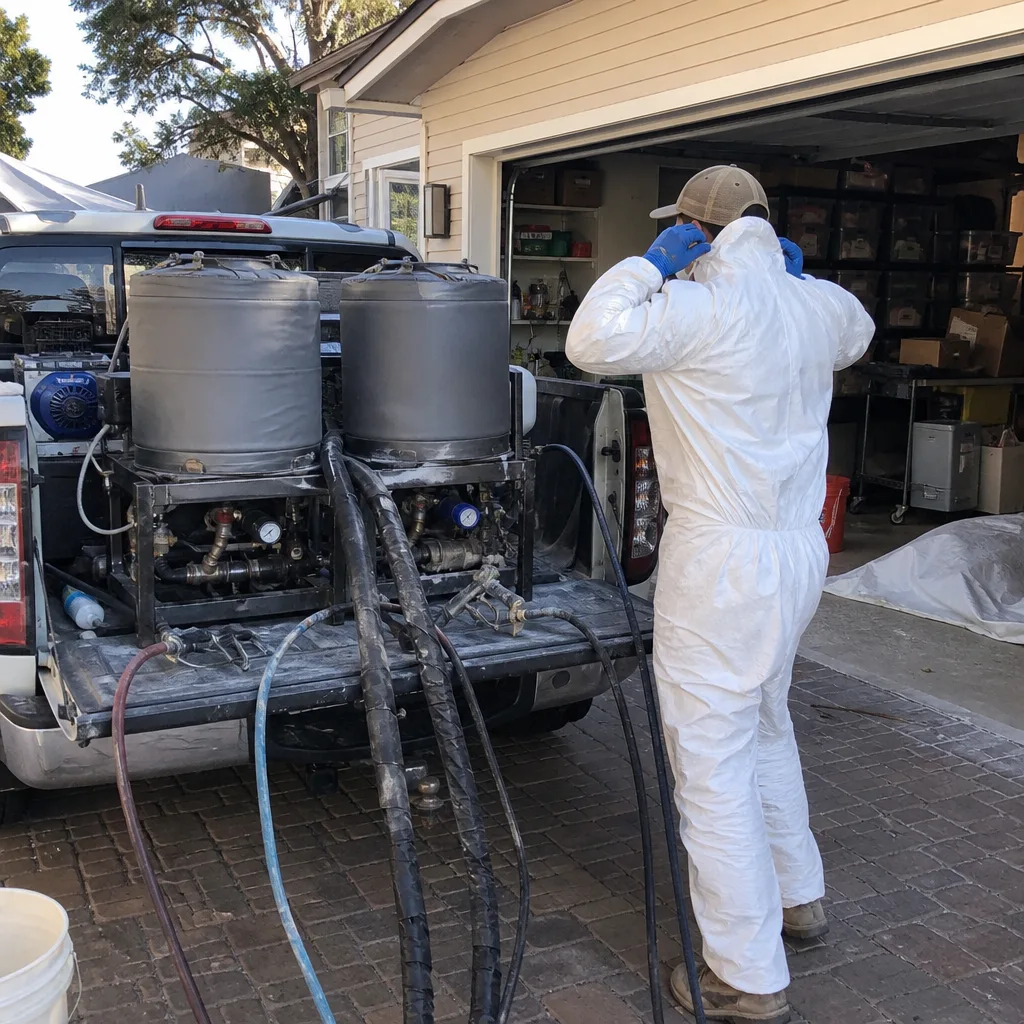
We source spray foam materials from Icynene, Demilec, and Owens Corning, with no proprietary product lock-in that limits your options or inflates your price. Our San Jose crews carry multiple resin systems on their rigs, which means we can match the specific product to your assembly type rather than forcing a one-size-fits-all approach. For Title 24 CF1R submissions, we provide manufacturer-certified R-value documentation with every spray foam application - not a generic spec sheet, but the product-specific certificate tied to your lot and permit number. Turnaround on documentation is same-day; we don’t hold your inspection hostage waiting for paperwork from a distributor three states away.
Common Spray Foam Insulation Problems We See in San Jose Homes
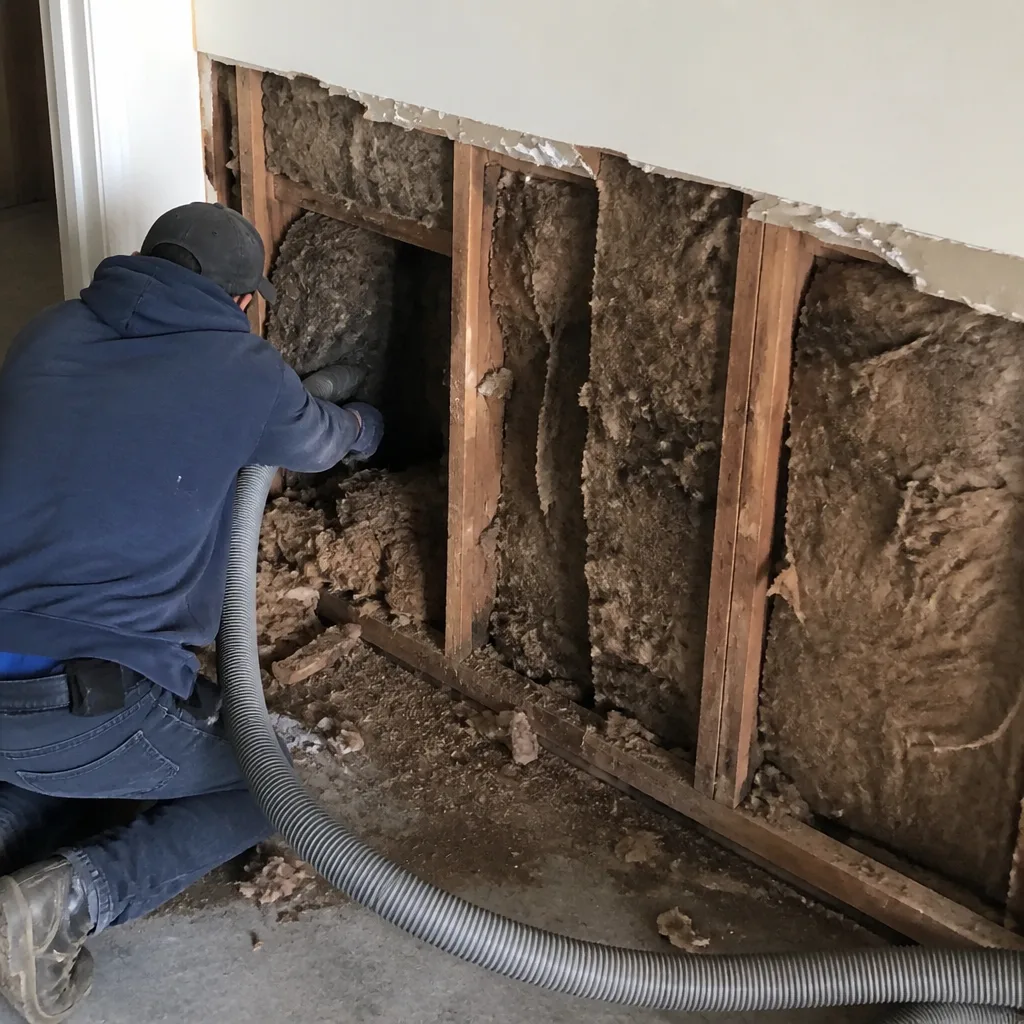
- Foam delamination in stucco ranch walls. Spray foam applied to a 1950s-1970s stucco ranch wall cavity without first addressing moisture trapped in original fiberglass batts leads to foam delamination and hidden rot in San Jose’s clay soils. We remove degraded batts and allow the cavity to dry before foam application - a step that adds half a day but prevents a full re-spray six months later.
- Unsealed rim joists in balloon-frame construction. Rim joists in older Willow Glen balloon-frame homes are left unsealed, allowing San Jose’s nighttime 35-45°F air to infiltrate while daytime 90-100°F attic heat still radiates through the unsprayed top plate. The homeowner feels both problems but rarely connects them to a single source.
- Title 24 documentation failures on ADU jobs. Detached workshops and ADUs in San Jose get foam installed without a Title 24 CF1R-compliant documented R-value, causing inspection failure and a mandatory re-spray or additional layer that breaks the one-trip promise. We verify permit requirements before quoting and deliver signed manufacturer certificates with the installed-thickness photo record.
- Open-cell in assemblies that need closed-cell. Out-of-area contractors sometimes specify open-cell for San Jose rim joists or below-grade applications where vapor drive requires the denser, lower-permeance closed-cell product. The result is moisture accumulation and odor complaints that surface within the first summer season.
Pricing for Spray Foam Insulation in San Jose, CA
| Application | Typical Range (San Jose) | Notes |
|---|---|---|
| Open-cell spray foam | $2.80-$3.80 / board foot | Roof decks, above-grade walls |
| Closed-cell spray foam | $4.50-$6.50 / board foot | Rim joists, ADU conversions, below-grade |
| Garage ceiling (typical 2-car) | $2,400-$4,200 | Includes Title 24 documentation |
| Rim joist only (full basement/crawl) | $1,800-$3,100 | Air sealing + insulation in one pass |
| Roof deck (unvented attic, 1,200 sq ft) | $4,800-$7,900 | Open-cell with vapor-profile design |
Most San Jose spray foam jobs fall between $3,200 and $8,500 depending on assembly accessibility, existing insulation removal requirements, and whether Title 24 documentation is needed for permit. We provide a Written Price Before Any Work Starts on every project - flat price, written scope, written warranty before anyone lifts a tool. That’s Haven Standard Clause 1. We also offer a Free Second Opinion on any written estimate from another contractor; bring us their scope and we’ll read it with you.
Call (831) 217-8521 for an exact quote on your specific assembly. Estimates are free.
We Also Serve Cities Near San Jose
Our crews work throughout Santa Clara County and the southern Peninsula, with regular routes to San Jose, Santa Clara, Sunnyvale, Campbell, and Cupertino. Dispatch and scheduling are coordinated from our San Francisco Bay Area office, and we maintain material stock close to these routes for same-day completion on standard residential jobs.
Serving San Jose, CA - Our Local Coverage Area
We’re based in the San Jose area and know this community well. Use the map below to see our service coverage - if you’re nearby, we can almost certainly help.
FAQs - Spray Foam Insulation in San Jose
Yes. San Jose’s ADU permitting program requires a Title 24 CF1R energy compliance report documenting verified wall, ceiling, and floor insulation values before final inspection. Spray foam is often the only product that lets a garage-conversion or backyard-unit project meet these requirements in one pass, but the contractor must provide manufacturer-approved R-value documentation for every application. We prepare this paperwork as part of our standard scope. Call (831) 217-8521 and we’ll verify your permit requirements before quoting.
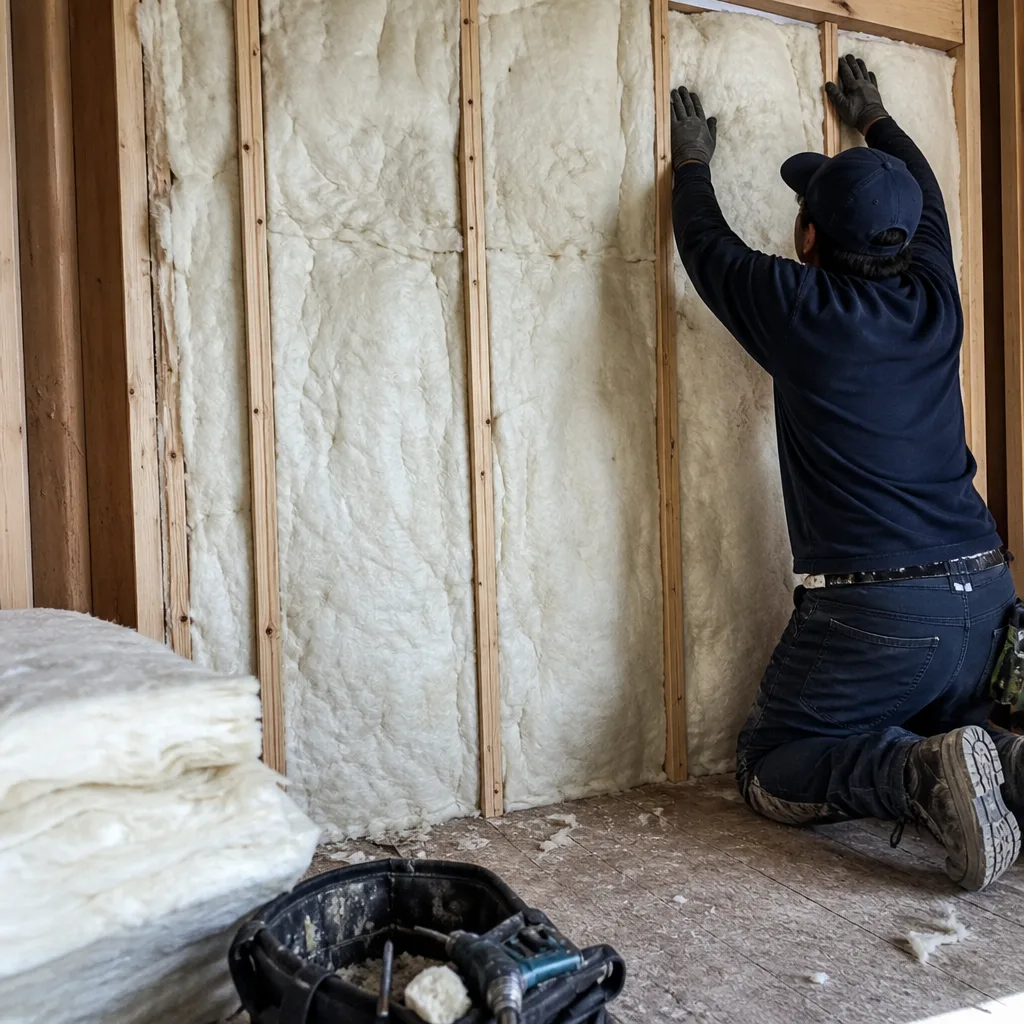
San Jose’s dominant housing stock - the post-war stucco ranch - was built with 2×4 walls and either degraded fiberglass batts or empty cavities, and the irregular framing common in that era makes batt installation nearly impossible without compression gaps that destroy R-value. Spray foam conforms to every irregularity, fills around electrical boxes and plumbing penetrations, and delivers its full rated performance without gaps or settling. For Title 24 compliance in ADU conversions, it’s often the only practical path to verified R-value in a 2×4 wall.
Yes, when properly specified. Open-cell and closed-cell spray foams are both rated for sustained temperatures well above 140°F, but the critical factor in San Jose is vapor-profile design - matching the foam’s permeance to the assembly’s drying potential so moisture doesn’t accumulate against hot sheathing. We calculate this before quoting and document the hygrothermal analysis in your project file. The foam itself won’t degrade; improper specification of the assembly around it is what causes problems.
Rim joist sealing is necessary on any home with a crawl space or basement, detached workshop or not - it’s the thermal bypass that connects outside air directly to your floor system. In San Jose, where nighttime winter temperatures drop to 35-45°F and summer attic heat radiates downward, unsealed rim joists create a year-round comfort problem that’s invisible until you see the blower-door numbers. We include rim-joist assessment on every San Jose estimate and typically recommend closed-cell foam at this location for its vapor-barrier properties against clay-soil moisture.
San Jose’s genuine two-season demand - real cooling load in summer, real heating load in winter - means insulation performance matters in both directions, unlike coastal Bay Area cities where mild temperatures mask envelope deficiencies. Closed-cell foam’s higher R-value per inch delivers more thermal resistance in constrained cavities, which matters for Title 24 compliance in 2×4 walls. Open-cell’s lower density and higher permeance suits roof-deck applications where summer moisture drive needs a drying path. We specify product by assembly, not by habit, and we document why in your written scope.
Written by Wes Okafor, Owner at Envelope Insulation Co., serving San Jose since 2016.