
Rockwool Attic Insulation: The Cupertino Owner’s Guide
Rockwool attic insulation installation in Cupertino typically runs $2.80 to $4.20 per square foot installed, with most single-story homes in the 1,200-2,000 square foot range landing between $3,400 and $7,200 for a complete attic floor application. We stock Rockwool Comfortbatt and AFB (Acoustical Fire Batt) densities on every truck, and most Cupertino jobs can be scheduled within 48 hours. Homeowners usually discover their existing Rockwool has failed when they notice hot second-floor bedrooms in July, find compressed or water-stained batts during a storage trip to the attic, or see their PG&E bill spike 30-40% year-over-year despite no change in thermostat setting.
Which Rockwool Models This Applies To
Rockwool’s residential attic line breaks into two families that behave differently in Cupertino’s climate. Comfortbatt comes in R15 and R23 densities, sized at 15.25″ width for 16″ on-center framing or 23″ width for 24″ spacing; the batts are hydrophobic and hold their R-value when attic humidity spikes during Santa Clara Valley’s winter marine layer events. AFB, the acoustical/fire variant, runs denser at 4 pounds per cubic foot and is what we find in Cupertino’s 1970s-1990s split-levels near Rancho Rinconada, where original builders used it for fireblocking at garage-ceiling penetrations as much as for thermal value.
Identification is straightforward once you’re in the attic: Comfortbatt has a tan-to-gray face with visible fiber structure; AFB is darker, almost charcoal, and noticeably stiffer. Both carry a printed lot code, but the critical spec is the density rating stamped on the edge of the batt, not the R-value alone. We’ve seen Cupertino homeowners order standard fiberglass batts thinking all R30 is interchangeable, then discover the 3.5″ fiberglass compresses to 2″ under its own weight where Rockwool’s 5.5″ batt would hold loft. OEM Rockwool is what we install; the aftermarket “mineral wool” products sold through some supply houses run lighter density and lose thermal performance faster in our dry, hot-summer climate. If your existing insulation is labeled Roxul, that’s Rockwool’s former North American brand name, pre-2018, and the sizing is identical to current stock.
Signs Your Rockwool Attic Insulation Is Failing
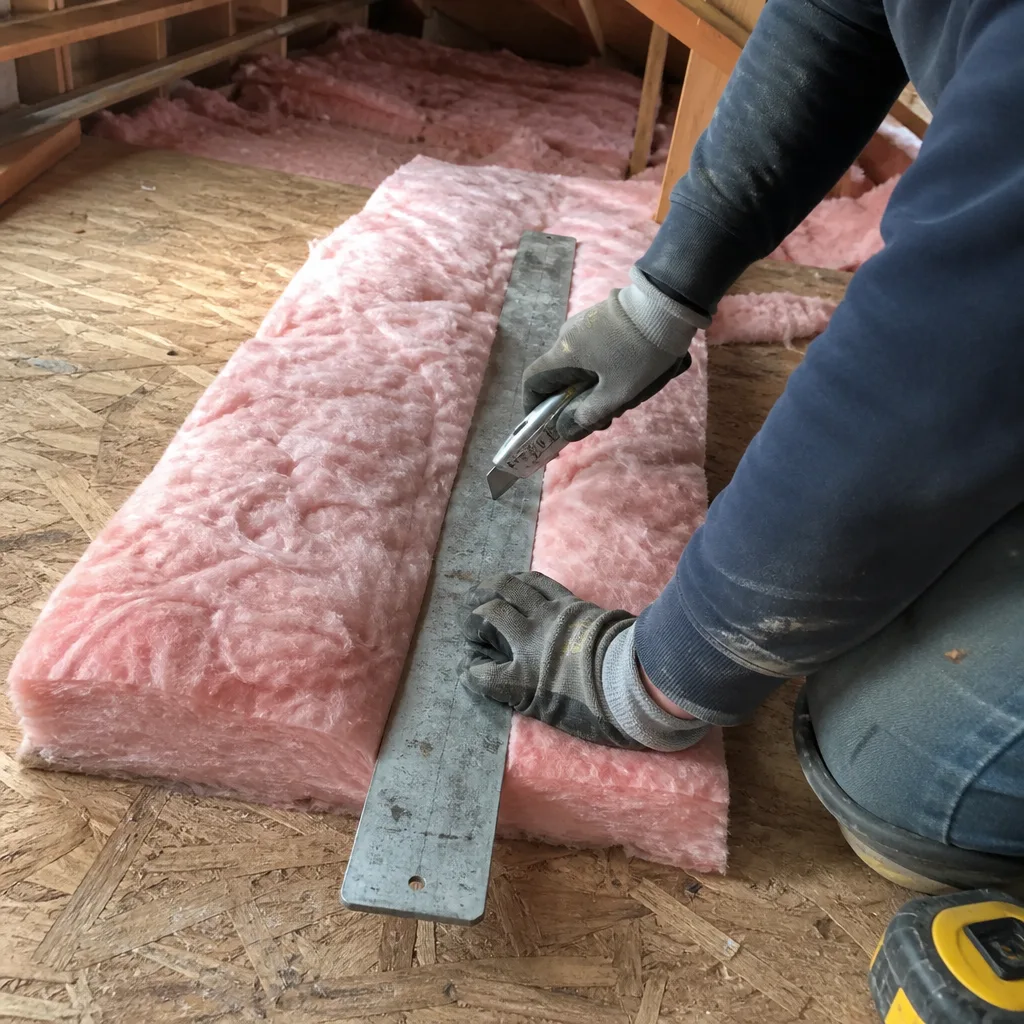
- Uneven temperature zones between rooms. Rockwool batts that have slid out of place or been displaced by wiring work leave bare top plates; conditioned air escapes through those gaps, and the room below becomes the cold spot or hot spot. We find this constantly in Cupertino’s Eichler-influenced homes with open-web trusses where batts were friction-fit without fasteners.
- Visible compression or thinning of batts. Rockwool is structurally rigid, but walking on it during HVAC maintenance or storage crushes the fiber matrix; a 5.5″ batt compressed to 3″ performs at roughly R19 instead of R23. The batt looks intact but the thermal resistance is gone.
- Water staining or rodent soiling on the facing. Rockwool itself doesn’t mold easily, but the paper or foil facing on older batts does; once that facing is compromised, the batt sheds fibers into the attic air and the thermal seal is broken. Cupertino’s occasional heavy winter rains find their way through undetected flashing failures.
- Draft around attic hatches or knee-wall doors. This is almost never the insulation itself but the bypass around it; Rockwool batts cut to fit a hatch frame without a dam or weatherstrip create a chimney effect. Wes Okafor has called this “just a polite hole in your ceiling” on more than one Cupertino job.
- PG&E bill climbing without usage changes. When Rockwool ages past 25-30 years in our climate, the binder that holds mineral fibers together embrittles; the batt doesn’t fall apart visibly, but micro-gaps open between fibers and convective heat transfer increases. The insulation looks fine from a flashlight glance but performs like a lower R-value.
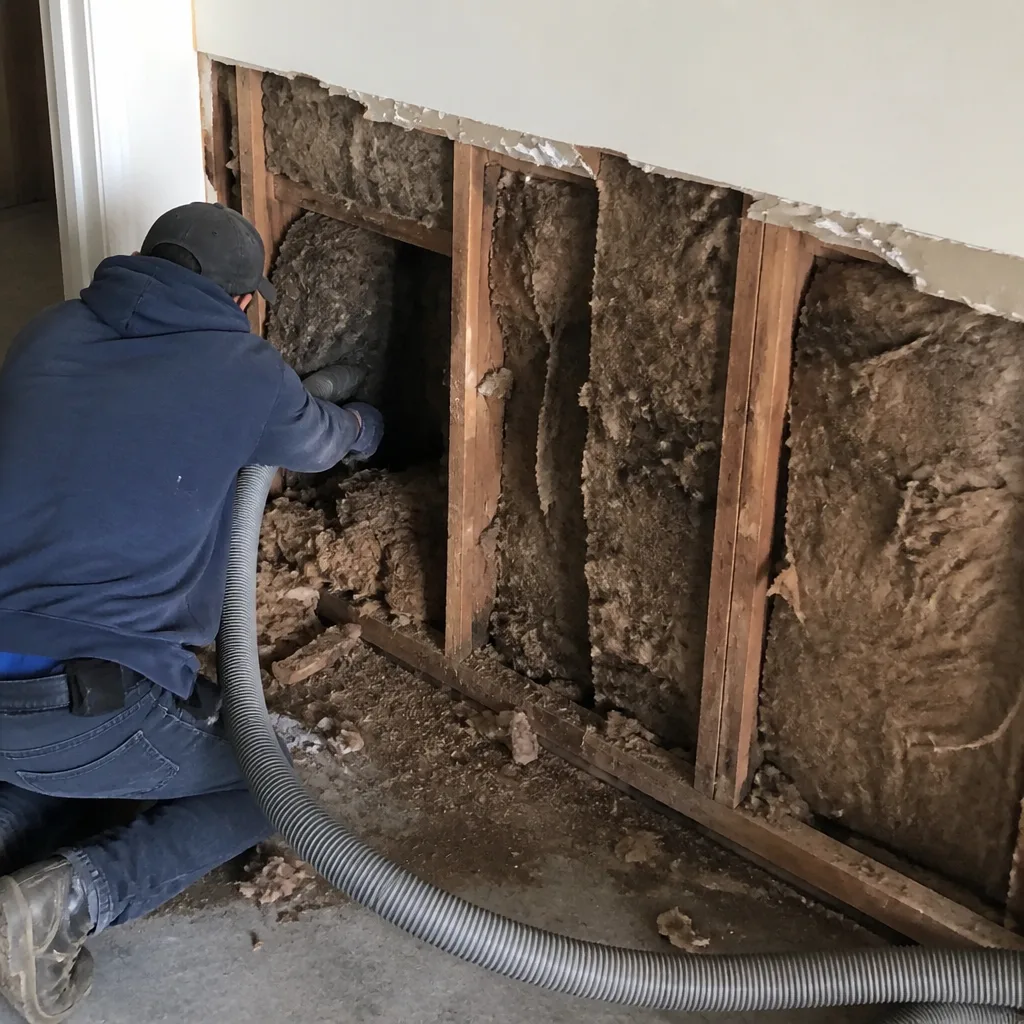 Before
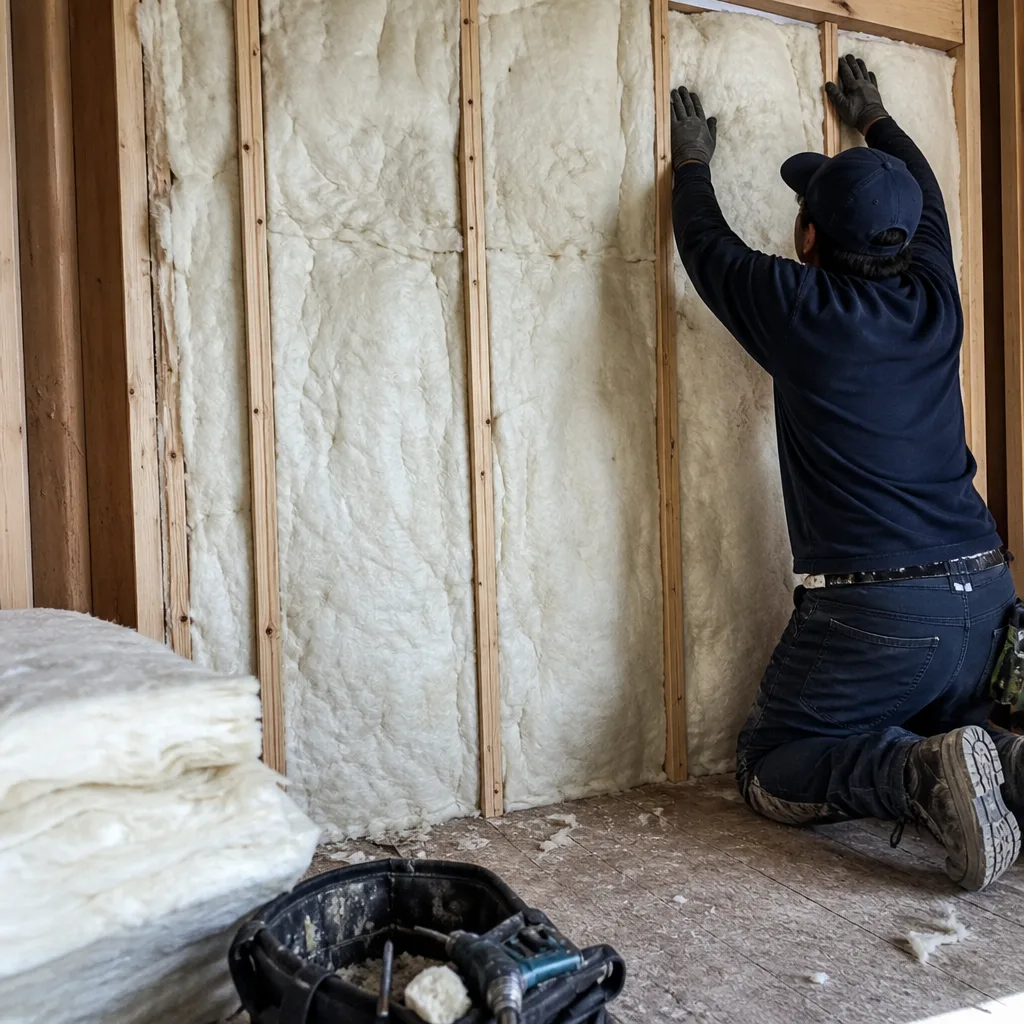 After
AfterReplacement Cost & What’s Included
Most full Rockwool attic replacements in Cupertino fall between $3,400 and $7,200 for a complete remove-and-replace on a 1,200-2,000 square foot footprint. The range depends on three factors we assess during our free estimate: whether existing material needs removal (adds $0.75-$1.10 per square foot), whether we find unsealed top plates and can lights that need pre-insulation air sealing (typically $800-$1,400 additional), and whether the attic has limited access requiring hand-carry instead of platform work.
Every Rockwool job we quote includes the material, installation, and our 365-Day Done Right Promise. We don’t start until you have a written price, a written scope, and a written warranty in hand, Haven Standard Clause 1. On applicable jobs, we run a blower-door test before and after, a pressurization reading that shows, in one number, how much air your building envelope was losing. The photo record, the blower-door readings, and the final R-value verification are yours to keep.
DIY or Call Us?
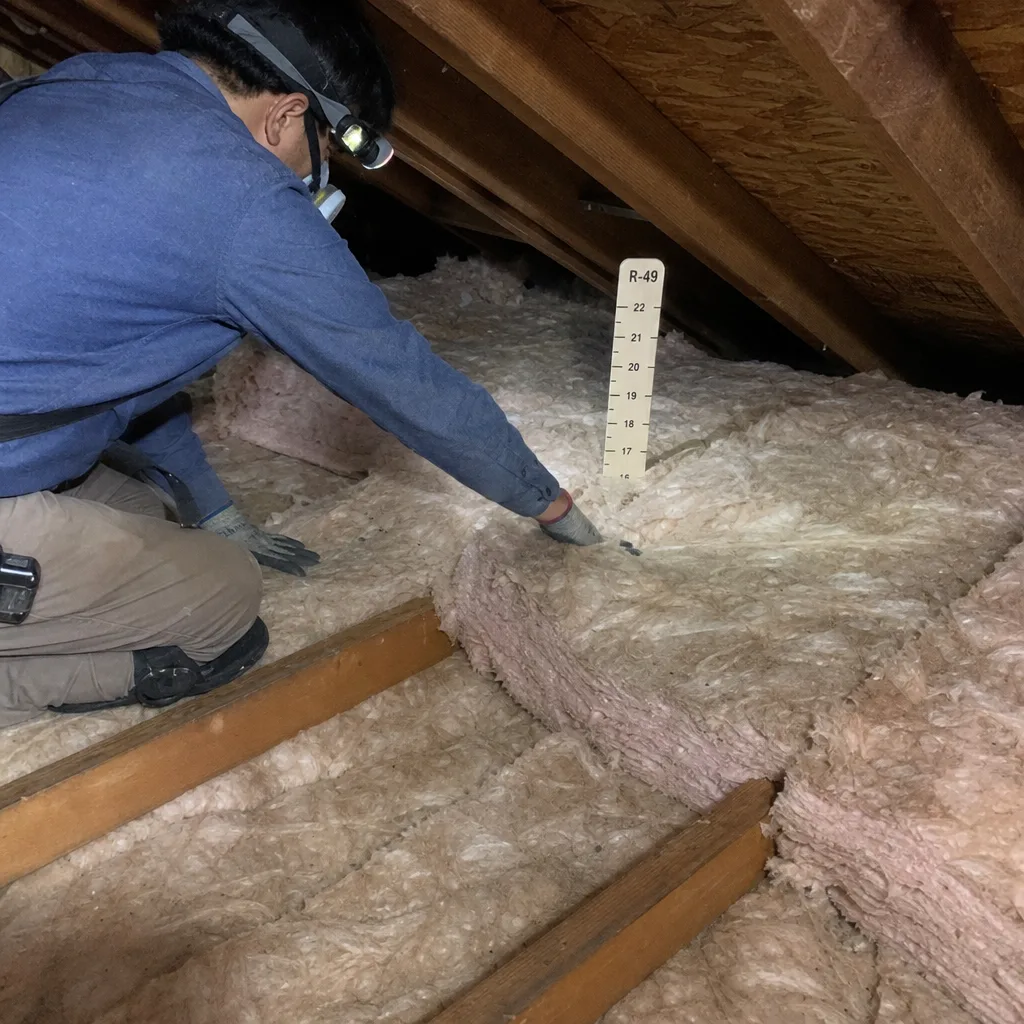
Rockwool installation isn’t mechanically dangerous like electrical or gas work, but it punishes shortcuts. A homeowner can safely check their attic for the symptoms above, measure existing batt thickness with a yardstick, and photograph any lot codes for identification. What goes wrong in DIY: compressing batts to fit around ducts or wiring, leaving gaps at top plates where fireblocking is required by Cupertino building code, or blowing insulation over unsealed can lights that are rated for contact.
The failure mode we see most is insulation installed before air sealing. Seal the leaks first. Insulation covers problems; it does not fix them. If your blower-door number is above 3,500 CFM50 on a 2,000 square foot house, adding Rockwool without sealing is spending money to hide the real issue. We carry infrared cameras and blower-door rigs on every truck; call (831) 217-8521 and we’ll show you the actual leaks before quoting any insulation work.
FAQs
Properly installed Rockwool mineral wool insulation lasts 30-50 years, though we see performance degradation starting around year 25 in Cupertino’s hot-dry summer cycle where binder embrittlement accelerates. The batts don’t disappear, but the fiber matrix loosens and thermal resistance drops 15-20%. Call (831) 217-8521 for a free attic inspection and we’ll measure your effective R-value with a thermal camera, estimates are free.
Partial repair works only if the existing batts are still structurally intact and you can match the exact density and thickness; mixing 3.5″ fiberglass patches with 5.5″ Rockwool creates thermal bridges and moisture traps. We don’t recommend it for anything beyond a small, isolated area. Call (831) 217-8521 for an exact quote on your specific situation, estimates are free.
Most Cupertino residential attics take one to two days: half a day for removal and air sealing, half a day for installation and verification. Homes near the Cupertino foothills with complex rooflines or limited hatch access may run into a second day. We stock Rockwool on every truck, so material availability never delays the schedule.
We stock Rockwool Comfortbatt and AFB in standard widths and densities on every truck; we are an independent service provider and not affiliated with Rockwool, but we source direct through their regional distribution. For unusual thicknesses or high-density commercial specifications, we can typically have material within 72 hours. Call (831) 217-8521 to confirm availability for your specific job.
Topside Attic Insulation Cupertino also stocks and installs Reflectix radiant barrier products for attics where summer heat gain is the primary concern rather than winter heat loss.
Ready to see what’s actually happening in your attic? Call (831) 217-8521. A live person answers 24/7. We’ll schedule a free estimate, run the blower-door test if applicable, and leave you with a written price before any work starts. Every job closes with a Documented Photo Record and, where air sealing is performed, before-and-after pressurization numbers you can verify yourself.
Written by Wes Okafor, Owner, Topside Attic Insulation Cupertino at Topside Attic Insulation Cupertino, serving Cupertino and nearby areas.