
Johns Manville Home Energy Audit in Cupertino: What to Know First
We provide independent Johns Manville home energy audit services in Cupertino, typically completing the full diagnostic visit and written report within a single appointment that runs two to three hours. Our price for a standard Johns Manville-focused audit on a single-family home in Cupertino runs $350-$650, and we deliver a written scope before any work starts - that’s Haven Standard Clause 1. This page is for homeowners who have Johns Manville insulation products in their attic, walls, or crawl space and need to know whether those materials are performing as installed, or whether gaps in the building envelope are undermining them. Call (831) 217-8521 to schedule or to get a free second opinion on another contractor’s written estimate.
How Johns Manville Products Fail - and How We Fix Them
- JM Spider blown-in fiberglass settles below labeled R-value in Cupertino’s variable attic temperatures. Spider - the loose-fill fiberglass bonded with a water-activated adhesive - can slump in attics that cycle through the wide temperature swings common to homes near the Cupertino foothills, where afternoon heat spikes and overnight cooling create expansion-contraction stress. We find the settled areas with depth gauges during our insulation inspection, then calculate the actual R-value against the original spec. Our fix: remove or redistribute the settled material, seal top plates and electrical penetrations first, then reinstall to proper depth with documented coverage.
- JM Climate Pro batts compress around wiring runs and HVAC plenums, creating thermal bypasses. Climate Pro formaldehyde-free batts are common in Cupertino tract homes built between 2015 and 2020, but installers often slice them loosely around obstructions rather than cutting and fitting precisely. The gaps are invisible from the attic entrance but show clearly on our thermal imaging inspection as cold stripes across the ceiling plane below. We pull the compromised batts, air-seal the penetrations with fire-rated caulk and rigid blocking, then reinstall with proper friction-fit or supplement with blown-in to fill irregular cavities.
- JM AP Foil-faced polyiso boards delaminate in high-moisture crawl spaces with poor vapor management. AP Foil, the reflective rigid foam used for crawl space and basement applications, relies on intact facing to maintain its vapor barrier properties. In Cupertino’s older homes near Rancho Rinconada, where crawl space vents were original and soil moisture is chronically high, we’ve found the foil separating from the core - the board still looks intact, but it’s no longer a continuous air barrier. Our fix: remove the compromised boards, install a proper vapor barrier on the soil, then replace with new polyiso or switch to a closed-cell spray foam if the geometry demands it.
- JM Linacoustic RC duct liner degrades at the adhesive seam in high-static systems. Linacoustic RC, the coated fiberglass duct liner used for noise attenuation, fails where the adhesive bead was skimped during original fabrication. Our duct leakage test pressurizes the system and pinpoints these seam failures with smoke pencil verification. We reline with OEM-equivalent coated liner or, if the duct geometry allows, recommend switching to externally insulated sheet metal - the labor to properly reline often exceeds replacement cost, and we’ll tell you that in the written scope.
- JM fiberglass batts installed over unsealed recessed can lights create a direct chimney effect. This isn’t a product defect - it’s an installation error we see constantly in Cupertino, where original 1970s and 1980s split-levels got retrofit batts stuffed around hot, non-IC-rated cans. The fiberglass doesn’t stop the airflow; it just filters it. Our blower-door test quantifies the leakage at these fixtures, then we install fire-rated covers, seal with caulk and spray foam, and reinstall the insulation with proper clearance. Seal the leaks first. Insulation covers problems; it does not fix them.
Our Johns Manville Home Energy Audit Process
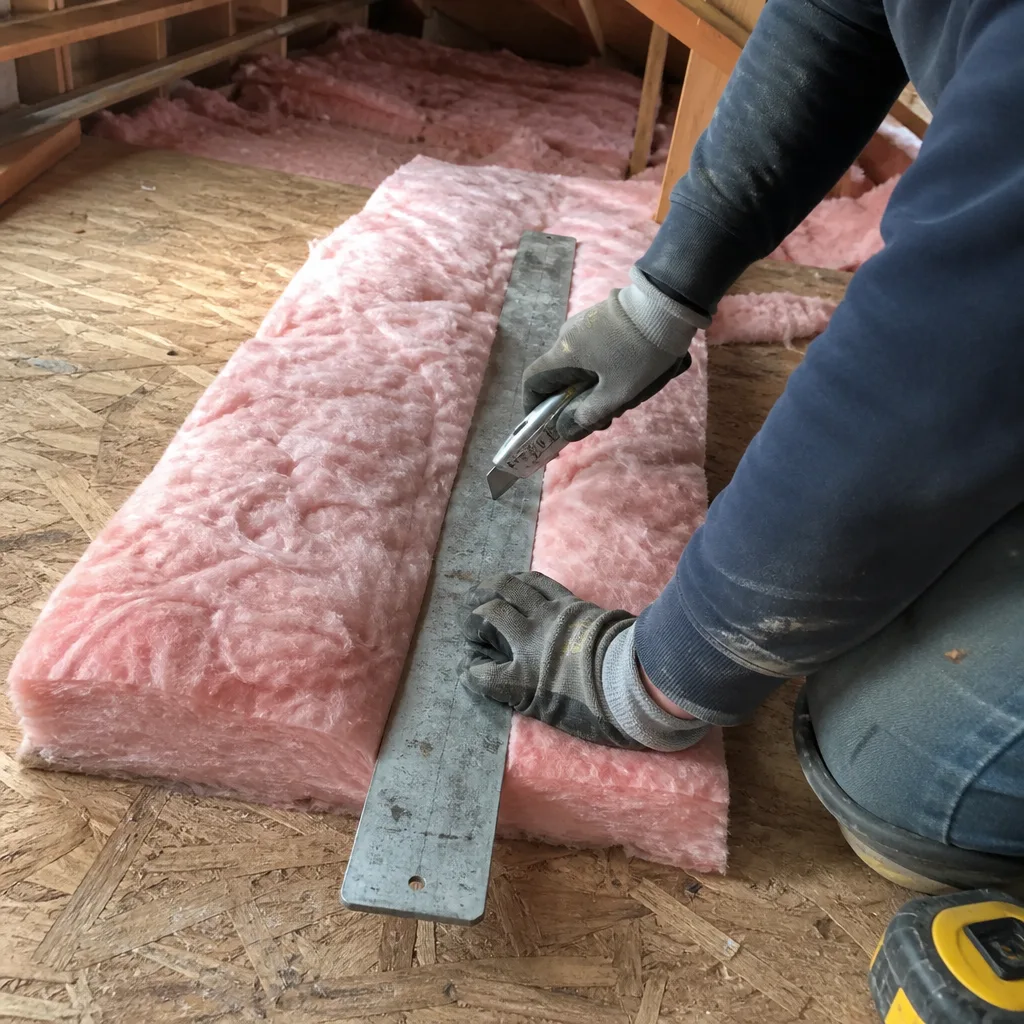
- 1
Call intake with a live person. No voicemail loops. We confirm your Johns Manville product type if you know it, the home’s age and square footage, and schedule a two-to-three-hour diagnostic window. You get a named technician and a text when they’re en route - Haven Standard: Arrive on schedule.
- 2
Pre-test blower-door run. We depressurize the house to 50 pascals and record the CFM50 reading - a single number showing how much air your building envelope is losing. In Cupertino’s older stock, we commonly see 3,500-5,500 CFM50 before any work.
- 3
Thermal imaging and insulation inspection. Our FLIR camera maps the ceiling plane and wall cavities, identifying settled Spider, compressed Climate Pro, or bypasses around the batts. We depth-gauge the attic in a grid pattern and photograph every anomaly.
- 4
Duct leakage test if HVAC is accessible. We pressurize the duct system and measure total leakage against the conditioned floor area. Linacoustic RC seam failures show up here as localized smoke pencil events.
- 5
Written scope with price before any work starts. You get a flat price, a written scope of air sealing and insulation correction, and a written warranty - all before anyone lifts a tool. No exceptions since 2016.
- 6
Post-work blower-door verification and documented photo record. On jobs where we perform the corrections, we run the blower door again and publish the before-and-after numbers. You walk away with photos, readings, and the ACH50 - air changes per hour at 50 pascals - so the improvement is documented, not just described.
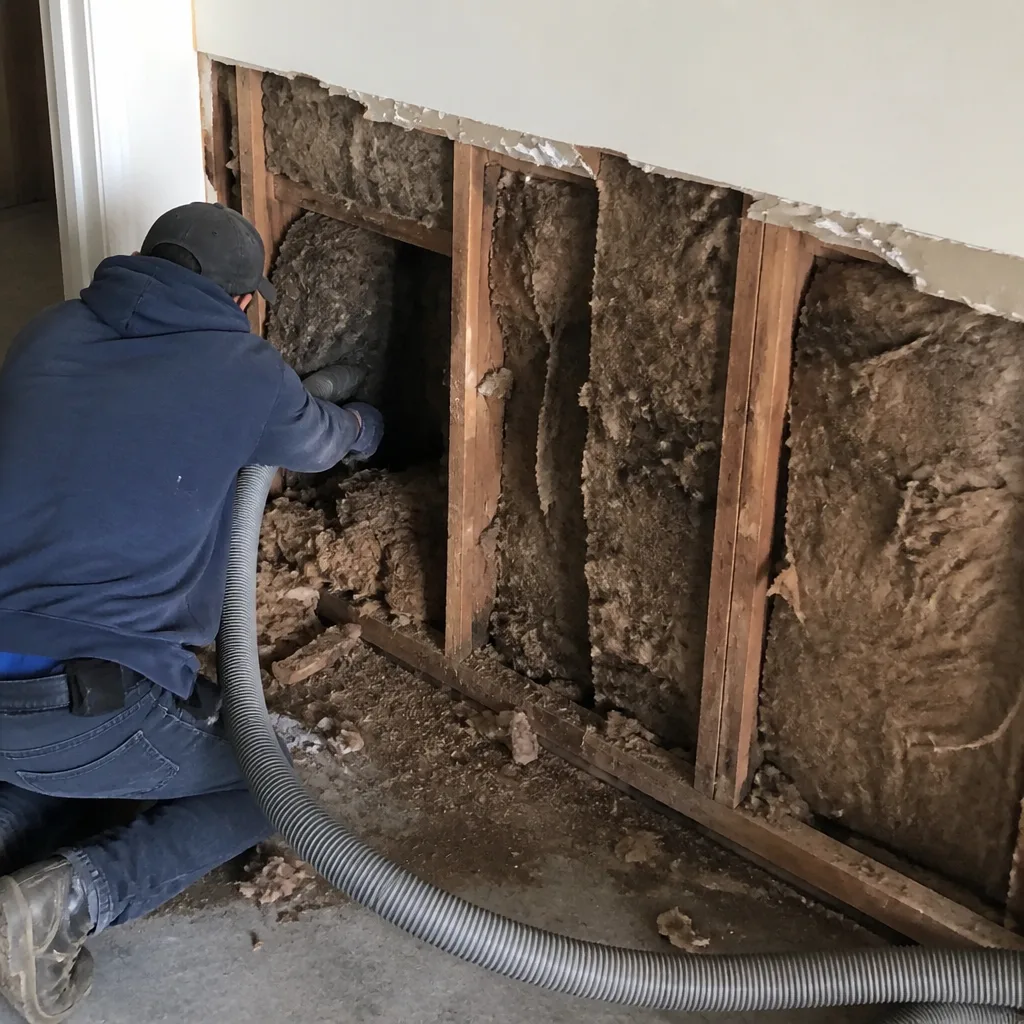 Before
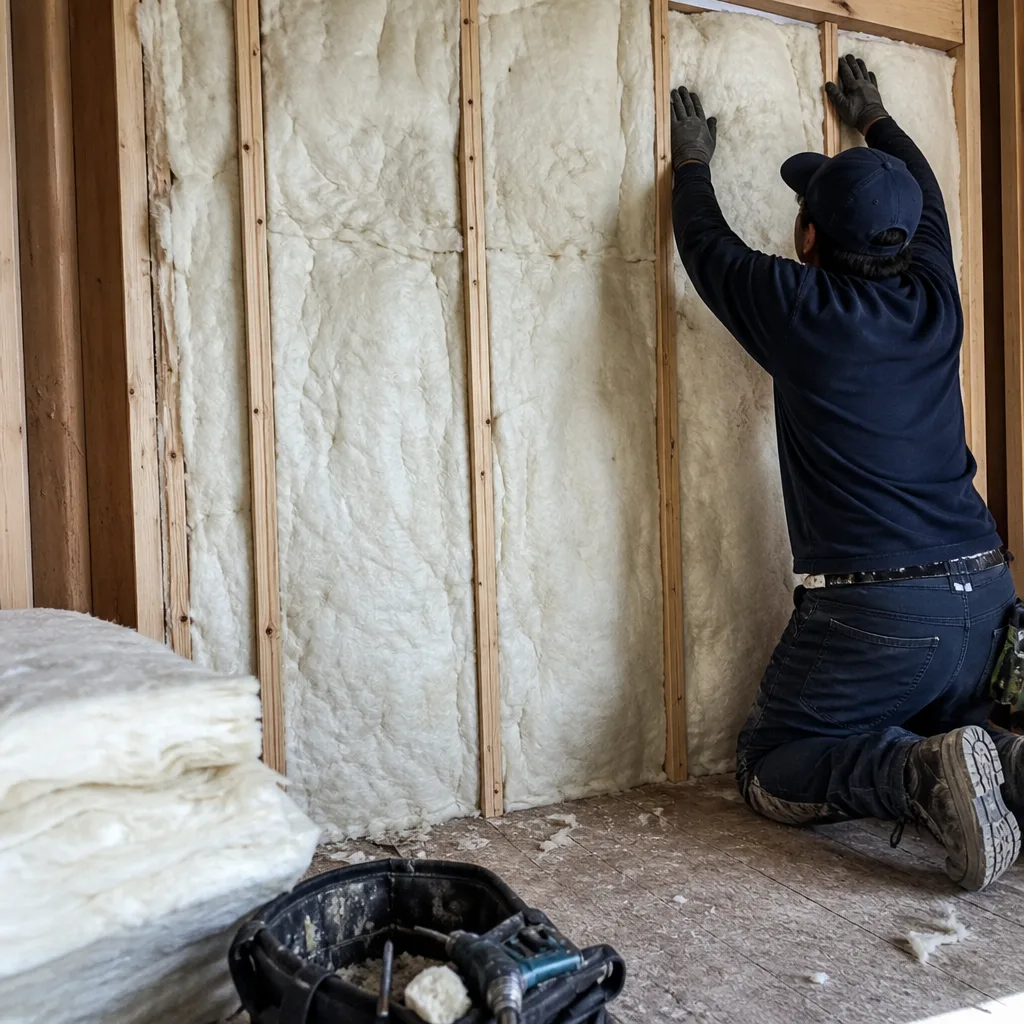 After
AfterWhat Johns Manville Home Energy Audit Costs in Cupertino
Most Johns Manville-focused home energy audits in Cupertino fall between $350 and $650 for a single-family home up to 2,500 square feet. What moves the price:
- Home size and complexity: Two-story homes with multiple HVAC zones add duct leakage test zones - typically $75-$150 per additional air handler.
- Attic accessibility: Hatches smaller than 22 by 30 inches or attics with less than 30 inches of clearance at the peak slow the work and may add $100-$200.
- Diagnostic depth: A blower-door-plus-thermal package runs at the lower end; adding full duct leakage testing with smoke verification pushes toward the upper end.
- Same-week scheduling: No premium for standard booking; emergency same-day diagnostics in peak season (September-November) may carry a $150 expedite fee.
We also provide a free second opinion on any written estimate from another contractor - bring us their scope and we’ll read it with you. Call (831) 217-8521 for an exact quote; estimates are free.
Why Cupertino Homeowners Call Topside Attic Insulation Cupertino for Johns Manville Work
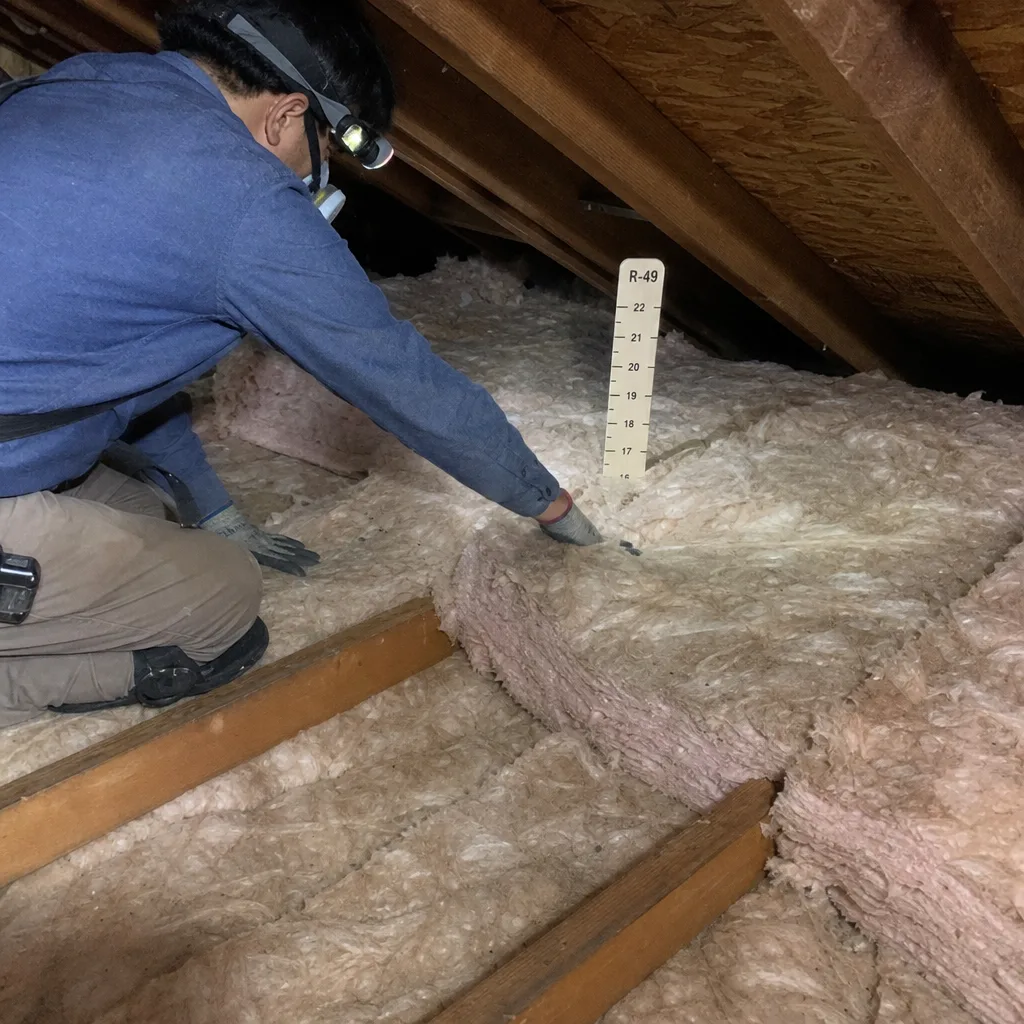
We’ve completed jobs from tract homes near Rancho Rinconada to older split-levels backing up to the Cupertino foothills - the kind of houses where the original attic bypasses were never sealed before the blown-in cellulose went down. Wes Okafor learned the trade at Olive-Harvey College, where the building science program ran blower-door diagnostics before most contractors in the region knew what one was. That training shows up in our documentation: every applicable job gets before-and-after blower-door numbers, and every visit ends with a photo record. We’re independently owned and operated under The Haven Standard since 2016 - not a franchise, not affiliated with Johns Manville - and we source materials from Johns Manville, Owens Corning, Knauf, Rockwool, and others, including Reflectix, so the solution isn’t locked to a single brand. The 365-Day Done Right Promise applies to all completed work. If it’s not done right, we make it right.
FAQs
No - a properly conducted diagnostic audit does not void Johns Manville’s product warranty, which covers manufacturing defects, not installation or building-envelope performance. As an independent Johns Manville service provider, we document existing conditions without altering the installed product unless you authorize corrective work in a separate written scope. If we find a true manufacturing defect during our inspection, we flag it in our report so you can pursue a claim with your original installer or Johns Manville directly. Call (831) 217-8521 to schedule - estimates are free.
We maintain standard Johns Manville replacement materials - Spider, Climate Pro, AP Foil, and Linacoustic RC equivalents - in our Cupertino-area inventory for audit-follow-up jobs. For specialized densities or discontinued lines, we source through regional distributors with two-to-three-day turnaround; we’ll tell you in the written scope if your job requires a special order. Call (831) 217-8521 to confirm availability for your specific product line.
Spot correction is cheaper when the failure is localized - settled Spider in one attic bay, compressed Climate Pro around a single HVAC plenum. Full replacement makes sense when the product is below 70% of labeled R-value across more than 40% of the surface area, or when the original installation omitted air sealing that now requires access to the entire cavity. Our audit gives you the numbers: actual R-value by zone, blower-door leakage by component, and a line-item price for each scenario. Call (831) 217-8521 for the written scope.
Standard scheduling is three to five business days; same-week appointments are often available outside September-November peak season. The audit itself takes two to three hours on site, and your written report with photos, blower-door readings, and priced scope arrives within 24 hours. Call (831) 217-8521 to book.
Yes. We audit multi-brand envelope systems routinely; our thermal imaging and blower-door testing capture interaction effects between zones, such as when a leaky crawl space with Reflectix rim-joist insulation pressurizes the attic and undermines Johns Manville ceiling performance. The audit price covers the whole envelope - no need to schedule separate visits. Call (831) 217-8521 to book.
Written by Wes Okafor, Owner, Topside Attic Insulation Cupertino at Topside Attic Insulation Cupertino, serving Cupertino and nearby areas.