
Johns Manville Attic Air Sealing: The Cupertino Owner’s Guide
Johns Manville attic air sealing components in Cupertino homes typically run $340-$780 installed, depending on attic square footage and how many top plates, can light housings, and duct chases need sealing. We stock Johns Manville-compatible acrylic-latex sealants, polypropylene mesh tapes, and rigid foam baffles on every truck, and most Cupertino jobs we start before noon are finished same day. Most homeowners discover the problem when their upstairs rooms won’t stay cool through a Santa Clara Valley afternoon despite new insulation, or when their energy auditor hands them a thermal image showing purple streaks where conditioned air is pouring into the attic through gaps the original builder never closed.
Which Johns Manville Models This Applies To
Johns Manville does not sell attic air sealing as a discrete “system” with model numbers like their insulation batts or blown-in lines. What we’re talking about are the sealants, tapes, and rigid accessories JM specifies for use with their Climate Pro, Spider, and Formaldehyde-free blown-in fiberglass products. The compatibility question is whether your attic was air-sealed to JM’s published installation guidelines, which call for sealing all ceiling penetrations to ASTM E2178 standards before insulation goes down.
To identify what you actually have, look for the original insulation bag labels, usually stapled to a rafter or joist near the attic hatch. JM bags list a lot number and the product line. If you see Spider or Climate Pro, the original contractor should have used JM-compatible sealants rated for fiberglass contact. The gotcha in Cupertino’s 1950s-1980s housing stock, especially the Eichler-influenced ranches near Rancho Rinconada and the split-levels off McClellan Road, is that many installers blew insulation directly over unsealed top plates and recessed can housings. The insulation looks right. The air sealing never happened.
We carry both OEM Johns Manville sealants and quality aftermarket equivalents from Owens Corning and Knauf that meet the same ASTM specs. For most Cupertino attics, the aftermarket performs identically at a lower per-tube cost. We quote both options in writing before work starts.
Signs Your Johns Manville Attic Air Sealing Is Failing
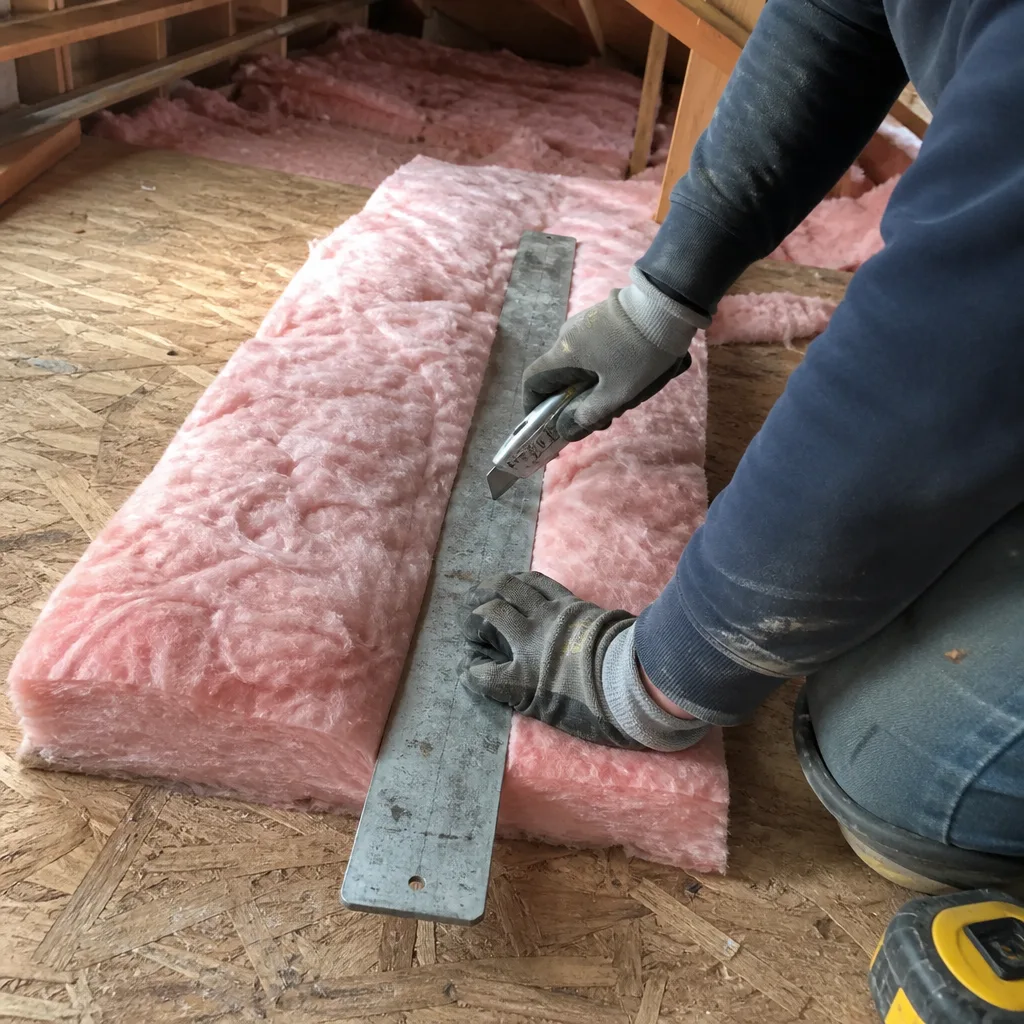
- Dust streaks around ceiling registers or can lights. These dark lines are filtration marks, airborne particles passing through gaps between the drywall and the fixture housing because the original sealant shrank or was never applied. In Cupertino, where summer afternoons hit the 90s and the attic hits 140°F, thermal cycling accelerates this.
- Upstairs rooms that lag 8-12 degrees behind the thermostat setting. Conditioned air is escaping into the attic through bypasses at interior wall top plates, the horizontal framing member where your wall meets the ceiling plane. We see this constantly in the older split-levels backing up to the Cupertino foothills, where the original construction left these gaps wide open.
- Ice damming or moisture staining on north-facing eaves in winter. Warm, moist interior air leaks into the attic, condenses on the underside of the roof deck, and freezes at the eave. Cupertino’s mild winters mean this shows as dark staining rather than dramatic icicles, but the mechanism is identical.
- Blower-door test showing more than 7 ACH50 in a home built after 1980. ACH50 means air changes per hour at 50 pascals of pressure, a standardized pressurization reading. A well-sealed home of that era should test below 5 ACH50. We’ve tested Cupertino homes at 11 ACH50 where the insulation looked perfect from the hatch.
- Insulation that appears settled or disturbed directly above interior walls. Air moving through unsealed gaps carries insulation particles with it, creating shallow spots or bare patches. This is not settling. It’s a wind-washing indicator, and it means your R-value is compromised exactly where you need it most.
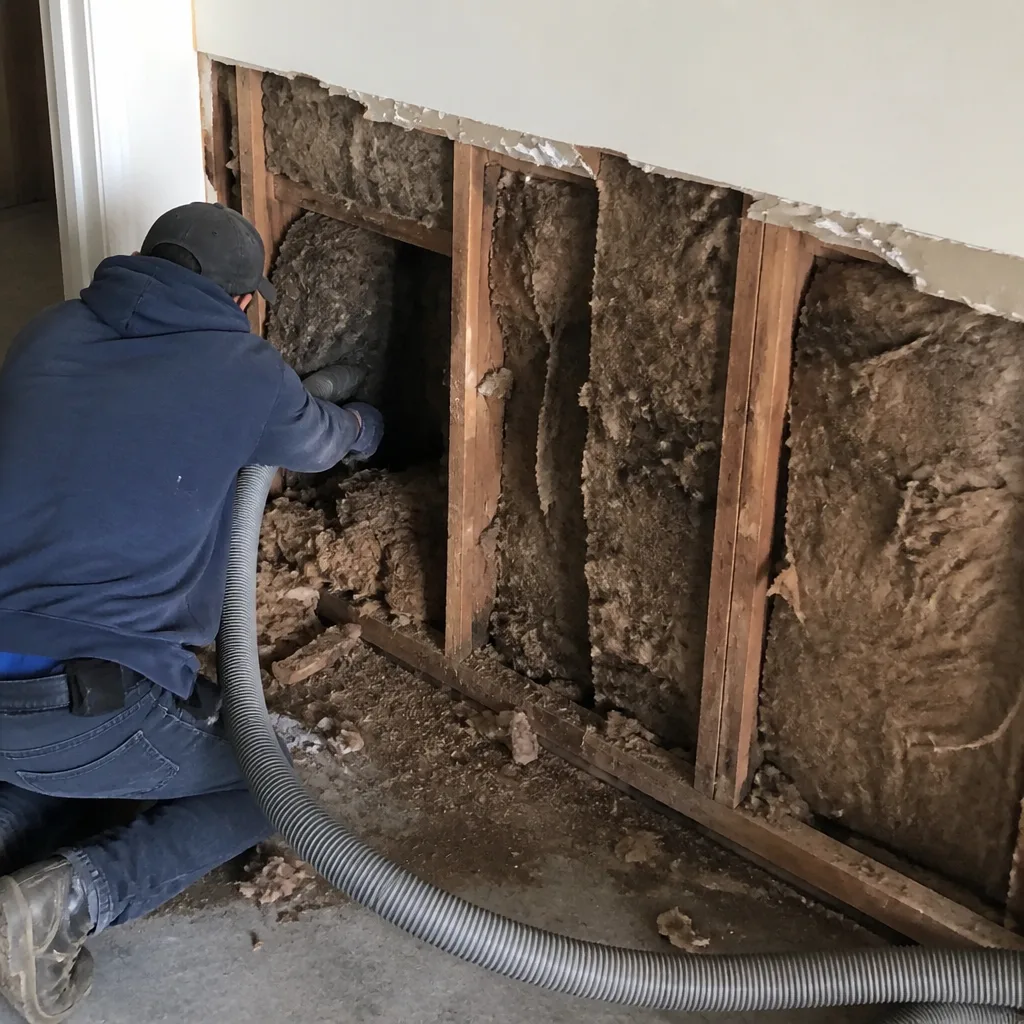 Before
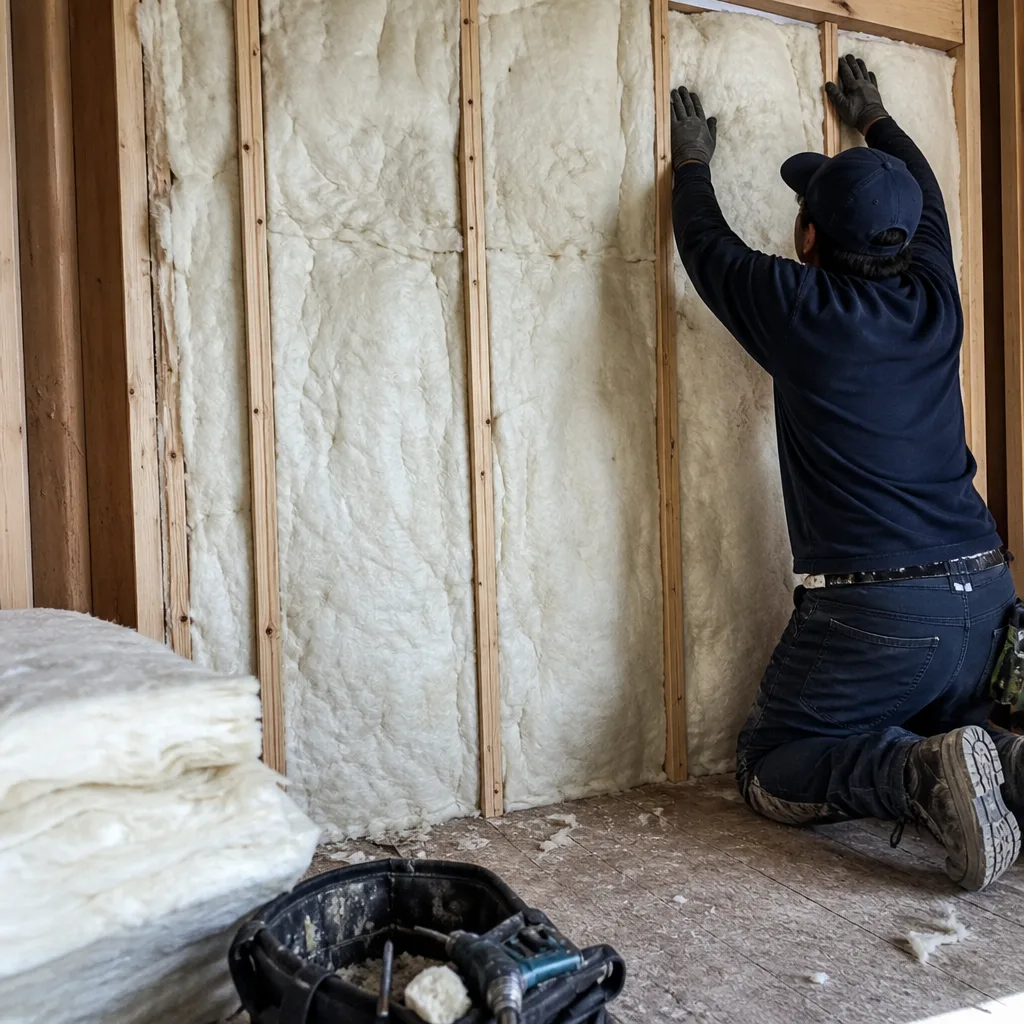 After
AfterReplacement Cost & What’s Included
| Scope | Typical Range in Cupertino |
|---|---|
| Attic floor sealing only (top plates, wire/plumbing penetrations, fixture boxes) | $340-$520 |
| Attic floor + can light housings (IC-rated or Tenmat cover install) | $520-$680 |
| Full envelope including duct chases, chimney soffit, attic hatch rebuild | $680-$780 |
What drives the range is access, not guesswork. A truss attic with a 30-inch hatch and clear walkways takes half the time of a 1950s Cape Cod with a 14-inch scuttle and engineered joists on 12-inch centers. Every quote we write specifies the linear feet of sealant application, the count of penetrations, and the blower-door target we’re committing to. No work starts without that written price.
The installed price includes materials, labor, and our 365-Day Done Right Promise. On applicable jobs, you get before-and-after blower-door numbers showing the actual CFM50 reduction. We also stock Reflectix radiant barrier accessories if your attic needs that layer addressed.
DIY or Call Us?
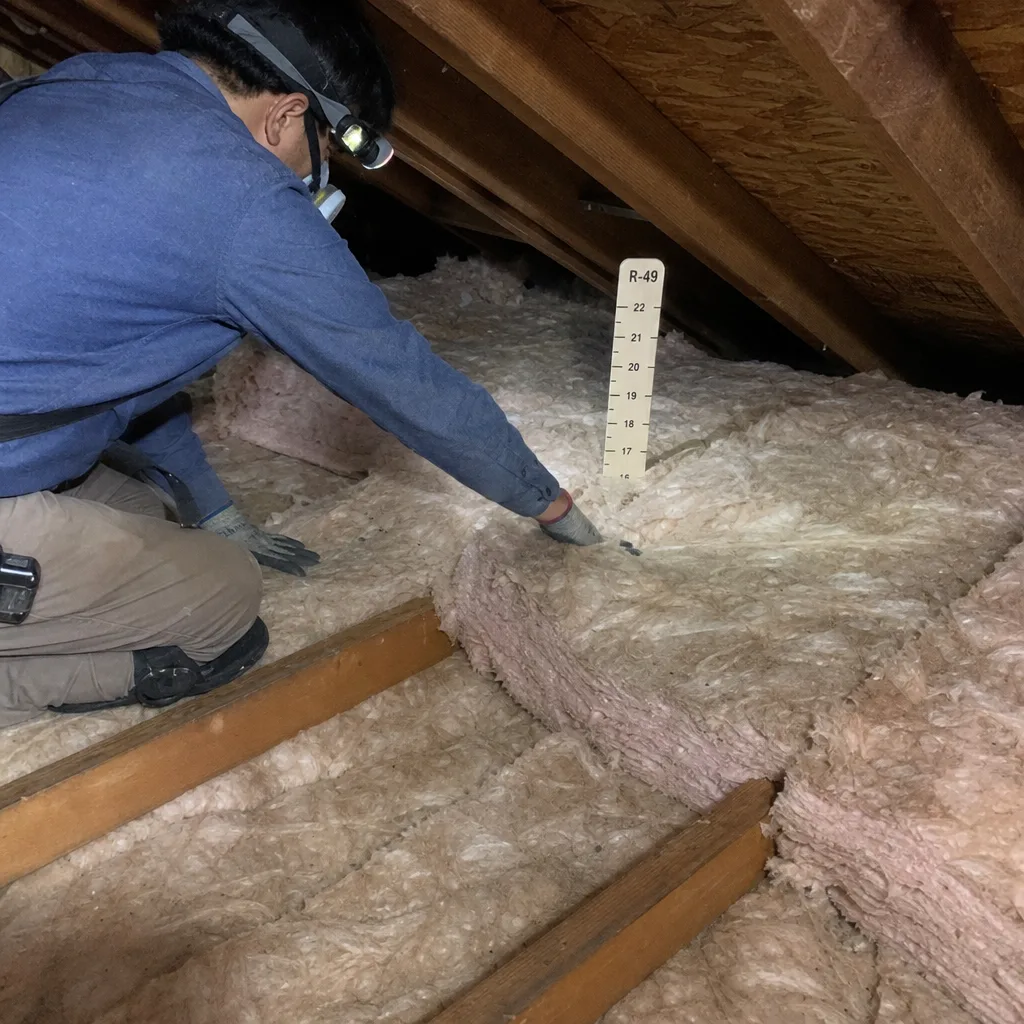
There’s a short list of what a Cupertino homeowner can safely check. Verify your attic hatch has weatherstripping and closes against a seal. Look for visible gaps around can lights from below, using a stepladder, not the attic. Check for bathroom fan housings that terminate into the attic rather than ducting outside, these are code violations and major leak sources.
Where DIY goes wrong is the actual sealing work. Attic air sealing requires working in 140°F heat on joists spaced 16 or 24 inches apart, often near live electrical wiring and in confined spaces where one misstep puts a foot through the ceiling below. The sealants themselves are straightforward, but finding every bypass, the ones hidden under existing insulation, the ones at interior wall intersections you cannot see from the hatch, takes training and a blower door to verify. We’ve been called to fix DIY jobs where the homeowner sealed the wrong gaps and pressurized the attic into the living space.
Seal the leaks first. Insulation covers problems; it does not fix them. Call (831) 217-8521 for a written price before anyone lifts a tool.
FAQs
Quality acrylic-latex sealants and polypropylene tapes installed to ASTM E2178 standards last 20-30 years in Cupertino’s climate, which lacks the freeze-thaw cycling that degrades sealants faster elsewhere. The failure mode we see is almost always original installation omission, not material degradation. If your home was built between 1960 and 1995 in Cupertino and has never had dedicated air sealing, assume it needs it now. Call (831) 217-8521 and we’ll test it.
Partial repair is possible if the original sealing was done correctly and only specific areas have failed, a shrunken bead around a new plumbing vent, for example. In practice, most Cupertino homes we enter never had comprehensive sealing to begin with, so “repair” means completing work that was skipped. We quote both approaches in writing after inspection. Estimates are free.
A typical Cupertino attic of 1,200-1,800 square feet takes one crew one day, with the blower-door test run before and after. Larger homes or attics with limited access, the low-clearance ranch styles near Stevens Creek Boulevard, may run into a second day. We give you a schedule commitment in writing, not a window.
We stock Johns Manville-compatible sealants, tapes, and rigid baffles on every truck, along with Owens Corning, Knauf, and Rockwool equivalents. We’re an independent service provider, not affiliated with Johns Manville, and we source materials based on what your specific attic needs, not brand loyalty. Same-day starts are available for most Cupertino calls we receive before 10 a.m.
Written by Wes Okafor, Owner, Topside Attic Insulation Cupertino at Topside Attic Insulation Cupertino, serving Cupertino and nearby areas.