
Icynene Attic Insulation: The Cupertino Owner’s Guide
Most Icynene open-cell spray foam attic jobs in Cupertino run between $4,200 and $7,800 installed, depending on whether we’re topping existing insulation or stripping failed material back to the deck and starting fresh. We stock Icynene LD-C-50 and MD-R-200 series material on our trucks, and we can usually inspect and quote same-day if you call before noon. Homeowners typically notice the problem first as a hot second floor in July, a spike in PG&E bills after a mild month, or water staining on the drywall where attic air has bypassed the foam and condensed against the sheathing.
Which Icynene Models This Applies To
The Icynene product line has shifted over the past decade, and what was sprayed in Cupertino tract builds from 2012 to 2019 is often the LD-C-50 open-cell formulation, a 0.5 lb/ft³ density foam that expands to fill rafter bays and stud cavities. You can identify it by the cream-to-pale-yellow color and the slightly soft, spongy feel when pressed, unlike the firmer, more rigid feel of closed-cell products. The MD-R-200 series, a higher-density open-cell used in some custom builds near Rancho Rinconada and the foothills, is gray and noticeably stiffer. Both are water-blown, meaning they won’t off-gas HCFCs as they age, but they do degrade differently when exposed to sustained roof leaks or attic temperatures above 180°F, which happens in Cupertino’s south-facing roofs without adequate ventilation.
Topside Attic Insulation Cupertino is an independent service provider, not affiliated with Icynene or its parent company. We source Icynene material through our distributor network, and we also install Owens Corning, Johns Manville, Knauf, Rockwool, CertainTeed, Demilec, and GreenFiber products when the job calls for a different approach. The OEM-versus-aftermarket question doesn’t really apply to spray foam the way it does to mechanical parts, but it does matter whether the existing foam was installed to the manufacturer’s lift thickness per pass. LD-C-50 is spec’d at 3.5 inches per lift; installers who went thicker in a single pass trapped exothermic heat, and that foam is the material we most often find shrunken, cracked, or separating from the substrate. When we strip and refoam, we follow the lift schedule exactly, and we document the pass thickness in the photo record you receive.
Signs Your Icynene Attic Insulation Is Failing
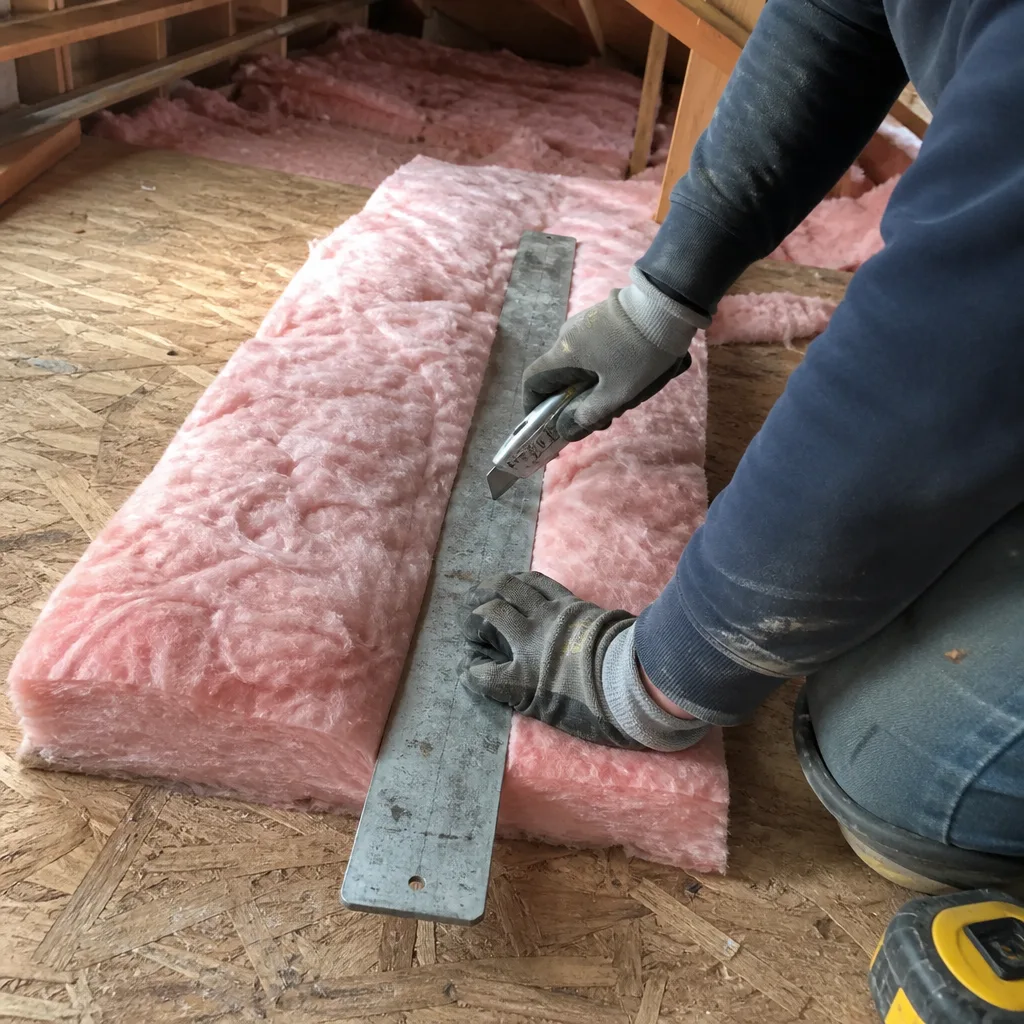
- Hot rooms directly below the attic in summer, cold in winter. The R-value of open-cell Icynene is roughly 3.6 per inch. If the original installer sprayed 5 inches in a 2×8 rafter bay and it has settled or shrunk to 3.5 inches, you’ve lost nearly a third of your thermal resistance. We measure this with a thermal imager and a probe to verify remaining thickness.
- Musty or chemical odor returning after years of no smell. Properly cured Icynene is inert, but if the foam was installed over damp sheathing or in a humid attic, trapped moisture can breed mold at the foam-wood interface. The odor is often the first sign; by the time you see staining, the substrate may need remediation before new foam goes down.
- Visible cracking or pulling away from rafters and top plates. This is shrinkage, usually from excessive lift thickness or spraying in cold weather without substrate pre-conditioning. In Cupertino, we see it most often on north-facing roofs where morning dew delayed cure, or in attics where the original contractor skipped the primer on dusty OSB.
- Ice damming or heavy frost on roof nails in winter. Warm, moist interior air leaking past compromised foam condenses on cold nail shanks. It’s a tell that your thermal boundary has gaps, often at the eaves where spray foam coverage is thinnest or where wind-washing has degraded the material over time.
- PG&E bills climbing year-over-year with no rate change. We pull 24 months of usage data on every energy audit. When kWh per heating degree-day rises, the envelope is the culprit, and degraded attic foam is the most common failure point in Cupertino’s 1960s-to-1990s housing stock.
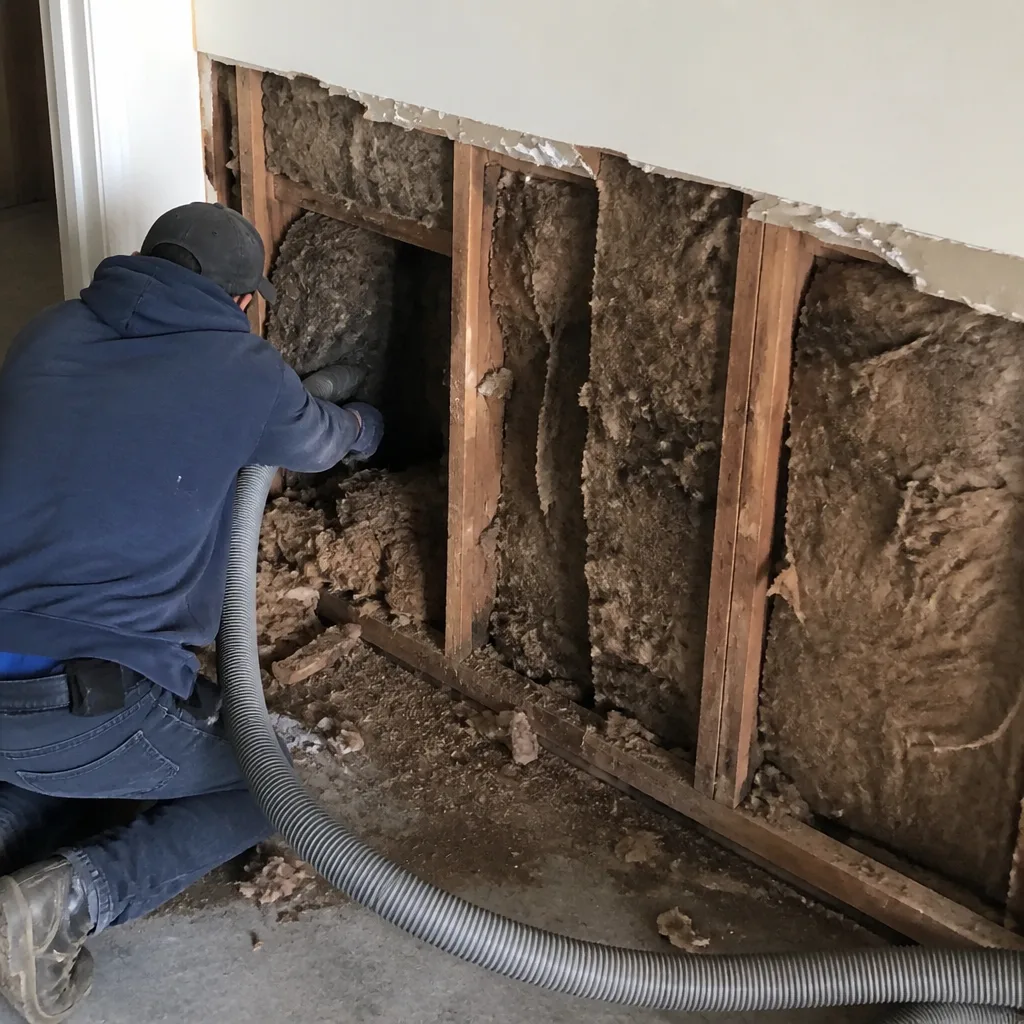 Before
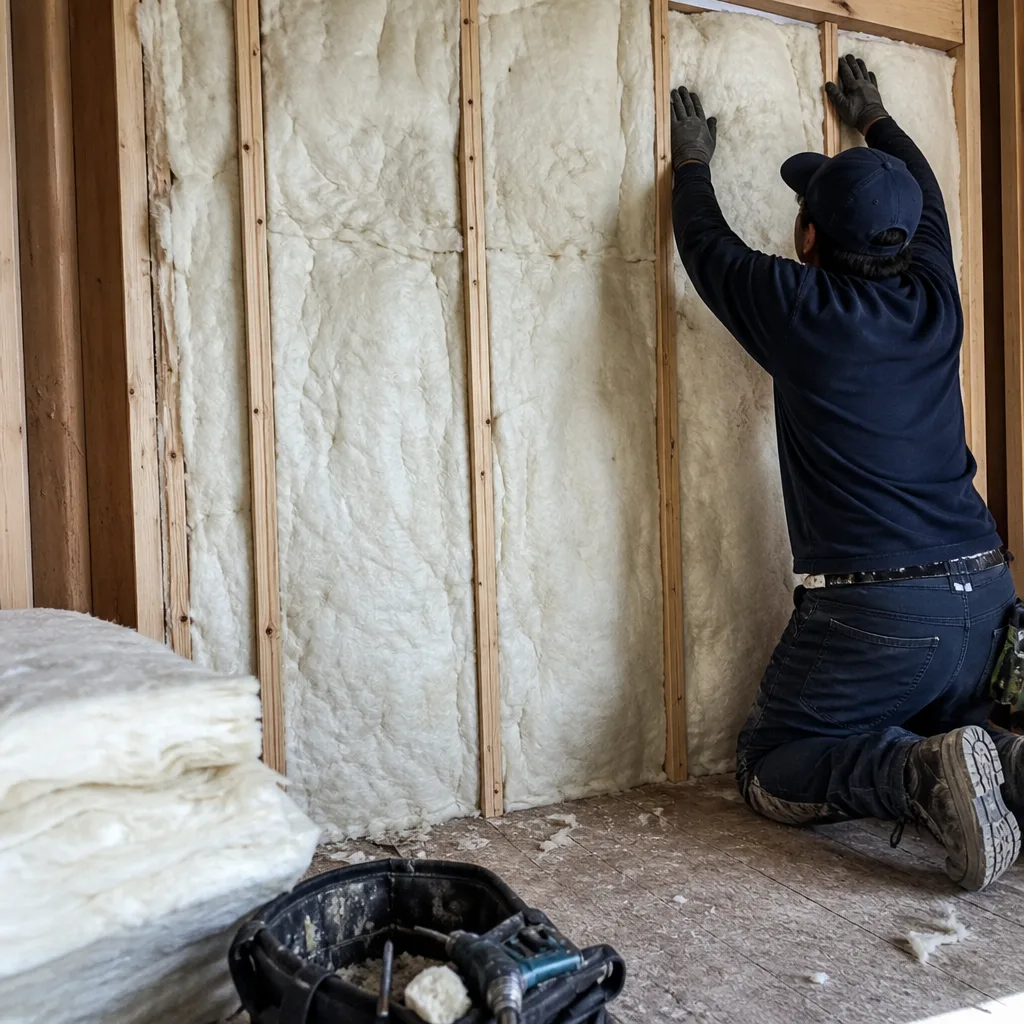 After
AfterReplacement Cost & What’s Included
In Cupertino, a full strip-and-refinish of an Icynene attic with open-cell spray foam typically falls between $4,200 and $7,800 for a home in the 1,600 to 2,400 square-foot range. The lower end applies when we’re spraying over a sound substrate with no remediation needed; the upper end includes stripping failed foam, treating mold-affected sheathing, installing baffles for proper ventilation, and refoaming to the full rafter depth. A partial repair, localized to a water-damaged section or a failed addition, runs $1,800 to $3,400.
| Scope | Price Range | What’s Included |
|---|---|---|
| Partial repair, localized strip and refoam | $1,800 - $3,400 | Removal of failed section, substrate prep, two-pass LD-C-50, photo record |
| Full attic, standard 2×8 rafter depth | $4,200 - $5,600 | Complete strip if needed, air sealing of top plates and penetrations, LD-C-50 to full depth, baffles, blower-door test, photo record |
| Full attic, deep 2×10 or greater rafter, or closed-cell upgrade | $5,800 - $7,800 | As above with MD-R-200 or hybrid open/closed-cell system, enhanced ventilation detailing |
Every job includes our written scope and written warranty delivered before anyone starts, per Haven Standard Clause 1. The 365-Day Done Right Promise covers the installation and the air-sealing result, documented with before-and-after blower-door numbers so you can verify the improvement in CFM50, not just take our word for it.
DIY or Call Us?
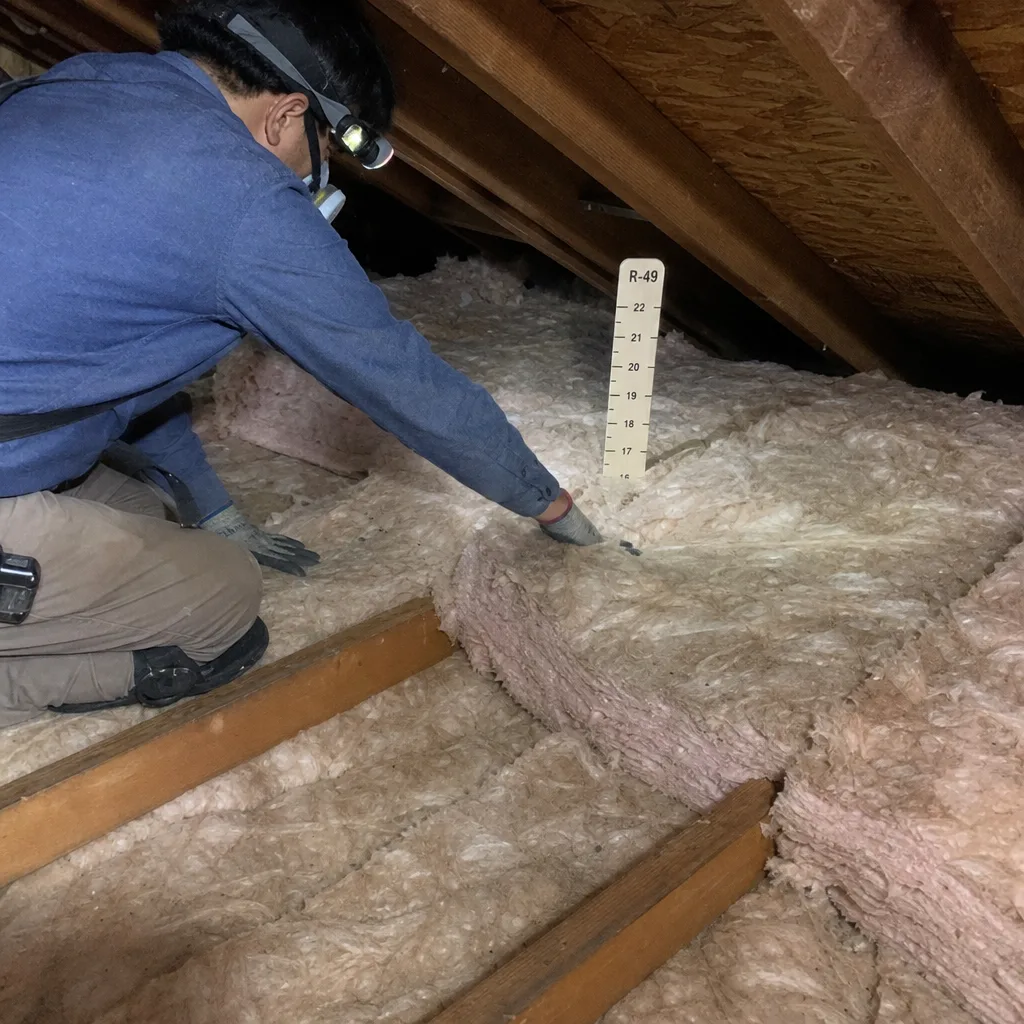
There’s no safe DIY path for spray foam installation. The two-component chemicals require heated proportioning equipment, proper respirators with organic vapor cartridges, and controlled application conditions that don’t exist in a residential setting. Even removal of failed foam is hazardous: the dust is respirable and irritating, and without negative-air containment you’ll contaminate your living space. What you can safely check: look for the visual symptoms above, note any recent roof leaks or pest activity, and photograph anything suspicious. Then call us. We’ll bring a thermal imager, a moisture meter, and a blower door if the job warrants it. Seal the leaks first. Insulation covers problems; it does not fix them. Call (831) 217-8521 and we’ll schedule a same-day look.
FAQs
Properly installed open-cell Icynene should perform for the life of the building, 25 years or more, but we’ve found material in Cupertino failing at 8 to 12 years when it was sprayed too thick in a single pass, applied over damp substrate, or installed without adequate ventilation. The thermal performance doesn’t drop off a cliff; it degrades gradually as shrinkage and cracking develop. Call (831) 217-8521 for a thermal scan that’ll show you exactly where you stand.
Localized failure can be repaired if the surrounding foam is sound, well-adhered, and the substrate is dry. We cut back to solid material, feather the edge, and respray. But if the failure is widespread, caused by systemic issues like chronic roof leaks or a botched original install, partial repair is throwing good money after bad. We quote both options honestly after inspection. Estimates are free; call (831) 217-8521.
Most Cupertino attics take two to three days: one day for strip and prep, one day for spray and cure, sometimes a third for detailed air sealing or ventilation work if the original builder skipped it. We don’t rush the cure. LD-C-50 needs time to off-gas and set before we close the attic. You’ll get a written schedule with your scope before work starts.
We stock LD-C-50 and MD-R-200 on our trucks, ready to go. For closed-cell or specialty formulations, we order to the job spec and typically have material within 48 hours. We don’t start until everything is on-site and the written scope is signed, so there are no mid-job delays. Call (831) 217-8521 to check current availability for your specific job.
We also stock and install Reflectix radiant barrier products for Cupertino attics where the roof geometry or budget calls for a reflective rather than an absorptive approach.
Ready to get your attic performance back? Call (831) 217-8521 for a free estimate. We’ll bring the blower door, the thermal imager, and a written price before any work starts. Haven Standard: Have it in writing.
Written by Wes Okafor, Owner, Topside Attic Insulation Cupertino at Topside Attic Insulation Cupertino, serving Cupertino and nearby areas.