
GreenFiber Crawl Space Encapsulation: The Cupertino Owner’s Guide
GreenFiber crawl space encapsulation repair in Cupertino typically runs $2,800-$5,400 for a full replacement, depending on square footage and whether the existing vapor barrier is salvageable. Most Cupertino jobs we book are completed same-day or next-day, and we stock GreenFiber-compatible 6-mil and 12-mil reinforced polyethylene barriers on our trucks. Homeowners usually discover the failure when they notice musty odors returning after rain, find standing water beneath the barrier, or spot mold bloom on floor joists that were dry when the original encapsulation was installed.
Which GreenFiber Models This Applies To
GreenFiber does not manufacture crawl space encapsulation systems under discrete model numbers like HVAC equipment. Instead, the brand appears in Cupertino homes through two channels: GreenFiber cellulose insulation installed in floor joist bays above the crawl space, paired with third-party vapor barriers that contractors sourced separately, and GreenFiber-distributed 6-mil and 12-mil polyethylene sheeting sold through regional building supply houses serving Santa Clara County. The compatibility issue is dimensional, not serial-numbered. Barriers installed before 2019 were often 6-mil virgin polyethylene in 12-foot or 20-foot widths; post-2019 stock in this region shifted to 12-mul string-reinforced polyethylene for the soil layer, with 6-mil used only for vertical foundation walls.
To identify what you have, check the edge printing on the polyethylene sheet itself. GreenFiber-distributed 12-mil carries a printed spec line reading “12-mil Reinforced, ASTM E1745 Class A” every 24 inches along the roll edge. If your barrier lacks edge printing or shows only “6-mil, no reinforcement,” it is likely pre-2019 stock or non-GreenFiber material that a prior installer substituted. We carry both specifications on our Cupertino trucks, plus seam tape rated for polyethylene-to-concrete adhesion, because the tape fails more often than the sheet in the clay-heavy soils around Stevens Creek and Rancho Rinconada where groundwater wicks through foundation joints.
OEM GreenFiber polyethylene is no longer distributed through the same supply chain that served Northern California in the 2010s. We source equivalent 12-mil string-reinforced polyethylene from Johns Manville and Owens Corning, both rated to the same ASTM E1745 Class A standard, with identical permeance ratings (0.06 perms) and tensile strength. The decision between OEM-hunt and quality aftermarket is usually straightforward: the GreenFiber-branded roll, if you can locate one, costs 40-60% more and offers no performance advantage over the JM or OC equivalent we install.
Signs Your GreenFiber Crawl Space Encapsulation Is Failing
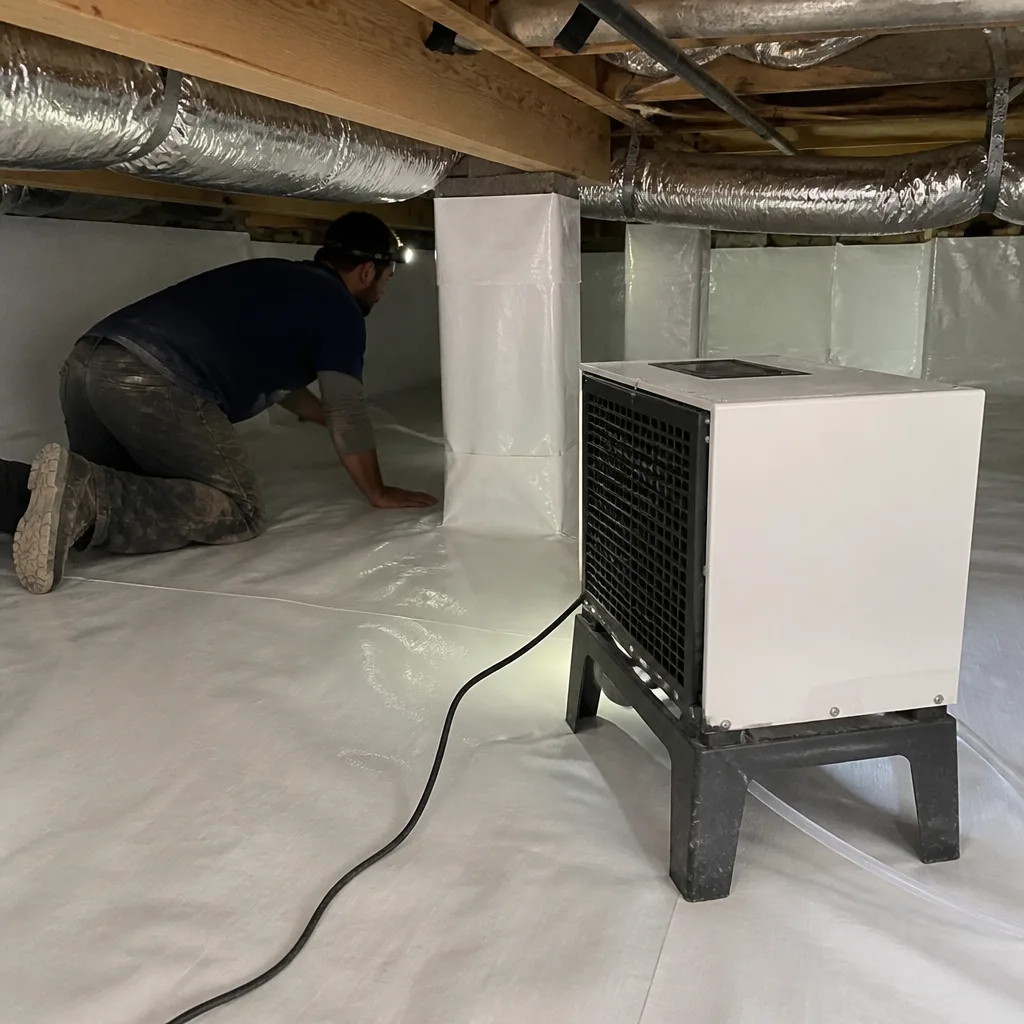
- Musty odor returning after winter rains. The polyethylene vapor barrier has torn at seams or punctured from crawl space entry traffic, letting soil moisture evaporate into the joist cavity. In Cupertino’s clay soils, hydrostatic pressure against foundation footings peaks January through March, so failures often surface then.
- Standing water on top of the barrier. This means the drainage layer beneath the poly is clogged or was never installed. GreenFiber encapsulations from the mid-2010s often skipped dimple mat or gravel bedding to cut cost, and the barrier eventually dams water instead of shedding it to a perimeter drain.
- Mold bloom on floor joists or subfloor. Warm, humid crawl space air contacts cool joist surfaces; the barrier is no longer blocking soil moisture, so relative humidity stays above 70% year-round. We see this in Cupertino split-levels near the foothills where afternoon sun bakes the exterior and the crawl space stays cool and shaded.
- Polyethylene pulling away from foundation walls. The termination seal, usually butyl tape or polyurethane caulk, has degraded. Cupertino’s temperature swings, 45°F winter lows to 85°F summer highs in the crawl space, accelerate adhesive fatigue.
- Increased energy bills with no HVAC change. Damp crawl space air carries more heat load; your ducts, if they run through the crawl space, lose efficiency to the humid environment. We measure this with a blower-door test, a pressurization reading that shows, in one number, how much conditioned air your building envelope is losing.
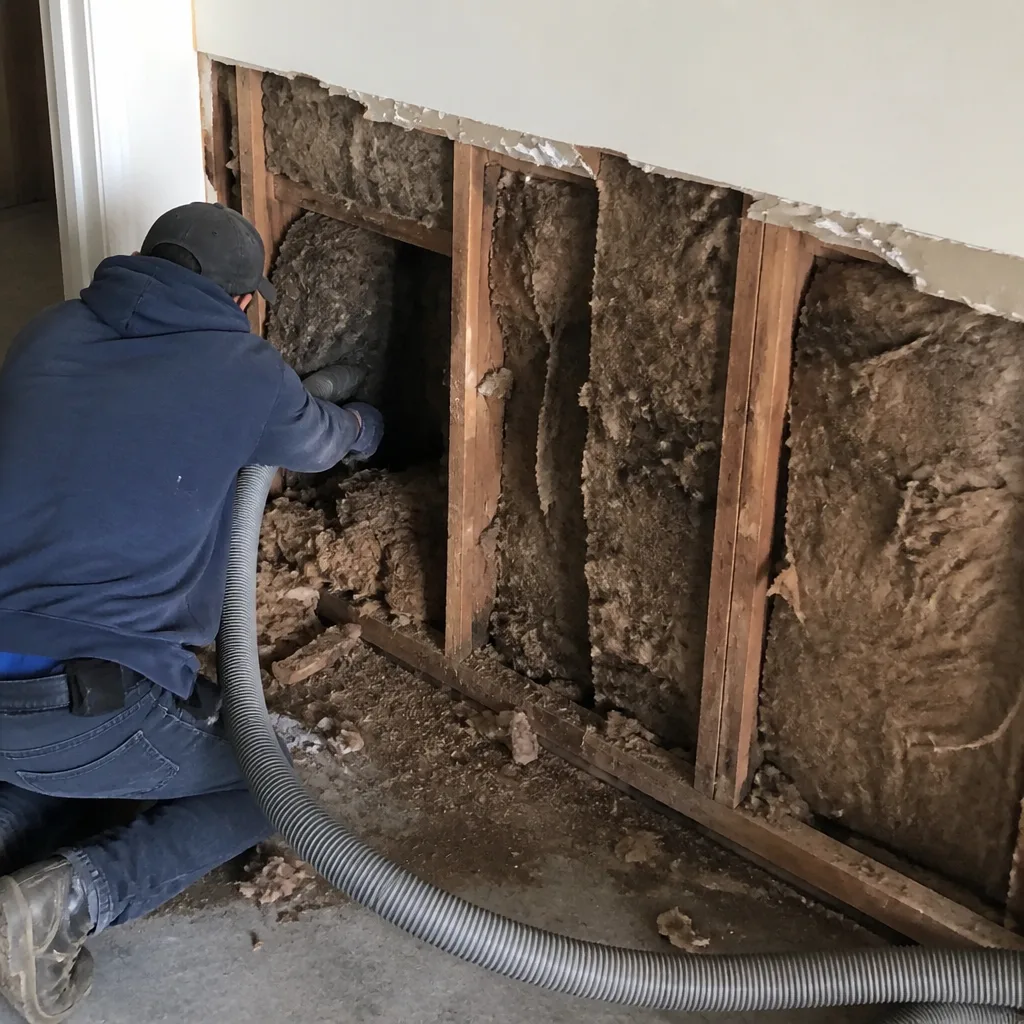 Before
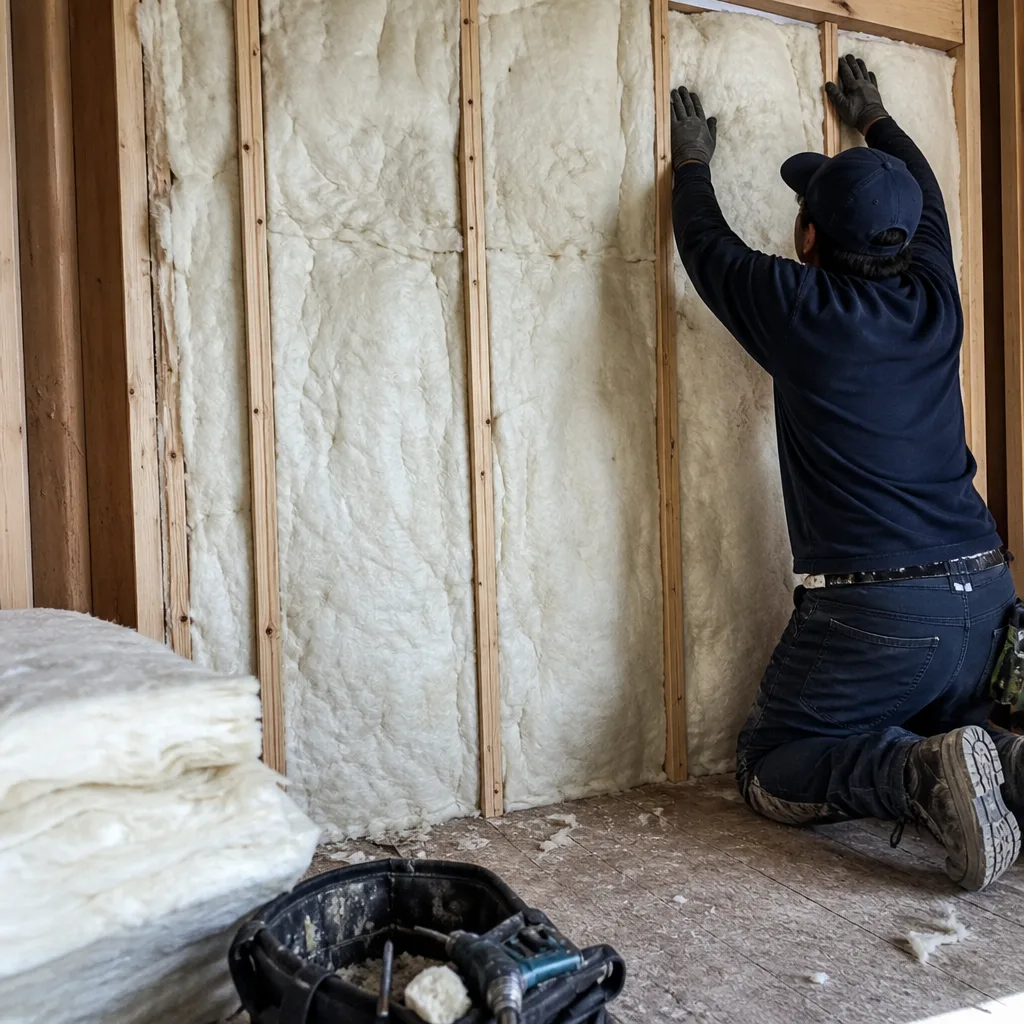 After
AfterReplacement Cost & What’s Included
Most full GreenFiber-compatible crawl space encapsulation replacements in Cupertino run $2,800-$5,400. The lower end covers a 600-800 square foot crawl space with accessible headroom, existing debris already cleared, and a perimeter wall height under 24 inches. The upper end applies to 1,200+ square feet, crawl spaces under 18 inches clear height where we work prone, or jobs requiring active sub-membrane depressurization to address radon or previous mold remediation.
Every replacement includes removal and disposal of the failed barrier, foundation wall prep and sealing, new 12-mil string-reinforced polyethylene soil cover with 12-inch overlaps and double-sided seam tape, mechanical fastening at perimeter walls, and a post-installation photo record. If your existing insulation is water-stained or compressed, we note it in the written scope but do not automatically replace it; that is a separate decision with its own line item. Under Haven Standard Clause 1, you get a flat price, written scope, and written warranty before anyone lifts a tool. Our 365-Day Done Right Promise applies to all encapsulation work.
DIY or Call Us?
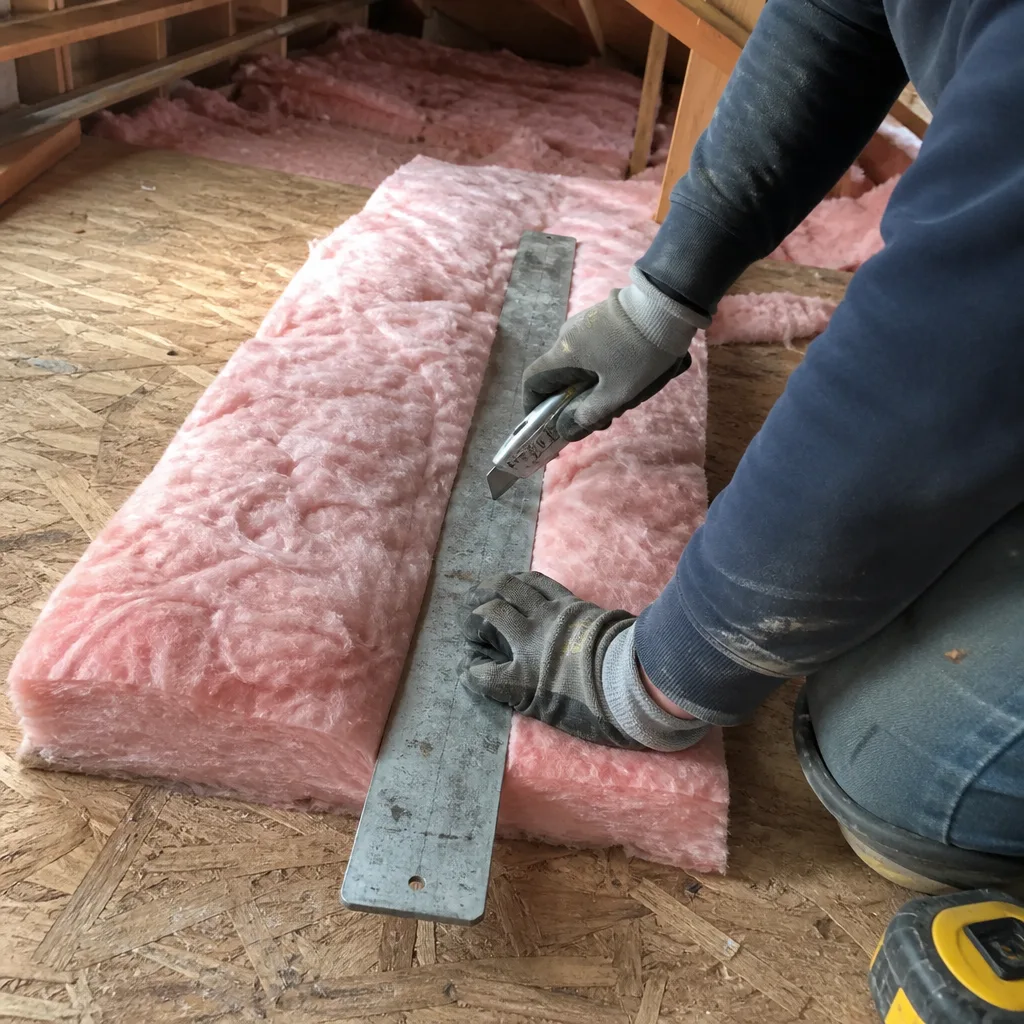
There is one thing a homeowner can safely check: the condition of the barrier at the crawl space entry. If you see tears, pooling, or pulled seams within arm’s reach, document it with photos and note the dimensions. Do not enter the crawl space if you smell sewage, see exposed wiring, or have any respiratory condition; confined spaces with degraded air quality are genuinely hazardous.
Where DIY goes wrong is in the preparation. Proper encapsulation requires removing all organic debris, treating active mold, sealing foundation penetrations, and establishing drainage before the polyethylene goes down. We have pulled out homeowner-installed barriers that trapped standing water for two years because the soil was not graded to a sump or drain. The polyethylene itself is not the fix; it is the last layer of a system. Seal the leaks first. Insulation covers problems; it does not fix them. If your GreenFiber barrier is failing, call (831) 217-8521. We will read your situation with you and give you a written price before any work starts.
FAQs
Properly installed 12-mil reinforced polyethylene lasts 15-20 years in Cupertino’s climate, though the seam tape often needs attention at year 8-12. The clay soils and seasonal groundwater pressure around Stevens Creek and Rancho Rinconada mean we inspect tape adhesion as part of any service call. Call (831) 217-8521 if you are unsure of your install date; we can estimate age from material spec and construction records.
Small punctures, under 4 inches, can be patched with compatible polyethylene tape if the surrounding material is still supple. If the barrier is brittle, has multiple tears, or the seams are failing across more than 20% of the surface, replacement is more cost-effective than chasing individual failures. We stock patch kits on our trucks for Cupertino service calls and will tell you honestly which path makes sense.
Most Cupertino replacements take one day for crews of two, assuming standard access and no active mold remediation. Tight crawl spaces under 18 inches, extensive debris removal, or drainage corrections add a second day. We give you a written schedule with the written price, so you know the timeline before we start.
We stock 12-mil and 6-mil reinforced polyethylene, double-sided seam tape, butyl termination tape, and mechanical fasteners compatible with GreenFiber installations. We are an independent service provider, not affiliated with GreenFiber, and we also stock Reflectix radiant barrier materials for jobs where the crawl space needs both vapor control and thermal reflection. If your original GreenFiber specification calls for something we do not carry, we source it within 24 hours rather than substitute without your knowledge.
Written by Wes Okafor, Owner, Topside Attic Insulation Cupertino at Topside Attic Insulation Cupertino, serving Cupertino and nearby areas.