
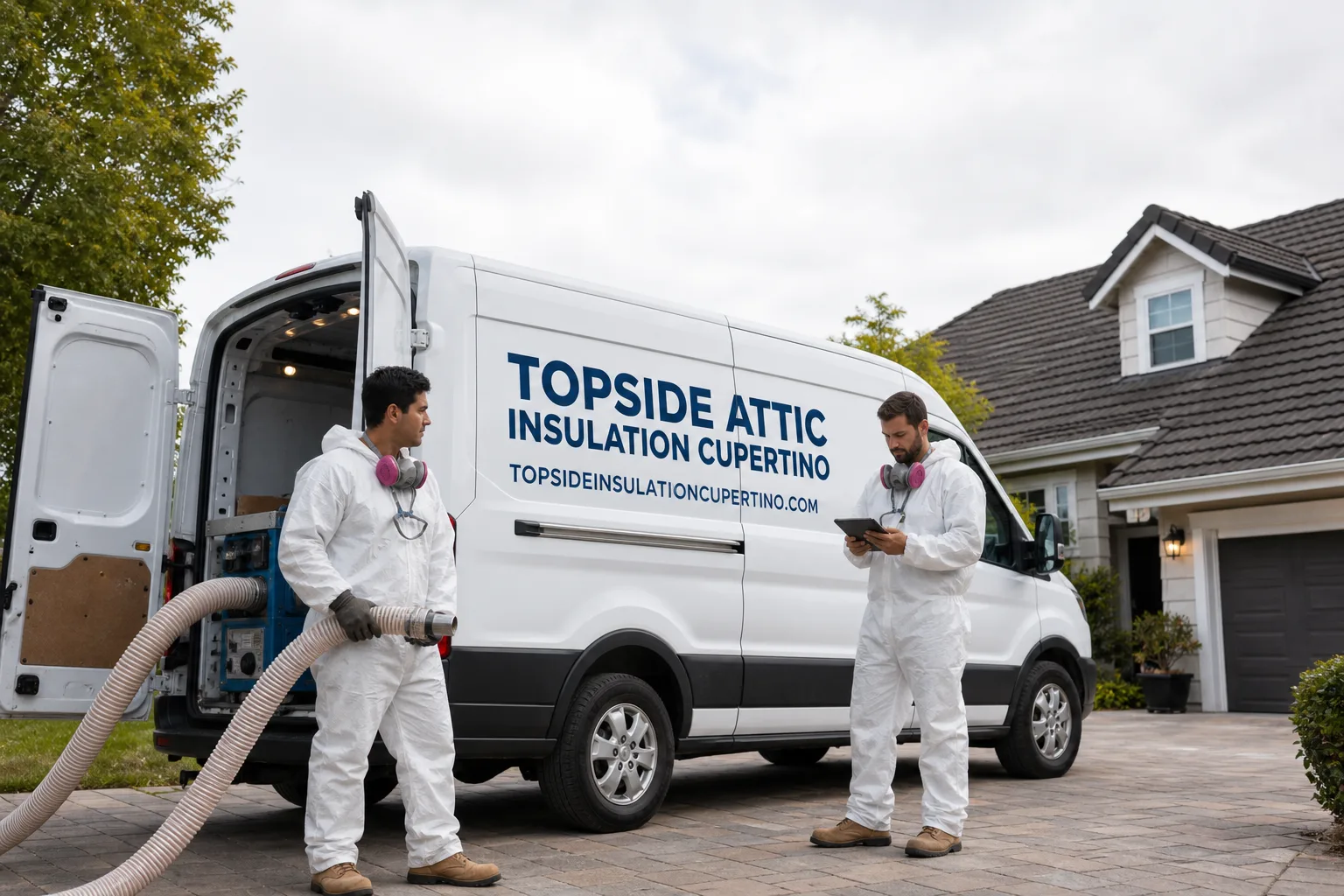
How Much Does Blown-In Insulation Cost in Cupertino?
Blown-In Insulation services in Cupertino, CA typically cost between $1,800 and $4,200 for a standard attic, with most single-story homes in the 1,500-to-2,200-square-foot range landing between $2,100 and $3,400 when air sealing is done first. The final number depends on your current R-value, attic access, the material used (cellulose runs cheaper than fiberglass, and both are cheaper than dense-pack), and whether existing insulation needs to come out before the new material goes in. Get a written price before anyone touches a bag – that’s not optional here, it’s how every job at Envelope Insulation Co. starts.
Blown-In Insulation Cost Breakdown (2026)
The table below reflects real job data from the Cupertino market – homes in neighborhoods like Monta Vista, Rancho Rinconada, and the older ranch-style tracts near De Anza College that we work in regularly. These are not national averages. Prices include labor and materials unless noted.
| Scope of Work | Typical Price Range (2026) | Notes |
|---|---|---|
| Blown-in cellulose, attic only (no removal) | $1,800 – $2,800 | Topping off to R-38/R-49 over existing insulation in good condition |
| Blown-in fiberglass, attic only (no removal) | $2,000 – $3,100 | Slightly higher material cost than cellulose; good where moisture is a concern |
| Attic air sealing + blown-in cellulose (combined) | $2,800 – $4,200 | The right sequence: seal top plates, can lights, and penetrations first, then blow |
| Insulation removal + air sealing + blown-in (full replacement) | $3,800 – $6,500+ | Common in Cupertino homes built 1960-1985 where original batt insulation has settled or been contaminated |
| Dense-pack blown-in for exterior walls | $3,500 – $7,000+ | Depends heavily on wall square footage and access method (drill-and-fill vs. open-wall) |
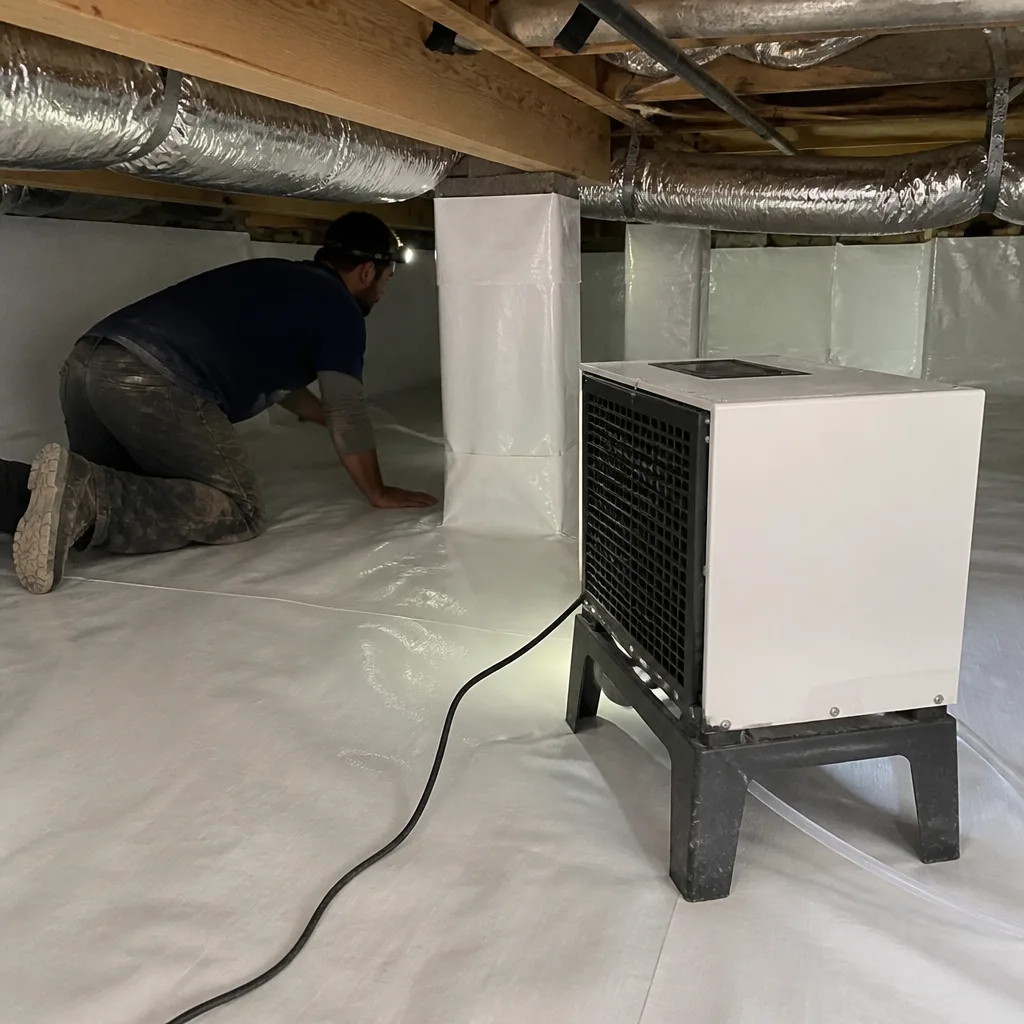
| Crawl space blown-in or batt + vapor barrier | $2,200 – $4,800 | Cupertino’s clay-heavy soil raises moisture risk; encapsulation often needed alongside |
| Per-square-foot rate (blown-in attic, labor + material) | $1.20 – $2.80/sq ft | Lower end = cellulose top-off, clean attic; upper end = fiberglass, complex access, or high-R target |
A few things drive that range wider than you might expect. Cupertino’s housing stock is not uniform – a 1,600-square-foot single-story in Rancho Rinconada with a flat, open attic deck takes roughly half the labor of a 2,100-square-foot two-story in Monta Vista where the attic breaks into multiple compartments over the garage, the bonus room, and the main living area. Attic access matters, too. A 22-by-30-inch scuttle hatch is workable. An 18-by-18 cutout above a closet with a shelf bolted across it adds time and cost. We measure the hatch before we quote the job, and that dimension goes in the written scope.
Material costs in the South Bay have also moved since 2024. Cellulose – recycled paper product, treated for fire resistance – runs about $0.35 to $0.55 per square foot in material alone at current supplier pricing. Fiberglass runs a bit higher. Both are sourced from manufacturers like Owens Corning, Johns Manville, Knauf, and GreenFiber – brands you can look up independently. We don’t lock you into a proprietary product.
What Affects Blown-In Insulation Pricing in Cupertino
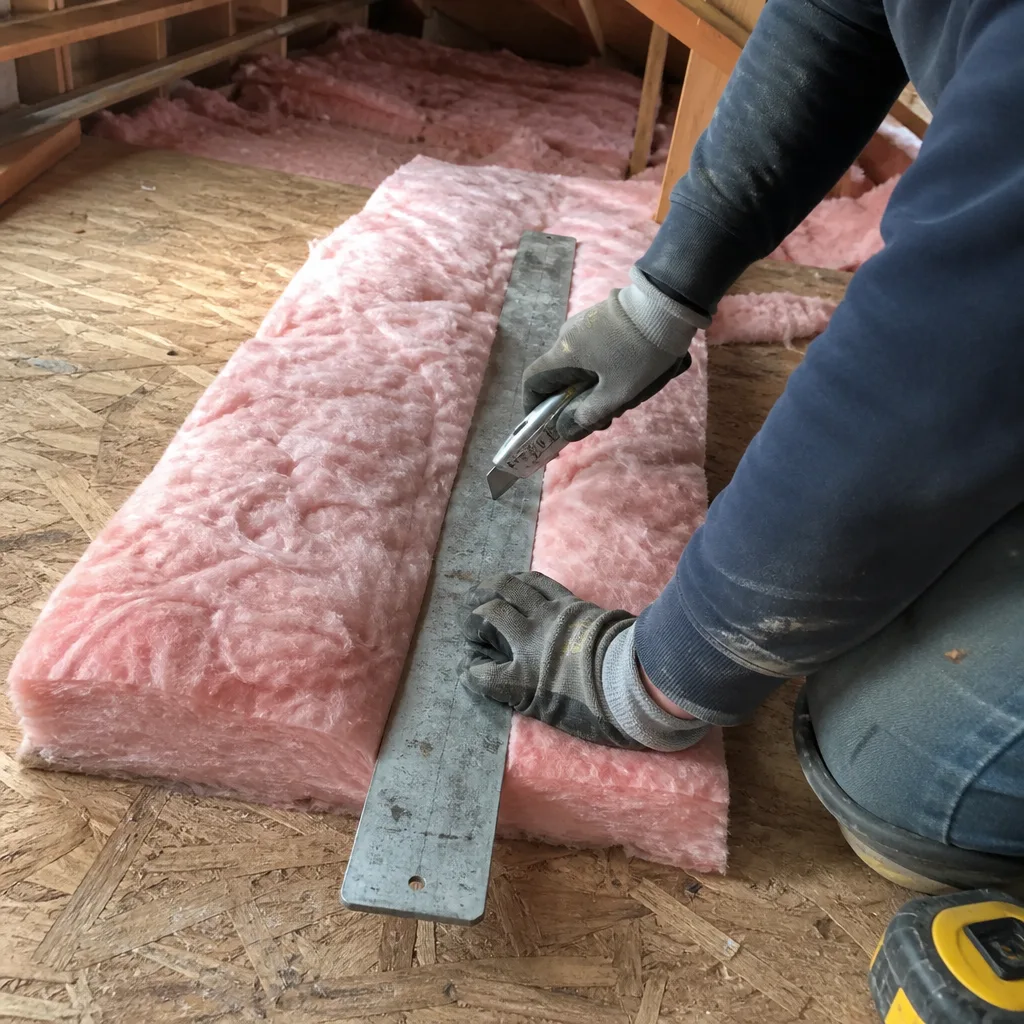
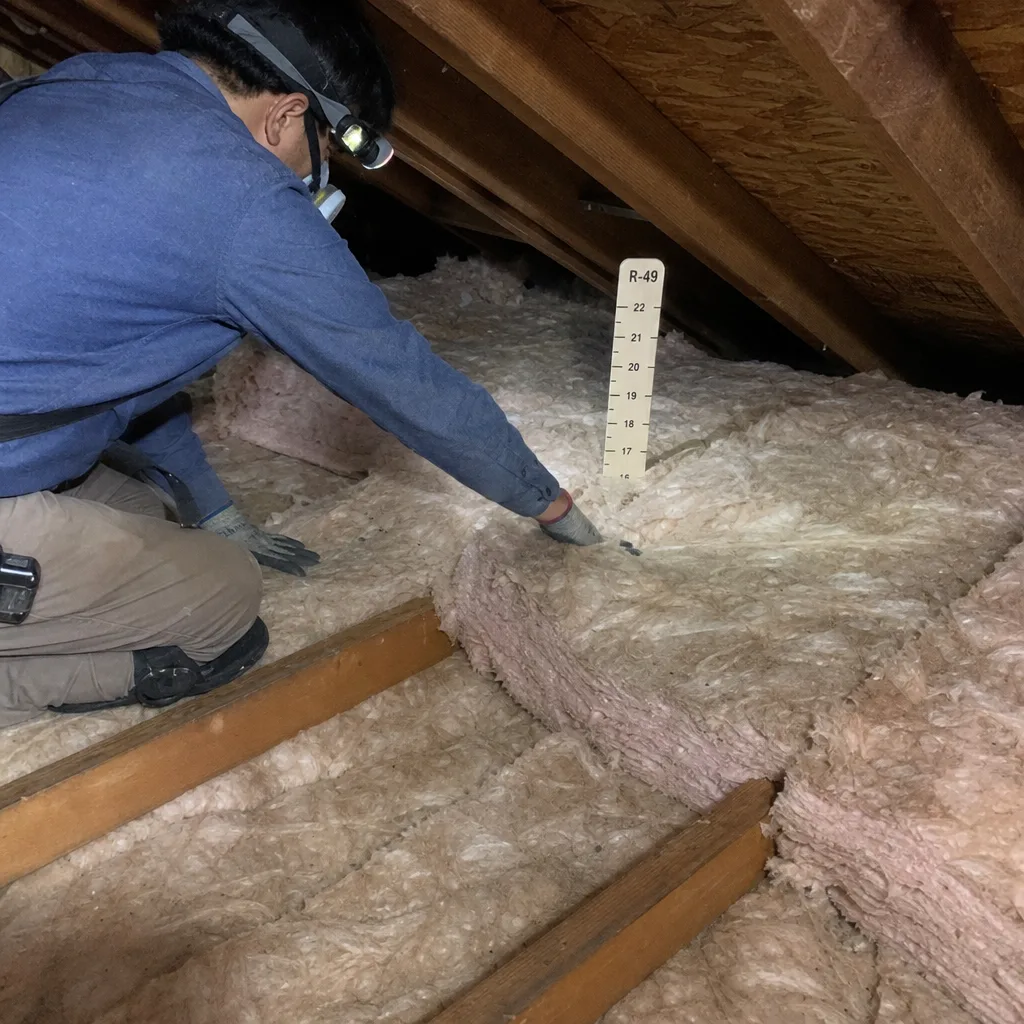
- Current R-value and depth to target: California’s Title 24 energy code requires R-38 minimum for attics in Climate Zone 4, which covers Cupertino. Many homes built before 1990 are sitting at R-11 or R-19 – sometimes less, especially if the insulation has settled over 30 years. The deeper the deficit, the more bags go in, and the higher the material cost. We measure existing depth at multiple points across the attic floor before we write the price.
- Air sealing as a prerequisite (not an add-on): Envelope Insulation Co. will not blow insulation over an unsealed attic floor. That’s not a marketing line – it’s a technical position. Blowing 14 inches of cellulose over open top plates and unboxed can lights is like insulating a colander. Air sealing – closing every gap at recessed lights, top plates, plumbing and electrical penetrations, and attic bypasses – typically adds $600 to $1,400 to an attic job but is the reason the insulation performs at its rated R-value rather than something lower. On every applicable job, we publish before-and-after blower-door readings – a pressurization test that shows, in a single CFM50 number, how much conditioned air the home was losing before sealing and after. That number is yours. It goes in the documented photo record.
- Attic access and geometry: Cupertino has a lot of mid-century and early-1970s ranch homes with low-slope attics and hatch openings that were sized for code compliance, not for human beings carrying hoses. Tight access means longer setup time. Broken attic decking, cross-bracing every 16 inches, or HVAC equipment sitting in the attic path adds labor. We photograph the access point before the estimate so there are no surprises on install day.
- Existing insulation condition: If the attic has rodent contamination, moisture damage, or asbestos-era vermiculite (relevant in Cupertino homes built before 1979), removal is required before new material goes in. Removal and disposal runs $1,200 to $2,800 depending on volume and material type. Vermiculite testing is a separate step that we walk through before any disturbing of existing material – this is not optional, and we won’t skip it. If you’re not sure what’s up there, the photo record from our initial visit will tell you.
- Cupertino’s climate and performance expectations: The city sits in a microclimate that gets meaningfully hotter than coastal Santa Clara County – summer afternoons in the Monta Vista area routinely reach the mid-90s while Half Moon Bay sits at 65. That temperature delta makes under-insulated attics expensive to live with in a way that’s more acute here than in San Jose’s east side. Homeowners in Cupertino who work from home – and a large share do, given the tech employer concentration – feel attic heat gain in their home offices by 2 p.m. every August. An R-49 attic in Cupertino earns its cost differently than the same job done in Daly City.
- Rebates and incentive programs: PG&E’s Energy Upgrade California program and Santa Clara County’s home energy rebate structure can offset $400 to $800 on qualifying attic insulation projects. The specific rebate amount depends on your starting R-value, the R-value installed, and whether air sealing is documented alongside. Because we measure before and after, and because the blower-door number is part of the written record, our jobs are typically straightforward to document for rebate applications. We’ll give you what you need – we don’t file for you, but we don’t leave you with a folder of nothing either.
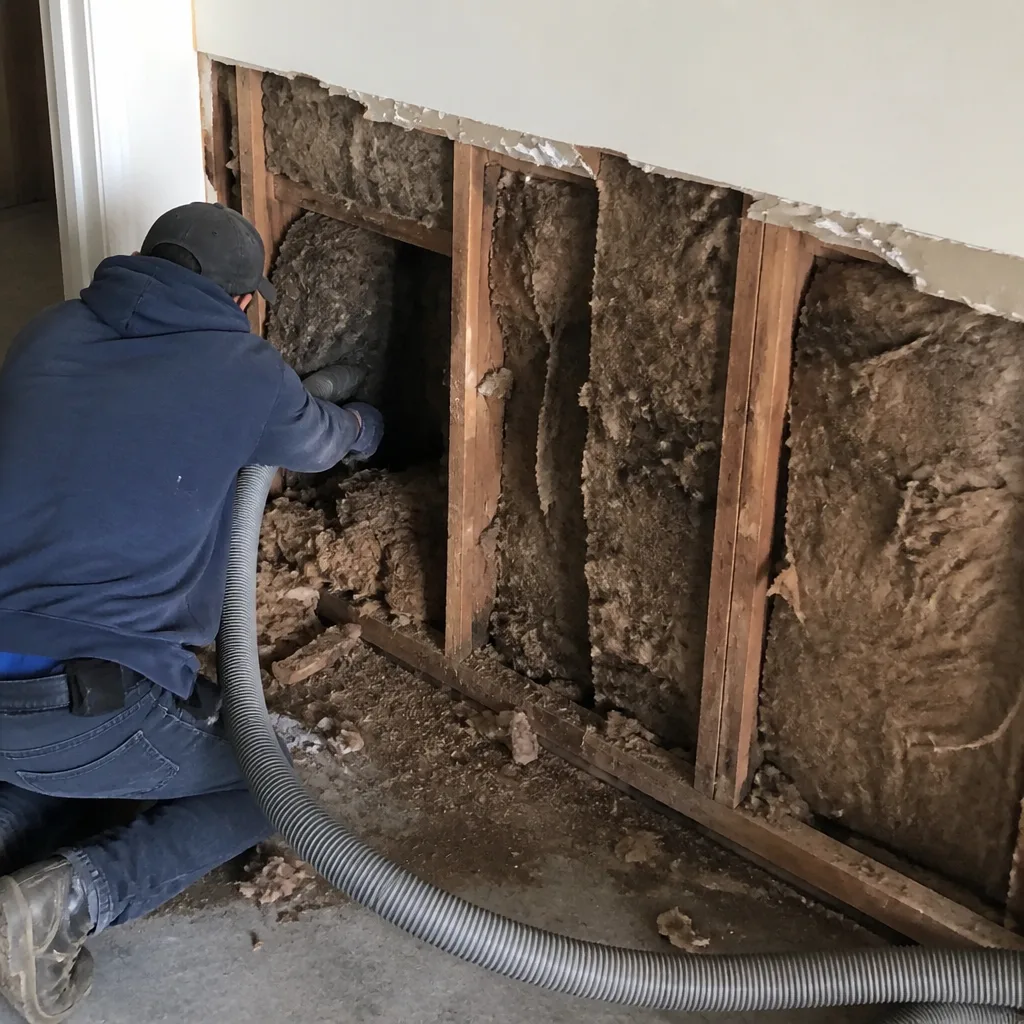 Before
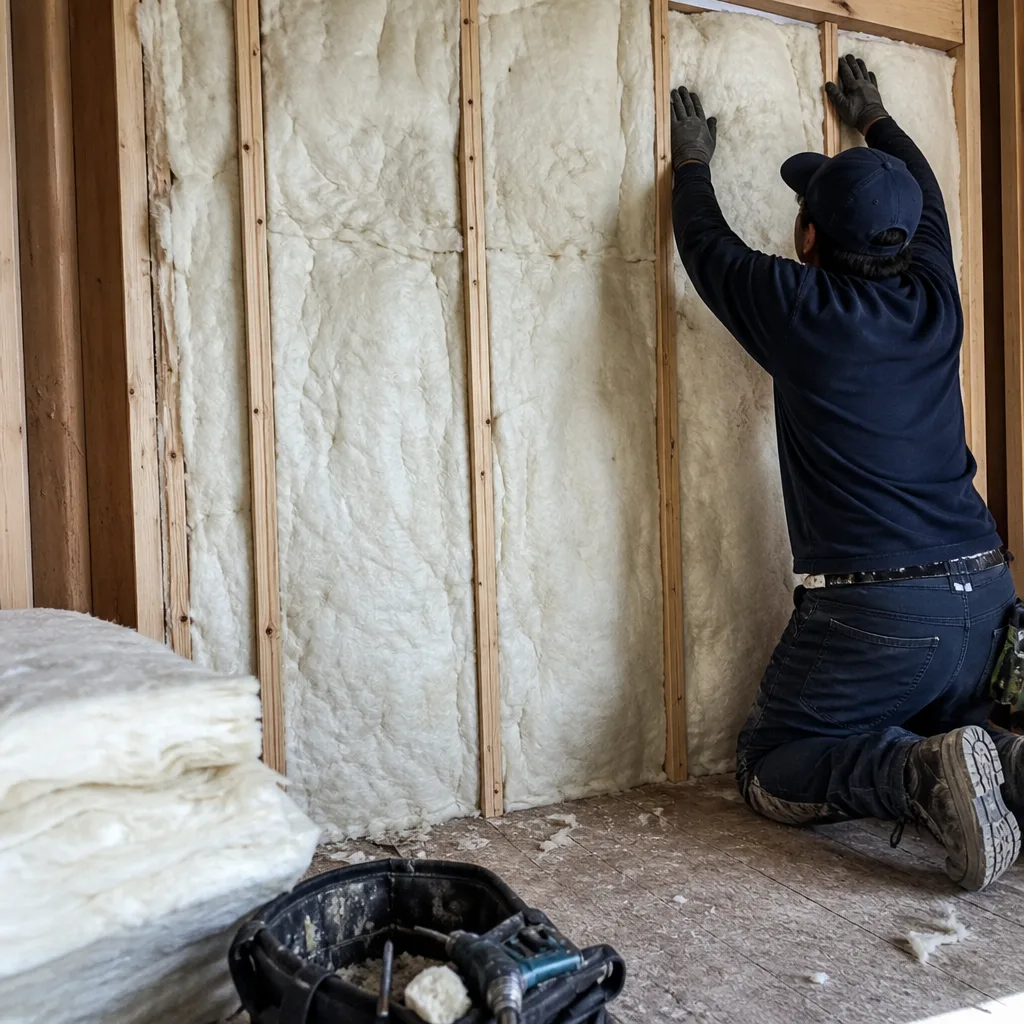 After
AfterHow to Save on Blown-In Insulation in Cupertino
The clearest way to reduce total cost is to avoid doing the job twice. The pattern we see in Cupertino goes like this: a homeowner gets a low quote, hires a crew that skips air sealing, gets insulation blown in over open top plates and unboxed recessed lights, and watches their PG&E bill barely move. Twelve months later, they call us. At that point they’re paying for the job they should have had the first time, plus a remediation cost for what went in before. The second job costs more than the first job done correctly would have.
Specific ways to reduce what you spend without compromising the result:
- Combine air sealing and blown-in on one visit. Scheduling them separately adds mobilization costs both times. A combined air-seal-and-blow job is more cost-efficient per hour of labor than two separate visits. We price them together for this reason.
- Get a second opinion on any written estimate you already have. Under the Haven Standard, we’ll read any written competing quote with you at no charge. If the scope is correct and the price is fair, we’ll tell you. If the scope is missing air sealing or the material quantities don’t add up to the R-value claimed, we’ll show you exactly why. Bring the written quote to (831) 217-8521 and we’ll walk through it.
- Ask about PG&E and utility rebates before the job, not after. Rebate programs sometimes have income-based tiers that change the math significantly – up to $1,500 off in some qualifying cases. The eligibility question is worth 10 minutes of your time before you sign anything.
- Time the job for late fall or early spring. Cupertino’s attic insulation demand peaks in June and July when homeowners realize the air conditioning is running at noon. Scheduling in March or November typically means shorter lead times and occasionally better crew scheduling flexibility – which can matter if your job has access complications that need extra time.
- Don’t pay for removal you don’t need. If your existing insulation is in good condition – no contamination, no moisture, reasonable depth – topping off over it is the right call and costs significantly less than full replacement. We check condition before we recommend removal, and we photograph what we find. If the existing material is fine, we say so, in writing.
For a free estimate with a written price before any work starts, call (831) 217-8521. You’ll get a flat price and a written scope before anyone lifts a tool – Haven Standard Clause 1, no exceptions.
Why the Sequence Matters: Seal First, Then Insulate
This section exists because it’s the most common technical misunderstanding we encounter in Cupertino homes, and it directly affects what a blown-in insulation project actually costs over time – not just on invoice day.
Blown-in insulation slows conductive heat transfer. That’s what R-value measures – resistance to heat moving through a material. What R-value does not measure is air movement. A house losing 3,500 CFM50 of conditioned air through gaps in the building envelope – which is a number we see regularly in Cupertino homes built in the 1970s – loses far more energy through air infiltration than through conduction. Adding R-49 of insulation on top of that air leakage does not fix the air leakage. It just makes the house slightly warmer in winter while the air continues to move freely through every unboxed recessed light, every open top plate, every electrical chase.
The blower-door test – a pressurization reading that, in a single CFM50 number, tells you exactly how much air your building envelope is losing – is how we establish the baseline before any sealing work starts. We run it again after sealing, before insulation goes in. The before-and-after numbers are in your documented photo record. On a typical Cupertino attic job where we seal before blowing, we see reductions of 30% to 55% in ACH50 – air changes per hour at 50 pascals of pressure. That number represents real conditioning load reduction, not a projected estimate from a software model.
Wes Okafor built Envelope Insulation Co.’s process around this sequence after working in homes where the insulation was pristine and the air sealing had never been touched. The blower-door told the story every time. Since 2016, every applicable job has gone out with before-and-after readings, and we’ve never once had a customer who didn’t want to see the comparison.
For a deeper look at the full service we provide in this area, visit our Blown-In Insulation in Cupertino service page, or the home page for a full picture of what Envelope Insulation Co. covers across the building envelope.
What the Job Looks Like, Start to Finish
People who research contractors carefully – which describes most of the homeowners we work with in Cupertino – want to know what they’re agreeing to before the truck shows up. Here’s how an attic blown-in job runs under the Haven Standard:
- Written estimate, flat price, written scope. Before any work is scheduled, you have a document in hand with the total price, the materials to be used (brand and type), the R-value target, what air sealing work is included, and the warranty terms. Nothing about that document changes on install day.
- Attic inspection and blower-door baseline. On applicable jobs, we run the blower-door before touching anything. We photograph the existing insulation depth at multiple measurement points, the attic access, the condition of existing material, and any visible air leakage points. These photos are part of your record before work starts.
- Air sealing first. Top plates, can lights, electrical and plumbing penetrations, attic bypasses – every gap is sealed before any insulation is added. Two-part foam and fire-rated caulk are the typical materials, depending on the gap size and material type.
- Post-seal blower-door reading. On applicable jobs, we run the test again before blowing insulation. This confirms the sealing work performed before it’s covered by material you can’t easily see through.
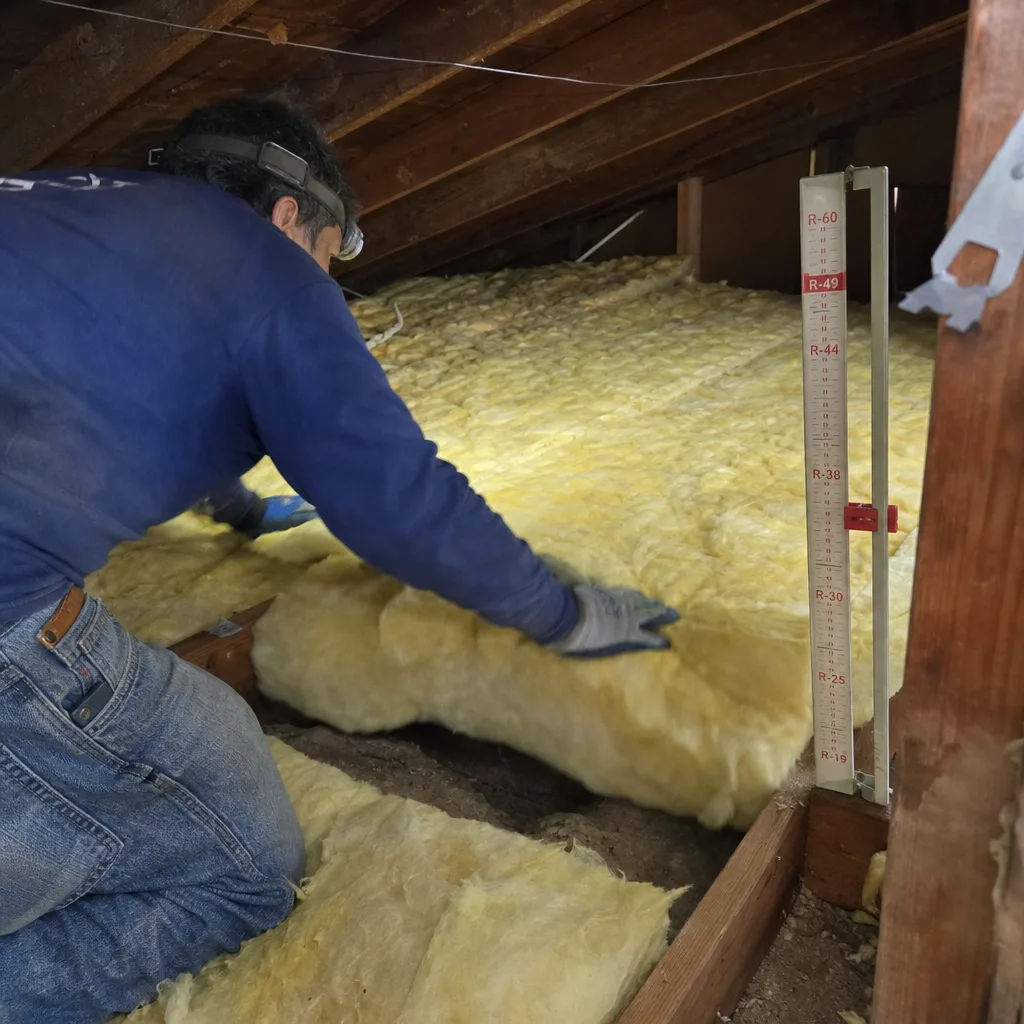
- Blown-in insulation to specified depth. Material is blown to the depth required to hit the specified R-value, verified with depth rulers photographed in place. Depth rulers stay in the attic – they’re how you or a future inspector can verify the work over time.
- Final blower-door reading and documented photo record. The after number goes in writing alongside the before number. You leave with photos, readings, written scope, and warranty – the full documented record. What “done” looks like is defined before we start, not after.
FAQs – Blown-In Insulation Cost in Cupertino
How much does blown-in insulation cost in Cupertino in 2026?
Most blown-in insulation jobs in Cupertino run between $1,800 and $4,200 for attic work, with the most common range for a 1,600-to-2,000-square-foot home landing around $2,400 to $3,600 when air sealing is included. Full-replacement jobs – where old insulation is removed first – start at $3,800 and can reach $6,500 or more depending on volume and contamination. For a flat written price specific to your home, call (831) 217-8521 – estimates are free and the price you get is the price you pay.
Is it cheaper to repair or replace existing blown-in insulation?
Topping off over existing insulation in good condition is almost always cheaper than full replacement – typically $1,800 to $2,800 versus $3,800 to $6,500. The question is whether the existing material qualifies. Moisture damage, rodent contamination, or insulation that has settled below R-13 in a California Title 24 attic application usually means replacement is the right call, not an upsell. We photograph the existing material during the estimate so you can see the condition yourself before deciding. If what’s there is fine, we say so.
Does blown-in insulation cost include air sealing?
Not always, and that’s worth reading carefully in any quote you receive. Air sealing – closing the gaps at top plates, recessed lights, and penetrations before insulation is added – is a separate scope item that adds $600 to $1,400 to a typical Cupertino attic job. At Envelope Insulation Co., air sealing is a prerequisite, not an optional add-on, and it’s always listed as a line item in the written scope so you can see exactly what you’re paying for. A quote that doesn’t include air sealing is often a cheaper number for a worse result. Call (831) 217-8521 if you want us to review a quote you’ve already received.
Can I get a rebate on blown-in insulation in Cupertino?
Yes. PG&E’s Energy Upgrade California program and Santa Clara County residential rebate structures can offset $400 to $800 on qualifying jobs, with income-based tiers pushing that number higher in some cases – up to approximately $1,500 for qualifying households. Eligibility depends on your current R-value, the R-value installed, and whether air sealing is documented alongside the insulation work. Because we measure before and after and provide written records, our jobs are straightforward to document for rebate applications. We’ll give you the paperwork; we don’t file on your behalf.
How long does blown-in insulation last in a Cupertino home?
Cellulose and fiberglass blown-in insulation typically hold their rated R-value for 20 to 30 years when installed correctly – meaning dry, clean conditions and no animal intrusion. Cupertino’s moderate humidity rarely causes moisture-driven degradation in attics with adequate ventilation. What degrades insulation in this market is usually rodent activity (more common in older ranch homes near Regnart Creek and the foothill edges of Cupertino) or attic HVAC leaks that introduce moisture over time. The depth rulers we leave in the attic let you or any future inspector spot-check performance at any time without disturbing the insulation. Our 365-Day Done Right Promise covers workmanship; if something isn’t right within the first year, we make it right.
How many inches of blown-in insulation do I need to meet California code in Cupertino?
California’s Title 24 energy code requires a minimum of R-38 in Climate Zone 4 attics, which covers Cupertino. R-38 corresponds to roughly 10 to 12 inches of settled cellulose or 13 to 15 inches of fiberglass, depending on the product’s rated settled density. Many contractors and energy consultants recommend R-49 for Cupertino homes given the city’s summer heat profile – that’s approximately 14 to 16 inches of cellulose. We measure existing depth at a minimum of six points across the attic floor and specify the target depth in writing before the job starts, so you know exactly what you’re getting and how it was verified.
What 9,000 Jobs Since 2016 Has Taught Us About Cupertino Attics
Across more than 9,000 homes sealed and insulated since Envelope Insulation Co. opened in 2016, a few patterns come up in Cupertino specifically that are worth naming because they affect cost estimates.
The mid-century ranch homes concentrated in the Rancho Rinconada neighborhood – generally built between 1957 and 1972 – tend to have wide, flat attic decks with good headroom and relatively simple geometry. These are usually the cleanest jobs: straightforward air sealing, decent access, and a top-off to R-49 runs the low-to-mid range of our pricing table. The tradeoff is that these homes often have original wiring that a good attic inspection should photograph, not disturb.
The two-story homes on the western edge of Cupertino near the Stevens Creek corridor – many built in the 1980s and 1990s – introduce more complex attic geometry. Broken slopes over garage additions, HVAC air handlers sitting mid-attic, and compartmentalized framing over bonus rooms all add labor. These jobs regularly land in the upper half of the cost range, and the written scope reflects that before work starts.
The newer developments near Apple Park – townhomes and single-family homes built post-2000 – are generally better air-sealed from the factory, but they’re not immune. Open can-light penetrations and cable runs through top plates are common even in homes built in the 2010s. The blower-door baseline tells us what we’re working with.
In Monta Vista, we regularly see spring failures in the air sealing around older recessed can lights – the original IC-rated cans from the late 1980s weren’t sealed at install and have had 30-plus years to shift. A blower-door reading in a Monta Vista home from that era will often show 4,000 to 5,500 CFM50 before sealing. After proper air sealing and before insulation goes in, we typically bring that number to 2,000 to 3,000 CFM50. The before-and-after comparison goes in the written record. You can see the change in a single number.
The Written Price Standard
Haven Standard Clause 1 is simple: a written price, written scope, and written warranty before anyone lifts a tool. No exceptions. On blown-in insulation jobs, that written scope names the material brand and type, the R-value target, the air sealing locations and methods, the blower-door test protocol, and what the documented photo record will contain. When Wes Okafor signs off on a job scope, that’s what gets installed – not a variation of it, not a simplified version based on what the crew found when they arrived.
If you have a competing written estimate and want a second set of eyes on it, call (831) 217-8521. We’ll read it with you and tell you what’s there and what’s not. That’s free, and it doesn’t obligate you to anything.
The 365-Day Done Right Promise backs every completed job: if it isn’t done right, we make it right. The promise is in writing before we start, which is the only kind of promise that means anything.
Schedule a Free Estimate
If you’re trying to get a real number for blown-in insulation in Cupertino – not a national average from a cost-estimator website, but an actual flat price for your specific attic – call (831) 217-8521. You’ll reach a live person. You’ll get a written estimate with a flat price and full scope before any work is scheduled. No work starts without it.
Envelope Insulation Co. has been independently owned and operated under The Haven Standard since 2016. Every job Wes Okafor’s team completes leaves the homeowner with a written scope, a written warranty, a documented photo record, and – on applicable jobs – before-and-after blower-door readings they can keep and reference. That’s what “done” looks like before we arrive. Call (831) 217-8521 to get started.
Pricing reflects the Cupertino market as of 2026. Topside Attic Insulation Cupertino offers free estimates – call (831) 217-8521.
Written by Wes Okafor, Owner at Envelope Insulation Co., serving Cupertino, CA since 2016.
What Our Customers Say
"The winter gas bill dropped by about a third. They had estimated a quarter, so they under-promised."
- Genevieve R."They photographed rodent damage in the old insulation that we had no idea about, and priced the exclusion work separately so we could decide."
- Harriet N."Two other companies quoted to blow more insulation on top of what was there. These were the only ones who said the existing material had to come out first, and explained why."
- Clifford E.