
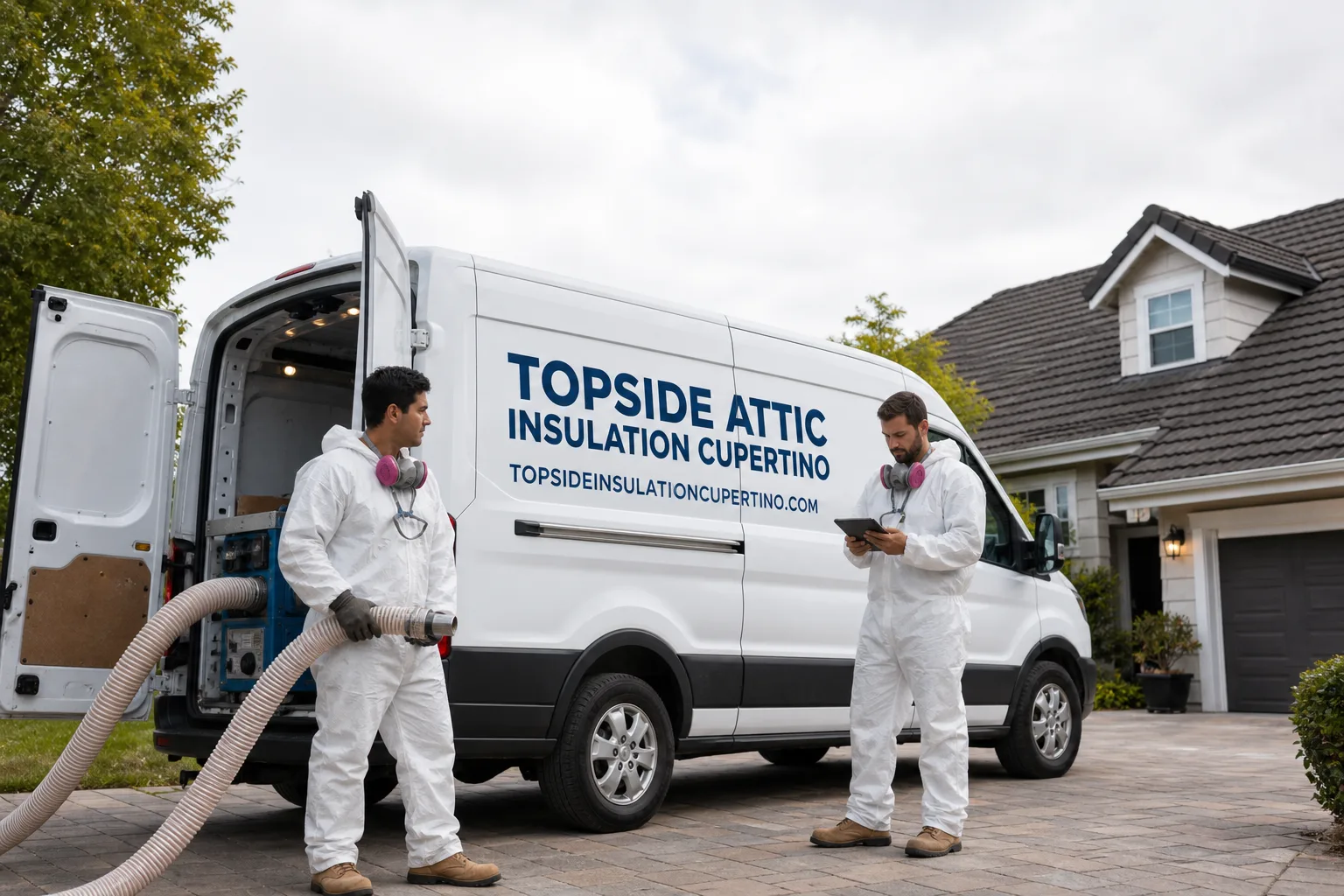
How Much Does Attic Air Sealing Cost in Cupertino?
Attic Air Sealing services in Cupertino typically cost between $1,200 and $3,800 for a single-family home, with most jobs landing in the $1,600 to $2,600 range depending on attic size, accessibility, and the number of penetrations that need to be sealed. Homes built before 1990 – which make up a significant portion of Cupertino’s stock in neighborhoods like Monta Vista and Garden Gate – tend to run toward the higher end because older framing often has more unsealed top plates, recessed can lights, and HVAC chases. That price covers the air sealing work itself; if insulation is being installed or replaced afterward, that’s a separate line item with its own written scope.
Attic Air Sealing Cost Breakdown (2026)
The table below reflects what Cupertino homeowners are actually paying in 2026, based on the work we do under the Haven Standard – a written price before any work starts, no exceptions. These are not ballpark figures pulled from national averages; they reflect Santa Clara County labor rates, local permit norms, and the types of homes we work in regularly throughout Cupertino.
| Scope of Work | Typical Cost Range | Notes |
|---|---|---|
| Air sealing only – small home (under 1,200 sq ft attic floor) | $1,200 – $1,800 | Ranch-style or single-story; accessible attic with moderate penetration count |
| Air sealing only – mid-size home (1,200 – 2,000 sq ft attic floor) | $1,600 – $2,600 | Most common scope in Cupertino; includes top plates, can lights, HVAC chases |
| Air sealing only – large home (2,000+ sq ft attic floor) | $2,400 – $3,800 | Two-story homes; vaulted or split-level attic geometry; heavy penetration counts |
| Air sealing + blower-door test (pre and post) | Add $200 – $450 | Pressurization test reads how much conditioned air the home was losing before and after |
| Air sealing + attic insulation (combined scope) | $2,800 – $6,500+ | Sealing is completed first; insulation goes in after – never simultaneously |
| Recessed can light sealing only (retrofit caps or foam boxing) | $35 – $75 per can | Common add-on in Cupertino homes built 1975-1995 with original IC-rated cans |
| HVAC chase sealing and top plate sealing | $400 – $900 (standalone) | Often part of a full attic seal; priced separately if the rest of the attic is already sealed |
| Attic hatch weatherstripping and sealing | $75 – $200 | Frequently overlooked; the hatch alone can account for a disproportionate share of air loss |
What moves the price up or down?
The single biggest driver is the number and type of penetrations in your attic floor – top plates, electrical boxes, plumbing stacks, recessed lights, HVAC ducts, and any built-in soffits that open into the attic. A 1,600 sq ft home in Rancho Rinconada with 22 recessed can lights and an HVAC drop from the 1980s costs more to seal than a 1,900 sq ft home in Fairgrove with a cleaner ceiling plane and a newer ducted system. Attic accessibility matters too: a standard scuttle hatch over a narrow hallway adds time because the crew can’t move materials or equipment freely.
Cupertino’s climate also shapes the urgency – and sometimes the scope. The city sits in a microclimate that swings from wet, cool winters to dry summers that can push attic temperatures well above 140 degrees Fahrenheit. That thermal load means the conditioned air your home is losing through an unsealed attic isn’t just a comfort issue; it’s a mechanical one. Systems work harder, maintenance intervals tighten, and ducts in unconditioned attic space lose efficiency faster. That context is worth knowing when you’re deciding whether to do sealing alone or sealing with insulation in the same visit.
Labor rates in Santa Clara County are higher than state averages. That’s not a negotiating point – it’s just an honest reason why prices here run higher than what a national cost calculator suggests. A crew doing detailed air sealing work – not surface spray foam over existing insulation, but actual penetration-level sealing at the attic floor – takes time. The work doesn’t speed up because a homeowner has a budget preference.
What Affects Attic Air Sealing Pricing in Cupertino
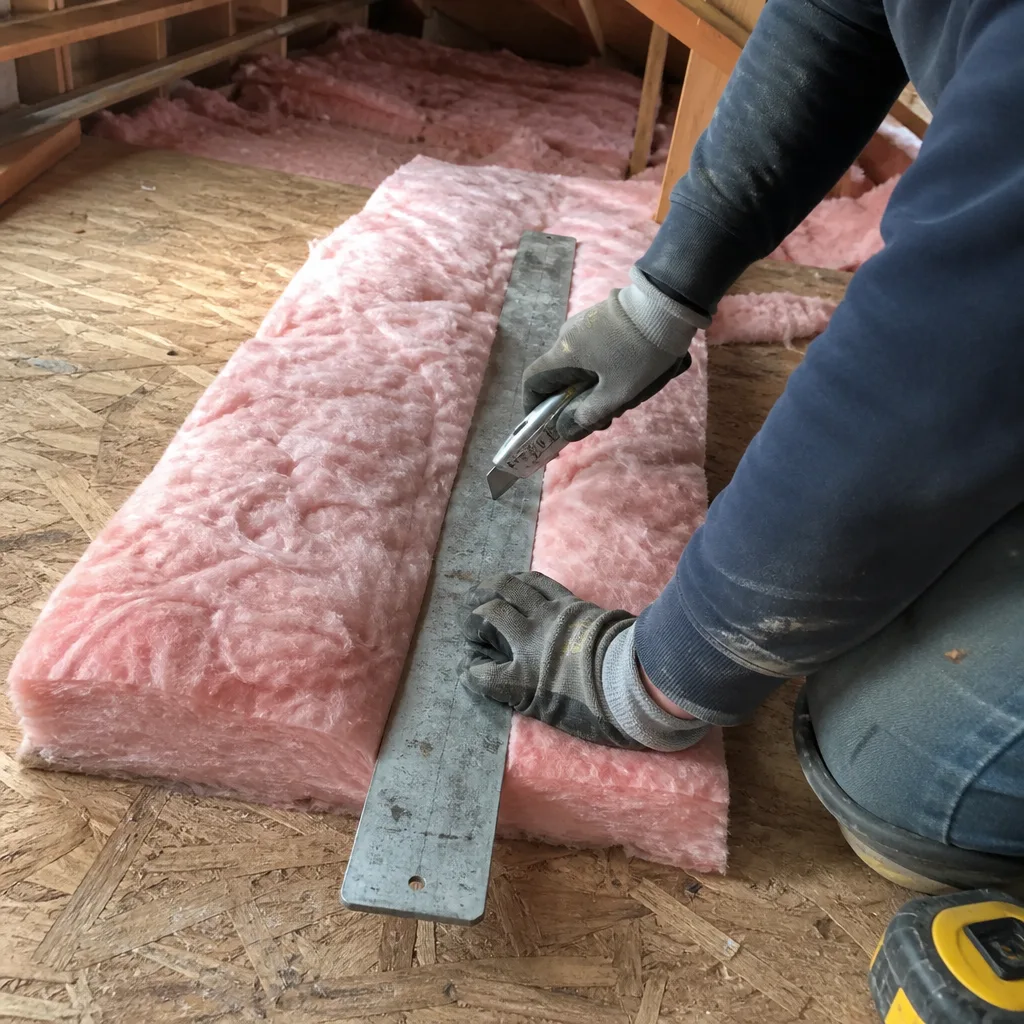
- Attic floor area and geometry: Larger attic floors mean more linear feet of top plate to seal and more surface area to cover. Irregular geometries – knee walls, cathederal transitions, or partial attics over additions – add time because the crew is working in multiple zones with different access points. Many Cupertino homes in the Stevens Creek corridor have been added onto over the decades, and those addition boundaries are almost always where the worst air leakage lives.
- Number and type of penetrations: Every recessed light, electrical junction box, plumbing stack, flue, or HVAC chase is a path for conditioned air to leave the building envelope. Homes with 20 or more can lights – common in Cupertino properties renovated in the 1990s and early 2000s – take considerably longer to seal properly than homes where lighting has been converted to surface-mounted LEDs.
- Existing insulation depth: If your attic has 10 or more inches of existing blown insulation, the crew needs to move it aside to reach the attic floor, seal the penetrations, and then redistribute the insulation. That adds labor. If the insulation is contaminated or damaged, it may need to be removed entirely before sealing begins, which is a separate scope. We document this in photos before any work starts so you can see exactly what was found.
- Attic access quality: A standard 22×30 inch scuttle hatch is the minimum that allows a technician to enter, but it slows material handling significantly. Pull-down attic stairs make a real difference in job efficiency, and that efficiency is reflected in the price. Homes in older Cupertino neighborhoods like Monta Vista often have original hatches that haven’t been changed since the 1960s.
- Home age and construction era: Pre-1978 homes often have knob-and-tube wiring or asbestos-containing materials in proximity to the attic space – both of which affect what sealants can legally and safely be applied in which locations. Homes built between 1978 and 1990 frequently have original can lights without proper IC ratings, meaning sealing must use approved air-tight enclosures rather than direct foam contact. This isn’t a gotcha; it’s a code compliance reality in Cupertino’s housing stock.
- Blower-door testing (before and after): A blower-door test – a pressurization measurement that shows, in one number (CFM50), how much air the building envelope is losing – adds to the project cost but produces the only verifiable proof that the sealing actually worked. Under the Haven Standard, we publish before-and-after blower-door numbers on every applicable job so the homeowner can see, in a documented figure, what changed. If a contractor won’t provide that number, you have no way to verify the result.
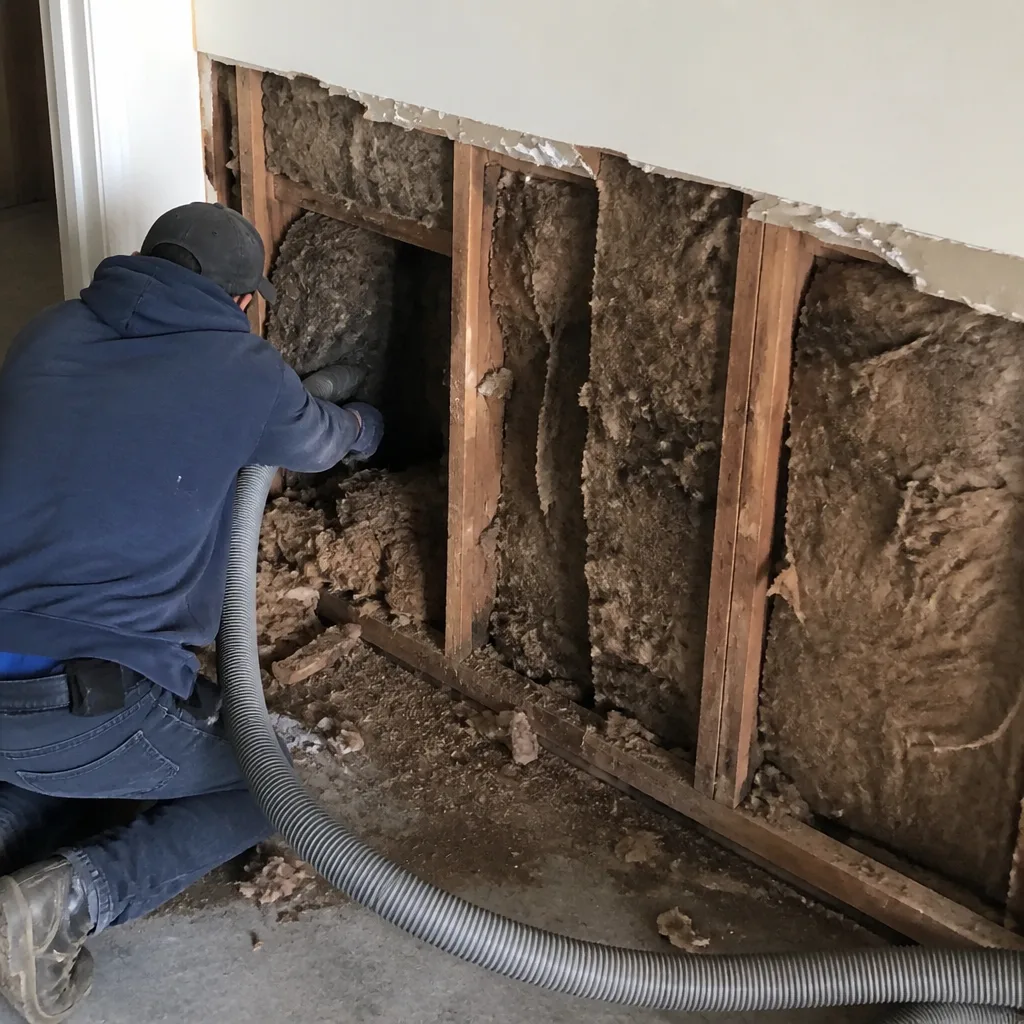 Before
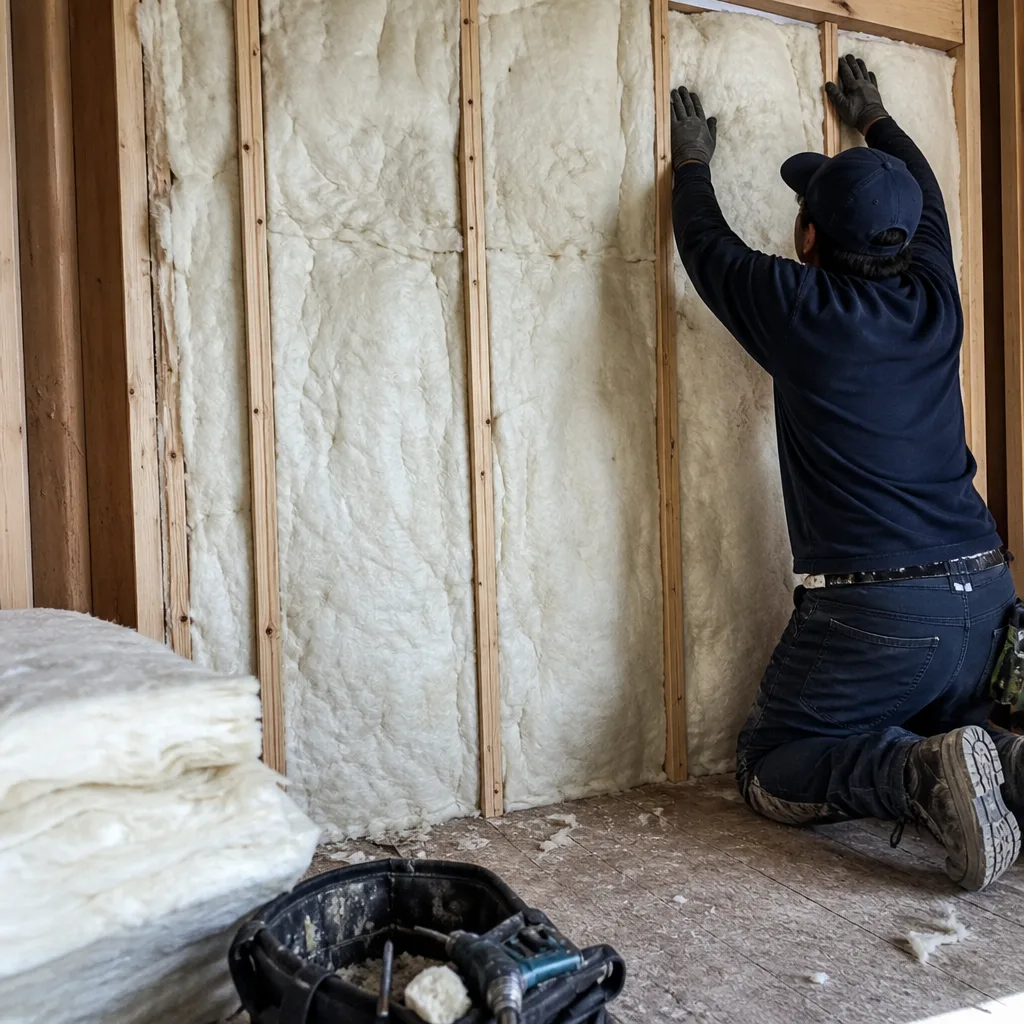 After
AfterHow to Save on Attic Air Sealing in Cupertino
Combine air sealing with insulation in a single visit
If your attic insulation is already due for replacement or upgrade – and a lot of Cupertino homes built before 2000 are running on original fiberglass batts that have settled and degraded – scheduling air sealing and insulation together in one visit almost always costs less than two separate mobilizations. The crew is already in the attic. Setup and breakdown happen once. The written scope covers both, and the Documented Photo Record captures the before-and-after of both scopes in the same set of images. We’ll never rush the sealing to get to the insulation faster; the sealing is completed and verified before anything goes on top of it.
Request a blower-door test upfront, not as an afterthought
A pre-job blower-door reading tells us exactly where air is moving most aggressively, which lets the crew prioritize the highest-impact penetrations first. On homes where the leakage is concentrated in two or three major bypass locations – a common finding on Cupertino two-story homes with open top-plate cavities between floors – that focus can actually reduce the total labor needed while improving the result. On Attic Air Sealing in Cupertino jobs, we use the pre-test reading to build the scope, not just to validate it afterward.
Check for PG&E and California utility incentives before you schedule
Pacific Gas and Electric (PG&E), which serves Cupertino, periodically offers rebates for air sealing and insulation work performed by participating contractors. The California Energy Commission also runs programs under the EnergySmart or Whole Home programs, and Santa Clara County has participated in financing programs like PACE (Property Assessed Clean Energy) that allow energy efficiency improvements to be paid back through property tax assessments. These programs change frequently; check current eligibility at the California Energy Commission’s website or with your PG&E account representative. We don’t administer these programs, but we can provide the documentation – blower-door readings, material specs, written scope – that most of them require for reimbursement.
Use a Free Second Opinion on any written estimate you’ve already received
Under the Haven Standard, we offer a Free Second Opinion on any written estimate from another contractor. Bring us the quote – the full written scope, not just the bottom-line number – and we’ll read it with you. We’ll tell you if the scope covers what it needs to cover, if the materials specified match the application, and if the price is in line with the current Cupertino market. This isn’t a sales tactic; it’s what we’d want a homeowner to do before spending $2,000 or more on work that can’t easily be undone.
For a written price on your specific attic, call (831) 217-8521. We’ll give you a flat number, a written scope, and a written warranty before anyone starts.
What the Work Actually Looks Like
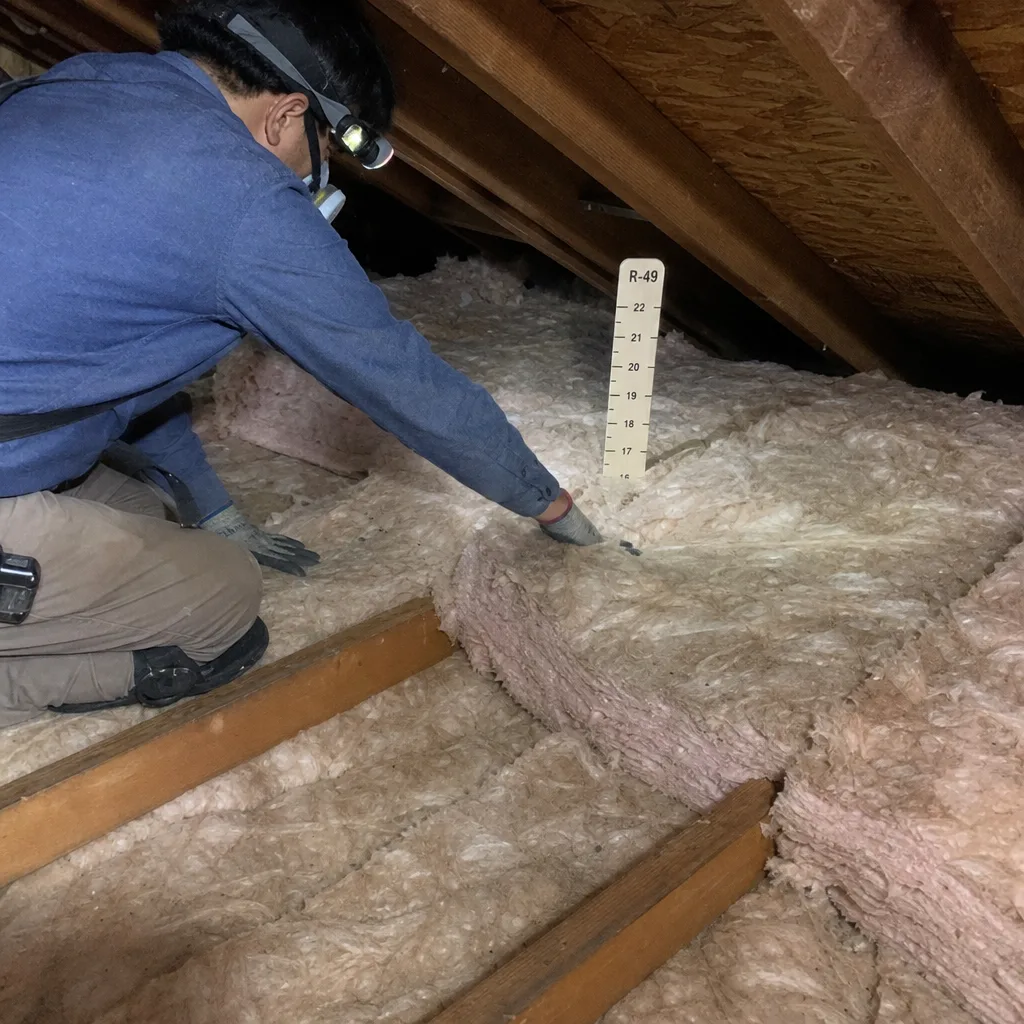
This section exists because “attic air sealing” is one of those phrases that contractors use to mean very different things. We’ve seen competing proposals that used the term to describe a single pass of spray foam along the attic hatch perimeter. That’s not what we mean, and it’s not what the Cupertino homes we work in actually need.
When we seal an attic, the crew works at the attic floor – the ceiling plane of the living space below. The priority is every penetration where conditioned air can travel from the living zone into the unconditioned attic: top plates (the framing members that sit on top of interior walls and often have open cavities running straight up into the attic), electrical junction boxes, plumbing stacks, recessed lighting fixtures, HVAC supply and return boots, dropped soffits built over kitchen cabinets, and any built-in chases that carry wiring or ductwork. Each one is sealed using the appropriate product for its location – two-component spray foam for large gaps, fire-rated caulk for smaller penetrations near electrical components, rigid foam board cut and fitted for large bypasses like open wall cavities or dropped soffits.
In Cupertino specifically, we regularly find open interior wall top plates on homes built before 1985. These are essentially open channels running from the first-floor ceiling up into the attic, and they can account for a large share of a home’s total air leakage even when the insulation looks intact from above. On one job in the Fairgrove neighborhood, the blower-door test read 3,800 CFM50 before we started. After sealing the top plates, 26 can lights, and two HVAC chases, the post-test read 1,950 CFM50 – essentially cutting the measured air loss in half. That’s the kind of result that shows up in a utility bill, not just on a contractor’s marketing page.
After the sealing pass is complete, a second walkthrough confirms that every penetration on the scope has been addressed. The Documented Photo Record captures each sealed location so there’s no ambiguity about what was done. Then, and only then, insulation goes in – if it’s part of the scope. We don’t blow insulation over an unsealed attic floor. The air sealing has to come first, or the insulation is doing less than half its intended job.
Cupertino-Specific Notes on Permits and Code
Most attic air sealing work in Cupertino does not require a building permit on its own. However, if the project involves replacing or significantly modifying HVAC components, adding new electrical, or is part of a larger renovation, the City of Cupertino Building Division may require a permit for the combined scope. California’s Title 24 energy code sets minimum air barrier requirements for new construction and major renovations, but routine air sealing on an existing home’s attic – without changes to mechanical systems – typically falls under maintenance and repair exemptions.
If you’re using a PACE financing program or a utility rebate that requires third-party verification, some programs do require that the work be inspected or that blower-door readings be submitted as documentation. We provide the blower-door data and written scope in a format that satisfies most program requirements. If your program has specific documentation formats, let us know before the job starts and we’ll confirm what we can provide.
One local note worth knowing: Cupertino, as part of unincorporated Santa Clara County for some parcels and an incorporated city for others, has a slightly different building department contact depending on your exact address. The City of Cupertino Building Division handles permits within city limits; properties in the unincorporated county areas that carry Cupertino mailing addresses may fall under the County of Santa Clara Department of Planning and Development. This rarely affects a standard air sealing job, but it matters if a permit is required for your combined scope.
Air Sealing vs. Insulation: Why the Order Matters
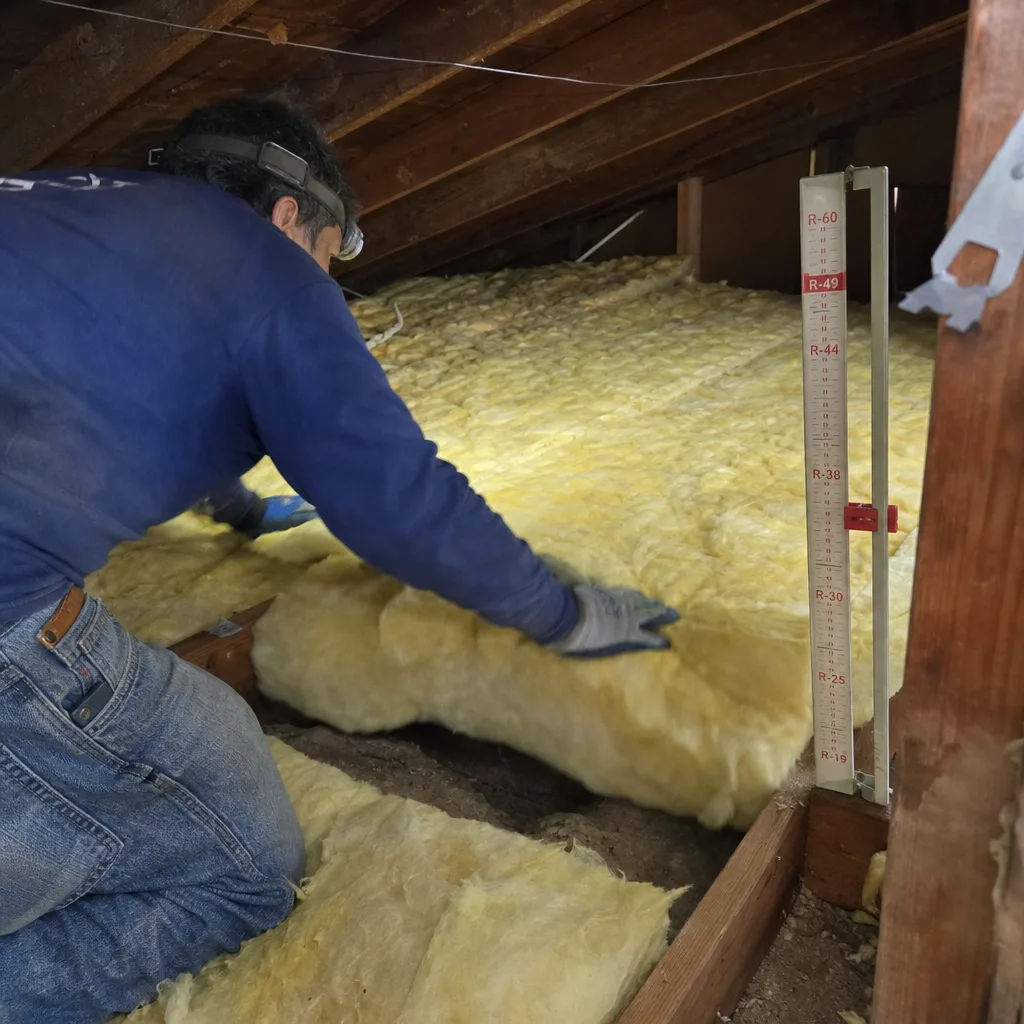
A question we get regularly from Cupertino homeowners is whether they can just add more insulation without doing the air sealing first. The honest answer is that more insulation without sealing helps less than the R-value label suggests, and in some cases makes diagnosis harder later.
Insulation slows the transfer of heat through a material – that’s its job. It does not stop air movement. A gap around a recessed light that’s covered by 12 inches of blown cellulose still allows conditioned air to travel through the insulation and exit through the gap. The R-value of that insulation doesn’t change; its effective performance does. Energy modeling studies – including work referenced in California’s own Title 24 compliance documentation – consistently show that air sealing produces a larger reduction in heating and cooling load than adding insulation above code minimums in an already-insulated attic.
We’ve structured our process around this because it’s the right sequence, not because it adds to our scope. Wes Okafor built Envelope Insulation Co. on the position that air sealing is a hard prerequisite, not an option. Since 2016, every attic job we’ve done that includes insulation has started with the sealing pass completed and documented before any insulation material is moved into the attic. That’s not a marketing point – it’s a technical one, and it shows up in the before-and-after blower-door numbers on every applicable job.
What You Get When the Job Is Done
Before anyone arrives at your home, you’ll have a written price, a written scope that names what’s being sealed and with what products, and a written warranty. That’s Haven Standard Clause 1, and it’s not optional on any job we do.
When the crew leaves, you’ll have:
- A Documented Photo Record showing each penetration before sealing and after – not a stock photo, but photos of your attic, your ceiling plane, your can lights and chases.
- Before-and-after blower-door readings on applicable jobs, showing the CFM50 measurement your home recorded before sealing and after – a single, verifiable number that confirms the air loss changed.
- The written scope marked as complete, with any deviations noted and explained.
- The 365-Day Done Right Promise in writing: if it’s not done right, we make it right – no re-inspection fee, no argument about what the original scope said, because the scope is already in writing.
On a $2,200 attic air sealing job, that’s what leaving looks like. We describe it upfront because homeowners who know what they’re getting before the crew arrives tend to make better decisions about who they hire.
Envelope Insulation Co. and Cupertino
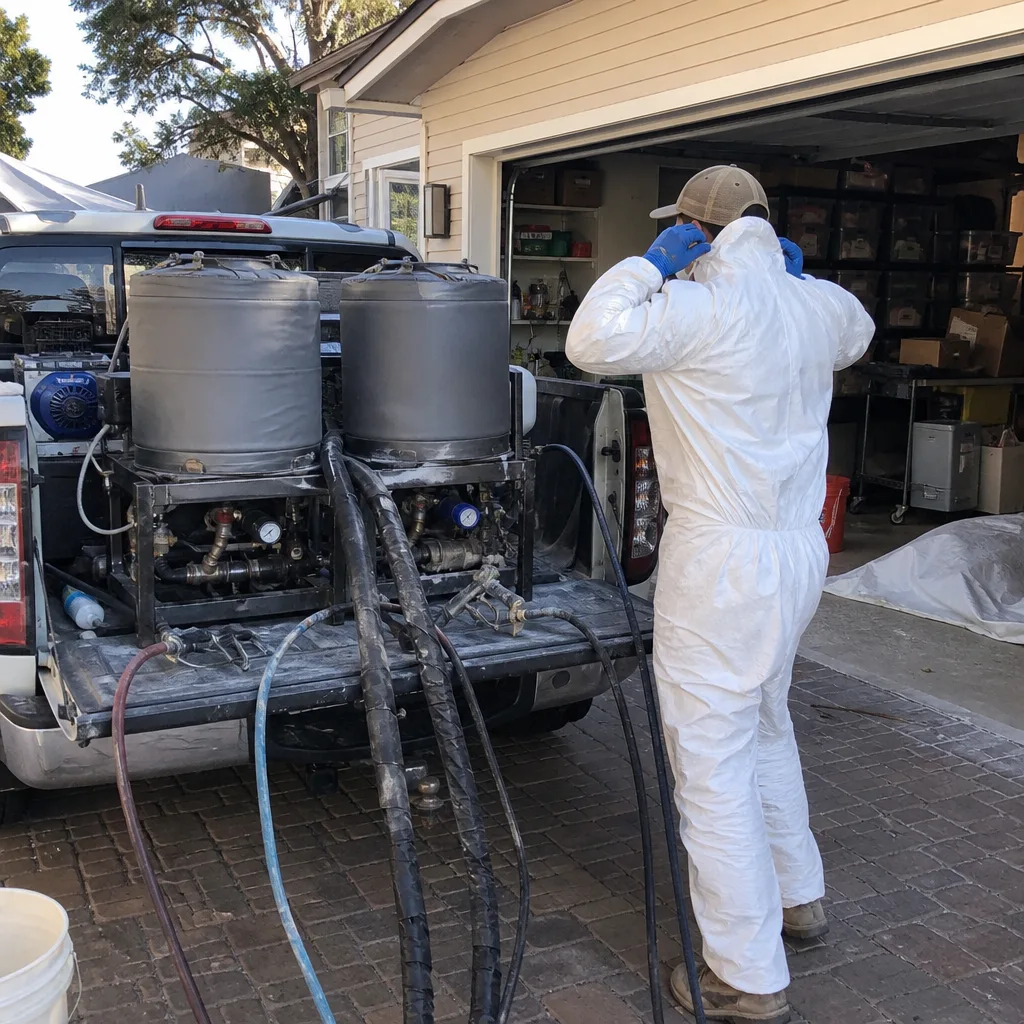
We’ve been working in Cupertino since 2016, which means we’ve seen the housing stock in Monta Vista, Rancho Rinconada, Fairgrove, Garden Gate, Seven Springs, and the neighborhoods along De Anza Boulevard and Stevens Creek Boulevard up close and in attic space. Most of the homes here were built in waves – late 1950s through 1970s ranch homes, 1980s two-stories, and a significant number of 1990s-era homes that were renovated with recessed lighting before anyone was thinking about air sealing. That history shows up in how we scope jobs in Cupertino specifically.
Cupertino’s position in the South Bay also means it gets caught between the marine influence from the coast and the warmer, drier air of the Santa Clara Valley floor. Summer attic temperatures here regularly hit ranges that put significant strain on HVAC systems, and a poorly sealed attic contributes to that load directly. We factor Cupertino’s actual climate – not a generic California average – into how we explain the work and what results homeowners can reasonably expect.
In the 9,000+ homes we’ve sealed and insulated since 2016 across this region, every single job started with a written price and ended with a documented record. That number doesn’t get padded; it comes from actual completed scopes. You can read more about our full home energy envelope service line or get a written price for your specific attic by calling (831) 217-8521.
FAQs – Attic Air Sealing Cost in Cupertino
How much does attic air sealing cost in Cupertino, CA?
Most Cupertino homeowners pay between $1,600 and $2,600 for a full attic air sealing job on a mid-size single-family home. Smaller homes with simpler attic geometry can come in around $1,200; larger two-story homes with heavy penetration counts can reach $3,800 or more. Those ranges reflect actual 2026 Santa Clara County labor rates and material costs, not national averages. For a flat written price on your specific home, call (831) 217-8521 – we don’t give estimates verbally and then change them on the invoice.
Is attic air sealing worth it in Cupertino’s climate?
Yes, and the reason is specific to Cupertino: attic temperatures here regularly exceed 130-140 degrees Fahrenheit in summer, which means an unsealed attic floor is functioning as a direct heat source for your living space during the months when cooling costs are highest. A blower-door test on a typical pre-2000 Cupertino home frequently reads between 3,000 and 5,000 CFM50 before sealing; post-sealing, a properly done job will often bring that number down by 30-50 percent. That reduction shows up in HVAC run times and, over a full cooling season, in energy costs. The payback period on a $2,000 sealing job in Cupertino, given local PG&E electricity rates, is typically in the 4-8 year range depending on home size and current leakage level.
Can I add insulation without doing air sealing first?
You can, but you’ll get a fraction of the performance benefit. Insulation slows heat conduction through a material; it does not stop air movement through gaps and penetrations. A recessed light covered by 14 inches of blown cellulose still allows conditioned air to exit through the gap around the fixture – the insulation’s rated R-value doesn’t change, but its effective performance does. We won’t install insulation over an unsealed attic floor, because doing so produces a documented result that’s worse than sealing first. If another contractor has proposed insulation without any mention of air sealing, bring us the written estimate and we’ll review it with you at no charge.
How long does attic air sealing take?
A typical Cupertino attic air sealing job takes 4 to 8 hours for one crew. Smaller homes with clean attic geometry and fewer penetrations come in closer to 4 hours. Larger two-story homes with 20 or more recessed lights, multiple HVAC chases, and dropped soffits can run a full day. If a blower-door test is included, add roughly an hour for the pre-test, crew mobilization between test and seal, and the post-test measurement. The written scope you receive before the job starts will name an estimated duration so you know what to expect.
Does attic air sealing require a permit in Cupertino?
Standalone attic air sealing on an existing home typically does not require a permit in Cupertino. If the work is part of a larger renovation, involves HVAC modifications, or is tied to a utility program that requires city inspection, a permit may be needed – and we’ll tell you that upfront in the written scope. Properties in unincorporated Santa Clara County areas with Cupertino mailing addresses fall under the County’s Department of Planning and Development rather than the City’s Building Division, which is worth clarifying if your project approaches permit thresholds. We document our work thoroughly enough that if a permit or third-party inspection is required, the Documented Photo Record and blower-door readings satisfy most verification requirements.
How do I know the air sealing actually worked?
The only way to know is a before-and-after blower-door test – a pressurization measurement that shows, in a single CFM50 number, how much air your building envelope was losing before the sealing and after. Under the Haven Standard, we publish those numbers on every applicable job. If a contractor completes air sealing work and doesn’t provide a post-test reading, you have no documented proof that the leakage changed. Ask any contractor you’re considering whether they provide both pre- and post-sealing blower-door readings, and ask to see examples of those documented results from past jobs in the Cupertino area.
Pricing reflects the Cupertino market as of 2026. Written by Wes Okafor, Owner at Envelope Insulation Co., serving Cupertino since 2016. Topside Attic Insulation Cupertino offers free estimates – call (831) 217-8521.
What Our Customers Say
"The winter gas bill dropped by about a third. They had estimated a quarter, so they under-promised."
- Genevieve R."They photographed rodent damage in the old insulation that we had no idea about, and priced the exclusion work separately so we could decide."
- Harriet N."Two other companies quoted to blow more insulation on top of what was there. These were the only ones who said the existing material had to come out first, and explained why."
- Clifford E.