
Demilec Vapor Barrier Installation: The Cupertino Owner’s Guide
Demilec vapor barrier installation in Cupertino typically runs between $1,800 and $3,400 for a complete crawl space encapsulation, depending on square footage and whether the foundation walls need sealing too. We stock Demilec-compatible 10-mil and 15-mil reinforced polyethylene barriers on our trucks, and most Cupertino jobs can start same-day or next-day. Most homeowners figure out something’s wrong when they notice a sharp musty smell coming up through the floorboards, or their hardwood starts cupping at the edges, or they spot condensation beading on the ductwork in a crawl space that should stay dry year-round.
Which Demilec Models This Applies To
Demilec doesn’t sell vapor barriers as standalone retail SKUs the way they sell spray foam kits. What we’re talking about here is the vapor barrier component installed as part of a Demilec-certified crawl space encapsulation system, or the standalone polyethylene sheeting Demilec supplies to contractors for moisture control beneath their closed-cell spray foam jobs. The critical compatibility gotcha: Demilec’s spec calls for a minimum 6-mil virgin polyethylene with a perm rating below 0.1, but in Cupertino’s clay-heavy soils, especially around the Monta Vista and Rancho Rinconada areas where groundwater sits high in winter, we won’t install below 10-mil. The 6-mil tears on gravel during the first Santa Clara Valley heat cycle.
To identify what you have now, look for the printed strip along the vapor barrier seam. Demilec-certified installs usually show a lot number and “Demilec” or “Icynene” branding, since Demilec operates under the Icynene-Lapolla group. If your barrier is unmarked white or clear poly, it’s likely a generic install by a prior contractor. We carry both OEM Demilec-spec barrier and a reinforced 15-mil cross-woven equivalent that outperforms the base spec for puncture resistance. For Cupertino homes with active rodent pressure near the Stevens Creek corridor, the reinforced option is worth the material upgrade. Topside Attic Insulation Cupertino is an independent service provider, not affiliated with Demilec.
Signs Your Demilec Vapor Barrier Installation Is Failing
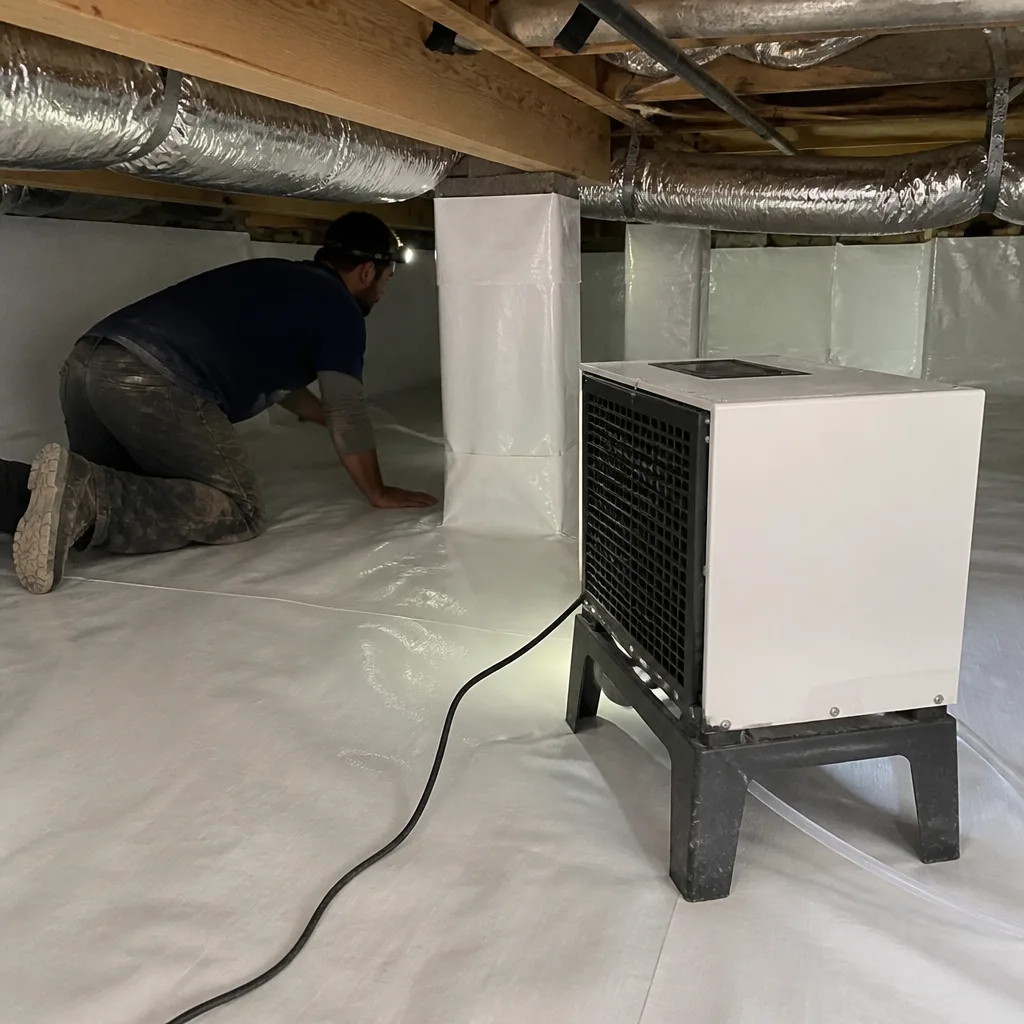
- Musty odors rising through floor gaps. When the vapor barrier separates at seams or tears at penetrations, soil moisture evaporates directly into the crawl space air. That humid air finds every path upward through subfloor gaps, electrical boxes, and plumbing chases. In Cupertino’s older Ranch-style homes near Rancho Rinconada, those paths are plentiful.
- Hardwood cupping or laminate warping. Wood flooring is hygroscopic, meaning it absorbs moisture from the air below. A failed barrier lets relative humidity in the crawl space climb above 70%, and the underside of your flooring starts swelling before you see anything. We’ve measured 82% RH in Cupertino crawl spaces with compromised barriers during March rains.
- Condensation on ductwork or HVAC plenums. Cold air conditioning ducts in a humid crawl space act like a glass of ice water on a summer day. The sweating drips onto the barrier, pools, and accelerates seam failure. This is especially common in Cupertino homes with flex duct runs that sag and touch the ground.
- Visible mold on floor joists or sill plates. Surface mold needs 60% relative humidity sustained over 48 hours. A torn barrier in Cupertino’s winter wet season provides that easily. The north-facing crawl spaces, where sun never hits the foundation vents, are the first to show it.
- Increased energy bills with no other explanation. Wet insulation in the crawl space, whether it’s batt or spray foam, loses R-value fast. A saturated fiberglass batt performs at roughly 20% of its rated value. Your HVAC runs longer to compensate, and the bill climbs without a corresponding temperature change.
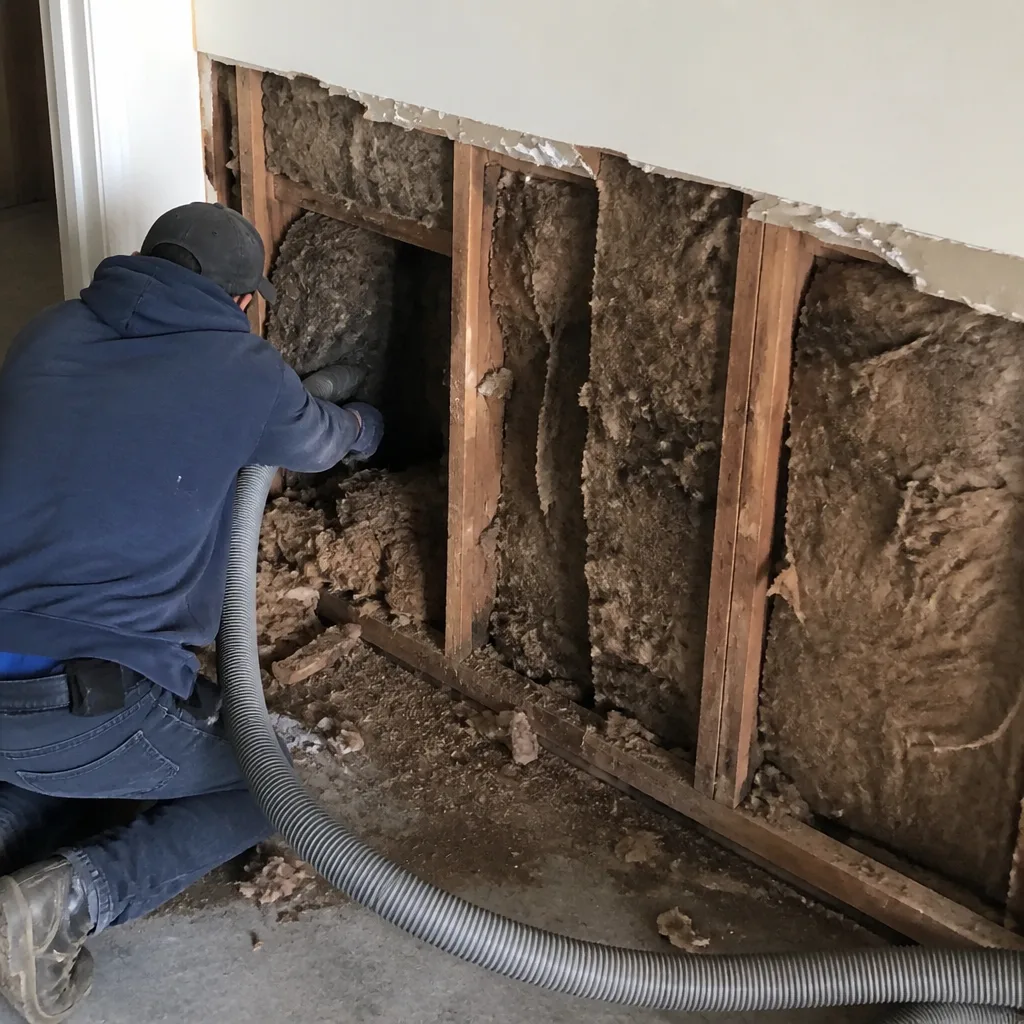 Before
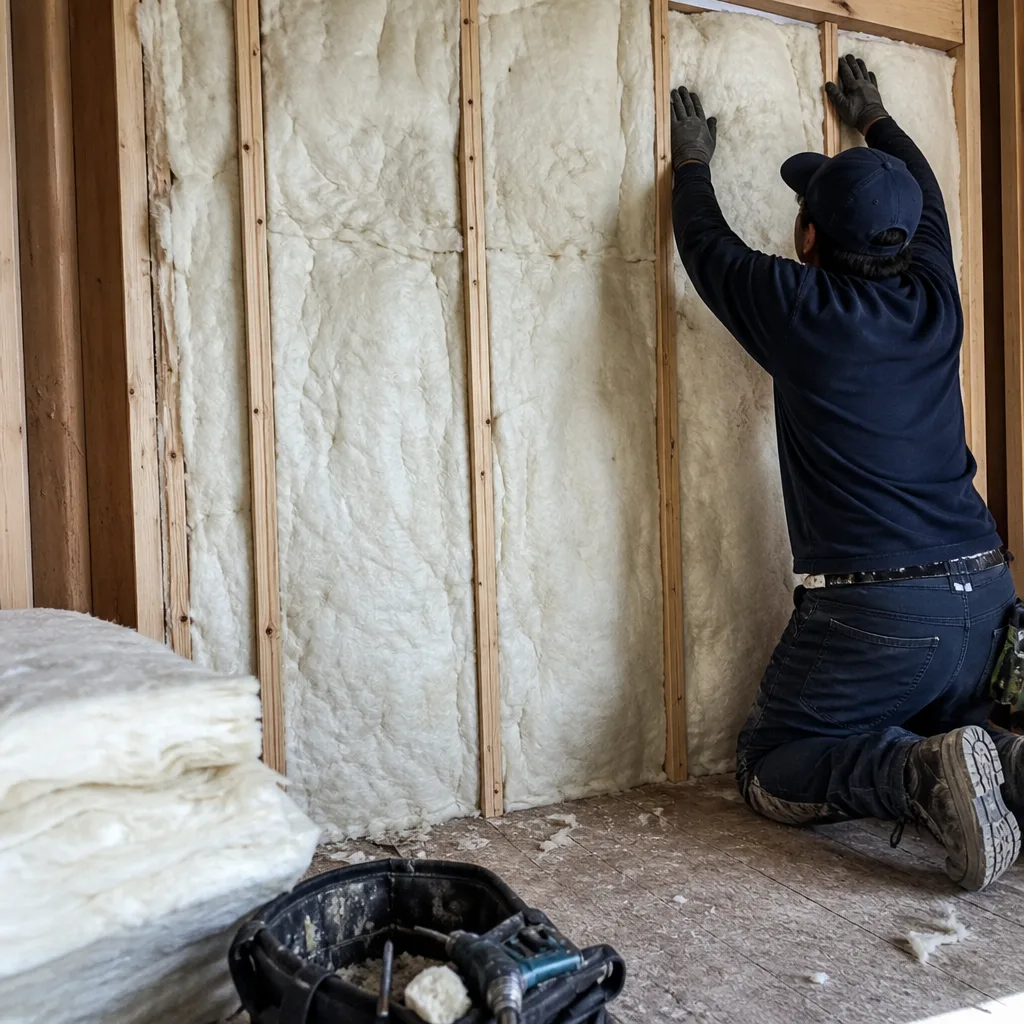 After
AfterReplacement Cost & What’s Included
Most complete Demilec vapor barrier replacements in Cupertino fall between $1,800 and $3,400. That range covers removal of the failed barrier, surface prep, new 10-mil or 15-mil reinforced polyethylene installation with sealed seams and mechanical fastening to foundation walls, and a post-install moisture reading. What drives the number up: crawl spaces under 400 square feet with limited access, active water intrusion requiring a sump basin, or rodent damage to insulation that needs addressing before the new barrier goes down. What keeps it at the lower end: straightforward rectangular footprints, good access, and intact existing insulation.
Every job under The Haven Standard starts with a written price before any work starts. You’ll get a flat scope, a written warranty, and a Documented Photo Record showing the old barrier condition, the prepped surface, and the completed install. On applicable jobs, we provide before-and-after blower-door readings so you can see the air-sealing improvement. The 365-Day Done Right Promise applies to all work. Materials are sourced from our standard supply chain, including Demilec-compatible products alongside Owens Corning, Johns Manville, and other manufacturers.
DIY or Call Us?
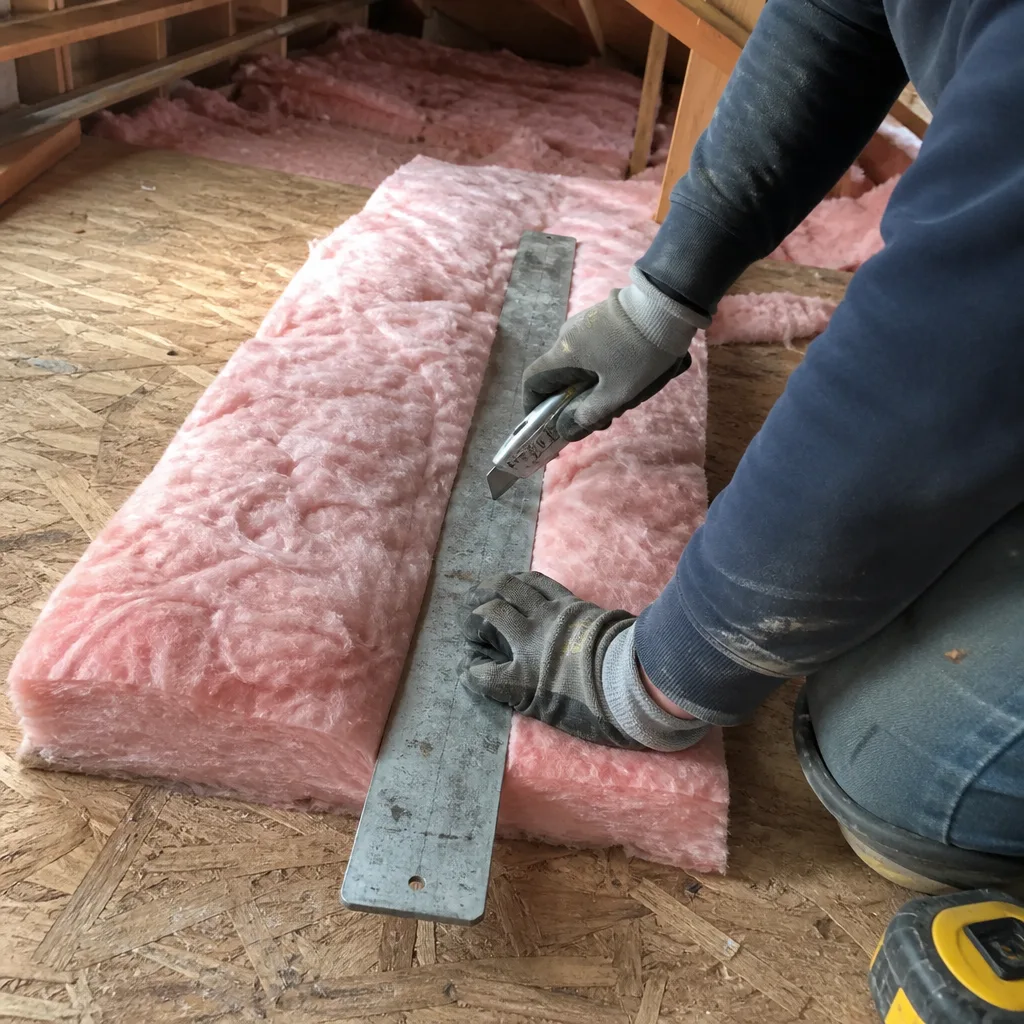
Here’s what you can safely check yourself: look at the barrier color and condition from the crawl space access point with a flashlight. White, clean, and taut is good. Yellowed, torn, or pooling water underneath is not. You can also buy a cheap humidity meter and stick it in the crawl space for 24 hours. Readings consistently above 65% mean the barrier isn’t doing its job.
Where DIY goes wrong: proper vapor barrier installation isn’t just rolling out plastic. Seams must overlap 12 inches and be sealed with pressure-sensitive tape rated for polyethylene, not duct tape, which fails in months. The barrier must extend 6 inches up foundation walls and be mechanically fastened, or groundwater wicks behind it. And in Cupertino’s older homes, especially the split-levels Wes Okafor’s crew has worked on near the foothills, the original attic bypasses and wall-to-ceiling gaps were never sealed before insulation went in. Seal the leaks first. Insulation covers problems; it does not fix them. For a written price and same-day scheduling, call (831) 217-8521.
FAQs
A properly installed 10-mil or 15-mil reinforced vapor barrier in Cupertino typically lasts 15 to 20 years. The clay soil expansion cycles and occasional groundwater pressure in Santa Clara County are harder on thinner 6-mil barriers, which we’ve seen fail in 5 to 7 years. Call (831) 217-8521 for an exact quote on replacement - estimates are free.
Small punctures or seam gaps under 6 inches can be patched with compatible polyethylene tape if the surrounding material is still supple. If the barrier is brittle, yellowed, or has multiple failure points, patching is a short-term fix that costs more in repeat visits. We assess this on every site visit and will tell you straight if repair makes sense. Call (831) 217-8521 for a free evaluation.
Most Cupertino crawl space vapor barrier replacements take one day for crews to complete, or two days if we need to remove degraded insulation or address active moisture intrusion first. We bring the barrier material on the truck, so there’s no supply delay. Call (831) 217-8521 to check same-week availability.
We stock 10-mil and 15-mil reinforced polyethylene vapor barrier compatible with Demilec specifications on every truck, along with seam tape, mechanical fasteners, and wall attachment systems. For Demilec-specific closed-cell spray foam jobs, we order to spec with a 48-hour lead time. Call (831) 217-8521 to confirm material availability for your job.
Written by Wes Okafor, Owner, Topside Attic Insulation Cupertino at Topside Attic Insulation Cupertino, serving Cupertino and nearby areas.