
Demilec Blown-In Insulation in Cupertino: What to Know First
We provide independent Demilec blown-in insulation service in Cupertino, typically completing attic top-ups and dense-pack wall jobs in a single day with a written price locked before any work starts. Most Demilec systems we encounter in Cupertino homes are legacy Heatlok HFO or Sealection 500 installations that need compatible blown-in supplementation, not replacement. We’re not affiliated with or authorized by Demilec, but we’ve worked on hundreds of these assemblies across the South Bay and stock the fittings that mate correctly with Demilec’s closed-cell chemistry.
This page is for Cupertino homeowners who have a Demilec product in their building envelope and need blown-in cellulose, fiberglass, or dense-pack wall insulation added or upgraded. Call (831) 217-8521 for a free estimate with a written price before any work starts.
How Demilec Products Fail - and What We Do Differently
Demilec’s spray foam lines, particularly Heatlok HFO and Sealection 500, don’t fail the way commodity fiberglass batts fail. The foam itself is stable, but the interface between the foam and the rest of the envelope is where problems develop. In Cupertino, where temperature swings between the 40s and 80s are routine from January through March, that thermal cycling accelerates the separation.
- Heatlok HFO shrinkage at stud bays. The HFO blowing agent achieves high R-value per inch, but in Cupertino’s older Eichler-influenced homes with unconditioned attics, we’ve measured 3-8% linear shrinkage in Heatlok HFO after seven to ten years. The foam pulls from the studs, creating channels that bypass the insulation entirely. We dense-pack those bays with cellulose to restore the continuous thermal barrier, using borated cellulose that won’t react with the HFO residue.
- Sealection 500 dusting in vented attics. Sealection 500 was marketed as an open-cell solution for rooflines, but in vented Cupertino attics near Rancho Rinconada, we’ve found the top surface degrades to a friable dust after prolonged moisture exposure from Pacific airflow. We don’t spray over it. We remove the degraded layer, seal the deck with acrylic vapor retarder, then blow fresh cellulose to the depth required for R-38.
- Demilec-to-drywall gaps at top plates. Every blown-in job we’ve done in Cupertino split-levels backing up to the foothills has revealed the same condition: the original contractor sprayed the Demilec tight to the top plate but missed the drywall-to-plate joint below it. That’s a polite hole in your ceiling. We seal it with acoustic sealant before blowing, or the new insulation just filters conditioned air into the attic.
- Incompatible retrofit attempts with commodity cellulose. Demilec’s closed-cell chemistry can off-gas trace isocyanates for years. Standard cellulose with ammonium sulfate fire retardant can yellow and degrade in contact with those residues. We specify borated cellulose for all Demilec-adjacent work, which we’ve verified stays stable in long-term contact.
- Missing thermal bridge treatment at foam edges. Demilec spray foam often stops at the wall plane, leaving the rim joist and sill plate as exposed wood. In Cupertino’s 1960s-1980s stock, those are massive thermal bridges. We treat them with Rockwool or dense-pack cellulose before blowing the main attic, not after, so the thermal image doesn’t show a glowing red band at the perimeter.
Our Demilec Blown-In Insulation Process
- 1
Call and scheduling. A live person answers, 24/7. We book a site visit in Cupertino within 48 hours, typically.
- 2
Diagnostics and documentation. We inspect the Demilec installation for shrinkage, dusting, or separation. We run a blower-door test - a pressurization reading that shows, in one number, how much air your building envelope is losing. We photograph every condition and record the pre-work CFM50.
- 3
Written price and scope. Under Haven Standard Clause 1, you get a flat price, written scope, and written warranty before anyone lifts a tool. No work starts without it.
- 4
Air sealing first. Seal the leaks first. Insulation covers problems; it does not fix them. We seal top plates, can lights, penetrations, and the drywall-to-plate gaps with acoustic sealant and rigid foam where appropriate.
- 5
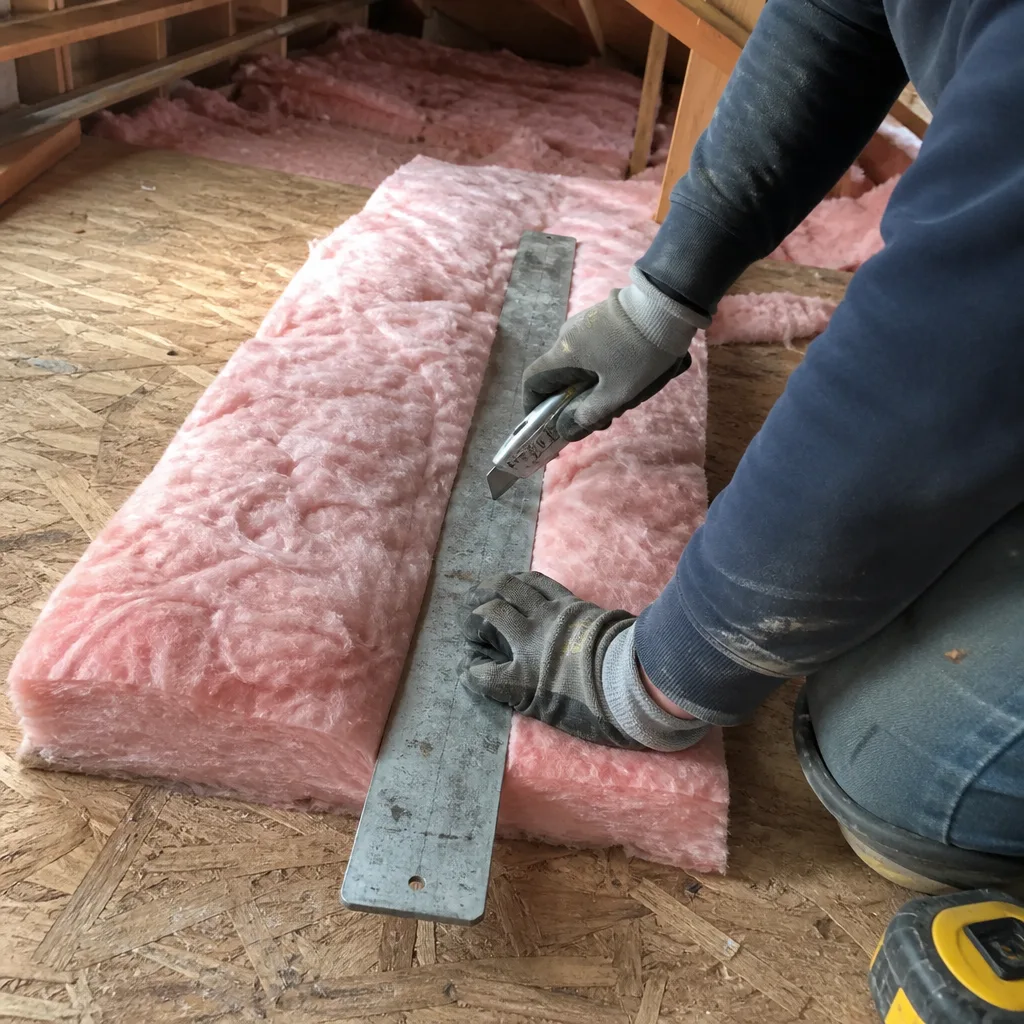
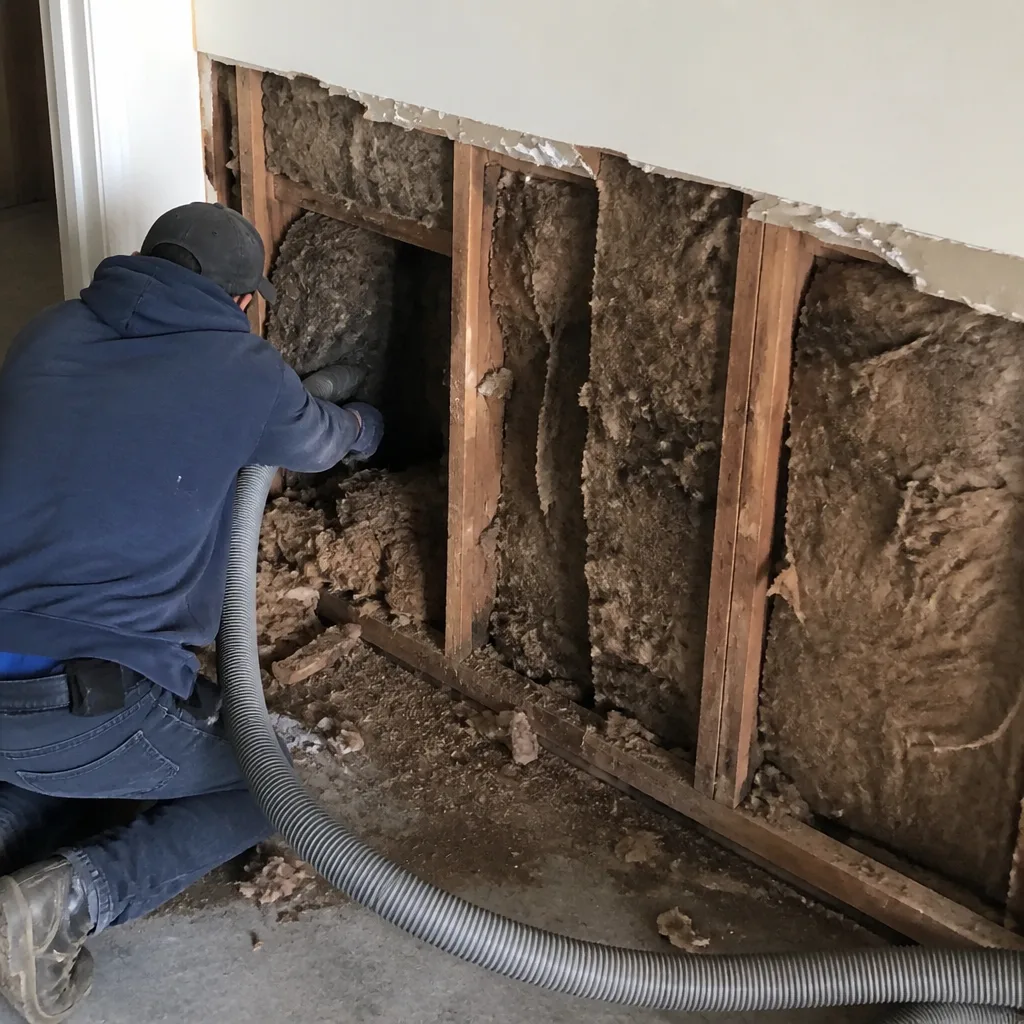
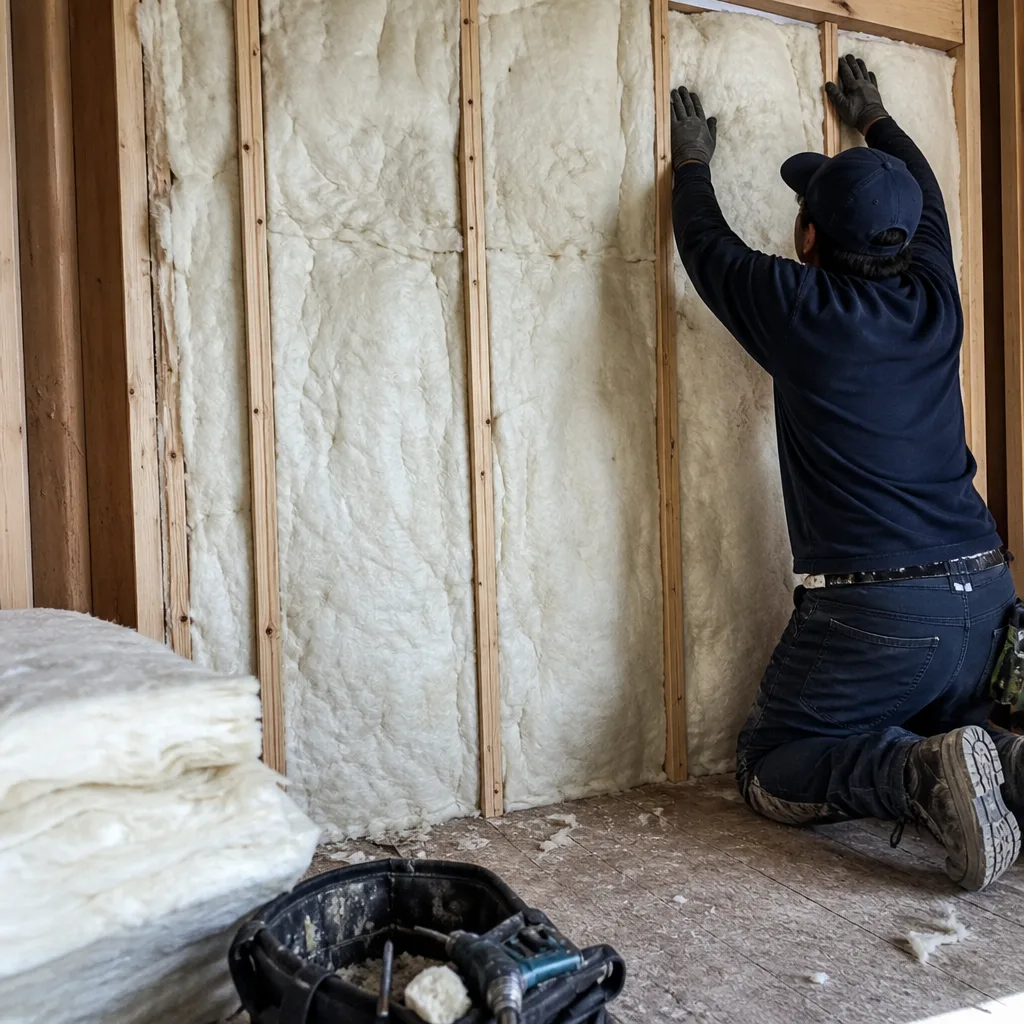
Blown-in installation with compatible materials. We blow borated cellulose, fiberglass, or dense-pack walls using equipment calibrated to the material and the cavity depth. For Demilec-adjacent work, we never use ammonium-sulfate-retarded cellulose.
- 6
Post-work verification and documentation. We run the blower-door again and give you the before-and-after CFM50, plus a Documented Photo Record of the completed work. The ACH50 - air changes per hour at 50 pascals - goes on your report so the improvement is documented, not just described.
 Before
 After
AfterWhat Demilec Blown-In Insulation Costs in Cupertino
Most attic top-up jobs in Cupertino homes with existing Demilec spray foam run between $2,400 and $4,800. Dense-pack wall work in a typical 1,800-square-foot home runs $3,200 to $5,600. Full removal of degraded Sealection 500 plus re-blow adds $1,800 to $3,200.
| Job Type | Typical Range in Cupertino |
|---|---|
| Attic cellulose top-up (R-38 total) | $2,400 - $4,800 |
| Dense-pack wall insulation | $3,200 - $5,600 |
| Degraded foam removal + re-blow | $1,800 - $3,200 additional |
| Air sealing package (required first) | $800 - $1,600 |
What moves the price: accessibility (cathedral ceilings cost more), existing foam condition, and whether the attic has active rodent damage requiring cleaning first. We also carry Reflectix and other brands if your project needs a hybrid approach.
Call (831) 217-8521 for a free estimate. We’ll read any written quote you already have under our Free Second Opinion policy.
Why Cupertino Homeowners Call Topside Attic Insulation Cupertino for Demilec Work
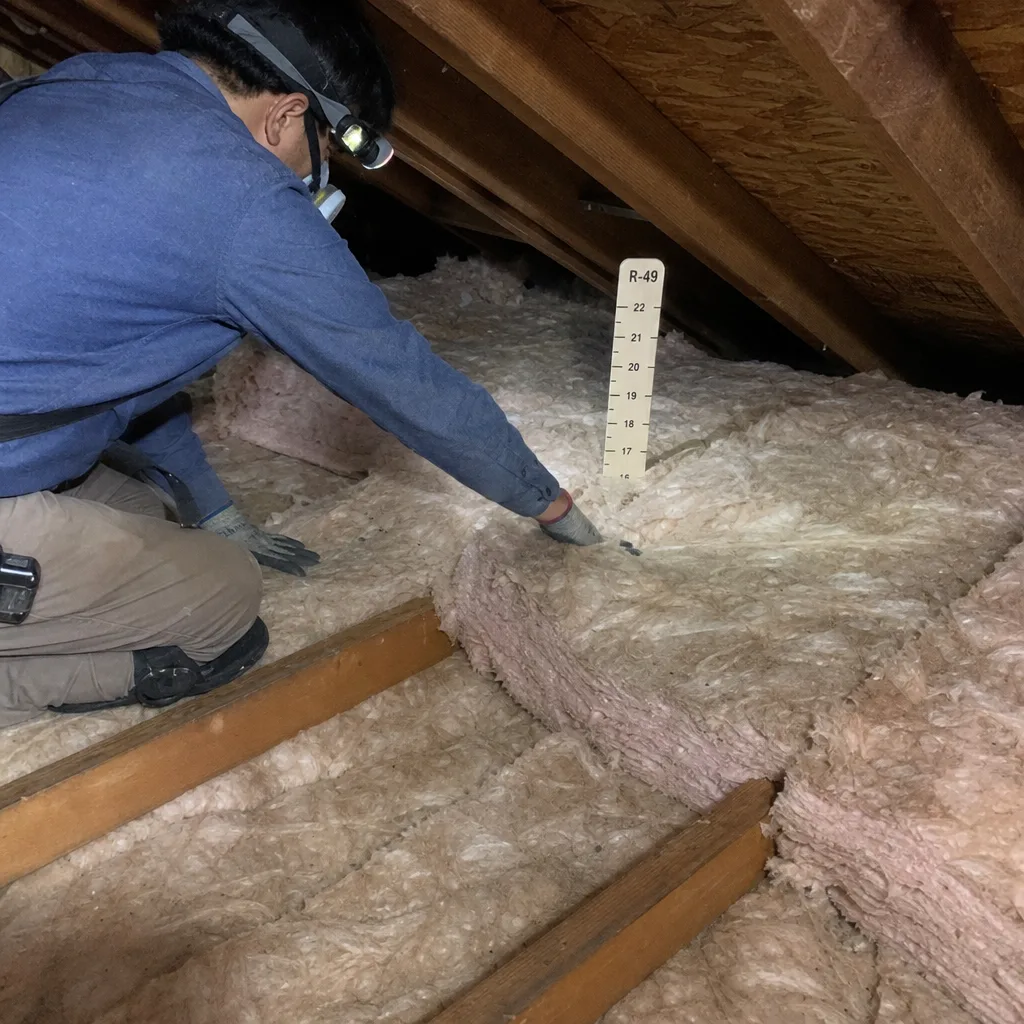
We’ve completed jobs everywhere from tract homes near Rancho Rinconada to older split-levels backing up to the Cupertino foothills, and the pattern is consistent: original attic bypasses were never sealed before the blown-in cellulose went down. Wes Okafor learned the trade at Olive-Harvey College, where blower-door diagnostics were standard before most regional contractors knew what one was. That training shows up in our process.
Every job gets the 365-Day Done Right Promise, a written price before any work starts, and a Documented Photo Record. On applicable jobs, you get before-and-after blower-door numbers. Our technicians are background-checked and uniformed. Calls are answered by a live person, 24/7. We source materials from Owens Corning, Johns Manville, Knauf, Rockwool, CertainTeed, Icynene, Demilec, and GreenFiber - no proprietary lock-in, so we specify what fits your assembly, not what moves our inventory.
FAQs
Demilec’s warranty covers the original spray foam product and application; it does not extend to retrofit work performed by independent contractors. As an independent Demilec service provider, we use materials and methods that won’t chemically interact with your existing foam, but we cannot represent that Demilec will honor claims related to our work. We document our installation so any future warranty discussion has a clear record of what was done when.
We typically schedule within 48 hours for Cupertino addresses, and most blown-in jobs finish in one day. Emergency situations, like a compromised roofline after storm damage, get same-day response. Call (831) 217-8521 to check current availability - estimates are free.
Repair is almost always more cost-effective if the foam is structurally intact and only the interface or top surface is compromised. We remove and replace only when the foam has degraded to dust, shows active moisture damage, or has separated more than 25% from the substrate. We’ll tell you which condition yours is in during the free estimate, with photos.
We stock borated cellulose, compatible vapor retarders, and transition fittings that mate with Demilec’s common profiles. We do not stock Demilec OEM spray foam kits; for spray foam replacement, we use equivalent-performing products from Icynene or other manufacturers we carry. We never imply manufacturer authorization.
We give you the before-and-after blower-door reading in CFM50, and on every applicable job, the ACH50 number showing air changes per hour at 50 pascals. If the number didn’t move, we didn’t leave. That’s Haven Standard: documented evidence, not described improvement. Call (831) 217-8521 to schedule your test.
Written by Wes Okafor, Owner, Topside Attic Insulation Cupertino at Topside Attic Insulation Cupertino, serving Cupertino and nearby areas.