
Rockwool Crawl Space Encapsulation: The Cupertino Owner’s Guide
We stock and install Rockwool-compatible crawl space encapsulation systems for Cupertino homes, with most full encapsulations running between $4,800 and $8,200 depending on crawl space footprint and existing moisture damage. Same-day assessments are available, and we carry Rockwool Comfortboard and Comfortbatt rigid insulation boards on our trucks for common foundation-wall applications. Most Cupertino owners discover their encapsulation has failed when they notice a sharp musty smell returning after months of absence, or when their spring PG&E bill jumps 20-30% without explanation - the vapor barrier has torn at a seam, or the rigid board has pulled away from the stem wall, letting outside air bypass the thermal boundary.
Which Rockwool Models This Applies To
Rockwool does not manufacture a branded “encapsulation system” in the way some competitors do. Instead, Rockwool crawl space encapsulation refers to assemblies built from Rockwool’s stone wool insulation products combined with mechanical fastening, vapor barriers, and sealants. The two products we match most often in Cupertino are Comfortboard 80 and Comfortboard 110 for exterior foundation walls, and Comfortbatt for rim joist cavities. Comfortboard 80 is the 8-pound-per-cubic-foot density board; Comfortboard 110 is the higher-compressive-strength variant at 11 pcf, specified when the crawl space has a history of pest intrusion or when the homeowner plans to use the space for storage. The critical compatibility gotcha: Comfortboard 80 will compress under foot traffic if left exposed, so any storage-use crawl space needs the 110 variant or a protective subfloor panel over the insulation.
To identify what you have, check the black ink stamp on the board face. It lists the density, R-value per inch, and manufacturing date. Boards installed before 2019 may carry the older “Roxul” branding. Rockwool shifted its North American product naming that year, but the material specs remained identical. We stock both OEM Rockwool boards and a mechanically equivalent Johns Manville MinWool-1200 for jobs where lead time matters - the JM board matches the 80-series density and vapor permeance, though its facing adhesive differs slightly in freeze-thaw cycling, which matters less in Cupertino’s mild climate than it would in Tahoe.
Signs Your Rockwool Crawl Space Encapsulation Is Failing
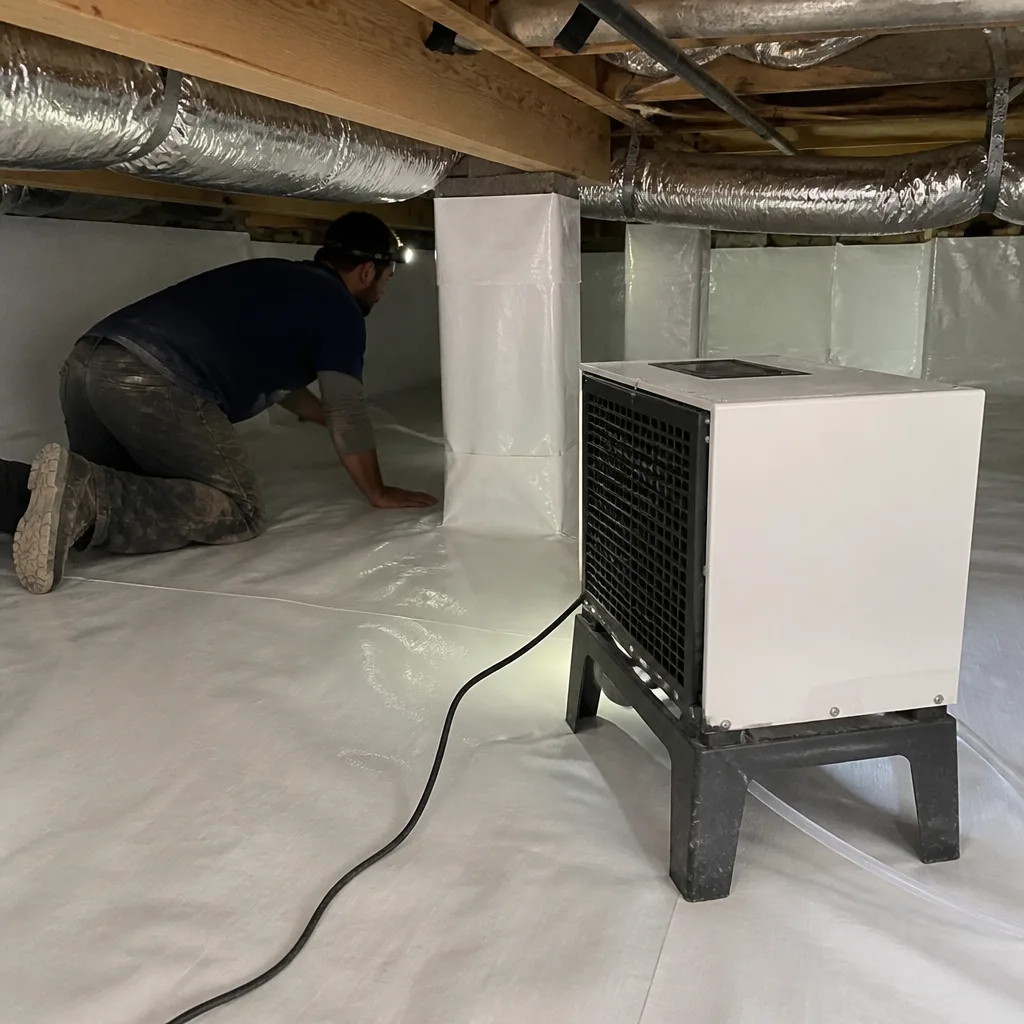
- Musty odor returning in humid months. The polyethylene vapor barrier has torn at a seam or the butyl tape has lost adhesion where the barrier meets the foundation wall. Cupertino’s clay-heavy soils hold moisture through May and June; once the barrier fails, that moisture migrates straight into the crawl space air.
- Cold floors in winter despite heating. The Comfortboard has pulled away from the stem wall, creating a thermal bypass. We see this most often in Rancho Rinconada homes built in the 1960s and 1970s, where the original concrete walls were never properly prepared for adhesive fastening.
- Insect or rodent activity in the crawl space. Stone wool is not a food source, but gaps at the board edges create highways. The failure point is usually the mechanical fasteners - Tapcon screws or powder-actuated pins that have worked loose from seismic micro-movement, common in the foothills zones near Monta Vista and Seven Springs.
- Condensation on ductwork or plumbing. The dew point has shifted because the thermal boundary is compromised. When warm, humid outside air hits the cooled supply ducts, water forms. This is the symptom that does the most hidden damage, because it happens slowly and rot progresses before anyone looks.
- Insulation boards sagging or dropping from overhead joist bays. The wire hangers or spring rods have corroded, or the friction-fit was never adequate for the weight of stone wool. Comfortbatt in a rim joist is heavy - roughly 1.5 pounds per square foot at R-23 - and gravity wins eventually if the support system was underspecified.
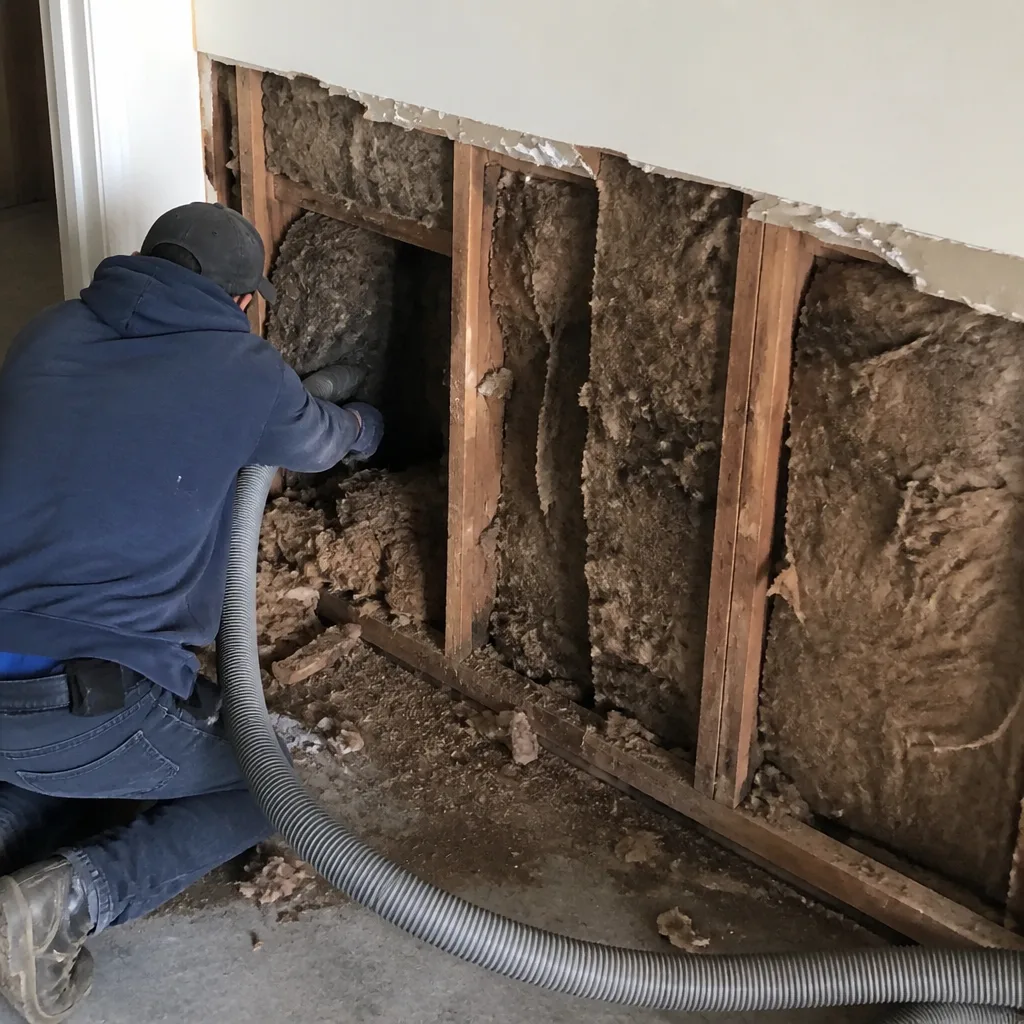 Before
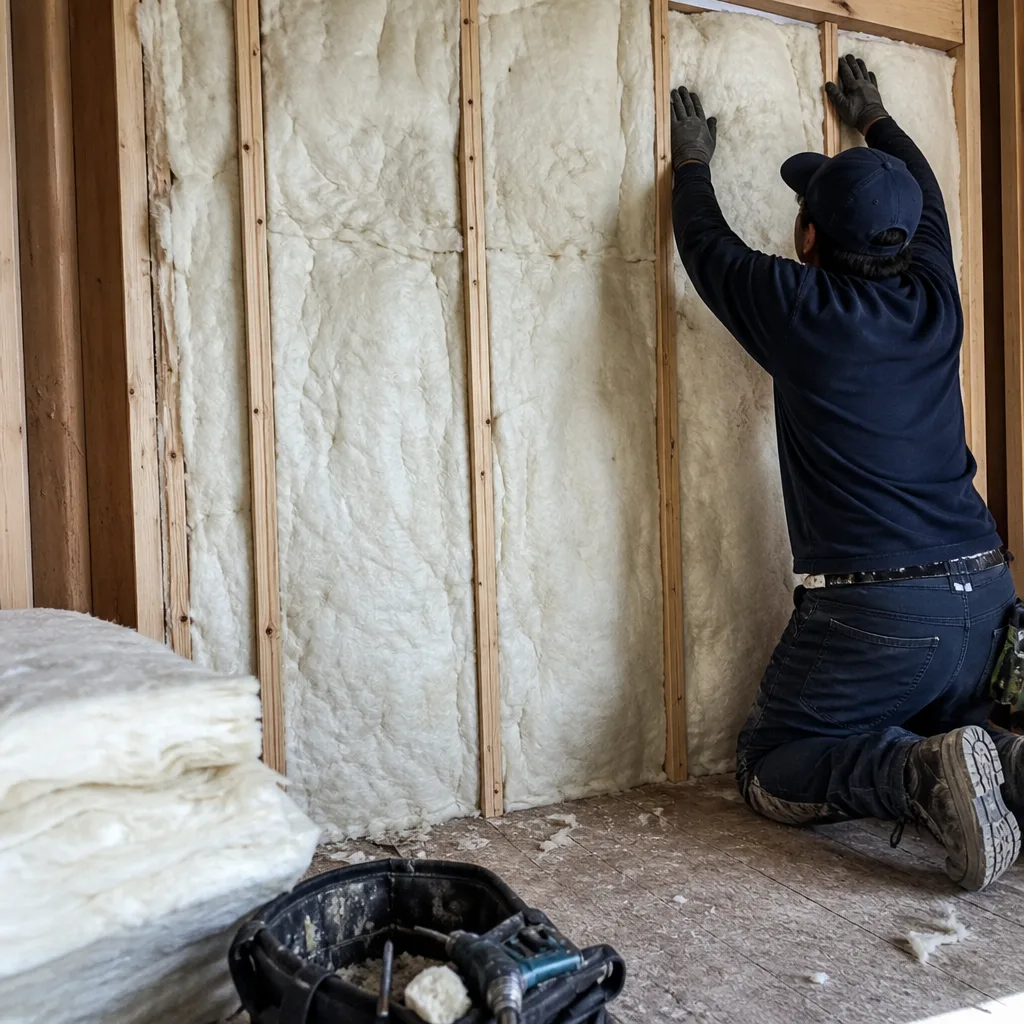 After
AfterReplacement Cost & What’s Included
For a typical Cupertino crawl space between 1,200 and 2,000 square feet of footprint, complete Rockwool encapsulation replacement runs $4,800 to $8,200. That range assumes standard access (not a belly-crawl), no active water intrusion requiring a sump pump, and foundation walls in repairable condition. What drives the spread: whether we need to remove and dispose of failed fiberglass or old cellulose first ($800-$1,400 additional), whether the stem walls need grinding and priming for proper adhesive bond ($600-$1,000), and whether the homeowner wants the full air-sealing package at rim joists and penetrations or just the thermal layer.
Every encapsulation we install includes the written scope, the Rockwool or equivalent board material, mechanical fastening, a 10-mil reinforced polyethylene vapor barrier with sealed seams, and perimeter attachment with butyl tape and termination bars. We also include our standard Documented Photo Record - before, during, and after - and on jobs where the crawl space connects to conditioned space, we run a blower-door test to quantify the air leakage reduction. The 365-Day Done Right Promise applies in full. Call (831) 217-8521 for a written price before any work starts; estimates are free and we will read any competing quote with you.
DIY or Call Us?
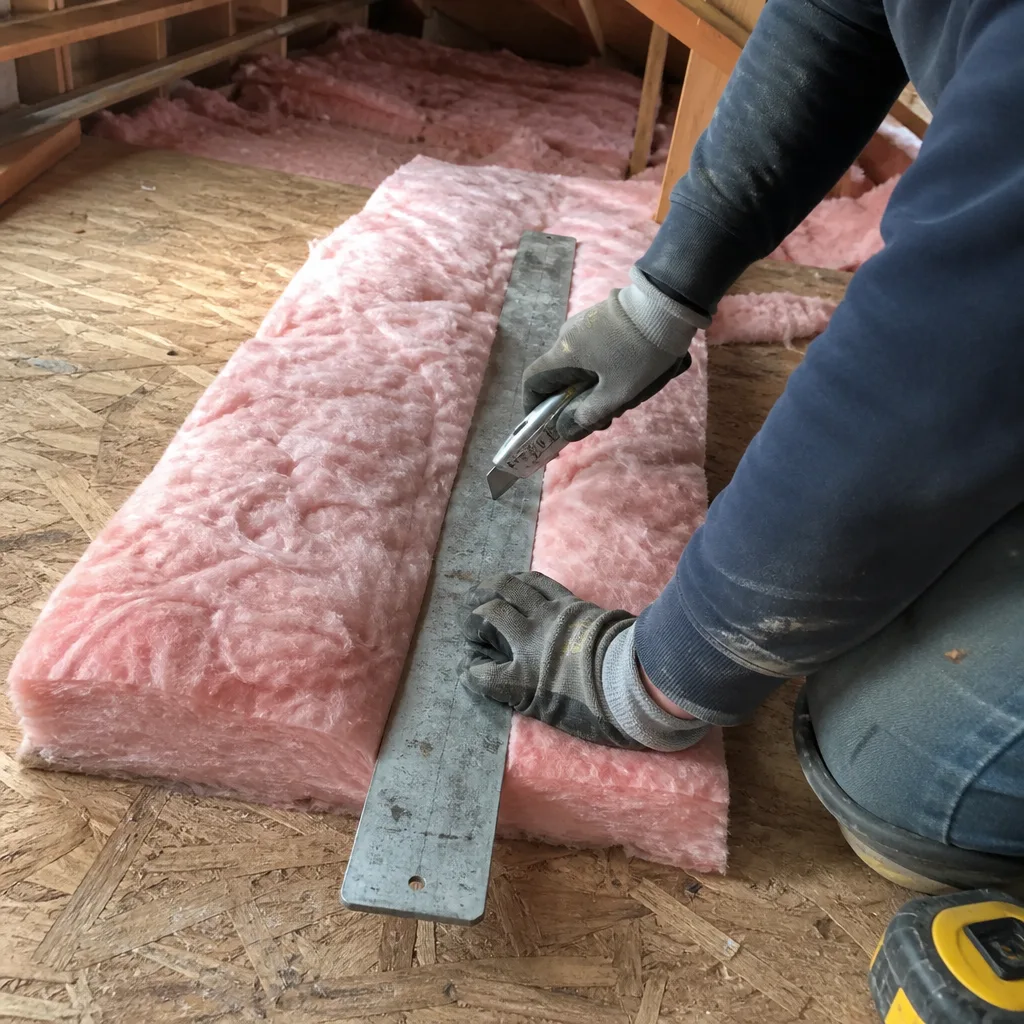
There is safe reconnaissance, and there is work that belongs to a crew with the right tools and the right respirators. A homeowner can safely check: whether the vapor barrier is intact at visible seams, whether any boards have dropped, and whether there is standing water or obvious mold. Use a flashlight, not your phone, and note what you see. Do not enter the crawl space if you smell gas, see exposed wiring in contact with moisture, or if the access hatch is compromised and you are unsure of structural support.
Where DIY goes wrong: grinding concrete for adhesive prep without a HEPA vacuum and proper respirator, attempting to cut Comfortboard with a standard utility knife (it destroys the blade and leaves ragged edges that compromise the vapor seal), and underestimating the fastening schedule. Rockwool’s own installation guidelines call for fasteners every 16 inches on vertical walls in seismic zones, which includes all of Santa Clara County. We have re-done three Cupertino jobs in the past eighteen months where a homeowner or handyman used construction adhesive alone, skipped the mechanical backup, and the boards peeled within two wet seasons. Seal the leaks first. Insulation covers problems; it does not fix them. For the assessment and the written scope, call (831) 217-8521.
FAQs
Properly installed Rockwool encapsulation with a maintained vapor barrier lasts 25 to 30 years in Cupertino’s climate. The stone wool itself does not degrade, but the polyethylene barrier and butyl tape seams are the wear items - expect 15 to 20 years before seam re-taping is needed, sooner if the crawl space has seasonal standing water. Call (831) 217-8521 for an inspection and written assessment of your specific assembly.
Localized repair is viable if the failure is limited to a torn vapor barrier section or a few dropped boards. We do partial repairs on roughly 40% of the Cupertino calls we receive. Full replacement becomes necessary when the original assembly was installed without air sealing, when multiple failure modes are present, or when the wrong density board was specified and compression damage is widespread. We will tell you which category you are in after the assessment - no replacement sold when a repair will last.
Most full replacements take two to three days for a standard Cupertino crawl space. Day one is removal, surface prep, and air sealing; day two is board installation and vapor barrier placement; day three is detail sealing, cleanup, and documentation. Smaller repairs are often same-day. We do not rush the adhesive cure time - Rockwool’s specified polyurethane adhesive needs 24 hours at 50°F or above to reach handling strength, and Cupertino’s January mornings sometimes require us to schedule around that.
Yes. We carry Comfortboard 80 and 110 in 2-inch and 3-inch thicknesses, Comfortbatt in standard joist widths, vapor barrier rolls, butyl tape, termination bars, and the Hilti or Tapcon fastening systems specified for seismic zones. For less common thicknesses or the higher-density Comfortboard 80 HD, we pull from our San Jose warehouse with next-morning delivery. We also stock Reflectix bubble-foil products for radiant barrier applications where the crawl space has ductwork that needs summer heat shielding.
Written by Wes Okafor, Owner, Topside Attic Insulation Cupertino at Topside Attic Insulation Cupertino, serving Cupertino and nearby areas.