
Knauf Attic Air Sealing: The Cupertino Owner’s Guide
Knauf attic air sealing components installed in Cupertino homes typically run between $340 and $780 for a complete replacement, depending on attic square footage and how many top plates, can-light housings, and penetration boots need sealing. We stock Knauf-compatible gasketed boxes, fire-rated foam, and ECOSEAL acrylic caulk on every truck, and most Cupertino jobs we start before noon are finished the same day. Homeowners usually figure out something’s wrong when their upstairs rooms won’t stay cool through a Santa Clara Valley afternoon, or their PG&E bill jumps after a neighbor’s identical floor plan costs half as much to condition.
Which Knauf Models This Applies To
Knauf doesn’t sell attic air sealing as a named “system” the way they sell insulation batts. What we’re talking about is the collection of air-sealing materials Knauf specifies for use with their ECOSEAL and Insulation System products: ECOSEAL Plus water-based acrylic sealant, IntuSeal gasketed electrical boxes, and the fire-rated intumescent foam used around chimney chases and recessed housings. If your attic has Knauf insulation, the original installer may or may not have used Knauf-specified sealants; we’ve found plenty of Cupertino attics where the blown-in glass mineral wool went down over completely unsealed top plates.
To identify what you actually have, look for the ECOSEAL label on any cured bead along top plates or drywall seams, or the Knauf logo on gray electrical box gaskets. If you see yellow canned foam from a big-box brand, that’s not Knauf spec and it’s likely degrading faster than the acrylic-based products. We carry both OEM Knauf ECOSEAL and a commercial-grade equivalent that meets the same ASTM E-84 smoke-and-flame index; for most Cupertino retrofits, the equivalent performs identically and costs less. The exception is homes still under Knauf product warranty, where using non-specified sealants can void coverage.
Signs Your Knauf Attic Air Sealing Is Failing
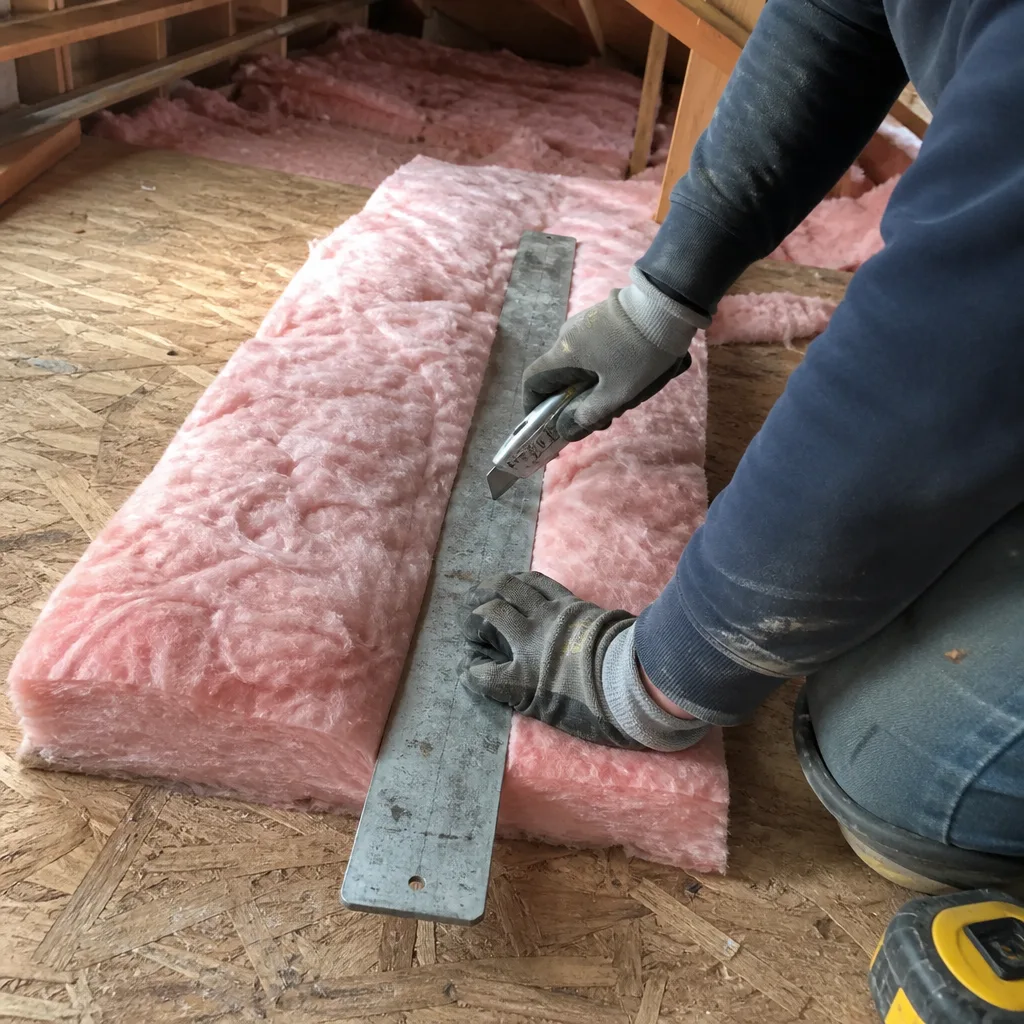
- Uneven temperatures floor-to-floor. Conditioned air escapes through unsealed top plates and wire penetrations, so your downstairs overworks while upstairs rooms drift. We see this constantly in Cupertino’s 1960s-1980s split-levels near Rancho Rinconada, where the original builder never sealed the interior wall-to-ceiling junctions before blowing in insulation.
- Dust streaks around ceiling registers or can lights. Those dark lines are filtration soiling: attic air, pulled through gaps by the pressure differential, deposits fiberglass and rodent debris on your ceiling. It means your air barrier has a breach, and your HVAC filter is working on attic air, not just recirculated room air.
- Ice damming or moisture staining at the eaves. Warm, humid interior air leaks into the attic, condenses on the underside of roof sheathing, and freezes at the gutter line in our brief Cupertino cold snaps. Knauf’s glass mineral wool doesn’t rot, but the surrounding framing will if the leak persists.
- Blown-in insulation settled away from the eaves. Air moving through bypasses carries lightweight insulation with it, creating bare spots where thermal performance drops to near zero. We’ve measured attic floors in Cupertino foothills homes where the center reads R-38 and the eaves read R-8 because wind-washing relocated the material.
- Blower-door test above 3,000 CFM50 in a home under 2,500 square feet. That’s the hard number. A well-sealed home of that size in Cupertino should test below 2,000 CFM50; anything higher means the envelope leaks faster than the insulation can compensate for.
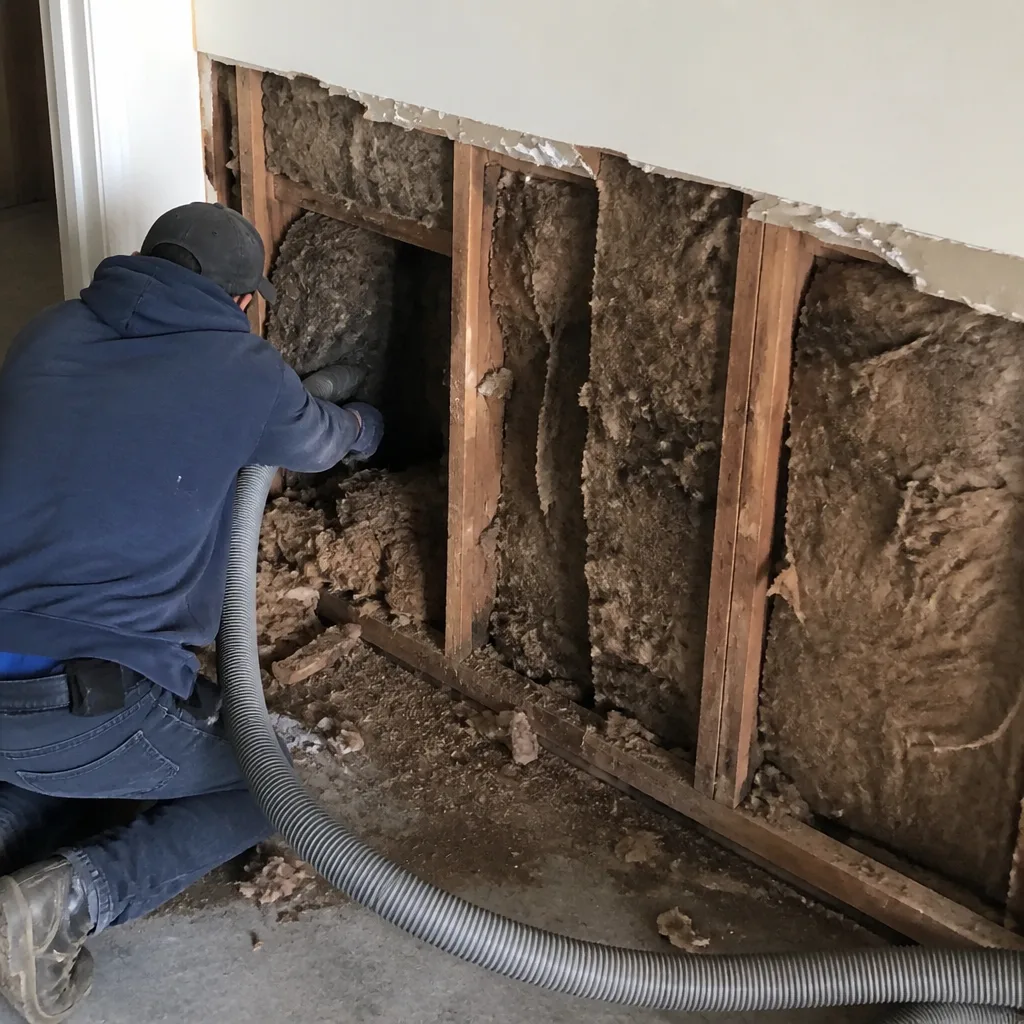 Before
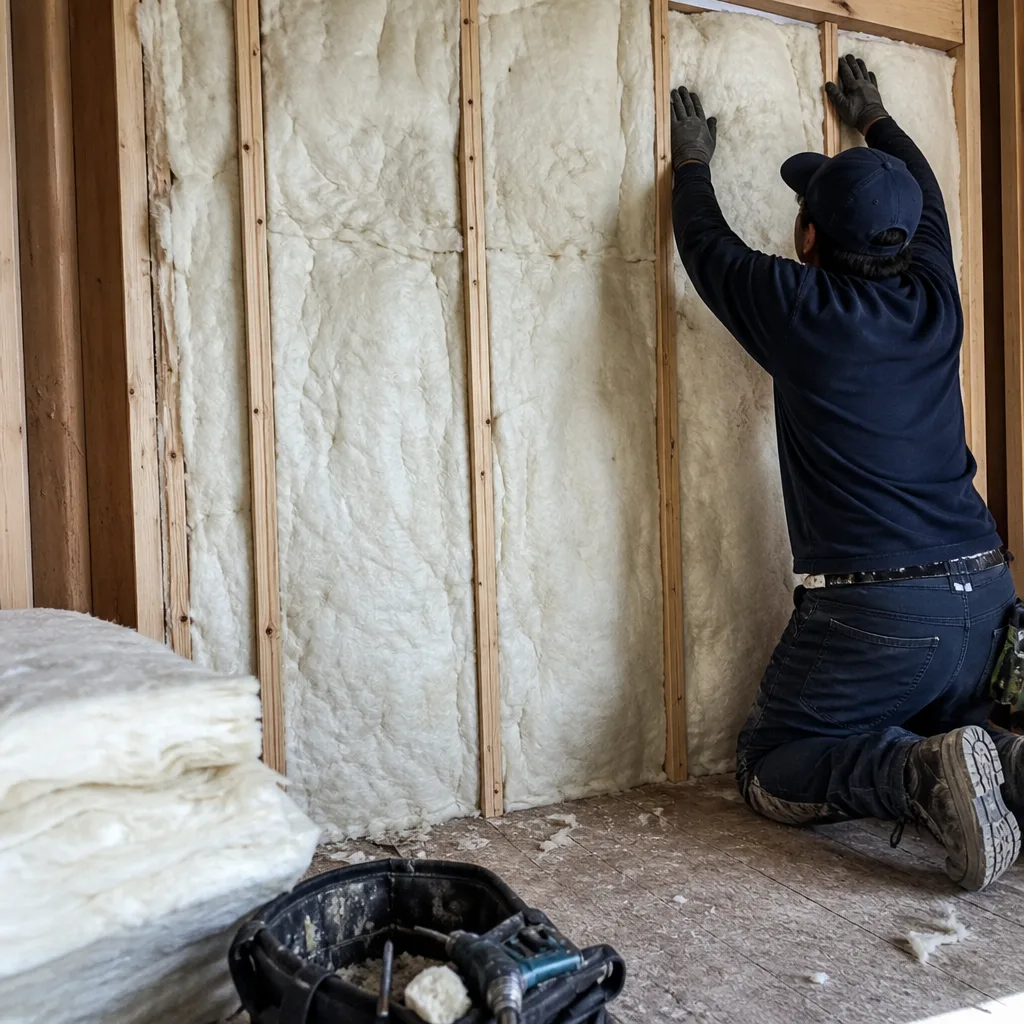 After
AfterReplacement Cost & What’s Included
Most complete Knauf attic air sealing jobs in Cupertino run $340-$780 for attics between 800 and 1,800 square feet. Here’s how that breaks:
- Small attic (under 1,000 sq ft): $340-$480 - typically 15-25 top plates, 6-10 can-light housings, minor penetration sealing
- Mid-size attic (1,000-1,500 sq ft): $480-$620 - adds chimney chase, bath-fan boots, whole-house fan damper seal
- Large or complex attic (1,500+ sq ft, multiple levels): $620-$780 - older Cupertino homes near the foothills with dropped soffits, skylight shafts, or previous rodent damage requiring cleanup first
What drives the range: accessibility (truss spacing, decking coverage), how much existing material needs removal, and whether we find disconnected bath-fan ducts or compromised fire-blocking that has to be addressed before sealing. Every job includes the Documented Photo Record - before, during, and after shots of each sealed penetration - plus before-and-after blower-door numbers when the house allows testing. We don’t start until you have a written price and a written scope; that’s Haven Standard Clause 1.
DIY or Call Us?
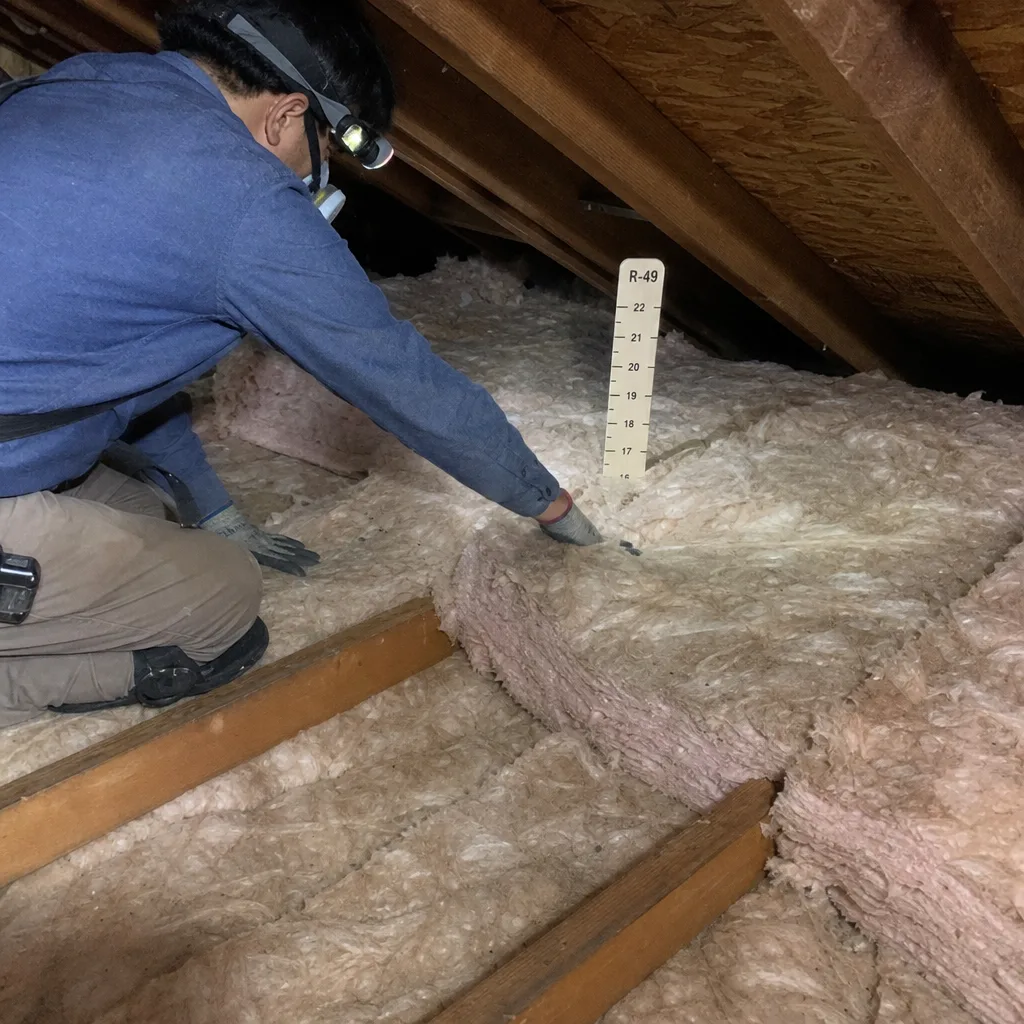
There’s no high-tension danger in attic air sealing the way there is with garage-door springs, but there are genuine hazards: disturbed vermiculite insulation (possible asbestos), active wasp nests in eaves, and heat exhaustion in Cupertino attics that hit 140°F by July afternoon. What a homeowner can safely check: whether bath-fan ducts are still connected at the roof jack, whether the attic hatch has a gasket, and whether light gaps are visible around the perimeter of can-light housings. What goes wrong with DIY: using the wrong foam (non-fire-rated around chimneys), missing the top plate entirely because it’s buried under insulation, or sealing so tightly that combustion appliances backdraft. Seal the leaks first. Insulation covers problems; it does not fix them. If your blower-door number is unknown, call (831) 217-8521 and we’ll test it before anything gets sealed.
FAQs
Properly installed Knauf ECOSEAL acrylic and compatible gasketed components last 20-25 years in Cupertino’s dry climate, though intumescent foam around chimney chases may need inspection at 15 years due to thermal cycling. The sealant itself doesn’t degrade from UV or moisture the way solvent-based foams do, but structural settling or rodent activity can open new bypasses that the original seal doesn’t cover. Call (831) 217-8521 for a free inspection if you’re unsure of your install date.
Spot repairs work for isolated failures - a single disconnected boot, a cracked bead at one top plate - but partial sealing leaves the overall blower-door number unchanged, which means you’re still paying to condition your attic. We won’t do spot repairs on attics testing above 3,500 CFM50; the economics don’t work for the homeowner. Call (831) 217-8521 and we’ll show you the whole-house number so you can decide.
Most Cupertino homes are sealed and tested in one working day, typically 4-6 hours for attics under 1,500 square feet. We arrive with Knauf-compatible materials on the truck, run the pre-test, seal, then post-test before we leave. You’ll have the blower-door report and photo record before dinner.
Yes - ECOSEAL Plus acrylic, IntuSeal gasketed boxes in standard and deep configurations, fire-rated intumescent foam, and Knauf-compatible spray foam for large gaps. We also stock Reflectix radiant barrier materials for Cupertino homes that need both air sealing and thermal reflection. Topside Attic Insulation Cupertino is an independent service provider, not affiliated with Knauf; we source what performs, not what we’re obligated to push.
Written by Wes Okafor, Owner, Topside Attic Insulation Cupertino at Topside Attic Insulation Cupertino, serving Cupertino and nearby areas.