
Knauf Attic Insulation: The Cupertino Owner’s Guide
We stock and install Knauf-compatible blown-in fiberglass attic insulation for Cupertino homes, with most attic jobs running between $2,800 and $5,400 depending on square footage and whether air sealing is needed first. Same-day installation is available on most calls placed before noon. Homeowners usually discover their Knauf insulation has failed when they notice hot second-floor rooms in summer despite running the AC, or when they pull back a section in the attic and find it compressed, displaced, or missing entirely around can lights and top plates.
Seal the leaks first. Insulation covers problems; it does not fix them.
Which Knauf Models This Applies To
Knauf produces several blown-in fiberglass product lines found in Cupertino attics, and identifying what you have matters for matching density and coverage. The most common is Knauf Jet Stream Ultra, a high-performance blowing wool typically installed to R-38 or R-49 in our climate zone. Look for white or light-yellow fiberglass with the Knauf logo printed on the bag, or a specification label stapled to a rafter near the attic hatch. Older Cupertino homes, especially the Eichlers and ranch-style builds near Rancho Rinconada, may have Knauf Insulation EcoFill or early Jet Stream formulations installed in the 2000s or 2010s.
The critical compatibility gotcha: Jet Stream Ultra requires a specific blowing machine setting (typically 2.2 to 2.5 pounds per cubic foot for open attic applications) to achieve its labeled R-value. A standard insulation blower set for generic fiberglass will under-densify Knauf product, leaving you with less insulation than you paid for. We run Knauf-specified equipment settings and verify settled depth with a yardstick at multiple grid points across the attic floor.
Topside Attic Insulation Cupertino is an independent service provider, not affiliated with Knauf. We source Knauf, Owens Corning, Johns Manville, and other brands based on what suits the job, not a preferred-vendor arrangement.
Signs Your Knauf Attic Insulation Is Failing
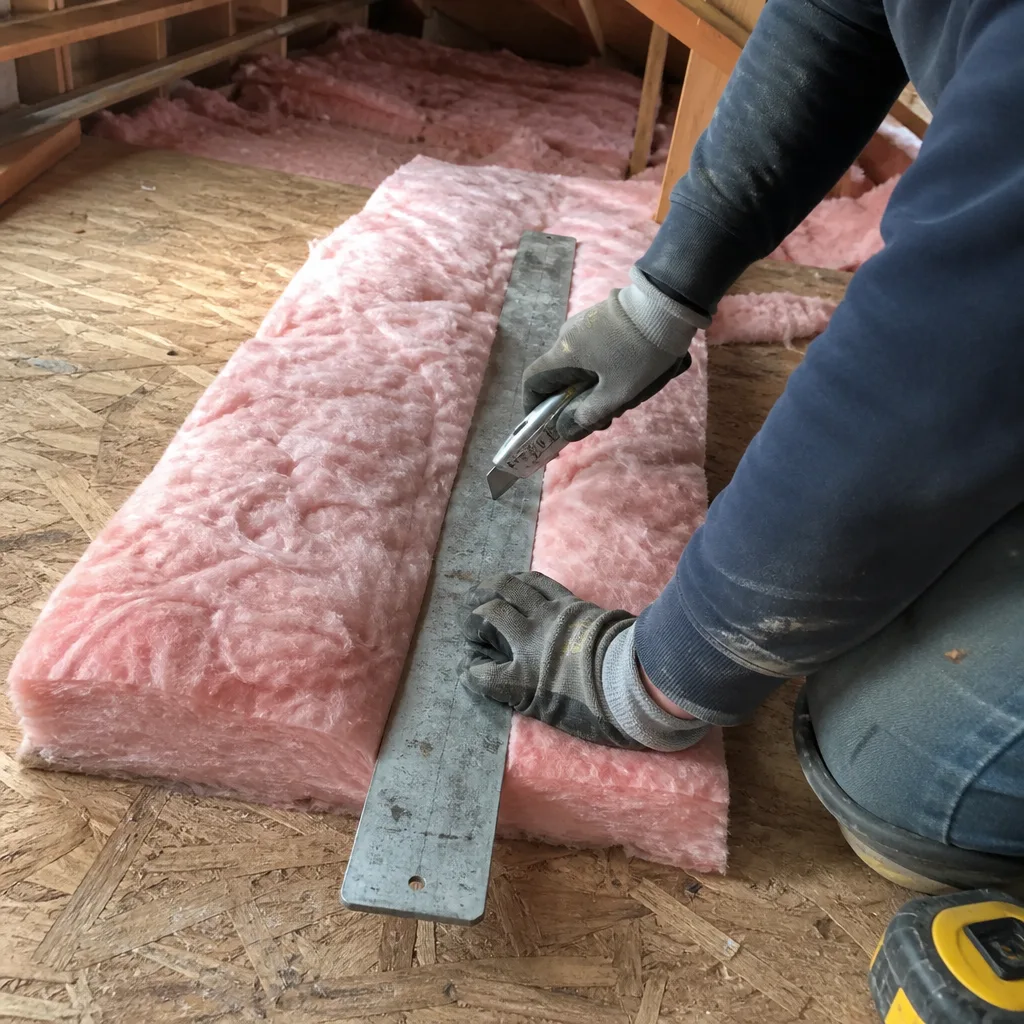
- Uneven temperature distribution between rooms. In Cupertino’s climate, properly installed Knauf fiberglass should keep interior wall surface temperatures within 2-3 degrees of the thermostat setpoint. If your south-facing bedroom runs 8 degrees warmer than the hallway in July, the insulation has likely settled, been disturbed by prior work, or was never dense enough at installation.
- Visible compression or displacement near attic hatches, HVAC platforms, or storage boards. Fiberglass loses effectiveness when compressed below its designed loft. We’ve found Knauf insulation in Cupertino foothills homes squashed to 3 inches where 14 inches should exist, usually from homeowners or solar installers using the attic for access without replacing what they disturbed.
- Dust or insulation particles settling on ceiling fixtures or around can light trim. This indicates attic bypasses - air leaks carrying particles from the attic into conditioned space. In older Cupertino split-levels, the gap between interior partition walls and the ceiling plane was rarely sealed before insulation went down, creating a continuous path for attic air to migrate downward.
- Ice dam evidence in winter or excessive heat in the attic during summer. Cupertino doesn’t see heavy snow, but inadequate Knauf insulation combined with unsealed bypasses allows conditioned air to escape, warming the roof deck and accelerating thermal cycling that degrades asphalt shingles.
- Energy bills rising year-over-year without rate changes. Pacific Gas & Electric rates have climbed, but a 20% usage increase beyond rate adjustments usually points to envelope failure. We compare your current usage against the same billing period three years prior to isolate weather-normalized consumption changes.
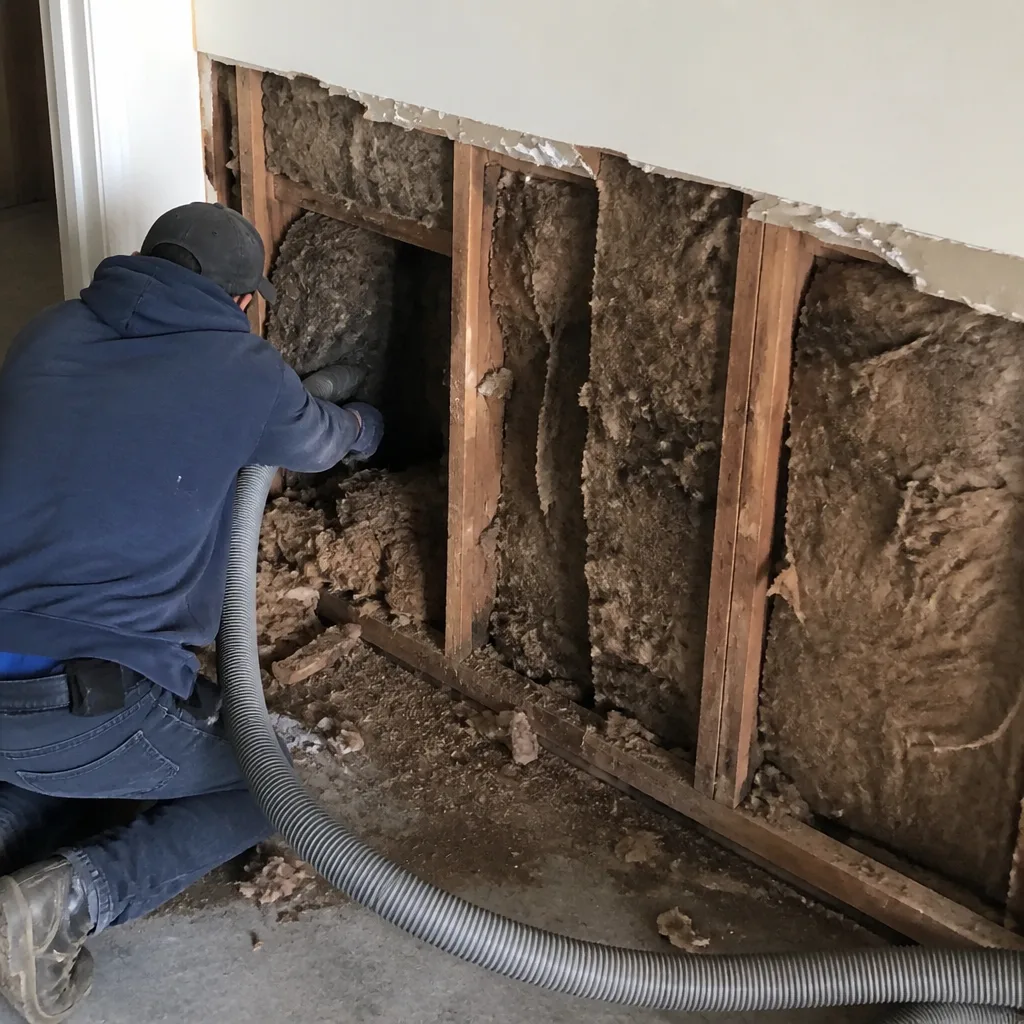 Before
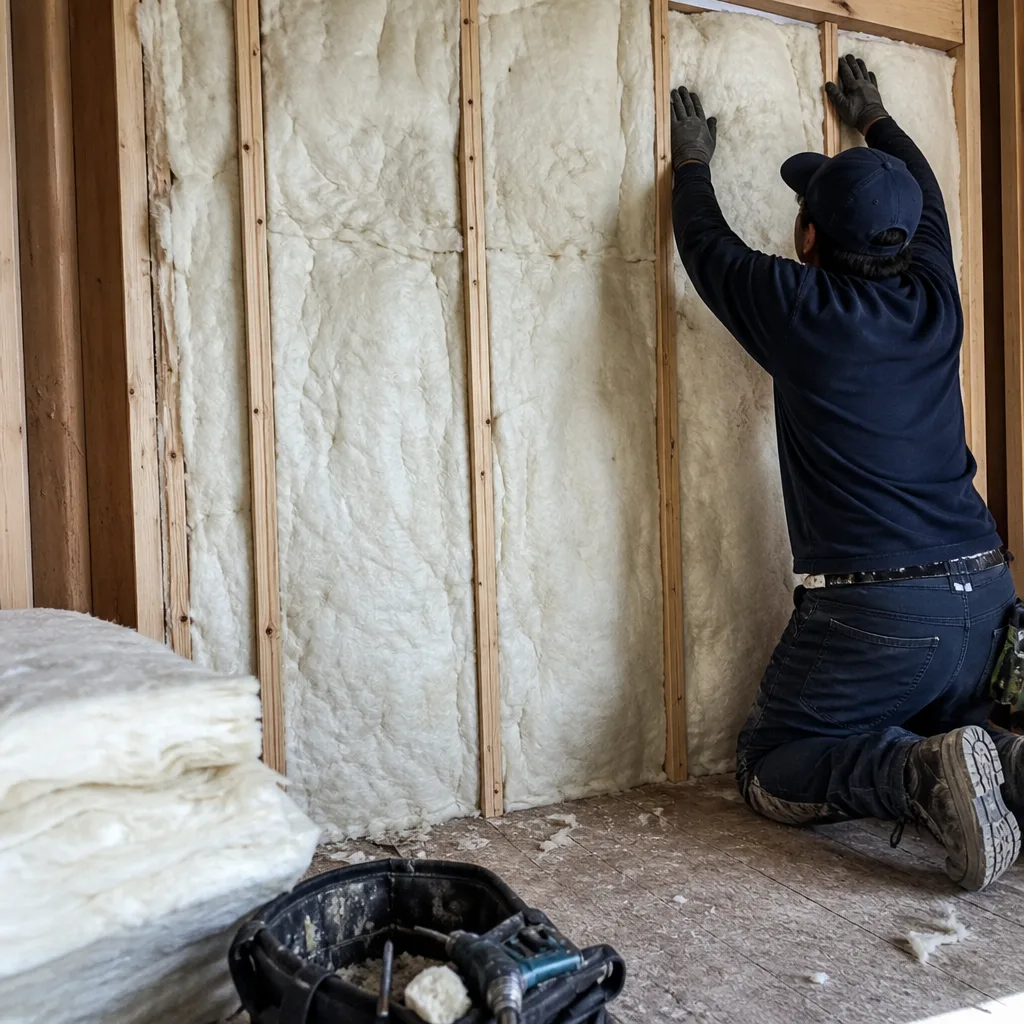 After
AfterReplacement Cost & What’s Included
Most full Knauf attic insulation replacements in Cupertino run $2,800 to $5,400 for homes between 1,200 and 3,000 square feet of conditioned space. The range depends on four factors: whether removal of existing material is required, the R-value target (R-38 for minimum code compliance in our zone, R-49 for better performance), the extent of air sealing needed before blowing, and attic accessibility (steep pitches, limited hatch size, or HVAC equipment crowding the workspace).
Every job includes:
- Written price before any work starts - Haven Standard Clause 1
- Attic air sealing of top plates, can lights, penetrations, and the attic hatch perimeter
- Before-and-after blower-door test on applicable jobs, with ACH50 documented
- Documented Photo Record of conditions found and work completed
- 365-Day Done Right Promise on all completed work
We do not price by the bag. We price by the result: a specified R-value at a specified density, verified and documented.
DIY or Call Us?
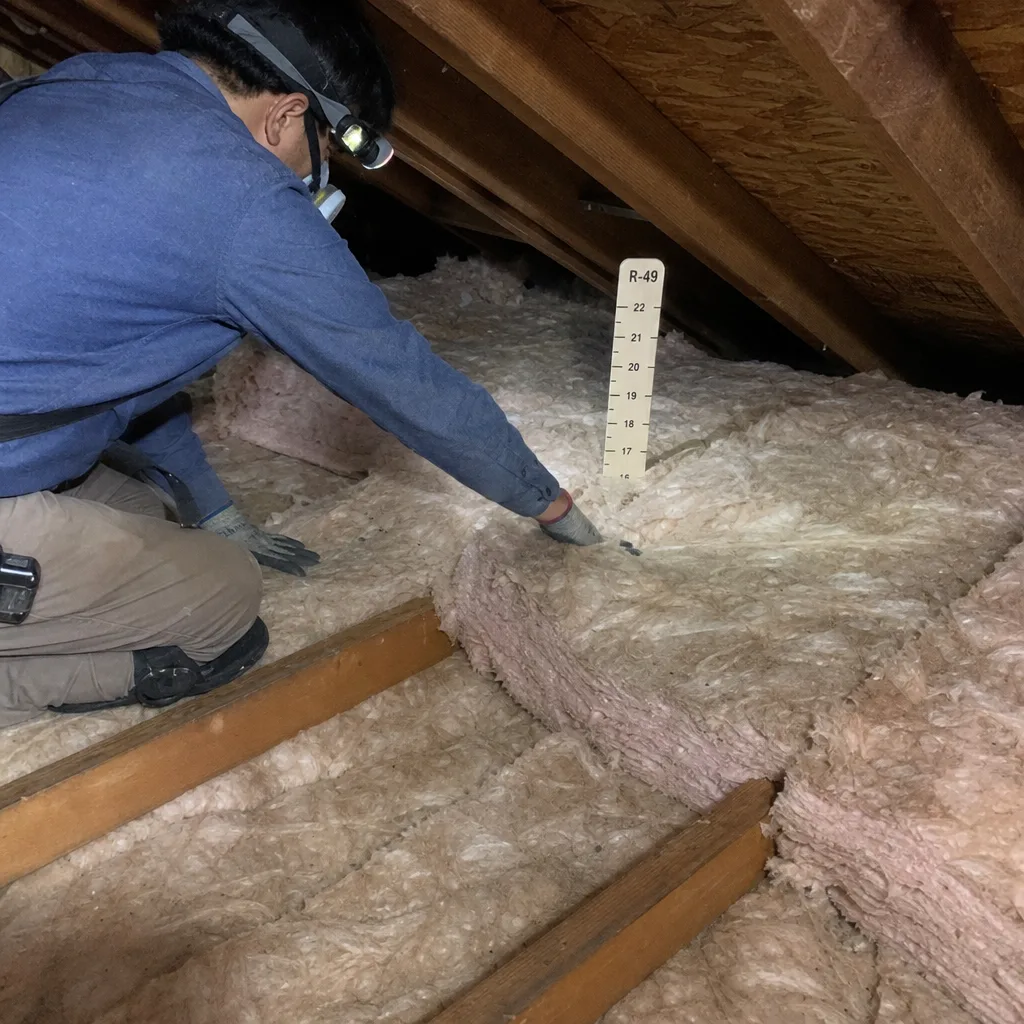
Homeowners can safely check two things: measure existing insulation depth with a yardstick at multiple points (avoiding the center where it may be fluffed), and inspect the attic hatch perimeter for visible gaps or missing weatherstripping. What you find is useful information to share when you call.
Where DIY goes wrong: blowing fiberglass to correct density requires calibrated equipment most rental yards don’t maintain, and air sealing top plates and can lights involves working near live electrical in a confined, hot space. In Cupertino’s older stock, we’ve found knob-and-tube wiring still active in attics, and disturbing insulation around it creates fire and shock hazards. Wes Okafor has documented this condition on jobs from Monta Vista to the foothills neighborhoods.
We carry Knauf-compatible materials on our trucks and can typically install same-day. Call (831) 217-8521 for a written estimate.
FAQs
Properly installed Knauf fiberglass can perform for 80 to 100 years, but in Cupertino’s climate it typically needs attention after 15 to 25 years due to settlement, disturbance from trades, or initial installation that skipped air sealing. The material itself doesn’t degrade; the installation conditions do. Call (831) 217-8521 and we’ll assess whether you need top-off, removal and replacement, or air sealing first - estimates are free.
You can if the existing material is dry, uncompressed, and free of rodent contamination, but we rarely recommend it without air sealing first. Layering new over old without sealing bypasses traps moisture pathways and leaves the thermal bypasses active. In Cupertino’s variable humidity, we’ve pulled back new-over-old installations where mold had developed at the interface. We test moisture content before recommending any approach - call (831) 217-8521 for an assessment.
Most Cupertino homes are completed in one day: 4 to 6 hours for air sealing, removal if needed, and blowing new material to specified depth. Larger homes or those requiring extensive bypass sealing may extend to a second day. We provide a written schedule with your price, not a callback window measured in business days. Call (831) 217-8521 to book.
We carry Knauf-compatible blown-in fiberglass on our trucks and maintain stock at our South Bay warehouse. For standard R-38 and R-49 installations in Cupertino, we do not order-to-wait. Specialty products or large commercial quantities may require 24 to 48 hours. Call (831) 217-8521 to confirm availability for your specific job.
Written by Wes Okafor, Owner, Topside Attic Insulation Cupertino at Topside Attic Insulation Cupertino, serving Cupertino and nearby areas.