
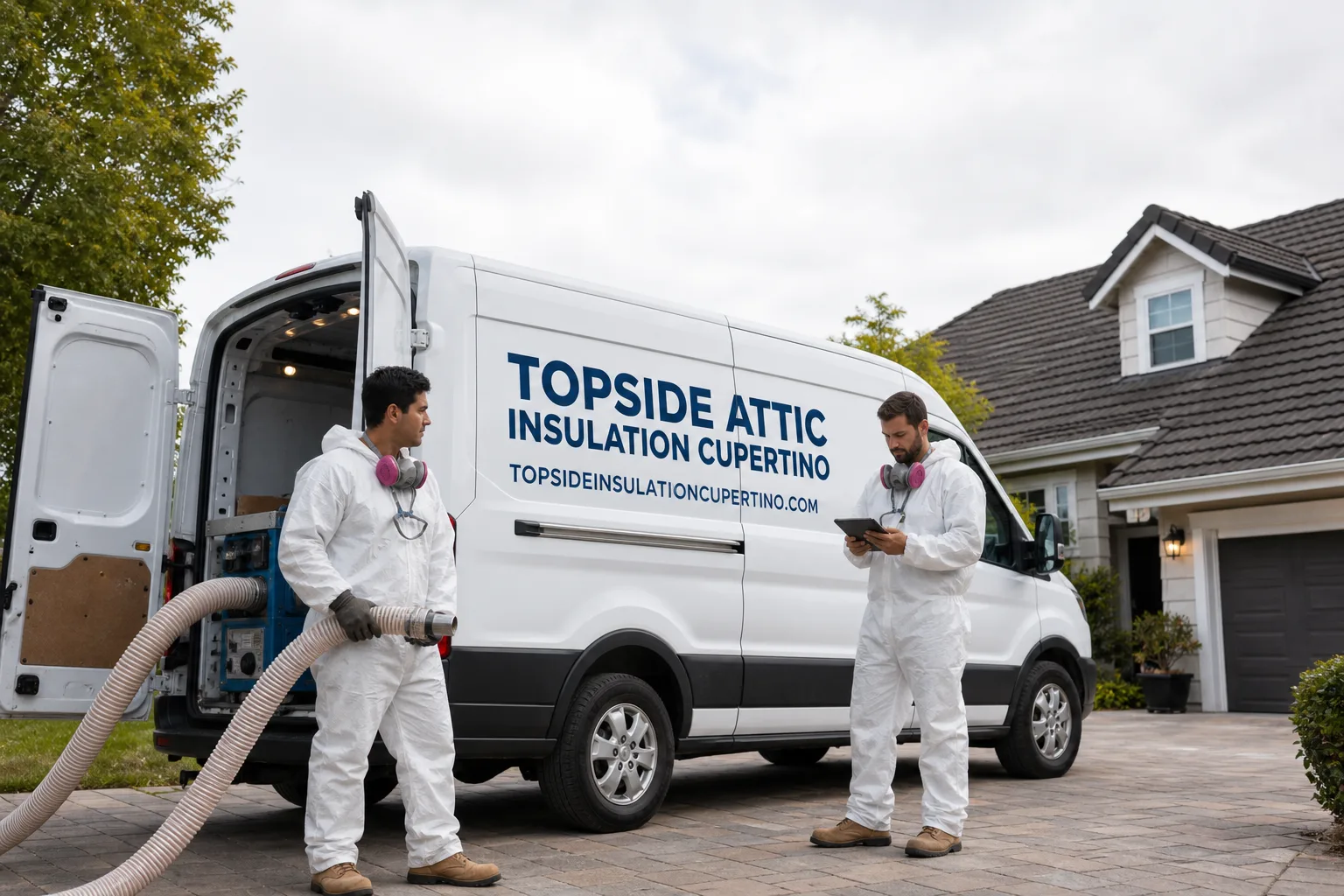
How Much Does Wall Insulation Cost in Cupertino, CA?
Wall insulation in Cupertino typically costs between $1,800 and $6,500 for a standard single-family home, depending on wall area, material choice, and whether the walls are open (new construction or gut renovation) or closed (retrofit). Most retrofit jobs on a 1,500-2,200 sq ft Cupertino ranch or split-level fall in the $2,400-$4,200 range when dense-pack cellulose or blown-in fiberglass is used. That number shifts higher when spray foam or a hybrid approach is specified, and shifts lower on smaller footprints or accessory dwelling units.
Wall Insulation Cost Breakdown (2026)
The table below reflects what Envelope Insulation Co. sees in the Cupertino market in 2026 – pricing pulled from actual job scopes written under Haven Standard Clause 1, not national averages padded for a disclaimer.
| Material / Method | Typical R-Value | Cost per Square Foot (installed) | Whole-Home Estimate (1,500-2,200 sq ft) |
|---|---|---|---|
| Dense-pack cellulose (retrofit, closed wall) | R-3.5 to R-3.8 per inch | $1.80 – $2.60 | $2,200 – $3,800 |
| Blown-in fiberglass (retrofit, closed wall) | R-2.2 to R-4.3 per inch | $1.60 – $2.40 | $1,900 – $3,500 |
| Open-cell spray foam (open wall, new or gut) | R-3.5 to R-3.8 per inch | $1.50 – $2.00 | $1,800 – $3,200 |
| Closed-cell spray foam (open wall) | R-6.0 to R-7.0 per inch | $3.00 – $5.50 | $3,600 – $7,500 |
| Fiberglass batt (open wall, new or gut) | R-11 to R-21 | $0.80 – $1.40 | $950 – $2,200 |
| Mineral wool / Rockwool batt (open wall) | R-15 to R-23 | $1.40 – $2.20 | $1,700 – $3,400 |
| Hybrid: air seal + dense-pack cellulose (retrofit) | R-13 to R-15 effective | $2.20 – $3.40 | $2,800 – $5,200 |
A few things to flag about these numbers. First, the “whole-home estimate” column assumes walls only – it does not include attic or crawl space work. Second, drywall patching after a retrofit blow-in is sometimes handled by a separate drywall crew; we price it into our scopes so you see one flat number before anyone touches your walls. Third, Cupertino’s older housing stock – particularly the pre-1980 ranches in Monta Vista and the postwar tract homes along Stevens Creek Boulevard – often has zero existing wall insulation, which means the full wall cavity is available and jobs tend to come in at the lower end of the retrofit range.
On the other end, homes in newer developments near Apple Park or the Rancho Rinconada area sometimes have existing fiberglass batts that are moisture-compromised or compression-settled. In those cases, removal and replacement adds $0.40-$0.85 per square foot to the scope before new material goes in.
What Affects Wall Insulation Pricing in Cupertino
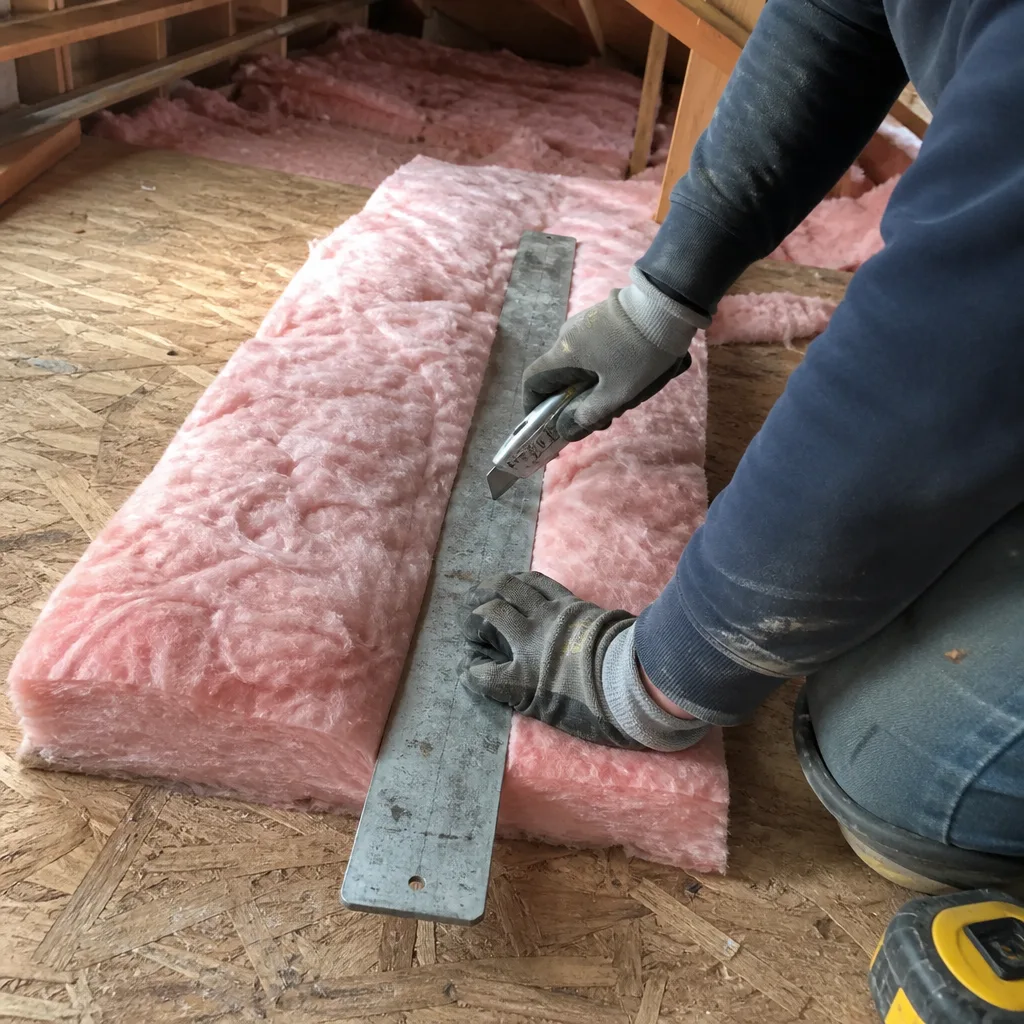
- Open vs. closed walls. This is the single biggest cost driver. If your walls are already drywalled – which is the situation in virtually every Cupertino home that isn’t mid-renovation – a contractor has to drill small access holes, inject material under controlled pressure, and patch. That process (dense-pack or blown-in) costs more per square foot than simply stapling batts into open stud bays, but it avoids a full drywall tear-out that would run $4-$8 per square foot on its own.
- Wall area and story count. A one-story 1,600 sq ft ranch in the Homestead High neighborhood has roughly 900-1,100 sq ft of exterior wall cavity after windows and doors. A two-story 2,400 sq ft home in the Garden Gate area may have 1,400-1,800 sq ft. More wall area is a straightforward multiplier. Two-story homes also add rigging or ladder cost that single-story jobs skip.
- Air sealing before insulation. Under the approach we use at Envelope Insulation Co., air sealing is not an optional add-on. Before any insulation material enters a wall cavity or attic assembly, penetrations, top plates, and can-light boots are sealed. In Cupertino’s mild climate, the biggest energy loss is often air exchange rather than conduction, and blowing insulation over unsealed gaps captures only a fraction of the available savings. That said, the air sealing step does add $200-$600 to most wall jobs, and it shows up as a line item in the written scope – not hidden in the material price.
- Material choice and local supply. Cellulose sourced from GreenFiber and fiberglass from Owens Corning, Johns Manville, or Knauf runs at stable commodity pricing. Closed-cell spray foam from Icynene or Demilec carries higher material cost and is more sensitive to temperature during application – Bay Area summers are generally fine, but scheduling matters. Mineral wool from Rockwool costs more per batt than fiberglass but is non-combustible and handles moisture differently, which matters in Cupertino microclimates near Calabazas Creek where interior humidity can vary.
- Permit requirements. Santa Clara County building code requires a permit for insulation work that involves adding insulation to existing finished wall assemblies as part of a larger renovation scope. Standalone retrofit blow-in jobs on unchanged wall assemblies typically do not require a separate insulation permit in Cupertino, but any structural modification, window replacement, or re-siding work paired with insulation will trigger permit review. We pull required permits on every job and include that cost in the written scope upfront.
- Existing insulation condition. Homes built in Cupertino between 1955 and 1975 often have rock wool or early fiberglass that has settled, compressed, or picked up moisture from roof leaks. Before a decision on retrofit vs. removal-and-replacement can be made, those cavities need to be assessed. We use a borescope camera to check cavity condition before quoting, and that finding goes into the written scope with photos. Removal adds cost but trying to dense-pack over compromised material voids the performance math.
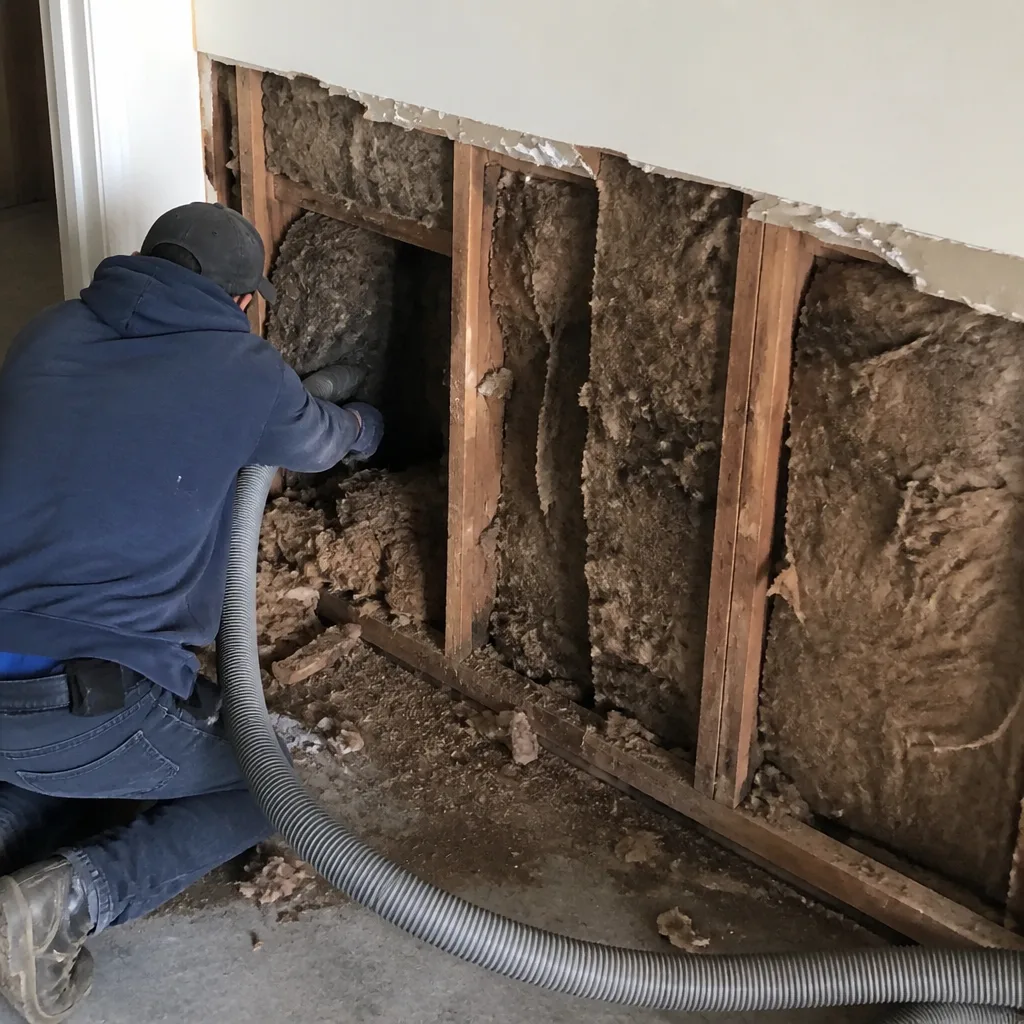 Before
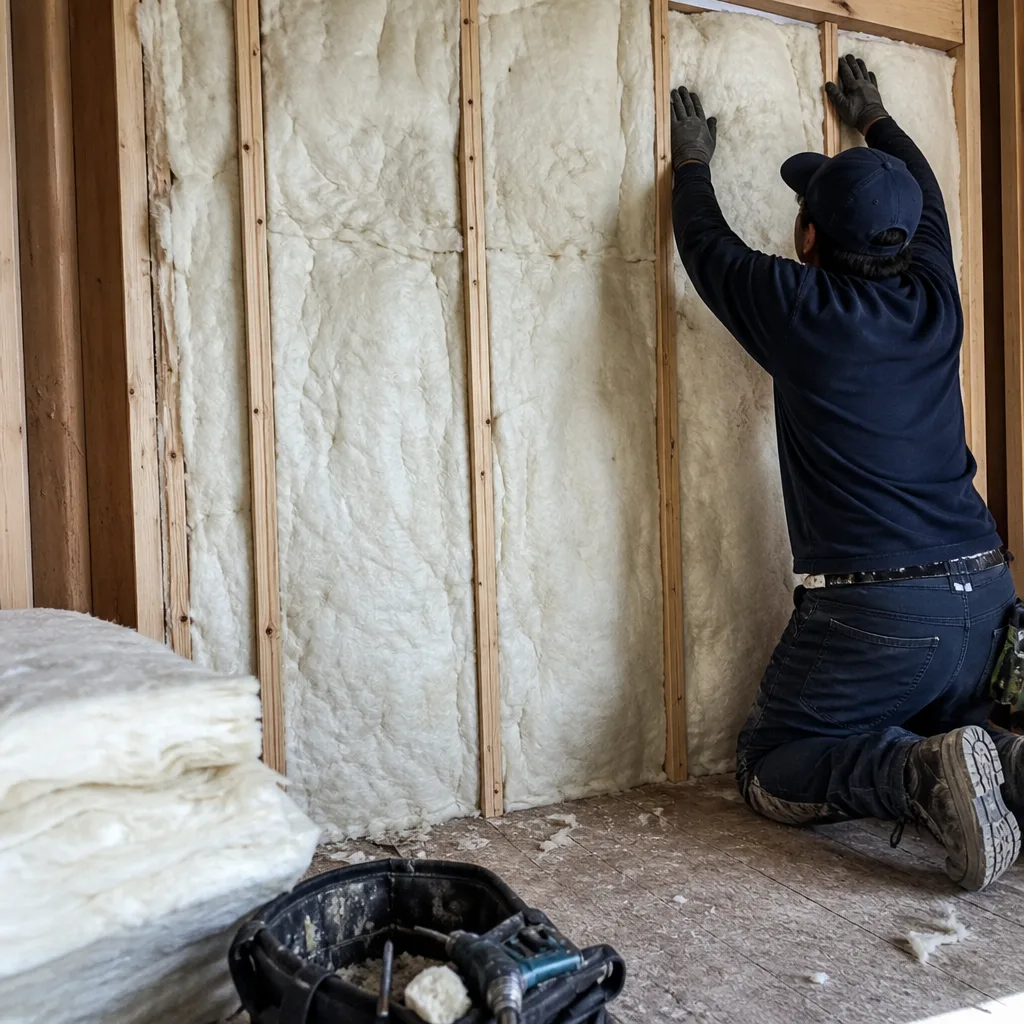 After
AfterCupertino-Specific Factors That Don’t Show Up on National Price Guides
Most pricing guides online use national averages that don’t reflect what insulation contractors actually charge in the South Bay. Here are a few Cupertino-specific realities that move the number:
Labor market. Santa Clara County trades labor runs 15-25% above Central Valley markets. A crew that quotes $1.50 per square foot for dense-pack in Fresno is not going to quote the same number in Cupertino. If a quote you receive looks unusually low, it warrants a close read of the scope – labor is usually where corners get cut first.
Parking and site access. Cupertino neighborhoods have narrow residential streets and strict HOA rules in some subdivisions. Blower trucks need to park within reasonable hose distance of the home, and in some Rancho Rinconada cul-de-sacs or the denser parts of Monta Vista, that adds setup time. We account for site-specific logistics in the written price rather than building in a “site condition” clause that inflates the final invoice.
Title 24 compliance. California’s Title 24 energy code sets minimum insulation requirements for new construction and significant remodels. For wall assemblies, the code minimum in Climate Zone 4 (where Cupertino sits) is R-13 for 2×4 walls and R-20 for 2×6 walls. If your project requires a Title 24 compliance form – common in additions or whole-house remodels that pull a permit – the insulation choice has to meet or exceed those minimums, which may shift material selection even if a lower R-value option would otherwise cost less.
Wildfire defensibility zones. Parts of Cupertino that back toward the Foothills or the Stevens Canyon area fall in or near Cal Fire’s WUI (wildland-urban interface) designation. Non-combustible insulation materials – mineral wool in particular – are increasingly specified in those zones. Rockwool batt pricing runs higher than fiberglass, but it meets California Fire Code’s non-combustibility requirements for assemblies in those areas without an additional fire-blocking layer.
How to Save on Wall Insulation in Cupertino
There are a few approaches that actually reduce the final number rather than just shifting cost around.
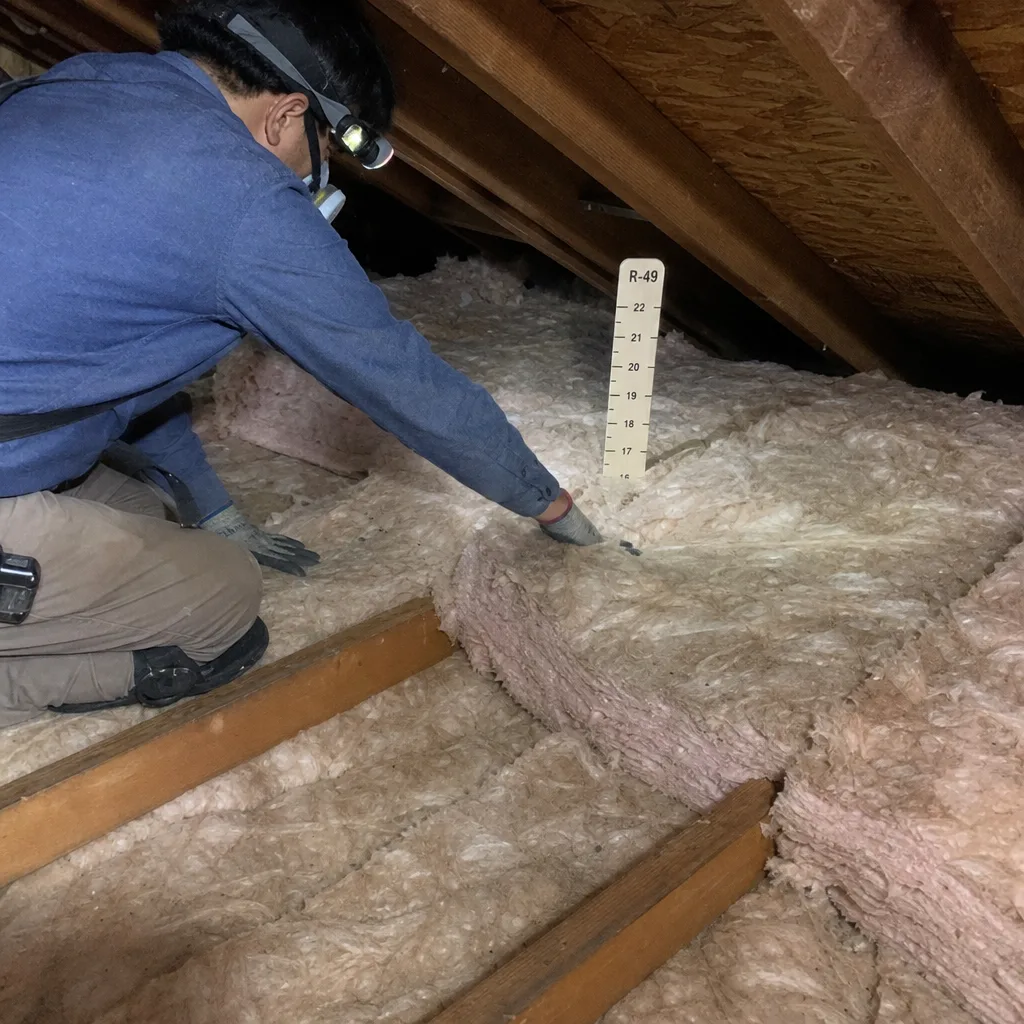
Combine wall and attic work in one mobilization. The biggest driver of overhead on any insulation job is the crew mobilization – truck, equipment, setup. If you’re already planning attic insulation, scheduling wall insulation in the same visit cuts that overhead cost from the wall job entirely. On a typical Cupertino home, combining attic and wall work in one mobilization saves $300-$600 compared to two separate visits.
Use the PG&E and BayREN rebate programs. The Bay Area Regional Energy Network (BayREN) Home+ program offers rebates for insulation upgrades in existing homes, and PG&E’s residential rebate program overlaps on some measures. As of 2026, BayREN rebates for wall insulation run up to $400 for qualifying projects in Santa Clara County. The Inflation Reduction Act’s 25C tax credit also covers 30% of the installed cost of insulation, up to $1,200 per year. We document the materials and scope in a format that supports these rebate applications – that paperwork is part of the job record, not a separate service.
Get a second opinion on any written estimate. If you’ve received a written quote from another contractor and the scope or number doesn’t add up, bring it to us. Under our Free Second Opinion policy, Wes Okafor or a member of the Envelope Insulation Co. team will read through the competing scope with you – line by line – and tell you what the numbers reflect, what’s missing, and what questions to ask. No pressure to book with us afterward.
Don’t skip air sealing to cut cost upfront. We see this decision backfire in Cupertino homes regularly. A homeowner gets a lower bid that omits air sealing, the insulation goes in, and the energy bills don’t drop by as much as expected. A blower-door test run after that job shows the air leakage path is still wide open – you’ve added R-value but not addressed the actual heat transfer mechanism. The remediation job that follows costs more than the air sealing would have in the first place. Sealed first, then insulated: that’s the sequence that produces the result the homeowner expected from the start.
Check your existing wall cavities before assuming a full-home job is needed. Not every wall in a Cupertino home needs insulation. South and west-facing exterior walls typically have the highest impact. Interior partition walls and walls that separate conditioned spaces don’t contribute meaningfully to thermal performance. A pre-job assessment with a borescope can identify which walls are already insulated, which are empty, and which have compromised material – so the quote targets the actual problem rather than square-footage reflexively. That scoping step is included in our estimate process.
For a written price on your specific home, call (831) 217-8521. The estimate is free, and the price you receive is flat and in writing before any work starts.
FAQs – Wall Insulation Cost in Cupertino
How much does it cost to insulate the walls of a typical Cupertino home?
Most single-family homes in Cupertino run between $2,400 and $4,800 for a full exterior wall retrofit using dense-pack cellulose or blown-in fiberglass. That range covers homes in the 1,500-2,400 sq ft range, which describes the majority of the Monta Vista, Garden Gate, and Rancho Rinconada neighborhoods. Smaller homes or ADUs come in lower; two-story homes or projects requiring closed-cell spray foam run higher. For a flat written price on your address, call (831) 217-8521 – the estimate costs nothing and the price is in writing before anyone touches your home.
Is it cheaper to insulate during a renovation when walls are open?
Yes, open-wall installation runs $0.80-$2.20 per square foot installed (batts or open-cell spray foam), compared to $1.60-$2.60 per square foot for a retrofit blow-in into closed walls. The difference is labor: drilling, injecting, and patching takes longer than placing batts in open stud bays. If you’re already opening walls for a kitchen, bathroom, or re-siding project, that’s the right time to insulate – the math is straightforward. Call (831) 217-8521 if you want a written scope built around your renovation schedule.
What R-value do I need for walls in Cupertino?
California Title 24 sets the minimum at R-13 for 2×4 walls and R-20 for 2×6 walls in Climate Zone 4, which covers Cupertino. Most Cupertino homes built before 1978 have 2×4 framing, which limits maximum achievable R-value in a standard retrofit to roughly R-13 to R-15 with dense-pack cellulose. Homes with 2×6 framing – more common in construction from the 1990s onward – can reach R-21 with mineral wool batts or R-20+ with dense-pack. Closed-cell spray foam can push a 2×4 cavity to R-21 at 3 inches, but the cost per square foot roughly doubles compared to cellulose. We’ll note the framing dimension and achievable R-value in the written scope so you’re not guessing after the job is done.
Does wall insulation require a permit in Cupertino?
A standalone retrofit blow-in into existing finished walls typically does not require a separate insulation permit in Cupertino under current Santa Clara County code, as long as the wall assembly itself isn’t being altered. However, if the insulation work is part of a broader renovation that pulls a building permit – an addition, re-siding, or structural work – the insulation becomes part of that permitted scope and must meet Title 24 minimums. We verify permit requirements for every job before work starts and include any permit cost as a line item in the written price. No surprises on the back end.
How long does wall insulation last, and is there a warranty?
Dense-pack cellulose and fiberglass both have effective lifespans of 20-30 years or more when installed correctly and kept dry. Spray foam, properly applied, doesn’t settle or degrade under normal conditions and can outlast the home’s original framing. The warranty that matters is the installation warranty – not the manufacturer’s material warranty, which doesn’t cover improper application. Every job we complete at Envelope Insulation Co. comes with the 365-Day Done Right Promise: if it’s not done right, we make it right, backed by a written warranty delivered before work starts. That document is part of the Haven Standard scope package you receive on day one.
Why Air Sealing Comes Before the Insulation – Every Time
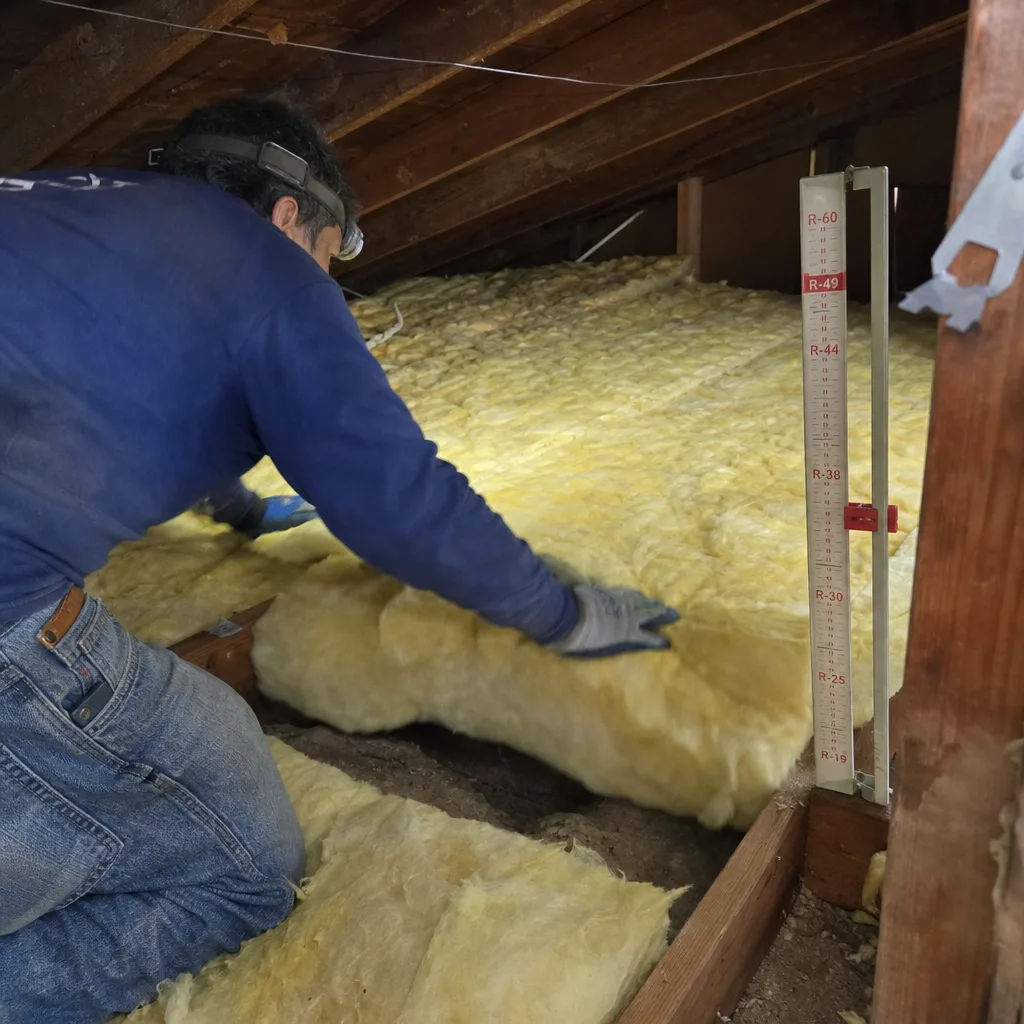
This is the detail that separates a job that performs from one that just adds R-value on paper. In Cupertino’s climate, conductive heat loss – the kind that adding R-value directly addresses – accounts for roughly 20-30% of total envelope heat transfer in a typical pre-1985 home. The rest moves through air infiltration: gaps at top plates, penetrations around plumbing and electrical, disconnected framing joints, can light housings that open directly to unconditioned attic space.
If you blow dense-pack cellulose into every wall cavity in a Cupertino home while leaving those air pathways open, you will capture the conductive portion of the savings. You will not capture the infiltration portion. And a blower-door test – a pressurization reading that measures, in a single CFM50 figure, how much air the building envelope is leaking – will tell you exactly what you got and what you didn’t.
We run a blower-door test before and after every applicable job. A pre-1980 Cupertino home with no air sealing typically reads between 3,800 and 5,500 CFM50. After air sealing the attic floor, top plates, and wall penetrations – before any insulation goes in – that number typically drops to 2,000-3,200 CFM50. After insulation, the combined result is documented in writing and delivered to the homeowner as part of the job record. Those are the numbers that answer the question “what did I actually get?”
We’ve seen jobs in Cupertino – particularly in the older subdivisions along Homestead Road and near De Anza College – where a previous contractor installed new insulation over an unaddressed attic bypass, and the homeowner spent the next five years puzzled about why their PG&E bills didn’t drop. The insulation was there. The air sealing wasn’t. These are not difficult problems to avoid; they require doing the steps in the right order.
What You Receive When Envelope Insulation Co. Completes a Wall Insulation Job
Documentation is the part of this work that most contractors skip entirely. Here’s what leaves with you after every job we complete in Cupertino:
- Written scope and flat price – delivered before work starts, under Haven Standard Clause 1. The price on that document is the price on the invoice. No scope creep clauses, no “site condition” addendums that appear after the crew arrives.
- Written warranty – the 365-Day Done Right Promise is named in the scope document, not referenced verbally. If something isn’t right within a year of the job date, we make it right in writing.
- Documented Photo Record – photos of the cavity condition before material is injected, access holes during the process, and the finished and patched walls. Every visit, not available on request – it’s part of the standard close-out package.
- Before-and-after blower-door readings – on every applicable job. The CFM50 figure before sealing and the figure after, recorded and handed to the homeowner. You don’t have to take our word for the performance change; the number documents it.
- Rebate documentation – material specs, installed R-values, and scope language formatted to support BayREN Home+ and 25C tax credit applications. Included in the job record.
Wes Okafor has led the Envelope Insulation Co. team through more than 9,000 homes sealed and insulated since 2016 – every one of them with a written price before work started and a photo record when the crew left. That’s the Haven Standard, and it applies to our Wall Insulation services in Cupertino the same as it does anywhere else we work.
Key Takeaways
- Wall insulation in Cupertino costs $1,800-$6,500 for most homes, with the majority of retrofit jobs landing between $2,400 and $4,800.
- Dense-pack cellulose and blown-in fiberglass are the most common retrofit materials; closed-cell spray foam costs more but achieves higher R-value per inch.
- Air sealing before insulation is the step that determines whether the job produces the energy savings the homeowner expected – and it’s the step most contractors either skip or price as a separate upsell.
- BayREN Home+ rebates (up to $400) and the federal 25C tax credit (30%, up to $1,200/year) are available for qualifying Cupertino projects and can meaningfully reduce the net cost.
- California Title 24 sets R-13 minimum for 2×4 walls and R-20 for 2×6 walls in Cupertino’s Climate Zone 4.
- Every Envelope Insulation Co. job comes with a written scope, written warranty, photo record, and before-and-after blower-door readings – in writing, before and after, not on request.
Get a Written Price for Your Cupertino Home
If you’re researching wall insulation costs in Cupertino and you want a number that reflects your actual home – not a national average applied to your zip code – call (831) 217-8521. The estimate is free. Wes Okafor or a member of the team will schedule a visit, assess the wall cavities with a borescope, note the framing dimension and existing insulation condition, and deliver a flat written price before any work starts. That price is the price – no callbacks with revised numbers after the crew shows up.
You can also learn more about how we approach the full building envelope on our home page, or go deeper on material options and the retrofit process on our Wall Insulation in Cupertino service page.
If you’ve already received a written estimate from another contractor and want a second set of eyes on the scope, bring it along. We’ll read it with you and tell you what the numbers mean.
Pricing reflects the Cupertino market as of 2026. Written by Wes Okafor, Owner at Envelope Insulation Co., serving Cupertino since 2016. Topside Attic Insulation Cupertino offers free estimates – call (831) 217-8521.
What Our Customers Say
"They photographed rodent damage in the old insulation that we had no idea about, and priced the exclusion work separately so we could decide."
- Harriet N."Two other companies quoted to blow more insulation on top of what was there. These were the only ones who said the existing material had to come out first, and explained why."
- Clifford E."Crawl space encapsulation done properly. Photographs of the vapour barrier at every seam, and the damp smell in the hallway is gone."
- Ainsley P.